
 Ronny Sianturi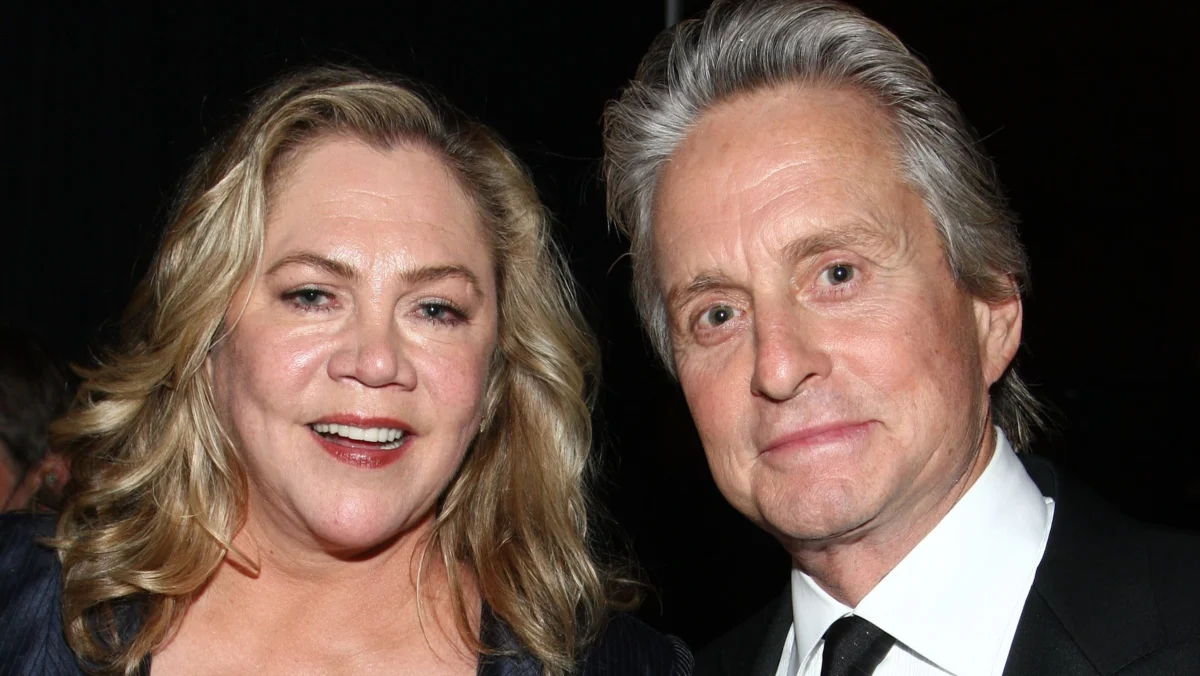
After four decades of persistent denials, Hollywood icon Michael Douglas has finally pulled back the curtain on one of cinema’s most enduring open secrets. In an exclusive excerpt published from his upcoming memoir, One Helluva Ride, the two-time Academy Award winner revealed that he and frequent co-star Kathleen Turner engaged in a passionate, albeit short-lived, romantic relationship during the 1984 production of the blockbuster adventure-comedy Romancing the Stone.
The revelation has sent ripples through the entertainment industry, prompting a lighthearted yet gracious response from Turner herself. For forty years, the pair maintained a united public front, repeatedly deflecting rampant speculation about off-screen chemistry that burned as brightly as their on-screen interactions. The truth, as Douglas outlines in his book, is that the undeniable electricity between the two lead actors was not merely acting, but the manifestation of a genuine, hidden romance that took place entirely behind the scenes of some of Hollywood’s most beloved cinematic milestones.
The Genesis of a Cinematic Partnership and Hidden Romance
The professional and personal trajectory of Michael Douglas and Kathleen Turner is deeply intertwined with the history of 1980s and 1990s cinema. When Robert Zemeckis directed Romancing the Stone, he cast Douglas—who was also producing the film—alongside Turner, a rising star who had recently captivated audiences and critics alike in Lawrence Kasdan’s 1981 neo-noir thriller Body Heat.
According to Douglas’s memoir, the high-pressure environment of location shooting in the jungles of Mexico, combined with long hours and intense creative collaboration, fostered an environment of profound mutual respect and physical attraction. At the time of filming, Douglas was married to Diandra Douglas. However, the actor clarifies in his book that he and Diandra were separated at the juncture and were mutually engaged in extramarital affairs.
Despite the separation, the complexities of marital boundaries quickly caught up with the nascent romance. Douglas notes that during a visit to the production set, Diandra grew suspicious of the palpable dynamic between her husband and his leading lady. Diandra reportedly confronted Turner directly, making it unmistakably clear that she viewed the marriage as intact and active, holding a vastly different interpretation of the couple’s separation terms than Douglas did.
Faced with this intervention and wishing to avoid further complications, Turner chose to step back. The relationship was promptly concluded, and Douglas returned to his marriage. Yet, the professional collaboration between Douglas and Turner was only just beginning, forcing the two actors into a delicate dance of public secrecy that would span the next forty years.
A Four-Decade Deception and the Art of the Denial
Maintaining the illusion of strictly professional camaraderie required a masterclass in media management. Over the subsequent decades, Douglas and Turner reunited on three more major projects: the 1985 sequel The Jewel of the Nile, the critically acclaimed dark comedy masterpiece The War of the Roses in 1989, and, much later, during press obligations for the Netflix comedy series The Kominsky Method.
Throughout promotional tours, junkets, and retrospective interviews, journalists frequently queried the pair about the intense chemistry that radiated from the screen. The official narrative, carefully constructed and uniformly maintained, was that while both actors acknowledged their undeniable magnetism and mutual status as enthusiastic flirts, nothing physical had ever transpired between them.
Douglas admits in his memoir that this narrative was an elaborate fabrication. The primary motivation behind sustaining the falsehood for four decades was remarkably protective. Douglas aimed to shield his family, specifically mentioning his wife and his son, from the public scrutiny, sensationalism, and personal fallout that a confirmed affair during a marital separation would inevitably cause in the relentless media landscape of the 1980s and 1990s.
Remarkably, the deception was so airtight that even key members of their immediate creative circle remained entirely in the dark. Director Robert Zemeckis and co-star Danny DeVito—who shared significant screen time and behind-the-scenes moments with both actors across multiple productions—were completely unaware that a romance had ever taken place during the grueling, mud-soaked shoots of Romancing the Stone.
Kathleen Turner’s Measured and Graceful Response
Public reaction to long-buried Hollywood secrets often involves controversy, recrimination, or PR maneuvering. However, Kathleen Turner’s response to Douglas’s candid confession was characterized by characteristic wit, pragmatism, and enduring affection.
Upon the publication of the memoir excerpt, Turner issued a concise, elegant statement to People magazine. “Good heavens, what a fuss about something 40 years ago!” the actress remarked. Demonstrating that there is no lingering animosity between the two veterans of the silver screen, she added, “I love Michael and I look forward to enjoying the book.”
Turner’s reaction highlights the pragmatic perspective of seasoned performers who recognize that personal histories from decades past rarely carry the same weight in the present day. By brushing off the sensationalism with humor while reaffirming her fondness for Douglas, Turner effectively defused any potential narrative of betrayal or bitterness, cementing their shared legacy as titans of American cinema.
Broader Impact and Implications of the Memoir Revelation
As celebrity memoirs increasingly serve as vehicles for historical correction and personal catharsis, Douglas’s admission in One Helluva Ride offers valuable insight into the realities of Golden Age and late-20th-century Hollywood moviemaking. The intersection of personal life and high-stakes professional production frequently creates emotional crucibles where boundaries blur.
Analysts of entertainment history note that confessions of this nature rarely damage the enduring legacies of the stars involved. Instead, they humanize figures who spent decades operating under the strict, image-conscious constraints of traditional studio publicity systems. In an era where modern social media often forces immediate transparency, the ability of Douglas and Turner to successfully guard a private truth for forty years represents a bygone era of celebrity privacy.
Furthermore, the revelation enhances the cultural appreciation of their cinematic output. For generations of film enthusiasts who sensed a genuine, unfeigned spark between Joan Wilder and Jack Colton in Romancing the Stone, or the vitriolic yet intoxicating energy between Oliver and Barbara Rose in The War of the Roses, Douglas’s admission provides validation. It confirms that the authenticity of their performances was anchored in real, shared human emotion, however brief and complicated its expression may have been.
As One Helluva Ride prepares for its official release, the literary and cinematic communities will undoubtedly examine the broader revelations contained within its pages. Yet, it is this specific chapter—the long-kept secret of an Amazonian jungle romance between two of Hollywood’s most charismatic icons—that has firmly captured the public imagination, transforming a footnote of 1980s pop culture history into a testament to professional grace, enduring friendship, and the passage of time.








