
 Ronny Sianturi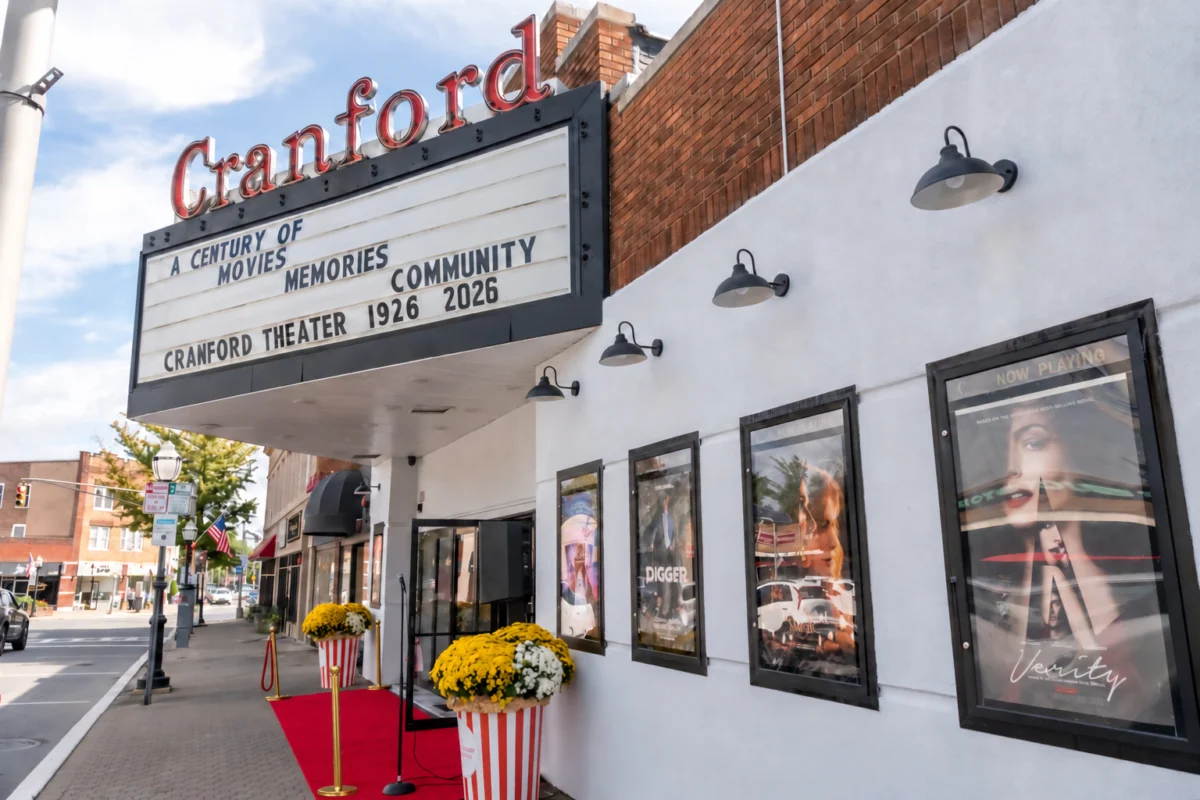
For nearly a century, the illuminated marquee of the Cranford Theater has served as a cultural anchor for Union County, New Jersey. As the region’s last remaining independent, family-run cinema, this five-screen neighborhood movie house is rapidly approaching its monumental 100th anniversary. Yet, the milestone is not merely a celebration of longevity; it is a testament to extraordinary resilience. Having weathered profound industry shifts, the economic devastation of the COVID-19 pandemic, a sudden structural disaster, and the relentless rise of home streaming, the Cranford Theater stands as a living monument to the enduring power of communal cinematic experiences.
At the helm of this historic institution is Doreen Sayegh, a second-generation theater owner whose life has been inextricably linked to the venue’s projection booths and concession stands. As Sayegh prepares to mark the theater’s centennial with a throwback screening of Padlocked—the very silent film that opened the venue on November 29, 1926, accompanied by a live organist—she is simultaneously looking forward. Her mission is to honor a century of local history while aggressively modernizing the business model to ensure the theater thrives for the next hundred years.
A Lifetime in Exhibition: The Chronology of a Family Legacy
The story of the Cranford Theater is deeply personal, rooted in a familial dedication to the theatrical exhibition business that dates back decades. Sayegh’s journey in the industry began under the tutelage of her father, Jesse Y. Sayegh, a veteran independent theater operator who managed a regional chain across New Jersey throughout the 1990s.
"I sold my first popcorn at 8 years old; I could barely see over the concession counter," Sayegh recalls. By age 11, she was ticketing patrons, eventually advancing through virtually every operational role in the building, including usher, box office cashier, and general manager.
The timeline of the theater’s ownership reflects the volatile shifts in independent exhibition over the late 20th and early 21st centuries:
- November 29, 1926: The Cranford Theater opens its doors as a single-screen venue, premiering the silent film Padlocked.
- 1997: Jesse Sayegh purchases the twin-screen Cranford Theater from Cineplex Odeon.
- 1998: The venue is successfully expanded and reopened as a five-screen independent cinema complex.
- 2010: Facing changing market dynamics, Jesse Sayegh sells the operational business to Bud Mayo’s Digiplex Destinations while retaining ownership of the underlying real estate. Doreen remains on-site, navigating subsequent changes in corporate management.
- November 2019: Recognizing her true calling on the building’s roof while touring the downtown Cranford landscape with a prospective tenant, Doreen Sayegh decides to take over operations herself. With her father’s backing, she executes a comprehensive renovation, reopening the complex just in time for the lucrative holiday movie season.
Navigating Unprecedented Crises: Pandemic Innovation and Survival
The triumphant reopening of the Cranford Theater in late 2019 was immediately imperiled by global events. By March 2020, the onset of the COVID-19 coronavirus pandemic forced sweeping economic shutdowns across the United States. Sayegh remembers the grim final night before the mandated closure: "We had maybe seven people in the building, and four of them were employees."
Refusing to accept closure as a permanent fate, Sayegh engineered creative operational pivots. To maintain revenue and community engagement, she initiated a curbside concession service, handing fresh popcorn and candy through car windows. More ambitiously, she rented a local parking lot and transformed it into a pop-up drive-in theater, showing classic films on a portable outdoor screen.
The logistical rollout of the drive-in proved that local demand for shared cinematic experiences remained robust, even under lockdown conditions. Sayegh recalls setting up an automated notification system on her mobile phone to alert her whenever a ticket was purchased. When the ticketing platform went live, her phone buzzed continuously before abruptly falling silent. Terrified that the sudden stop indicated a complete failure, she contacted her web hosting provider, only to learn that surging consumer traffic had temporarily crashed the servers. The drive-in had completely sold out its initial three-night run in just 90 seconds.
The initiative quickly expanded to a six-night-a-week operation. Crucially, because the events sold out automatically, Sayegh redirected her administrative energy toward local philanthropy, community fundraising, and interactive neighborhood engagement—such as hiding "golden tickets" in local Cranford businesses for free admission to a screening of Willy Wonka and the Chocolate Factory.
Diversification and Resilience in a Post-Streaming Landscape
As pandemic restrictions lifted, the independent exhibition sector faced enduring headwinds, including the rapid expansion of direct-to-consumer streaming services and the disruptive 2023 Writers Guild of America and SAG-AFTRA strikes. Sayegh recognized that the traditional business model—relying solely on standard ticket sales and baseline concessions—was no longer viable for a standalone art house.
To combat the "couch culture" accelerated by streaming, Sayegh diversified the theater’s programming. The venue transformed into a community hub hosting live comedy shows, classical piano recitals, independent film festivals, and specialized genre screenings. By curating unique, eventized cinematic experiences, the Cranford Theater carved out a defensible market niche that digital streaming platforms could not replicate.

However, the road to the centennial featured further physical trials. In April 2025, a sudden structural failure caused a portion of the theater’s ceiling to collapse. Fortunately, occupancy was low at the time, and staff executed a swift, orderly evacuation resulting in zero injuries.
"That was most important to me, because that would have changed the whole story," Sayegh notes. "And the fact that no one was hurt meant I knew I was going to rebuild." Following a seven-month restoration process, the 99-year-old cinema relit its iconic neon marquee and reopened its doors on November 26, 2025.
Economic Implications: The New Jersey Film Production Boom
The reopening of the Cranford Theater coincided with a broader macroeconomic shift within the state: a flourishing production boom in New Jersey. Bolstered by competitive state film tax credits, infrastructure investments, and aggressive legislative incentives, major Hollywood studios have increasingly utilized the Garden State as a primary location for feature films and television series.
This localized production surge has provided a direct economic lifeline to independent exhibitors like Sayegh. The Cranford Theater has capitalized on the trend by hosting high-profile advance screenings and premieres for films shot locally, including:
- Steven Spielberg’s Disclosure Day
- Steven Soderbergh’s supernatural thriller Presence, which utilized actual locations within Cranford
- Mother’s Instinct, starring Academy Award winners Anne Hathway and Jessica Chastain
- Maybe I Do, featuring the late Diane Keaton and William H. Macy
- Peter Farrelly’s I Play Rocky, a biographical drama detailing the making of Sylvester Stallone’s iconic 1976 underdog classic
The synergy between local production and local exhibition creates a tangible economic ripple effect across Union County. Cast members, production crews, and visiting cinephiles frequent neighboring small businesses, generating secondary revenue for downtown cafes, restaurants, and retail shops.
The Broader Impact and Future Outlook
Industry analysts frequently point to the vulnerability of standalone movie houses in an era dominated by corporate multiplex chains and subscription video-on-demand services. Independent cinemas account for a shrinking percentage of total box office market share nationwide. Yet, community-centric operators like Sayegh demonstrate that hyperlocal engagement, agile programming, and deep roots within a municipality can sustain historical venues where corporate giants might falter.
The thematic parallels between the films Sayegh champions and the history of her own enterprise are unmistakable. Discussing the upcoming screening of I Play Rocky, Sayegh draws a direct line between Sylvester Stallone’s fictional underdog narrative and the literal survival of her family’s business.
"The story of Rocky is so rooted in perseverance, resilience and continuing to fight when the odds are against you," Sayegh observes, "and in many ways those themes resonate with the Cranford Theater’s own story and everything it has survived over the course of 100 years."
Attribute-wise, Sayegh credits her longevity to the fundamental business ethics instilled by her father: honoring contractual commitments, treating patrons and staff with professional respect, and programming films according to genuine audience demand rather than personal artistic bias.
As the Cranford Theater looks ahead to its next century, the lineage of family stewardship appears secure, though entirely self-determined. Sayegh notes that her five-year-old daughter, Natalia, is already growing up within the halls of the cinema, observing firsthand what it means to manage operations, welcome the public, and serve a community.
"My father represents where it all started. I’m carrying that forward today, and now my five-year-old daughter is growing up in the theater much the same way I did," Sayegh reflects. "She is already watching and learning what it means to welcome people, take care of a theater and, most importantly, serve a community. I would love to see her running the show one day, although ultimately that will be her story to write."








