Kang Muslim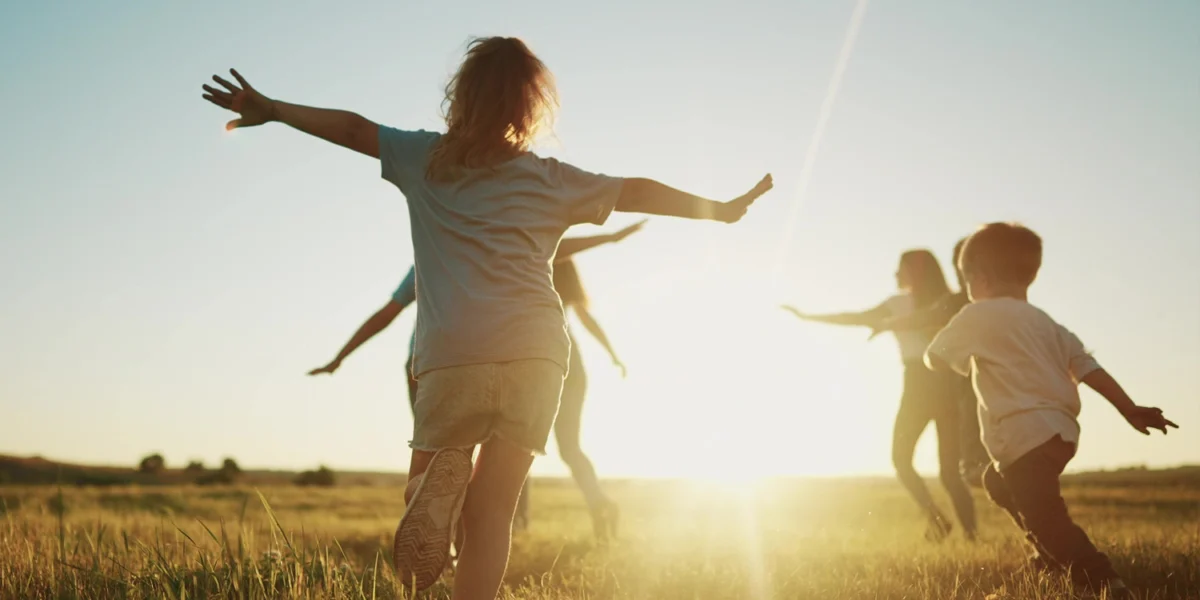
A landmark study published in the Journal of Environmental Psychology suggests that the modern impulse to shield children from all physical risk may be inadvertently hindering their ability to manage real-world hazards. The research, which utilized immersive virtual reality (VR) to simulate dangerous scenarios, provides empirical evidence that children who engage in "risky play" develop superior risk management skills. These children demonstrate a heightened ability to navigate high-consequence environments, such as busy urban intersections, with greater speed and efficiency without compromising their personal safety.
The findings challenge decades of parenting norms and institutional policies that have prioritized the elimination of all potential injuries. Instead, the study suggests that the "perception-action loop"—a continuous cycle of observing a challenge and taking physical action—is a critical component of childhood development. By testing their physical limits on the playground, children appear to build a mental and physical toolkit that transfers to practical, non-play safety skills.
Redefining Childhood Safety through Managed Risk
Risky play is defined by experts as thrilling and exciting activities that involve a risk of physical injury. This includes climbing to great heights, experiencing high speeds on bikes or swings, using potentially dangerous tools like hammers or knives, or playing near elements like water or fire. It also encompasses "independent mobility," where children are permitted to explore their neighborhoods without direct adult supervision.
While these activities often trigger anxiety in caregivers, developmental psychologists argue they are essential for fostering resilience, physical coordination, and emotional regulation. Mariana Brussoni, a professor at the University of British Columbia’s department of pediatrics and a lead researcher on the study, posits that keeping children safe actually requires letting them take risks. According to Brussoni, risky play is a fundamental mechanism through which children learn about the world and, crucially, about their own physical capabilities and limits.
The research identifies a "dynamic risk management model" that children employ when facing physical challenges. This model consists of three distinct stages:
- Risk Willingness: An emotional process driven by a child’s natural curiosity and desire for challenge.
- Risk Assessment: A cognitive process where the child evaluates the environment and the potential for danger.
- Risk Handling: The physical execution of movements required to navigate the challenge safely.
The Mechanics of Risk: Virtual Reality as a Research Gateway
To investigate these behaviors without exposing participants to actual harm, the international research team—comprising scientists from the University of British Columbia, Queen Maud University College in Norway, and Colorado State University—turned to cutting-edge technology. The ViRMa project at Queen Maud University College developed a virtual reality platform that allowed children to explore hazardous environments in a controlled, simulated setting.
The ethical constraints of pediatric research have historically made it difficult to study how children react to genuine danger. As Brussoni noted, no ethics board would allow researchers to place children in live traffic to observe their decision-making. VR provided a solution, offering a realistic environment that 85 percent of the participants reported felt authentic.
The study involved 424 children between the ages of seven and eleven. The cohort included 361 children from Norway and 63 from Canada. This cross-national approach allowed researchers to examine how different cultural attitudes toward independence and risk-taking influence a child’s development. In Norway, national education policies and cultural traditions like "friluftsliv" (open-air life) encourage outdoor independence. In contrast, Canadian and broader North American childhoods are often characterized by more restricted, supervised play environments.
The Experimental Framework: Playground vs. Pedestrian Safety
Each participant completed two distinct VR tasks while wearing a headset and moving within a physical gymnasium to ensure their movements matched the virtual space.
Task One: The Virtual Playground
This scenario was designed to measure "risk willingness." Children explored a structure composed of balance beams and freestanding pillars. The height of the structures varied, reaching up to 1.5 meters. Researchers tracked several metrics, including the speed of movement, the time spent on elevated sections, and the frequency of ventures onto unstable pillars. If a child lost their balance and "fell" in the simulation, it was recorded as a play failure.
Task Two: The Urban Intersection
The second task shifted from play to a practical safety scenario. Children were required to cross a virtual bicycle path and a street with oncoming traffic. The vehicles moved at a consistent speed of five meters per second. To simulate real-world decision-making, traffic density was initially high and gradually decreased, meaning the safest choice was often to wait. Researchers measured "assessment time"—the duration a child spent evaluating the traffic before stepping out—and recorded any "collisions" or "near-misses" (defined as crossing within 0.8 seconds of a vehicle).
Statistical Findings: Efficiency without Endangerment
The data revealed a clear correlation between playground behavior and pedestrian safety. Norwegian children, who grow up in a culture that prizes outdoor risk, showed significantly higher risk willingness than their Canadian counterparts. Across the entire sample, boys and older children also tended to be more willing to take physical chances.
The most striking finding, however, was the transfer of skills between the two environments. Children who exhibited high risk willingness on the virtual playground were significantly faster at making decisions in the traffic scenario. On average, the most risk-willing children spent 68 seconds less evaluating traffic than the most risk-averse children.
Crucially, this speed did not come at the cost of safety. The researchers found no association between high risk willingness and an increase in collisions or near-misses. Instead, the children who took more risks during play appeared to process environmental "affordances"—the physical opportunities for action provided by a space—more efficiently. They were able to read the situation, identify a safe gap in traffic, and execute the crossing more decisively than their more cautious peers.
The Role of Failure in Cognitive Development
The study also highlighted the developmental value of "play failure." Approximately 21 percent of the children experienced a simulated fall during the playground task. Statistical modeling showed that for every unit increase in a child’s risk-willingness score, the odds of a fall increased by 78 percent.
While a fall is technically a failure, researchers argue it is a vital learning experience. Through the "perception-action loop," stumbling and trying again allows children to refine their mental map of what they can and cannot do. This trial-and-error process is essential for developing accurate self-assessment. A child who never falls may never learn the precise boundaries of their physical reach or balance, potentially leaving them less prepared for high-stakes situations where a lack of confidence or a slow reaction could be dangerous.
Cultural and Policy Implications
The research suggests that the "safety-first" architecture of modern childhood may be reaching a point of diminishing returns. By removing all "manageable" risks from playgrounds—such as lowering the height of climbing frames or removing seesaws—policymakers may be depriving children of the very experiences they need to stay safe in the unmanaged world.
The contrast between the Norwegian and Canadian samples underscores the impact of cultural policy. Norwegian society tends to view children as capable actors, whereas North American perspectives often lean toward a "protectionist" model. The study’s authors suggest that communities should strive to make play spaces "as safe as necessary" rather than "as safe as possible." This involves creating natural, creative environments that offer varied challenges rather than standardized equipment that children quickly outgrow.
For parents, Brussoni recommends a shift in intervention tactics. She suggests providing children with "time, space, and freedom"—the three essential ingredients for risky play. To help parents resist the urge to over-supervise, she proposes the "17-second rule": when a child is engaged in a risky activity, the parent should count to 17 before intervening or saying "be careful." This pause allows the parent’s initial fear response to subside and gives the child a window to solve the problem independently.
Limitations and Future Research Directions
Despite the robust findings, the researchers noted several limitations. While the VR environments were rated as highly realistic, they cannot perfectly replicate the sensory complexity and physical consequences of the real world. Additionally, the Canadian sample was recruited from a school that specifically emphasizes outdoor play, meaning the gap between "typical" Canadian children and Norwegian children might actually be wider than recorded.
Furthermore, the current VR setup did not accommodate children with physical disabilities or those who use mobility aids, limiting the generalizability of the results to the entire pediatric population. Future studies will need to adapt these virtual environments to be more inclusive.
The research team hopes to expand their work to include a wider variety of cultural groups and physical scenarios. There is also interest in developing wearable technology to track children’s movements in real-world settings to verify if the "efficiency" observed in VR translates directly to the asphalt of a real city street.
The study concludes that risk is not something to be eliminated, but rather a language that children must learn to speak. By allowing children the freedom to climb higher, run faster, and occasionally fall, society may be equipping them with the cognitive and physical agility necessary to navigate an increasingly complex and unpredictable world.