Jono Maryono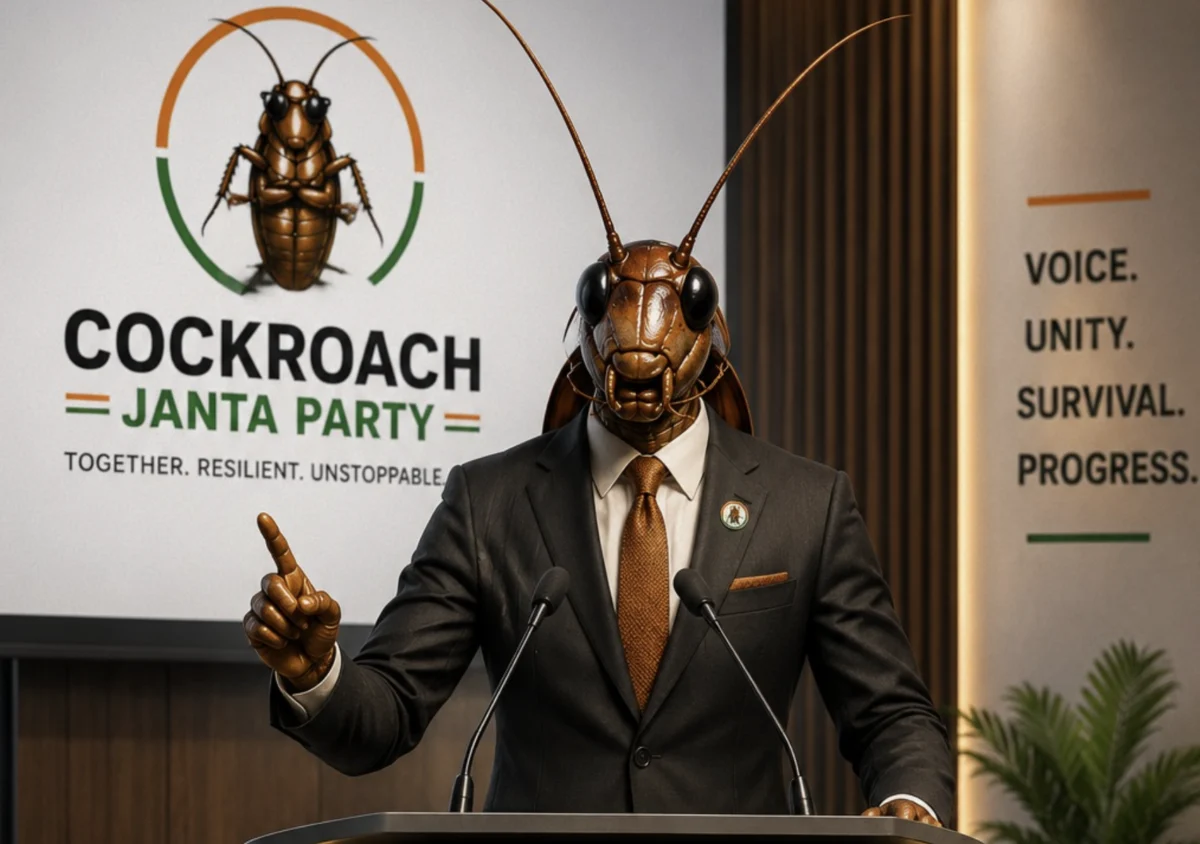
New Delhi, India – Abhijeet Dipke, a recent public relations graduate from Boston University, has found himself at the unexpected epicenter of a burgeoning satirical political movement, the Cockroach Janta Party. What began as a fleeting social media jest has rapidly transformed into a significant online phenomenon, attracting thousands of new adherents daily. This surge in participation is a direct response to remarks made by India’s Chief Justice of the Supreme Court, Surya Kant, during an open court hearing, which drew widespread criticism from a generation grappling with persistent unemployment, economic hardship, and societal divisions.
The catalyst for this movement emerged on Friday when Chief Justice Surya Kant, while presiding over a hearing, referred to certain individuals as "parasites" and drew an analogy between them and "cockroaches." He stated, "There are youngsters like cockroaches, who don’t get any employment or have any place in the profession. Some of them become media, some of them become social media, RTI activists and other activists, and they start attacking everyone." This statement, made in the context of what the Chief Justice later clarified as a concern about individuals acquiring fraudulent degrees, ignited a firestorm of outrage across India, particularly among the youth.
The Chief Justice’s office subsequently issued a clarification, emphasizing that his comments were not intended to disparage the nation’s youth, whom he described as "the pillars of a developed India." However, for many young Indians, the initial remarks struck a deeply sensitive chord. The country is currently navigating a complex socio-economic landscape characterized by significant unemployment rates among graduates, escalating inflation, and a deeply polarized political climate under Prime Minister Narendra Modi’s Hindu nationalist government, now in its twelfth year.
In the wake of the public outcry, Dipke, a 30-year-old who had recently returned from his studies in the United States, posted a provocative question on the social media platform X (formerly Twitter) on Saturday: "What if all cockroaches come together?" This question, posed with a blend of sardonic wit and palpable frustration, quickly resonated with a vast online audience. It marked the genesis of the Cockroach Janta Party, a satirical entity deliberately conceived as a playful jab at the ruling Bharatiya Janata Party (BJP). Dipke swiftly established dedicated social media accounts on Instagram and X, alongside a website, to formalize the nascent movement.
"Those in power think citizens are cockroaches and parasites," Dipke stated in a recent interview, articulating the sentiment that fueled his initiative. "They should know that cockroaches breed in rotten places. That’s what India is today." This sentiment encapsulates a broader disillusionment felt by many young Indians who perceive a growing disconnect between the aspirations of the populace and the pronouncements of those in authority.
A Rapidly Growing Digital Uprising
The Cockroach Janta Party’s online presence has exploded in popularity within a remarkably short timeframe. Its Instagram account has amassed over 3 million followers in just three days, while more than 350,000 individuals have registered as members through a simple Google form. The party’s rapid expansion highlights a significant public appetite for unconventional forms of political expression and a desire to voice grievances in a landscape where traditional avenues often feel stifled.
The appeal of the Cockroach Janta Party extends beyond the general public, attracting attention from established figures within the political sphere. Notable individuals who have registered for membership include Mahua Moitra, a prominent opposition parliamentarian from West Bengal, and Kirti Azad, a former parliamentarian from Bihar. Their participation underscores the broad-based dissatisfaction that the party’s satirical message has tapped into.
Ashish Joshi, a retired Indian bureaucrat who previously served in federal service, was among the early signatories. He shared his motivation for joining, stating, "In the last decade, there has been a lot of fear in the country. And people are scared to speak." Joshi’s comments reflect a widely held perception of a crackdown on dissent under the current government, contributing to an atmosphere where open criticism is often met with apprehension. He further elaborated, "India has become so hateful that the Cockroach Janta Party is like a breath of fresh air."
Joshi also offered a nuanced interpretation of the Chief Justice’s "cockroach" analogy, pointing out the inherent resilience of these insects. "Cockroaches are resilient insects; they survive. And apparently they can form a party and crawl over your system," he observed, suggesting that the perceived weakness of the youth might, in fact, be their strength.
The Echoes of Gen Z Discontent in South Asia
The emergence of the Cockroach Janta Party occurs against a backdrop of significant youth-led political activism across South Asia. In recent years, countries like Sri Lanka, Nepal, and Bangladesh have witnessed historic Gen Z-driven protests that have led to substantial political upheaval, including the toppling of governments. India, as the world’s most populous nation, faces its own set of escalating challenges that are contributing to widespread discontent.
Despite experiencing substantial economic growth, India is grappling with widening income inequality, persistent unemployment, and a soaring cost of living. Each year, India produces over eight million graduates, yet the unemployment rate among this demographic stands at a stark 29.1 percent – a figure nine times higher than for individuals with no formal education. Compounding this issue, more than a quarter of India’s population belongs to the Gen Z demographic, making it the largest such cohort globally. This demographic reality amplifies the impact of the Chief Justice’s remarks, as a significant portion of the population feels directly addressed by the critique.

The timing of Chief Justice Kant’s comments was particularly sensitive, coinciding with a week marked by nationwide protests by young students. These demonstrations were triggered by the leak of an examination paper for a crucial government-run medical entrance test, leading to its cancellation and further exacerbating the anxieties of aspiring students.
Prashant Bhushan, a distinguished lawyer at India’s Supreme Court and a human rights activist, commented on the broader implications of the Chief Justice’s statements. He described them as reflecting "deep-rooted prejudice and antipathy towards activists and youth in general." Bhushan further drew a parallel between the remarks and the prevailing "mentality of this present government," suggesting a systemic issue rather than an isolated incident.
Bhushan has long advocated for a youth-led resurgence in India, arguing that the nation’s "economy and society are bleeding for the benefit of crony capitalists like Ambani and Adani," referring to prominent Indian billionaires often perceived as having close ties to Prime Minister Modi. The public’s response to the Chief Justice’s remarks, channeled through the Cockroach Janta Party, can therefore be interpreted as a manifestation of this frustration.
The controversy surrounding the Chief Justice’s comments also emerged during a challenging period for Indian diplomacy. Indian diplomats faced scrutiny from the Norwegian press following Prime Minister Modi’s decision to avoid direct questions from journalists during his tour of the European country. This avoidance of press interactions has been a consistent pattern since the BJP came to power in 2014, with the Prime Minister typically engaging in carefully managed interviews with sympathetic media outlets.
"Some people connect with satire – like is the case with the Cockroach Janta Party – because it’s funny, while others connect because they are frustrated," Bhushan observed. "People are finally asking questions and demanding accountability." He expressed that while he would have personally joined the party, his current professional standing renders him ineligible.
The Manifesto of the Unemployed and Online
The Cockroach Janta Party has established a playful yet pointed set of eligibility criteria for its members: one must be unemployed, lazy, chronically online, and possess the ability to rant professionally. Its motto on X encapsulates its satirical ethos: "A political front of the youth, by the youth, for the youth. Secular – Socialist – Democratic – Lazy." On Instagram, the party defines itself as "a union of lazy, unemployed cockroaches," actively inviting Gen Z allies to join its ranks.
The party’s manifesto, crafted with a sharp, edgy tone, directly addresses critical issues facing contemporary India. These include allegations of voter manipulation against the Modi government, concerns about a largely pliant corporate media landscape, and the controversial practice of appointing retired judges to government positions.
Abhijeet Dipke demonstrated remarkable agility in launching the online party, reportedly building its digital infrastructure and manifesto within 24 hours of his initial post. He leveraged advanced AI tools, including Claude and ChatGPT, to assist in designing the party’s visual identity and drafting its platform. This approach aligns with a global tradition of countercultural political movements that employ satire, absurdity, and performance art to challenge established political norms.
Meghnad S., a prominent YouTuber who hosted Dipke for a livestream to discuss the newly formed party, noted the organic and overwhelming response to the initiative. "The joke has taken a life of its own," he remarked, describing how he has been inundated with messages from Gen Z users seeking guidance on how to advance the movement.
"There is an overwhelming sense that people are looking for alternative political formations, not necessarily political parties, but political experiments that are not traditional," Meghnad elaborated. He further posited that the Cockroach Janta Party, despite being satirical and non-existent, has managed to capture the public imagination because "people believe that it is a better alternative to reality. That’s kind of a giant commentary on Indian political parties in general."
Meghnad admitted that his initial engagement with the party was rooted in its humor. However, he also acknowledged a deeper connection, stating, "But, at a very deeper level, I’m also experiencing the same frustration that this joke party has been born out of."
For Dipke, the creator of this viral phenomenon, the joke has evolved into a significant undertaking. He has been foregoing sleep to maintain the momentum, organizing social media campaigns focused on current political issues. "For too long, people have been quiet in India," he asserted. "There is a responsibility to take this moment and not laugh it off." His dedication underscores the transformation of a casual online jest into a platform for genuine political expression and a catalyst for dialogue in a nation grappling with profound social and economic challenges. The Cockroach Janta Party, born from a judicial remark and amplified by digital connectivity, stands as a potent symbol of a generation seeking a voice and demanding accountability in contemporary India.