Kang Muslim
Political ideologies now permeate nearly every aspect of human life, extending far beyond the simple act of casting a ballot. Recent psychological and demographic research suggests that a person’s partisan identity influences behaviors in the private sphere, from family planning to the interpretation of basic social cues. Our political affiliations now correlate with a vast spectrum of human experience, including how we perceive a simple smile and the number of children we choose to raise. At the same time, the institutions and platforms that facilitate public discourse are undergoing a period of rapid, technology-driven evolution. Elected officials increasingly leverage digital networks to broadcast high-arousal emotions like anger, while the general public finds itself struggling to distinguish between human political speech and text generated by sophisticated artificial intelligence.
As massive new datasets emerge, long-standing assumptions regarding race, education, and political independence are facing unprecedented scrutiny. A collection of nine recent peer-reviewed studies provides a comprehensive map of this shifting landscape, detailing how underlying psychological traits, changing demographics, and modern communication tools are actively rewriting the rules of civic engagement. Together, this body of research offers a granular look at the unseen forces guiding human behavior in an era defined by deep polarization and technological disruption.
The Great Realignment: Education as the New Ideological Fault Line
For decades, racial identity was considered the primary predictor of political alignment in the United States. However, an analysis of survey data spanning five presidential election cycles indicates that the fundamental dividing lines of American politics have shifted. Since 2008, ideological differences between racial groups have decreased sharply, while differences based on educational attainment have grown substantially.
This realignment is driven by two simultaneous trends. First, Black and Hispanic respondents have, on average, moved toward more conservative ideological positions. Second, individuals with a high school diploma or less have shifted toward conservatism across all racial demographics. Conversely, those with college and graduate degrees have become increasingly liberal. Utilizing data from the Cooperative Election Study—encompassing over 250,000 respondents—researchers measured positions on taxes, healthcare, and immigration. The findings suggest that the "diploma divide" has replaced the "racial divide" as the most prominent indicator of a voter’s place on the liberal-conservative spectrum.
Debunking the Moral Hierarchy: Family, Strangers, and the Moral Circle
A persistent narrative in social media discourse has suggested that political liberals prioritize the well-being of strangers and animals over their own families—a concept often referred to as an "inverted moral hierarchy." However, new psychological research has debunked this claim. While liberals do tend to extend their moral concern further outward to include marginalized groups and the environment, they do not do so at the expense of their inner circle.
Psychologists use the concept of a "moral circle" to describe the boundary of who an individual considers worthy of ethical care. In studies requiring participants to allocate "moral concern points" among groups ranging from immediate family to all sentient beings, results were consistent across the political spectrum. Both conservatives and liberals placed their family and friends at the absolute peak of their moral hierarchy. The distinction lies in the radius of the circle: liberals exhibit a larger overall circle of concern, but the prioritization of intimate relationships remains a universal human trait regardless of partisan leaning.
The Digital Outrage Economy: Congressional Communication on Social Media
The tone of political discourse in the United States has become notably more hostile, particularly on digital platforms. A study analyzing over 2.2 million official posts from members of the U.S. Congress reveals that this rise in outrage is not symmetrical. Democratic lawmakers are disproportionately driving the escalation of angry rhetoric on social media.
Using computational textual analysis to scan millions of posts for emotional tones associated with indignation, researchers found that while both parties use anger to capture attention, the trend is more pronounced among Democrats. This behavior is largely incentivized by the "outrage economy" of social media platforms; high-arousal emotions like anger generate significantly higher user engagement, likes, and shares. For modern politicians, broadcasting anger has become a primary tool for brand-building and reaching a wider audience, even if it contributes to a more polarized public square.
The Authenticity Paradox: AI vs. Human Political Speech
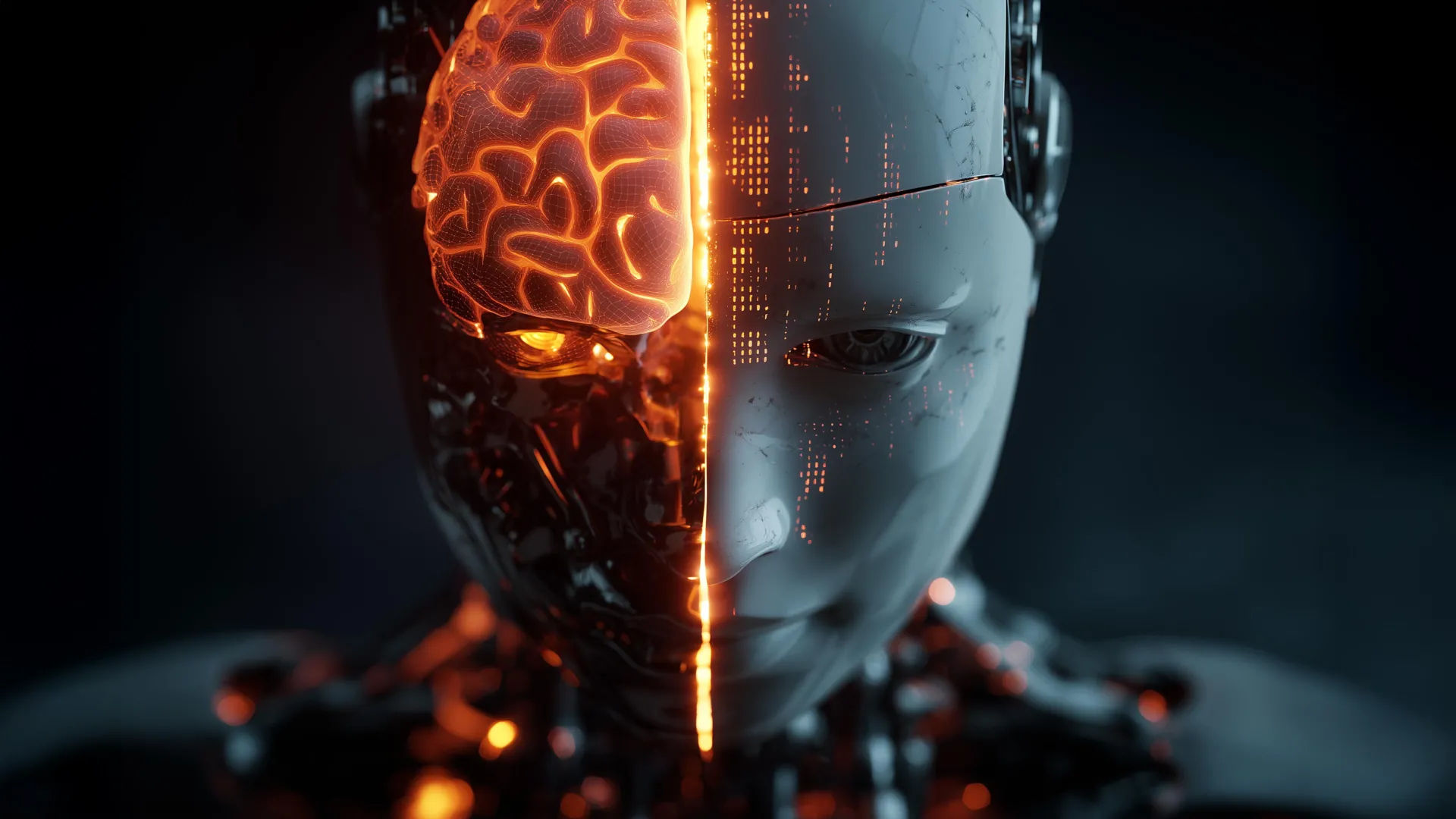
As generative artificial intelligence becomes more sophisticated, its ability to mimic human communication has reached a critical threshold. In a recent study involving 948 British adults, researchers found that voters often find AI-generated debate answers more authentic and coherent than the actual responses provided by politicians.
The study used an AI model to generate responses to audience questions from a televised political debate, instructing the software to roleplay as specific public figures. When presented with transcripts of both real and fake answers, participants consistently rated the machine-generated text as more relevant and "on-topic." While real politicians frequently used "pivoting" techniques to dodge difficult questions, the AI provided direct, structured responses. This "authenticity paradox" suggests that AI could be used to create highly believable misinformation, as the public may find the polished, direct nature of synthetic speech more appealing than the often-evasive nature of traditional political rhetoric.
Reevaluating the Independent Voter: Beyond Apathy and Stigma
Political independents constitute the largest segment of the American electorate, yet they are often misunderstood. Historical theories have characterized them as either apathetic citizens or "closet partisans" who hide their true leanings to avoid social friction. However, an analysis of over seven million data points from a massive administrative voter database tells a different story.
The data reveals that well over half of independent voters are genuinely moderate in their beliefs. Far from being apathetic, these individuals often place a high value on a flexible political identity that avoids strict partisan labels. National surveys indicate that the public views independents as a bridge-building cohort, and the voters themselves see their lack of affiliation as a deliberate choice for better, more nuanced representation. This suggests that the independent bloc is an active and distinct segment of the public that feels underserved by the current two-party system.
The Ideological Fertility Gap: Politics and Population Growth
Demographic data now shows a stark link between political beliefs and birth rates. Since the mid-1940s, a significant divergence has emerged: while conservative Americans continue to have children at rates near the replacement level (approximately 2.1 children per woman), birth rates among left-leaning Americans have plummeted.
Analyzing data from the General Social Survey (1970–2022) involving 23,000 adults, researchers found that for the cohort born in the early 20th century, politics had no bearing on family size. However, in more recent decades, right-wing individuals have maintained historical birth averages while left-wing birth rates have fallen well below the level needed to sustain a population without immigration. This fertility gap is now a primary driver of the overall decline in U.S. birth rates and suggests that the future electorate may be shaped significantly by the differing reproductive choices of today’s partisans.
The Psychological Bridge: Authoritarianism and Dark Personalities
Recent research into the "dark factor" of personality—a cluster of traits including narcissism, psychopathy, and sadism—has found a surprising link to political ideology. Individuals with these antagonistic traits often use right-wing authoritarianism as a psychological bridge to express their tendencies in a socially acceptable manner.
Right-wing authoritarianism centers on strict obedience to authority and the desire to punish those who break social rules. A survey of 498 adults found that individuals with "dark" personalities often report high levels of self-control through their adherence to these rigid, punitive beliefs. By championing "law and order" and strict traditionalism, these individuals can channel their underlying hostility and desire for dominance through a framework of disciplined rule-following.
The Perception of Social Cues: Politics and the Meaning of a Smile
Even the most basic human interactions are filtered through a political lens. Research conducted leading up to the 2024 presidential election suggests that a person’s party identity influences how they interpret a smile. While smiles can signal bonding and reward, they can also be used to assert dominance or signal a place in a social hierarchy.
The study found that identifying as a Republican was the strongest predictor of viewing a smile as a "play for power." Republicans were significantly more likely than non-Republicans to endorse "hierarchy management" as a primary reason for smiling. Researchers suggest that this may stem from growing up in close-knit, uniform communities where social order and hierarchy are more clearly defined and prioritized than in more diverse or transient social environments.
The College Effect: Identity vs. Ideology
A common point of contention in American public life is the role of higher education in shaping political views. While college graduates have certainly become more liberal since 2012, the "indoctrination" effect may be overstated. A study of 360,000 undergraduates found that the vast majority of students do not change their political identity during their four years of study.
The research distinguishes between "issue-based ideology" (views on specific policies) and "identity-based ideology" (the labels people use for themselves). While college graduates are more likely to adopt the "liberal" label, the actual shift in their views during their time on campus is minimal. Interestingly, the general public believes that college students’ identities change twice as much as they actually do, suggesting that the "diploma divide" is more a result of who chooses to go to college—and the social environment therein—than a radical transformation of student beliefs by faculty.
Broader Impact and Implications for Civic Engagement
The cumulative findings of these studies point toward an American electorate that is more psychologically and demographically stratified than at any point in recent history. The shift from race-based to education-based polarization suggests a new form of class struggle centered on credentials and cultural values. Meanwhile, the rise of AI and the "outrage economy" on social media pose significant challenges to the quality of public discourse, potentially rewarding "authentic" machines and angry partisans over nuanced human leadership.
As the ideological fertility gap persists and the independent moderate bloc remains underserved, the fundamental structure of the American family and the two-party system may face long-term instability. Understanding these unseen forces—the psychological bridges, the moral circles, and the digital incentives—is essential for navigating a future where the personal has not only become political but where the political has become deeply embedded in the very fabric of human psychology and biological choice.