
 Reynand Wu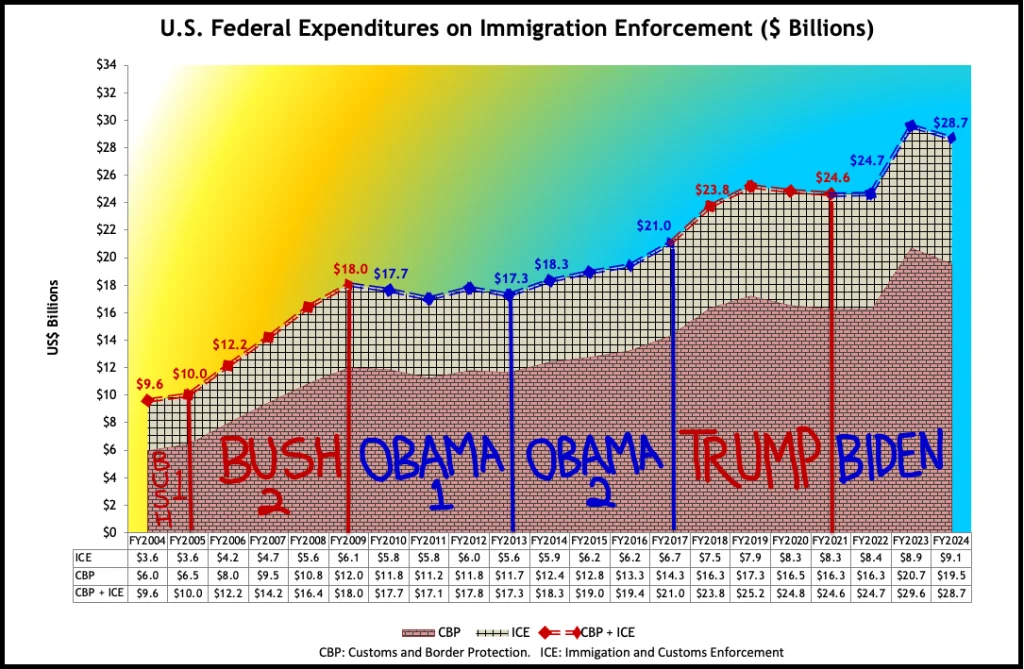
State borders, often perceived as immutable geographic features, are in fact dynamic constructs, products of intricate political conflicts, fervent nationalist discourses, and deeply unequal economic systems. Critically, as recent analysis highlights, their establishment and maintenance are underpinned by colossal public financial investments. Public policy and prevailing political narratives frequently serve to naturalize these boundaries, obscuring their often arbitrary and violent origins. Beyond simply delineating territory following war or conflict, state borders perform vital social functions, distinguishing political systems, and rigorously separating "insiders" from "outsiders." Economically, these borders are instruments of difference, sustaining unequal trade relations, distinct national currencies, and disparate value regimes across states and regional zones.
The Post-9/11 Transformation: Securitization and the Rise of a Border Apparatus
The landscape of U.S. border policy underwent a profound transformation in the aftermath of the September 11, 2001, terrorist attacks. In this new era, U.S. state officials strategically intertwined the discourse of anti-terrorism with that of border regulation, initiating a rapid and unprecedented securitization of the U.S.-Mexico border. This pivotal shift culminated in the creation of the Department of Homeland Security (DHS) through the Homeland Security Act of 2002, a landmark piece of legislation signed into law by President George W. Bush.
Under the expansive umbrella of DHS, two key agencies emerged as central pillars of this new enforcement paradigm: U.S. Customs and Border Protection (CBP) and U.S. Immigration and Customs Enforcement (ICE). These agencies were explicitly tasked with apprehending, detaining, and deporting immigrants. CBP, proclaiming itself "one of the world’s largest law enforcement organizations" (CBP, 2020), articulates its primary mission as "to detect and prevent the illegal entry of individuals into the United States" and to "maintain borders that work" (CBP, 2021). Similarly, ICE states its mission as protecting "America from the cross-border crime and illegal immigration that threaten national security and public safety" (ICE, 2022). This institutional restructuring laid the groundwork for a dramatic escalation in federal spending and operational scope related to border security and immigration enforcement.
A Visual of Expenditure: The Border as a Budget
A compelling data visualization, conceptualized as a fenced border wall, starkly illustrates the trends in federal spending on immigration enforcement and border security. In this representation, the brick wall symbolizes the annual budget of CBP, while the fence atop it signifies the annual budget of ICE. Graffitied sections on the wall demarcate the six presidential terms since 2002: Bush 1, Bush 2, Obama 1, Obama 2, Trump, and Biden. The red and blue barbed wire above represents the combined annual budgets for both CBP and ICE, with red sections indicating budgets approved under Republican presidents and blue sections under Democratic presidents. Numeric labels positioned above the barbed wire highlight the total combined budget for CBP and ICE at the beginning and end of each presidential term, offering a clear temporal progression of financial commitment.
The Bipartisan Consensus: Rhetoric Versus Reality
Despite pronounced rhetorical differences in immigration policy between the two major political parties – with Democrats often articulating a more pro-immigrant stance compared to their Republican counterparts – the budgetary reality reveals a striking bipartisan consensus on funding border policing. The data provides a powerful counter-narrative to the political performativity of partisan distinctions, demonstrating that in practice, Democratic presidents have shown no less enthusiasm than their Republican counterparts in allocating substantial funds to border enforcement.
Over a 21-year period, from Fiscal Year 2004 to Fiscal Year 2024, both Democratic and Republican administrations collectively spent a staggering $409.4 billion of public funds on immigration enforcement. Republican presidents accounted for $178.9 billion of this total, averaging an annual expenditure of $17.9 billion. Democratic presidents, however, allocated an even greater sum, spending $230.5 billion, which averages to $21.0 billion annually. Breaking down these figures further, $275 billion was directed towards CBP, while $134.4 billion was allocated to ICE. Overall, federal expenditures on immigration enforcement have nearly tripled in unadjusted dollars, soaring from $9.6 billion in FY2004 to an estimated $28.7 billion in FY2024. Even when adjusted for inflation to 2024 dollars, this represents a significant increase from approximately $17.5 billion to $28.7 billion, underscoring a consistent and substantial upward trajectory in funding.
Chronology of Escalation: Key Milestones in Border Securitization
The journey towards the current state of border securitization has been marked by a series of legislative actions, technological advancements, and policy shifts:
- 2002: Homeland Security Act: Consolidated 22 federal agencies, including the Immigration and Naturalization Service (INS), into the new DHS. This dissolved the dual enforcement/service role of INS, separating enforcement functions into CBP and ICE.
- 2005: REAL ID Act: Established minimum security standards for state-issued driver’s licenses and identification cards and removed judicial review for the waiver of laws necessary to construct border barriers.
- 2006: Secure Fence Act: Mandated the construction of hundreds of miles of physical barriers along the U.S.-Mexico border, alongside increased surveillance technology. This was a direct response to perceived security gaps.
- 2008: Establishment of the ‘Consequence Delivery System’: A DHS strategy aimed at deterring repeat illegal crossings by implementing stricter penalties and more rigorous processing.
- Obama Administration (2009-2017): Despite initial promises of comprehensive immigration reform, the Obama administration oversaw record deportations, earning him the moniker "deporter-in-chief" from some critics. Investments in drone technology and virtual fences also significantly increased.
- Trump Administration (2017-2021): Prioritized the construction of a "big, beautiful wall" along the U.S.-Mexico border, initiating emergency declarations to divert funds for its construction. Policies like "zero tolerance" and family separation at the border drew widespread international condemnation.
- Biden Administration (2021-Present): While initially halting some border wall construction, the administration has faced immense pressure from rising migrant encounters. In October 2023, President Joe Biden’s administration controversially waived 26 federal laws – including the National Environmental Policy Act, the Clean Air Act, and the Safe Drinking Water Act – to expedite the construction of a border wall in Starr County, Texas. This move, echoing his Republican predecessor Donald Trump’s tactics, highlighted the persistent political challenges and perceived necessities driving border enforcement, particularly in the lead-up to the 2024 presidential election.
Supporting Data: Beyond the Billions
The sheer financial investment translates into a vast operational infrastructure. CBP alone employs over 60,000 personnel, including more than 20,000 Border Patrol agents, making it the largest law enforcement agency in the United States. ICE also commands a significant force, with thousands of agents deployed across various units.
Beyond personnel, the budgets fund:
- Technology: Drones, surveillance towers, ground sensors, biometric identification systems, license plate readers, and advanced data analytics.
- Infrastructure: Physical barriers (walls, fences), roads for patrol access, forward operating bases, and communication networks.
- Detention and Deportation: The sprawling network of immigration detention centers, which are often operated by private contractors, and the logistical costs associated with transporting and deporting individuals. In recent years, annual spending on immigration detention alone has regularly exceeded $2 billion.
- Operational Costs: Fuel for vehicles and aircraft, training, legal services, and administrative overhead.
The concept of a "border industrial complex" has emerged to describe the intertwining of government agencies, private corporations, and political interests that profit from increased border enforcement, influencing policy decisions and perpetuating demand for security technologies and services.
Official Responses and Political Nuances
Official statements from DHS, CBP, and ICE consistently frame their operations as essential for national security, public safety, and maintaining the rule of law. They emphasize the need to combat drug trafficking, human smuggling, and potential terrorist threats.
Politically, the divergence in rhetoric remains stark. Democrats frequently advocate for "comprehensive immigration reform" that includes pathways to citizenship, addressing root causes of migration, and prioritizing humanitarian concerns. They often criticize the harshness of certain enforcement tactics and the separation of families. Republicans, conversely, typically emphasize "border security first," advocating for increased physical barriers, more agents, and stricter enforcement measures, often linking uncontrolled borders to national security vulnerabilities and economic strain.
However, the budgetary figures expose a deeper, more complex reality. While Democratic politicians may express sympathy for immigrants and advocate for more humane policies, their administrations have consistently maintained or increased funding for the very agencies responsible for apprehension, detention, and deportation. This dichotomy suggests that electoral pressures, perceived national security imperatives, and the entrenched institutional momentum of the border security apparatus often override stated policy preferences.
Broader Impact and Implications
The immense financial investment in border enforcement carries significant and far-reaching implications:
- Humanitarian Crisis: The militarization of the border has pushed migrants into more dangerous routes, leading to a tragic increase in deaths from exposure, dehydration, and drowning. Detention practices continue to draw criticism from human rights organizations regarding conditions, medical care, and the prolonged incarceration of asylum seekers. Family separation, though officially ended, has left lasting trauma on thousands.
- Economic Impact: While proponents argue that border security protects national jobs and resources, critics contend that the massive expenditures could be better utilized for economic development, education, or infrastructure within the country. The economic contributions of undocumented immigrants, particularly in sectors like agriculture and construction, are also a significant factor often overlooked in enforcement discussions. The "taxpayer burden" argument often fails to account for the taxes paid by undocumented individuals and their consumption of goods and services.
- Civil Liberties and Border Communities: Increased surveillance and law enforcement presence can lead to concerns about civil liberties, particularly in border regions where constitutional protections are sometimes perceived to be diluted. Communities along the border often grapple with the social and economic impacts of heightened enforcement.
- Geopolitical Relations: U.S. border policies have significant implications for diplomatic relations, particularly with Mexico and Central American countries. The U.S. often leverages foreign aid and economic agreements to encourage these nations to curb migration flows, effectively externalizing border enforcement.
- The "Contradictions of Bourgeois Liberal Democracy": The discrepancy between political rhetoric and policy outcomes can be attributed, as Dr. Ghazah Abbasi suggests, to the fundamental contradictions inherent in bourgeois liberal democracy. While elected representatives theoretically represent the will of the working populace, in practice, they often navigate and sometimes capitulate to the powerful interests of ruling economic, political, and racial elites. These elites may benefit from a secure, yet permeable, border that allows for a flexible labor pool while maintaining an enforced hierarchy.
- Future Outlook: The trajectory of increasing border enforcement spending appears deeply entrenched. Substantive progress towards de-carcerating the United States and de-securitizing the U.S.-Mexico border would likely necessitate a significant shift in political power, particularly if progressive forces were to gain greater influence in Congress and exercise more direct control over budgetary allocations and immigration enforcement policies. However, in the current political climate, such a shift remains challenging. The Biden administration’s decision to waive federal regulations for border wall construction, mirroring the actions of its Republican predecessor, underscores the potent political pressures that can override ideological commitments, leading to the perpetuation of anti-immigrant violence and policies in the absence of a robust progressive agenda. As global climate change and political instability continue to drive migration, the pressures on borders and the associated financial outlays are only likely to intensify.









