Ana Megawati
In the hallowed, often darkened, screening rooms of Cannes, a peculiar and unsettling vision of cinema’s future flickered to life this past week. The inaugural World AI Film Festival (WAIFF) marked a significant, if controversial, moment, showcasing creations ranging from the surreal – men manifesting fish scales and seaweed, heroines with externally beating hearts – to the epic, featuring AI-generated armies on battlefields that would make legendary director David Lean blush. This digital spectacle unfolded mere days after the venerable Cannes Film Festival, celebrating its 76th year, emphatically banned emerging AI technology from its prestigious Palme d’Or competition, asserting that "AI imitates very well but it will never feel deep emotions." Yet, the very same Croisette that champions human artistry found itself hosting the burgeoning AI film movement, backed by significant investments from big-tech and a growing interest from Hollywood studios, heralding what many are calling a "nouvelle vague" – a new wave – of cinematic creation.
The Rise of AI in Cannes’ Shadow
The WAIFF, while distinct from the traditional Cannes Film Festival, strategically leveraged the global film hub’s prestige, establishing a parallel narrative about cinema’s evolution. Its presence underscored a growing tension within the industry: between the custodians of traditional filmmaking, who prioritize human authorship and emotional depth, and proponents of AI, who see it as a revolutionary tool for creativity and efficiency. The timing was no coincidence; by staging its event in Cannes, the WAIFF aimed to assert AI’s legitimacy and inevitability in the film landscape, even as the mainstream festival maintained a cautious, if not outright dismissive, stance.
This year’s festival, the second iteration after its inaugural run in Nice, demonstrated a remarkable surge in participation, receiving an astounding 5,000 AI-created film submissions, a five-fold increase from the previous year’s 1,000. This exponential growth highlights the rapid adoption and experimentation with AI tools by filmmakers globally, signaling a burgeoning ecosystem around this new form of media. The enthusiasm for AI-generated content is not merely academic; it reflects a tangible shift in how films can be conceived, produced, and distributed, particularly for independent creators and those operating with limited budgets.
A Glimpse into AI’s Cinematic Frontier
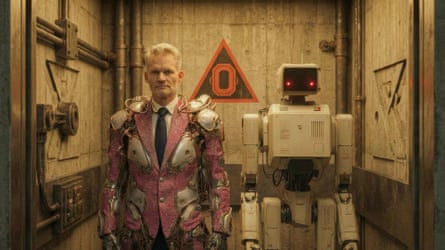
The films presented at WAIFF offered a stark contrast to the sun-drenched glamour typically associated with Cannes and its legendary figures like Brigitte Bardot or George Clooney. Instead, audiences were treated to a parade of "Blade Runner-ish" dystopias and feverish nightmares, reflecting broader societal anxieties about artificial intelligence itself. One notable entry depicted a man who amassed billions by selling the philosophical concept that "nothing matters," a narrative perhaps uniquely suited to the detached, often nihilistic aesthetic that AI can sometimes generate.
The experimental nature of these early AI films often translated into bizarre and sometimes unsettling experiences. Viewers witnessed perplexing narratives, such as a human being sucked into a launderette coin slot, a woman graphically slicing and devouring raw liver, and a lengthy historical piece featuring 19th-century French elite awkwardly animating from history book pages to recount the story of Napoleon III. While these concepts might sound avant-garde, their execution often lacked the nuanced emotional resonance and coherent storytelling typically found in human-directed cinema. This focus on the technically novel over the narratively compelling became a recurring criticism, with many AI directors prioritizing hyper-realistic flesh tones and razor-sharp shadows over the heart of a story.

A peculiar sub-trend that garnered both amusement and bewilderment was the proliferation of photorealistic animals engaging in human activities – bears lounging on sunbeds and pigs navigating golf carts. This particular quirk prompted one AI filmmaker to declare, perhaps half-jokingly, "That should be a rule – no pigs on golf carts," encapsulating the often-unforeseen and sometimes absurd outcomes of generative AI.
The Copyright Conundrum and Ethical Minefields
Perhaps the most contentious issue highlighted by WAIFF was the specter of copyright infringement. A short film featuring lead characters bearing an uncanny resemblance to Aardman Animation’s beloved, Oscar-winning Wallace and Gromit was controversially shortlisted for an award. This immediately raised eyebrows and drew a sharp rebuke from Mathieu Kassovitz, the acclaimed director of the 1995 gritty classic La Haine, who reacted with a succinct, "What the fuck?"
The WAIFF organizers, in response to the outcry, stated that their jury had indeed noticed "a strong resemblance to an existing work" and consequently "decided not to award or screen it." They reaffirmed their commitment, declaring, "The WAIFF is extremely committed to respecting copyright." However, this incident served as a potent reminder of the fundamental ethical and legal challenge facing AI-generated content. The underlying AI models that power these cinematic creations are trained on vast datasets comprising millions of hours of human-produced content – films, music, literature, and art – representing countless hours of careful and expensive human labor. The big tech companies developing and selling these AI tools are under increasing pressure to address issues of compensation and consent for the creators whose work forms the bedrock of AI’s "learning."
This debate extends beyond mere intellectual property; it delves into the very definition of authorship and fair use in the digital age. With lawsuits already being filed against AI companies by artists and writers, the WAIFF incident underscores the urgent need for robust legal frameworks and industry standards to govern the use of copyrighted material in AI training and output.
Industry Adoption and Economic Shifts
Despite the festival’s raw and experimental nature, the interest from mainstream Hollywood is undeniable. Big-name industry players, including directors Ron Howard and James Cameron, and actor Matthew McConaughey, have reportedly invested in AI technology. The chatter in the festival corridors suggested a future where the AI film festival could one day rival, or even overhaul, its "analogue" counterpart.
Hollywood studios are keenly observing AI’s potential to revolutionize production economics. Joanna Popper, an LA film and tech executive and one of the WAIFF judges, highlighted the appeal of AI for studios seeking "more shots on goal." She suggested that instead of committing to one colossal $200 million conventional film, studios might opt to produce several $50 million AI-driven or hybrid films. This shift could democratize access to filmmaking, allowing for greater creative experimentation and risk-taking, potentially leading to a more diverse range of cinematic outputs. Paramount, under the ownership of David Ellison (son of tech billionaire Larry Ellison), has explicitly stated that AI is poised to impact every facet of its business, from script development and pre-visualization to post-production and distribution.

This economic argument posits AI as a cost-reduction and efficiency tool, capable of generating complex visual effects, character animations, and even entire scenes at a fraction of the traditional cost and time. The experience of 22-year-old Swiss-Italian filmmaker Dario Cirrincione exemplifies this, whose poignant short film utilized AI to convey the disassociated feeling of dementia for a mere €500 (£433), a stark contrast to the estimated €20,000 it would have cost using conventional special effects.
Challenges and Criticisms: The Human Element
While the technological prowess of AI was on full display, the WAIFF also exposed its current limitations, particularly in areas traditionally defined by human creativity. The films, by and large, lacked humor, with AI actors seemingly unblessed with comic timing. The absence of genuine emotional depth and narrative heart was a recurring critique. For many viewers, the early output of AI cinema felt "uncanny" – visually impressive but emotionally hollow, a precise imitation lacking the subtle nuances and lived experience that human artists imbue into their work.
This points to a deeper philosophical question about the essence of cinema. If a film is, as Cannes president Iris Knobloch put it, "not an assembly of data; it is a personal vision," then what does an AI-generated film represent? Can algorithms replicate the suffering, love, and doubt that inform human storytelling? The WAIFF’s slogan, "New waves of creation," while aspirational, might have been more aptly phrased as "Just because you can, doesn’t mean you should," reflecting the qualitative gap between AI’s generative capabilities and its artistic profundity.
Voices from the Crossroads: Filmmakers’ Dilemma
The festival became a forum for filmmakers to grapple with these complex issues. Heavyweight figures like Gong Li, the Chinese superstar of Raise the Red Lantern, and Oscar-winning French director Claude Lelouch, known for 1966’s Un Homme et une Femme, were in attendance. Lelouch, an 88-year-old veteran who has worked across every film format from 8mm to 70mm, announced his intention to use AI for his 52nd film, exclaiming, "I’ve got my childhood back." This sentiment captures the excitement many artists feel about AI’s potential to liberate them from technical constraints and unlock new creative avenues.
However, this enthusiasm is tempered by the profound ethical and practical dilemmas. As Agnès Jaoui, the celebrated French actor who chaired the competition jury, articulated her conflicted position: "Ever since I accepted… everyone has been yelling at me. Are you validating AI?" Filmmakers find themselves in a paradoxical bind: they want to embrace methods that make filmmaking quicker, more expressive, and economical, yet they also demand recompense from the very Silicon Valley companies accused of appropriating their intellectual property to train the AI models that make these efficiencies possible.
Mathieu Kassovitz, despite his strong feelings about the Wallace and Gromit-like film, is actively making his next feature with AI and is opening an AI studio in Paris. His contradictory stance – "Fuck copyright" when discussing his own embrace of AI, but a promise to sue if anyone uses AI to do "stupid shit" with La Haine – perfectly illustrates the industry’s conflicted psyche.
The Clash of Paradigms: Traditional vs. Algorithmic
The juxtaposition of WAIFF with the traditional Cannes Film Festival highlights a fundamental philosophical clash. The mainstream festival’s ban on AI films from its Palme d’Or competition, rooted in the belief that AI cannot feel deep emotions, represents a defense of human artistry and the unique perspective of the individual creator. President Iris Knobloch’s assertion that "A film is not an assembly of data; it is a personal vision" encapsulates this traditionalist view.
Yet, this stance may prove to be a "vain last stand," as suggested by Marco Landi, the WAIFF founder and former Apple Europe executive. Landi’s warning resonates with the historical trajectory of technological disruption: "They can do what they want… But I would alert them: there’s a wave mounting and is becoming big. You have two solutions: stay there and the wave will destroy you or you start to ask what can I do with this wave." This frames the debate not as a choice between good and evil, but as an inevitable adaptation to a powerful, transformative force.
The closing ceremony of WAIFF inadvertently underscored this tension, with many festivalgoers noting the irony that one of the most compelling moments was an 80-piece human orchestra performing Ravel’s Boléro in front of a montage of human dancers. After hours of AI films, this vibrant display of human artistry served as a poignant reminder that, for all of AI’s advancements, the emotional depth and raw power of human expression remain unparalleled. It was a subtle yet powerful declaration: human art is not done yet.
Looking Ahead: An Unstoppable Wave?
The World AI Film Festival in Cannes was a nascent, imperfect, yet undeniably significant event. It provided a raw, unpolished glimpse into a future where artificial intelligence will play an increasingly central role in filmmaking. While the early cinematic output may be characterized by technical precision over narrative heart, and moments of baffling absurdity, the economic incentives and creative possibilities are too compelling for the industry to ignore.
The implications are far-reaching. AI could democratize filmmaking, reduce production costs, and allow for unprecedented visual spectacle. However, it also brings with it a host of challenges, including the displacement of human labor, the thorny issue of copyright, the potential for creative homogeneity, and a redefinition of what it means to be a "filmmaker." The debate between preserving the "soul" of human cinema and embracing the "wave" of AI innovation is far from over. As the technology matures and artists learn to wield it with greater intention and finesse, the "nouvelle vague" of AI cinema will undoubtedly continue to evolve, shaping the industry in ways we are only just beginning to comprehend. The question is no longer if AI will transform cinema, but how humanity will choose to navigate this powerful, disruptive, and often strange new frontier.