Ana Megawati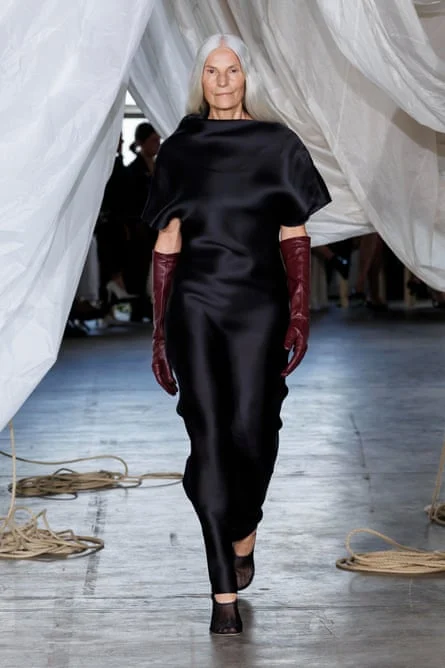
Sydney, Australia – Australian Fashion Week 2026 has opened with a striking and symbolic shift, marking the return of globally renowned Australian supermodels and a palpable move towards broader age diversity on its prestigious runways. This season, designers are not only showcasing their latest collections but also challenging long-held industry norms by featuring a cast that more accurately reflects the diverse consumer base. The palpable energy surrounding this evolution suggests a significant turning point for Australian fashion, aligning it with a global movement towards inclusivity.
The Comeback Trail: Iconic Figures Re-Emerge
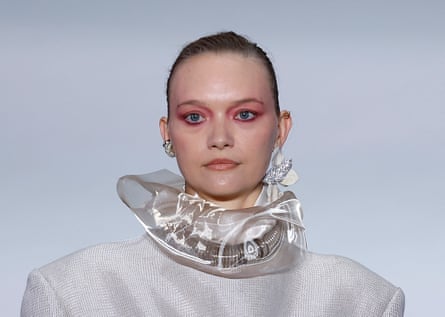
The most prominent sign of this new direction arrived on Monday afternoon with the highly anticipated return of Gemma Ward, who opened the show for acclaimed Melbourne designer Toni Maticevski. Ward, a name synonymous with a distinct era of fashion, had been largely absent from Australian runways for over a decade. Her re-emergence is more than just a nostalgic moment; it signals a deliberate choice by designers and casting directors to tap into the enduring power and recognition of established figures. Ward first graced an Australian Fashion Week runway for Wayne Cooper in 2003 at the tender age of 15, swiftly ascending to international superstardom, becoming the youngest model ever to grace the cover of US Vogue the following year and fronting campaigns for Calvin Klein, among others. Her return underscores a recognition of legacy and seasoned professionalism.

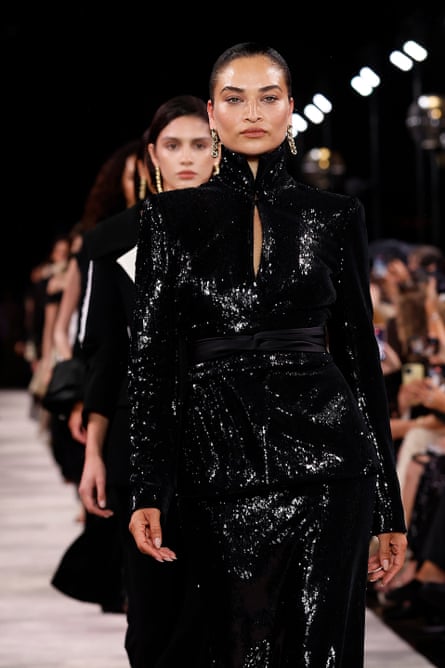
Later that same Monday evening, another celebrated Australian export, former Victoria’s Secret Angel Shanina Shaik, made her impactful return, walking for the heritage Australian fashion label Carla Zampatti. Shaik, who famously donned the coveted wings for Victoria’s Secret in the early 2010s, expressed a profound connection to her roots, noting, “there’s always something grounding” about returning to Australia to model. Her last appearance at Australian Fashion Week was in 2016, for the international powerhouse Oscar de la Renta. Shaik’s sentiment, "There’s such an incredible energy around Australian fashion right now. It’s really nice to reconnect with people I’ve known for years,” encapsulates the collaborative and revitalised spirit permeating this year’s event. Her commanding presence, opening and closing the Carla Zampatti presentation in a floor-length black coat and a sequined two-piece skirt set, exuded confidence, a quality she described as feeling "confident and feminine."
A New Era of Maturity: Beyond the Familiar Faces
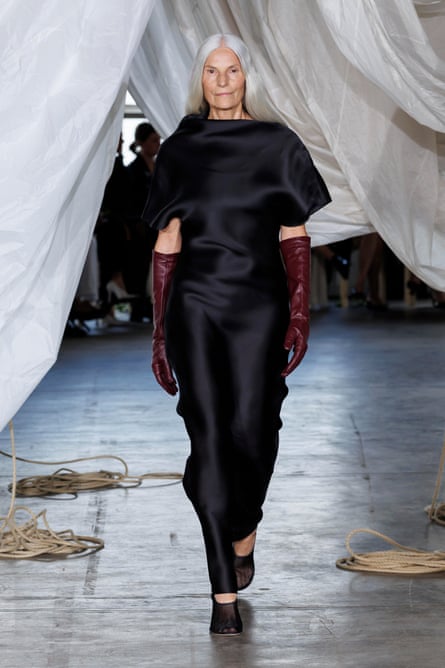
While the returns of Ward and Shaik have captured headlines, their appearances are emblematic of a much broader, and arguably more significant, trend: the deliberate incorporation of models of varying ages. Maticevski’s show, for instance, featured several models who, while lacking the household name recognition of Ward, were part of a "new wave of maturity" gracing Australian runways. This strategic casting decision reflects an industry increasingly willing to move beyond the narrow confines of youth, acknowledging that beauty and style transcend age.
This shift was even more pronounced at the Carla Zampatti show, where Shaik, despite her nearly two decades in the industry, was far from the most experienced model. Kate Bell, a veteran of the fashion world now in her 50s, delivered a powerful statement in a floor-length column dress and elegant black leather opera gloves. Bell’s career journey is particularly illustrative of the industry’s changing landscape. After early forays into catwalk modelling, she pivoted to more lucrative commercial work. Now, in what might traditionally have been considered the twilight of a modelling career, she is experiencing a renaissance as a "runway darling." Bell enthusiastically shared, “I’m walking the most shows that I’ve walked in Australian fashion week ever.” While acknowledging friends’ surprise at her busy schedule, she attributes it to consistent effort: “I have been putting in the spade work so it’s not all that surprising for me.”
Bell’s insights are crucial, as she vividly recalls a time when models over 25 were deemed too old for "typical" runway work. This historical context highlights the dramatic nature of the current transformation. While the controversial practice of casting very young teenagers on runways began to decline by the mid-2010s, the embrace of adults of all ages is a more recent and welcome development.
Global Currents: Fashion’s Wider Embrace of Age
The movement seen at Australian Fashion Week is not an isolated phenomenon but rather a localised reflection of a broader global shift within the fashion industry. Over the past year, major international fashion capitals have increasingly showcased age diversity. In January 2026, Chanel’s haute couture show notably featured many models in midlife and beyond, challenging the traditionally youth-centric narrative of high fashion. This trend continued through the recent Autumn/Winter 2026 shows in New York, London, Milan, and Paris. From silver-haired models commanding the runway at Tom Ford to iconic figures like Alicia Silverstone gracing the front row at Alaia and Sissy Spacek at Loewe, the industry’s major players are demonstrably expanding their definition of desirable representation.
This global pivot is driven by several factors, including evolving consumer demographics and a heightened demand for authenticity and relatability in marketing. As the global population ages and purchasing power among older demographics grows, brands are recognising the imperative to represent their customer base more accurately.
Behind the Seams: Voices from the Runway
The impact of this age inclusivity extends beyond mere optics, profoundly changing the backstage atmosphere and overall experience for models. Shanina Shaik, in her 30s, expressed her approval: “I actually love it. I think the industry has evolved so much in the best way.” She elaborated on the positive shift: “There’s less pressure to fit into one mould and more appreciation for women at different stages of life and career.” This sentiment highlights a move away from rigid, often unrealistic, beauty standards towards a more inclusive and supportive environment.
Kate Bell echoed this enthusiasm, noting, “I think everyone is just happy about it, the younger models, the more mature models that are there are just thrilled.” However, Bell also articulated a crucial caveat, suggesting that the industry still has further to go. “There’s a lot more mature models that could be in the mix. And I think that’s what’s been spurring me on. Since my 40s, I’ve just thought the market is going to catch up at some point. And we need this as women.” Her statement is a powerful call for continued progress, advocating for greater representation that truly mirrors the diversity of women in society.
Designer Perspectives: Reflecting the Real Customer
For designers, the appeal of all-ages casting is multifaceted, blending commercial logic with creative integrity. Toni Maticevski, whose show featured exquisitely finished sculptural ball gowns, layers of tassels, and exaggerated funnel-neck sweaters and coats, explained his rationale succinctly: “My brand is diverse, it’s not pinned to single woman, it’s for a variety of women, and men, and everyone else.” This commitment to representing his broad customer base resonates deeply in an era where consumers demand authenticity and inclusivity from the brands they support.
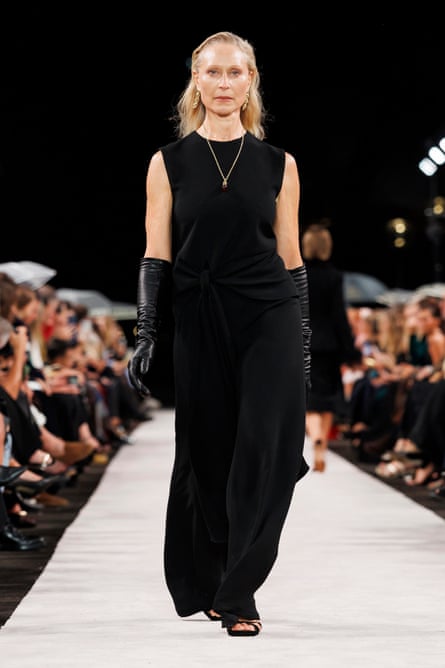
Furthermore, this approach allows designers to maintain and celebrate longstanding relationships within the industry. Maticevski revealed that many of his models are “people that I’ve worked with for the last 15 to 20 years.” When preparing for his show—also his first in over a decade—he personally approached these familiar faces, saying, “I said, ‘I want you in the show.’” This personal touch not only fosters loyalty but also brings a rich history and depth of experience to the runway, allowing the clothes to be presented by individuals who have grown with the designer’s vision.
The Industry’s Evolution: Challenges and Opportunities
The increased visibility of older models at Australian Fashion Week signifies a positive evolution, yet it’s important to contextualise this progress within the broader landscape of diversity. While age inclusivity is gaining traction, other forms of runway diversity, such as size representation, have unfortunately seen some backsliding in recent seasons, both locally and internationally. This indicates that while the industry is making strides in certain areas, the journey towards truly comprehensive representation remains ongoing.
The dialogue surrounding how to appropriately describe models over 30 also highlights lingering challenges. Kate Bell expressed her dissatisfaction with common industry labels: “We’ve all been called ‘classics’ or ‘timeless’ or ‘ageless’… but all those things are just really old ways of describing women.” She argues for a more modern and empowering vocabulary that acknowledges the depth and experience these models bring: “The whole thing that we’re now selling is our presence, our story and our emotional credibility. We’re fully realised identities.” Bell’s preferred descriptors – “confidence, individuality and self-authorship, quite frankly” – point to a desire for a narrative that celebrates wisdom and personal journey rather than attempting to erase the natural process of ageing. This shift in language is critical for truly embedding age diversity as a positive attribute rather than a mere concession.
Beyond the Runway: A Cultural Shift
The significance of seeing diverse age groups on the runway extends far beyond the fashion industry itself. It reflects and reinforces a broader cultural shift in how society views and values women, particularly as they age. Bell’s observation that her “87-year-old mum… is still killing it fashion-wise” underscores a societal move away from the outdated notion that style diminishes with age. “That idea that you lose your style as you get older is just some misogynistic madness,” she asserts. This powerful statement challenges entrenched ageism and misogyny, advocating for a world where women are celebrated for their evolving style and self-expression throughout their lives.
Even unintentional moments at Fashion Week can highlight this evolving perception. During resort wear brand Commas’ Tuesday morning presentation on Tamarama beach, a silver-haired man, not a scheduled model, confidently strode down the steps ahead of the show, waved to the crowd, walked part of the runway, and then proceeded to warm up for a swim. This unplanned moment, captured by photographers, became a viral sensation, playfully underscoring the universal appeal of confidence and individuality regardless of age.
Future Outlook: The Road Ahead for Australian Fashion
The 2026 edition of Australian Fashion Week has established itself as a pivotal moment, showcasing a renewed commitment to diversity that resonates with global trends while celebrating distinct Australian talent. The return of iconic figures like Gemma Ward and Shanina Shaik, combined with the prominent featuring of experienced models like Kate Bell, suggests a more mature and thoughtful approach to casting. This move not only broadens the appeal of fashion to a wider demographic but also enriches the narrative presented on the runway, infusing it with depth, experience, and relatability.
While the industry must continue to address other aspects of diversity, particularly size inclusivity, the progress made in age representation is undeniable. This evolution is driven by both the changing demographics of consumers and a growing ethical imperative for the industry to reflect the real world. As designers increasingly recognise that their customer base is as diverse as society itself, the runways are likely to continue transforming, offering a more authentic, inspiring, and inclusive vision of fashion for all. The current momentum indicates that Australian fashion is not just following a trend but actively shaping a more inclusive future for the global industry.