Jono Maryono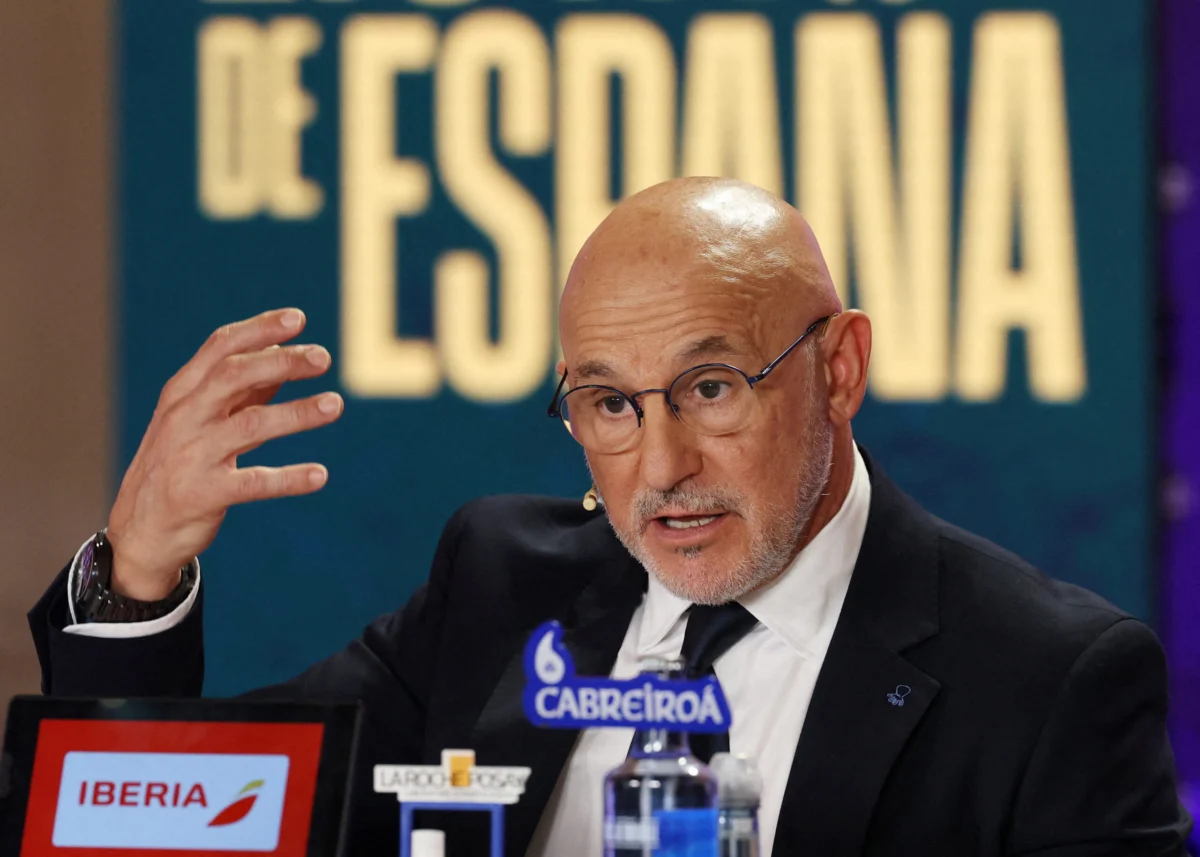
Luis de la Fuente, the head coach of the Spanish national football team, has unveiled a 26-man squad for the upcoming World Cup that has sent ripples through the footballing world, primarily due to its unprecedented absence of any player from Real Madrid. In a move that sharply contrasts with previous selections and ignites the enduring El Clásico rivalry, the squad is heavily populated by eight players from FC Barcelona, leading to widespread discussion about the strategic and symbolic implications of this decision. De la Fuente, addressing the media, emphatically declared that the Spanish national team badge transcends any individual club affiliation, emphasizing his commitment to fostering a "united nation" on the pitch.
This historic decision marks the first time in recent memory that a Spanish World Cup squad will not feature a single player from the esteemed ranks of Real Madrid, a club with a storied history and a significant contingent of Spanish internationals in most past tournaments. The squad, designed to compete for Spain’s second World Cup title – their first triumph coming in South Africa in 2010 – leans heavily on the talent pool cultivated by Barcelona. Notable omissions from Real Madrid include established defenders Dean Huijsen and Dani Carvajal, whose exclusion has particularly raised eyebrows among fans and pundits alike.
Coach De la Fuente has been resolute in his defense of the selection process, asserting that his choices were guided solely by sporting merit and the overarching objective of national representation. During a breakfast meeting with media representatives, organized by Spanish public broadcaster RTVE and news agency EFE, he articulated his vision. "For me, the greatest team there is – the very ‘greatest’ – is the Spanish national team," De la Fuente stated. "I don’t look at where players come from or their background. What matters are Spanish players who are proud to represent their country’s national team and to be part of a united nation." This statement underscores a deliberate effort to shift the focus from club loyalties to a collective national identity, a sentiment that will be closely scrutinized as the tournament progresses.
Barcelona’s Dominance and Strategic Considerations
The significant presence of Barcelona players in the squad is a testament to the Catalan club’s current form and the perceived synergy within their ranks. The eight Barcelona representatives are Joan Garcia, Pau Cubarsi, Eric Garcia, Gavi, Pedri, Dani Olmo, Lamine Yamal, and Ferran Torres. This concentration of talent from one club raises questions about how De la Fuente intends to integrate these players into a cohesive unit that can perform under the immense pressure of a World Cup. The Premier League also features prominently, with seven players plying their trade in England’s top flight, indicating a balanced approach to sourcing talent from various competitive leagues.
De la Fuente acknowledged that squad selection inherently involves subjective elements but maintained that the primary driver was sporting consideration. "The day I make a mistake, fail to make the right choice, or act in a way that might be beneficial just to get a result, I’m putting my job on the line," he commented, highlighting the weight of responsibility he feels.
Injury Concerns and Cautious Optimism
While the squad selection is complete, the fitness of several key players, including Lamine Yamal, Nico Williams, and Mikel Merino, remains a point of attention. All three are reportedly recovering from minor fitness concerns, prompting a degree of caution from the coaching staff. De la Fuente expressed optimism regarding their availability for the opening match, stating, "We’re in contact with all the clubs. We know that these players are in good physical shape; each one is making good progress in their recovery process. I’m very optimistic; I think they’ll be available for the first match."
However, the coach also indicated a willingness to adopt a strategic approach to player management throughout the tournament. "If we have to take a risk, mate, we’ll take it in a World Cup," he said, hinting at potential gambles if necessary. "But… our view goes beyond the first match and also the second. So, if we have to wait a little longer, we’ll wait." This suggests a long-term perspective, prioritizing the team’s overall success in the tournament over immediate, potentially risky decisions regarding injured players.
Lamine Yamal: A Young Star Ready for the World Stage
One of the most talked-about players in the squad is 18-year-old Barcelona winger Lamine Yamal. Expected to be a significant attacking threat for Spain, Yamal’s maturity and sense of occasion have been highlighted by De la Fuente. "Yamal is absolutely ‘thrilled’ and raring to go," the coach remarked. "He’s a very young lad, just 18, but he has a remarkable sense of maturity and knows that this is his moment. You have to seize the moment. And he knows this is his moment." Yamal’s inclusion, despite his youth, signals the coach’s confidence in his ability to perform under pressure and contribute significantly to Spain’s World Cup campaign. His integration into the squad, alongside other young talents and experienced players, will be crucial for Spain’s aspirations.

Historical Context and the El Clásico Rivalry
The exclusion of Real Madrid players from the Spanish national team, particularly for a major tournament like the World Cup, is a rare occurrence and a departure from established norms. Historically, Real Madrid and Barcelona players have formed the backbone of the Spanish national team, often showcasing a remarkable ability to bridge their club rivalry for the common good of the nation. This has been particularly evident during Spain’s most successful periods, including their Euro 2008, World Cup 2010, and Euro 2012 triumphs. The intense rivalry between the two Spanish giants is a significant cultural and sporting phenomenon, and its translation into national team selections has always been a delicate balancing act for coaches.
The 2010 World Cup victory, for instance, was heavily influenced by the "Golden Generation" of Spanish football, a cohort that included numerous players from both Real Madrid and Barcelona, who had developed a strong understanding and camaraderie through years of club competition and national team duty. The current selection, therefore, represents a significant shift in this dynamic.
Potential Implications and Fan Reactions
The decision to omit Real Madrid players is likely to be met with a mixed reception. While many neutral observers and Barcelona supporters may view it as a bold and potentially effective strategy, Real Madrid fans and a segment of the wider Spanish footballing public will undoubtedly express disappointment and potentially criticism. The narrative surrounding the squad will inevitably be framed by this unprecedented club-based division.
From a tactical perspective, De la Fuente’s emphasis on national unity suggests a desire to avoid any lingering club-based factions within the squad. By selecting players who he believes are fully committed to the national cause, he aims to create a more cohesive and unified team environment. This approach, however, carries the risk of alienating a significant portion of the fanbase and potentially overlooking valuable talent that could contribute to Spain’s success.
The media coverage surrounding the squad announcement has already highlighted the polarizing nature of the decision. Football analysts are dissecting the potential strengths and weaknesses of the chosen squad, with particular focus on how the absence of Real Madrid’s experience and leadership might impact the team’s performance in crucial matches. The lack of Real Madrid players might also present an opportunity for other players to step up and assert their importance on the international stage, potentially creating new dynamics and leadership within the squad.
Deeper Analysis of Selection Criteria
Coach De la Fuente’s assertion that "sporting considerations alone guided his selection" warrants closer examination. While subjective, the interpretation of "sporting considerations" can encompass a wide range of factors, including current form, tactical fit within the coach’s preferred system, player mentality, and the ability to perform under pressure. The heavy reliance on Barcelona players could indicate a preference for a particular playing style that is currently best exemplified by the Catalan club’s roster. This could involve a focus on possession-based football, intricate passing, and high pressing, elements that have historically been associated with successful Spanish teams.
The inclusion of younger players like Lamine Yamal also suggests a forward-thinking approach, with De la Fuente potentially building for the future while also aiming for immediate success. The balance between youth and experience, and the integration of players from different club backgrounds, will be key to the team’s overall effectiveness. The coach’s clear communication about his priorities – national unity and sporting merit – sets a clear expectation for the players and fans alike.
The Road to the World Cup: A Test of National Cohesion
As Spain embarks on its World Cup journey, the narrative surrounding the squad will undoubtedly be one of national unity against the backdrop of club rivalries. The success or failure of this approach will be closely watched, not only by Spanish football enthusiasts but also by the wider international football community. The coach’s bold decision to prioritize the "united nation" over established club affiliations presents a unique challenge and an intriguing proposition for the future of Spanish football. The coming weeks will reveal whether De la Fuente’s gamble pays off and if this unprecedented squad selection can indeed lead Spain to World Cup glory, forging a new chapter in their footballing history. The world waits to see if the spirit of the Spanish national team can truly transcend the deep-seated passions of club loyalty.