Ronny Sianturi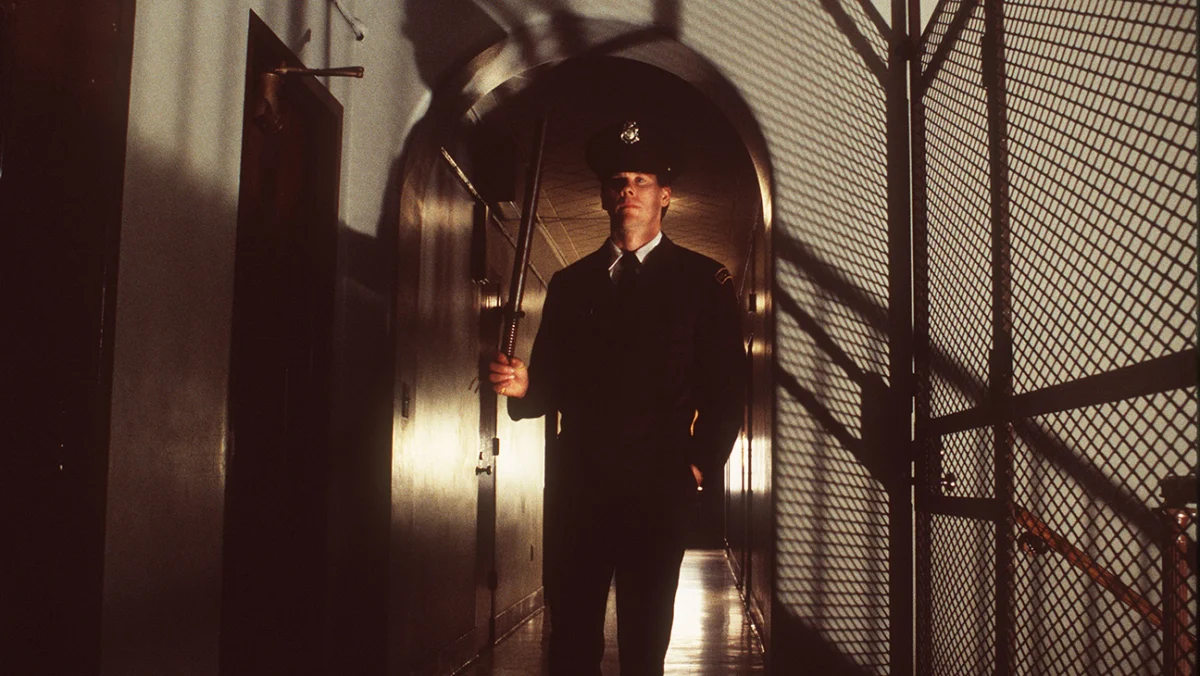
Nearly three decades after its release, Barry Levinson, the acclaimed director behind the star-studded drama Sleepers, maintains that the public discourse surrounding his 1996 film was fundamentally misguided, overshadowing its core message about institutional abuse and the complexities of justice. In a recent interview with The Hollywood Reporter, coinciding with the film’s new 4K/Blu-ray release, Levinson revisited the controversies that dogged the film, particularly the debates surrounding its veracity and the moral compass of its characters, arguing that these discussions detracted from the film’s intended impact.
Based on Lorenzo Carcaterra’s bestselling novel of the same name, Sleepers delves into a harrowing tale of childhood trauma and its long-lasting repercussions. The narrative begins in the late 1960s, introducing four young friends in Hell’s Kitchen, New York City. A seemingly innocent prank—an attempt to procure a hot dog from a street vendor—takes a dark turn when the boys inadvertently cause severe injury to a bystander. This act of youthful recklessness results in their consignment to the Wilkinson Home for Boys, a juvenile detention facility notorious for its brutal regime. Over a period of six to eighteen months, the boys endure horrific sexual and physical abuse at the hands of four sadistic guards.
The film then fast-forwards to 1981. The passage of time has not erased the scars of Wilkinson. Two of the former friends, John Riley (Ron Eldard) and Tommy Marcano (Billy Crudup), spot one of their former tormentors, Sean Nokes (Kevin Bacon), in a restaurant. In an act of vigilante justice, they gun him down. Their remaining childhood companions, Lorenzo "Shakes" Carcaterra (Jason Patric), now a junior clerk at The New York Times, and Assistant District Attorney Michael Sullivan (Brad Pitt), embark on a mission to exonerate the imprisoned Riley and Marcano. Their ultimate goal is to expose the systemic corruption and abuse that festered within the Wilkinson institution, seeking to bring the architects of their suffering to justice.
In today’s climate, a film that culminates in the dismantling of a child predator ring would likely be hailed as prescient. However, upon its initial release in 1996, the critical conversation surrounding Sleepers was heavily dominated by skepticism regarding Carcaterra’s assertion that the book was based on his own life experiences. While Carcaterra maintained that the emotional core of the story was authentic, even if names and specific events were altered for narrative purposes, Levinson believes this focus on factual authentication inadvertently diluted the film’s broader thematic concerns.

Questioning the Narrative: Truth vs. Storytelling
Levinson expressed his frustration with the media’s fixation on the "true story" aspect of Sleepers. "Why does film get caught in this cycle of whether something happened or didn’t happen?" he mused to The Hollywood Reporter. "It’s a story. It wasn’t the craziest, weirdest thing you’ve ever imagined. I never quite got that noise that was made at that time. It, in some ways, took away from what the piece was. It doesn’t need to be authenticated in that regard for us to pay attention."
This sentiment underscores a perennial debate in cinema: the distinction between factual accuracy and narrative truth. While some viewers and critics demand strict adherence to reality, Levinson argues that the power of a story lies in its ability to resonate emotionally and thematically, regardless of its literal provenance. He suggested that the film’s allegorical weight, representing the broader issue of institutional abuse and the quest for justice, was unfortunately sidelined by debates over the verifiable details of Carcaterra’s personal history.
The Moral Quandary of Father Bobby
Another significant point of contention for critics was the character of Father Bobby (Robert De Niro), a priest who mentors the four boys and provides a false alibi for John and Tommy on the witness stand. The notion of a clergyman lying under oath, particularly after placing his hand on the Bible, struck many as implausible and morally objectionable.
However, Levinson points to a crucial, often overlooked, detail in the narrative: Father Bobby and his closest friend were also former residents of the Wilkinson Home. This shared history provides a deeper, more complex motivation for his actions. If not a direct victim himself, his friend certainly was. Therefore, Father Bobby’s reluctant decision to commit perjury was not merely about facilitating vigilante justice for the boys; it was intrinsically linked to his desire to expose and dismantle the corrupt system that had devastated his own life and the lives of those he cared about.
"The discourse got caught up in whether or not a priest would ever lie on the stand," Levinson explained. "You can certainly have that, but that’s not the point of the movie. It was a much broader piece than that. It’s not a film that was trying to advocate this or that." This perspective highlights how the film sought to explore the grey areas of morality when confronted with profound injustice, suggesting that even figures of faith might be driven to extraordinary measures when faced with systemic evil.

The Unfolding Narrative: A Chronology of Trauma and Justice
The narrative arc of Sleepers is deliberately structured to emphasize the enduring impact of childhood trauma.
- Late 1960s: Four young friends in Hell’s Kitchen engage in a prank that results in a serious injury to a bystander.
- The Wilkinson Home for Boys: The boys are sent to the institution, where they endure months of severe physical and sexual abuse by guards, including Sean Nokes. This period is depicted as a formative trauma that shapes their futures.
- 1981: The adult friends, now leading disparate lives, reunite under the shadow of their past. John Riley and Tommy Marcano exact revenge on Sean Nokes.
- The Legal and Moral Battle: Michael Sullivan, now an Assistant District Attorney, and Shakes Carcaterra, a journalist, work to clear John and Tommy and expose the Wilkinson scandal. This involves navigating a complex legal and ethical landscape, including the moral compromise of Father Bobby.
- The Verdict and Revelation: The film culminates in the exposure of the Wilkinson abuse ring, though the path to justice is fraught with moral ambiguity.
Behind the Scenes: Casting and Creative Choices
Levinson shared insights into the making of Sleepers, touching upon key creative decisions. The initial impetus for the project came from Steve Golin, co-founder of Propaganda Films, who brought the book to Levinson’s attention. The director acknowledged that he doesn’t recall the development process being particularly challenging from a studio perspective, despite the heavy subject matter.
The selection of John Williams as composer was a deliberate choice to imbue the dark narrative with a sense of gravitas and emotional depth. Levinson felt Williams’s score could provide "glimmers of hope" and evoke the specific New York atmosphere, drawing a parallel to the work of Leonard Bernstein.
The casting process, Levinson suggested, likely involved identifying the adult actors first and then finding younger counterparts who could embody their younger selves. The ensemble cast featured established stars like Brad Pitt, Robert De Niro, and Dustin Hoffman alongside emerging talents and child actors. Pitt’s casting, coming off major roles in 12 Monkeys and Seven, added significant star power. Levinson, however, downplayed any direct influence from Fincher’s connection to Propaganda Films in securing Pitt.
His collaborations with Robert De Niro, which began with Sleepers and extended to four more films, were described as organic. "It was great, but I didn’t foresee beyond the first time we worked together," Levinson admitted. "It was just something that began to fall together periodically. The work that came up just made sense for Bob." Similarly, his work with Dustin Hoffman, following their Oscar-winning collaboration on Rain Man, was not a pre-planned reunion. Levinson simply felt Hoffman would be an ideal fit for a particular role.

The physicality of Brad Pitt’s performance as Michael Sullivan in the courtroom scenes, characterized by constant page-flipping and fidgeting, was a conscious choice to reflect the character’s internal struggle with alcoholism and his reluctance to be embroiled in the case. Levinson noted, "The physicality of it—as opposed to just sitting there—shows that the guy’s got some issues."
Regarding the controversial decision to have John and Tommy kill Nokes early in the film, rather than building to a final confrontation with him, Levinson reiterated his commitment to the narrative’s thematic focus. "You could certainly do another version, but then you would have more murders in the piece, as opposed to happenstance," he stated. The film aimed to explore the immediate aftermath of trauma and the complex motivations for seeking justice, rather than a straightforward revenge narrative.
The Shifting Landscape of Hollywood and the Future of Filmmaking
Levinson also addressed the broader challenges facing the film industry, particularly the decline of mid-budget films like Sleepers. He lamented the studios’ increased reliance on massive blockbuster productions, arguing that this strategy narrows the audience and overlooks the potential of more modestly budgeted films to succeed and foster diverse cinematic experiences. "My take on it is that I don’t think you can survive by just working in one area predominantly. It narrows your audience year by year. That’s a mistake," he asserted.
The director also commented on the perceived scarcity of breakout movie stars in the current era, attributing it partly to the shift away from mid-budget films that historically served as launchpads for talent. The rise of streaming services and the pervasive influence of the internet and mobile devices have further fragmented audiences and altered viewing habits, he suggested, potentially impacting the way stories are consumed and appreciated.
Despite these industry shifts, Levinson remains committed to filmmaking. He revealed that he has two or three projects in development, all within the mid-budget range. He expressed confidence in his ability to work efficiently and affordably, citing his experiences making low-budget films like The Humbling and The Bay. "I have no problem working in all ways as long as I know the story that I want to tell," he concluded. He acknowledged the current "radical shift" in the business, marked by numerous mergers and acquisitions, and the resulting uncertainty about the future of filmmaking.

When asked about the notion that filmmaking is a "younger man’s game," Levinson firmly rejected it. "Well, I don’t think age is the issue. It’s the ideas," he countered. "What ideas do you want to do? Are they completely out of fashion? But if you’re basically dealing with the world we’re in, what’s the story that you want to tell? I don’t think it’s based on anything other than that." This perspective underscores Levinson’s enduring belief in the power of compelling storytelling, regardless of the filmmaker’s age.
Sleepers continues to resonate, not just as a film that pushed boundaries and sparked debate, but as a powerful examination of the lasting impact of abuse and the often-complicated pursuit of justice. Its re-release offers a new generation the opportunity to engage with its complex themes and Barry Levinson’s enduring vision.