Ronny Sianturi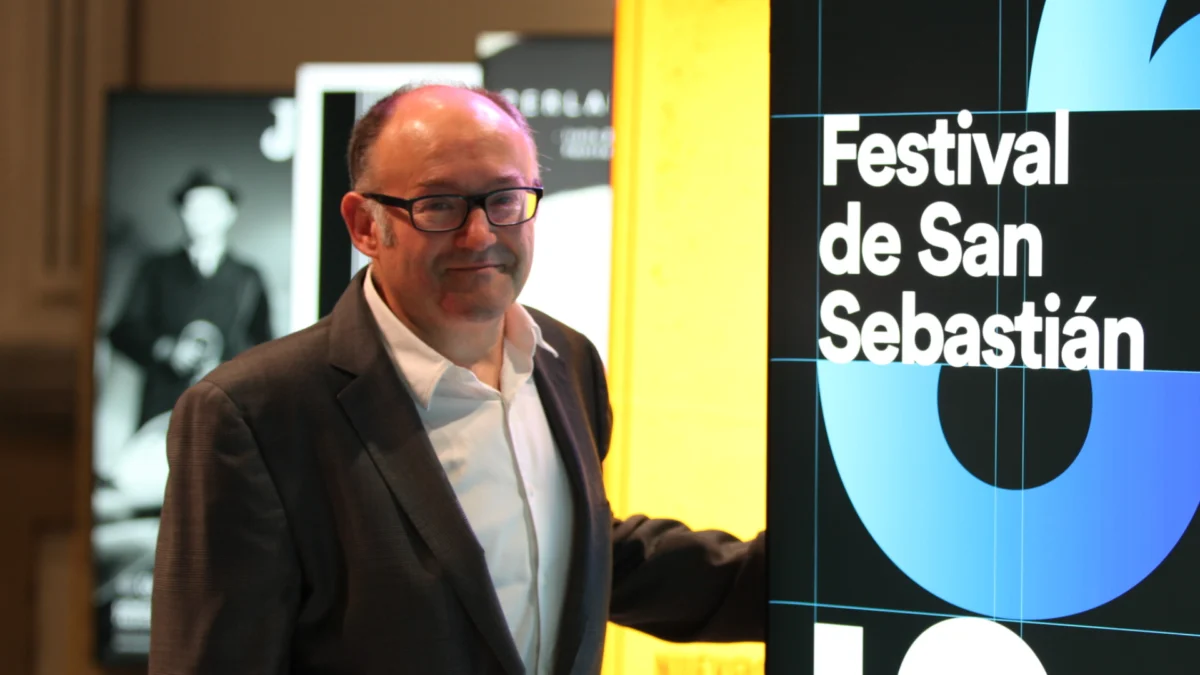
For those immersed in the vibrant ecosystem of international film festivals, the San Sebastián International Film Festival (SSIFF) has long held the esteemed reputation of a "hidden gem." This designation speaks volumes about its multifaceted appeal: a captivating blend of global cinema, the allure of cinematic stars, the warmth of enthusiastic local audiences, an intimate scale that fosters genuine connections, the indulgence of world-renowned Basque cuisine, and the undeniable charm of its picturesque bay-side setting. Yet, the "hidden" aspect of its identity often sparks curiosity and prompts a deeper examination of its place within the fiercely competitive landscape of major film festivals.
Despite boasting a rich history spanning 73 editions, San Sebastián continues to occupy a somewhat understated position for certain segments of the film industry. It often finds itself in the shadow of its larger European counterparts, such as Cannes, Venice, and Berlin. While the festival adeptly curates a compelling program that unites international auteurs with A-list celebrities, it is sometimes narrowly perceived as primarily a platform for Spanish and Latin American cinema. Furthermore, its autumnal timing presents a strategic challenge. Occurring in September, immediately following the Venice Film Festival and sometimes overlapping with the Toronto International Film Festival, SSIFF must contend with established giants for prime world premiere slots.
However, the festival’s leadership has consistently embraced its unique strengths rather than attempting to emulate others. José Luis Rebordinos, who will retire after 15 years at the helm of SSIFF following the 74th edition (September 18-26), articulates this philosophy with clarity. "I think one of the San Sebastián Film Festival’s strengths is its awareness of its core characteristics and its refusal to try to be anything else," Rebordinos stated. He elaborated on the festival’s strategic positioning, acknowledging its limitations while highlighting its distinct advantages. "We can’t be a major market, but we can have interesting industry activities like the Europe-Latin America Co-Production Forum or the Investors’ Conference," Rebordinos continued. "We can’t have the year’s biggest American releases as premieres, but we can showcase some of them with members of their teams in parallel sections."
This deliberate approach has allowed San Sebastián to carve out a distinct and highly valued niche. "In other words, the event has found its sweet spot," Rebordinos remarked. "We are a festival with a large enough audience to interest both the industry and critics, but small enough to feel human and welcoming. We work with humility, and our slogan is ‘We are the smallest of the greats.’” This self-awareness and commitment to its core values resonate deeply with festival regulars. Christine Vachon, co-founder of the New York-based production company Killer Films, observes, "Everybody thinks of Cannes and Venice and Berlin, but it’s the smaller festivals like San Sebastián that people will gravitate toward. Those are the festivals where you actually get to spend time with filmmakers, local artists, and financiers."
The festival’s legacy is marked by its early recognition and sustained commitment to cinematic excellence. San Sebastián achieved "A" status from the International Federation of Film Producers Associations (FIAPF) in 1957, a mere four years after its inception in 1953. This early validation cemented its position among the world’s elite film events. Over the decades, it has attracted legendary figures from the global film pantheon, including Federico Fellini, Alfred Hitchcock, Jean-Luc Godard, Kirk Douglas, Audrey Hepburn, and Elizabeth Taylor. The prestigious Donostia Award, established in 1986 to honor lifetime achievement, has been presented to an illustrious roster of recipients such as Gregory Peck, Bette Davis, Lauren Bacall, Al Pacino, and Anthony Hopkins.
The 73rd edition saw a notable milestone with the youngest-ever recipient of the Donostia Award, Jennifer Lawrence, alongside the first producer to be honored, Esther García, Pedro Almodóvar’s long-standing in-house executive. Accepting her award, Lawrence eloquently captured the essence of the festival’s appeal, describing it as "really special" to be "at a festival where people genuinely love cinema – the storytelling art and the soul of the movies."
Expanding Industry Horizons and Fostering Co-Creation
Beyond its celebrated film program and prestigious awards, San Sebastián has significantly expanded its industry-focused initiatives, establishing itself as a vital hub for international co-production and investment. The Creative Investors’ Conference, now in its fifth year and developed in collaboration with CAA Media Finance, has become a cornerstone event. Alongside the highly successful Europe-Latin America Co-Production Forum, the festival offers a suite of programs targeting emerging directors, works in progress, and film startups. The 2023 edition welcomed over 2,400 accredited professionals representing more than 1,500 companies from 65 countries, underscoring its growing global reach and influence.
"The Europe-Latin America Co-Production Forum has been a great success for years now," Rebordinos highlighted. "Selecting only around 16 projects is difficult due to the high quality of the submissions. More and more members of the industry are participating in this event. The Investors’ Conference has also become a key event, bringing together some of the most important names in global film production and investment." These forums not only facilitate crucial networking opportunities but also provide essential platforms for securing financing and forging creative partnerships that can launch nascent projects into global distribution. The strategic focus on bridging European and Latin American cinematic landscapes addresses a critical need for cross-cultural collaboration and market access in the global film industry.
A Cornerstone of Basque Cinema and Regional Economic Impact
San Sebastián International Film Festival stands as the undisputed crown jewel of the burgeoning Basque film industry. Long-time observer Rob Stone, emeritus professor of film studies at the University of Birmingham and co-author of Basque Cinema: A Cultural and Political History, notes, "Its sights are firmly set on filmmaking as an evolving global force." Yet, he emphasizes, "it’s still ‘Basque at heart.’" This dual identity – a globally connected festival deeply rooted in its regional identity – has proven to be a powerful catalyst for local cinematic growth.
The trajectory of Basque cinema at the festival has been remarkable. Since Jose Mari Goenaga and Jon Goraño’s Flowers (Loreak) made history as the first Basque-language film to premiere in the main competition in 2014, the festival has consistently featured at least one local film in its official selection each year. In 2023, an impressive 37 Basque productions were screened, a testament to the region’s rapid ascent as a production hub, significantly bolstered by new incentive programs. The economic impact of the festival on the Basque Country is substantial, with the 2023 edition estimated to have generated 47.9 million euros ($56.2 million) for the region.
Mar Izquierdo, coordinator of Zineuskadi, a non-profit organization established by the regional government to champion and support the Basque film industry, acknowledges the abundance of high-quality local productions. "There was a lot of very good material to choose from, and last year, many [Basque films] were left out," she stated. However, she also echoed Rebordinos’s commitment to meritocracy, noting, "José Luis has always said he wouldn’t want Basque productions to be here for free – he doesn’t want it to seem like just because you’re from here, you automatically get in." This approach ensures that Basque films gain recognition on their artistic merits, further enhancing their credibility on the international stage.
Nurturing Talent and Launching Careers
The festival’s prowess in identifying, developing, and promoting talent, particularly from Spain and Latin America, is widely acknowledged. Belén Vidal, a reader in film studies at King’s College London and a specialist in Spanish cinema, observes, "SSIFF is excellent at identifying, attracting and nurturing original talent in Spain and Latin America." She further notes that these talents often go on to produce the year’s most significant films from these regions. "I attend SSIFF to catch the ‘big’ Spanish titles for the year ahead," Vidal adds.
A prime example of this phenomenon is the trajectory of Basque filmmaker Alauda Ruiz de Azúa. Her film Sundays (Los Domingos) not only secured the festival’s highest honor, the Golden Shell award, but subsequently dominated the Spanish Goya Awards, the country’s equivalent of the Oscars. Manu Calvo, co-producer of Sundays through Encanta Films, commented on the festival’s impact: "Participating in San Sebastián greatly helps position a film and give it exposure, especially in Europe and Latin America, and particularly in Spain."
Marisa Fernández Armenteros of Buenapinta Media, another co-producer on Sundays, elaborated on the transformative power of the Golden Shell win: "Winning the Golden Shell was a turning point for the film. An award like that opens many doors, because you go from having just another film on the festival circuit to gaining significant visibility in Spain and abroad. It helps with international sales, expands its reach to other festivals, and allows the film to find audiences it probably wouldn’t have reached otherwise, and who, in the case of Los Domingos, connected with it and filled the theaters."
A Festival for the People: Audience Engagement and Accessibility
The enduring appeal of San Sebastián is also deeply intertwined with its robust local audience engagement. As attendees of SSIFF can attest, the festival’s screenings are consistently well-attended. The 2023 edition saw a remarkable 181,183 spectators attending 666 screenings of 254 titles from 56 different countries, representing a 5.15 percent increase in audience numbers compared to the previous year. This strong turnout underscores the festival’s commitment to making cinema accessible to the local community. As Rob Stone points out, "Ticket prices are kept low and stable to ensure that local audiences can attend screenings." This dedication to affordability ensures that the festival remains a vibrant cultural event for residents, fostering a genuine love for cinema that permeates the city.
A Seamless Transition in Leadership
The festival is poised for a significant leadership transition. The appointment of Maialen Beloki, the current deputy director, as Rebordinos’s successor marks a continuity of vision and expertise. Rebordinos expressed his satisfaction with the appointment: "I am immensely pleased that the person appointed… is someone from my team, as well as a fundamental part of the work carried out over these 15 years." This internal promotion ensures that Beloki will inherit a deep understanding of the festival’s operations and strategic direction.
The transition process is already underway, with Rebordinos committed to a thorough handover. "Now that the appointment has been made, my responsibility in the coming months is to work closely with Maialen so that she arrives in January 2027 with the greatest possible understanding of the festival," Rebordinos stated. This measured approach to leadership change signals a commitment to sustained excellence and a thoughtful evolution of the San Sebastián International Film Festival’s esteemed legacy. As it continues to navigate the complexities of the global film landscape, San Sebastián remains a beacon of cinematic discovery, a vital industry nexus, and a cherished cultural institution, proving that sometimes, the most precious gems are the ones that require a discerning eye to truly appreciate their brilliance.