Layla Zulfa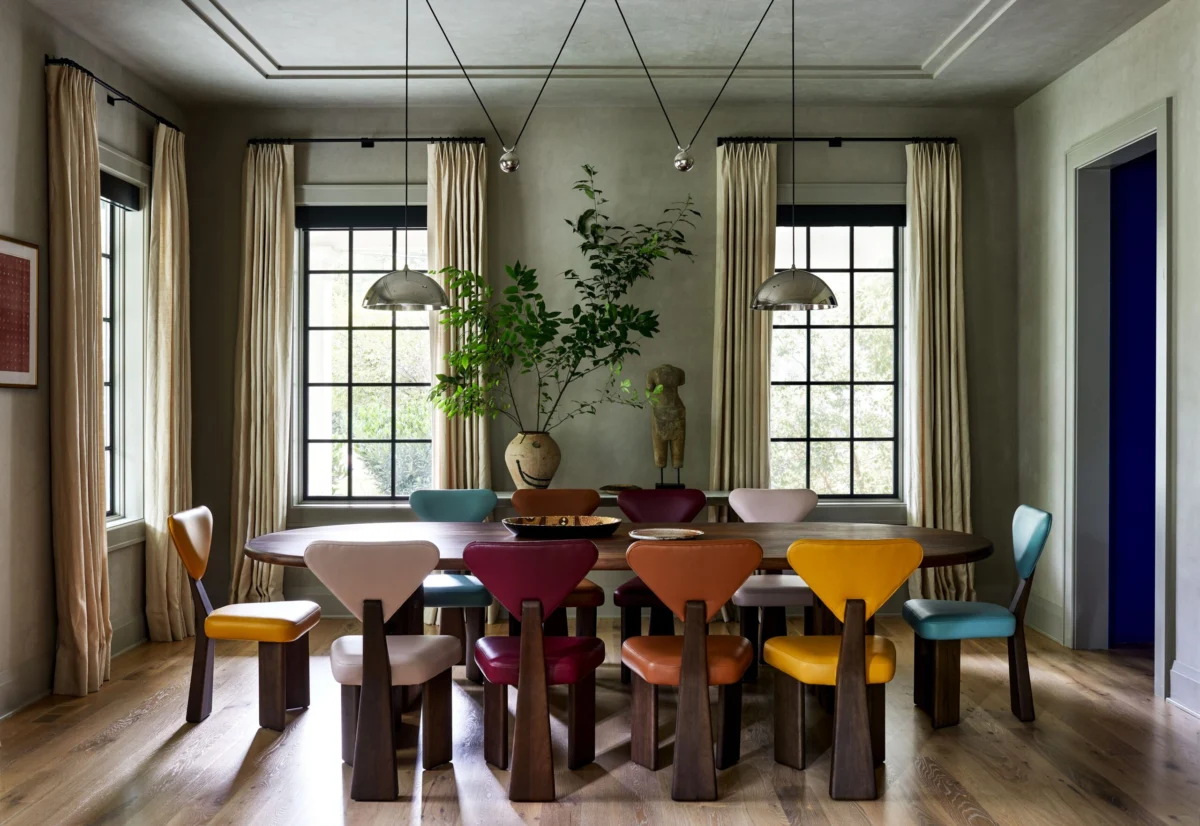
The interior design industry is currently witnessing a paradigm shift as the traditional metrics of home valuation—square footage, zip code, and brand-name appliances—are being supplemented by a more ephemeral concept known as dec-aura. Derived from the "aura points" phenomenon that gained viral traction on social media platforms like TikTok in 2024, dec-aura represents a qualitative assessment of a home’s "innate cool factor." While the term originated in digital youth culture to describe personal charisma or social competence, its application to the domestic sphere marks a significant evolution in how designers and homeowners conceptualize successful living spaces. In this new landscape, a home’s success is measured not by its adherence to fleeting trends, but by its ability to project a magnetic, lived-in, and highly individualized atmosphere.
The Cultural Genesis of the Aura Metric
The concept of "aura" as a social currency emerged as a dominant cultural trope in early 2024. According to digital trend analysts, the system functions as a gamified version of social standing, where specific actions result in the gain or loss of hypothetical "points." For instance, a display of effortless competence, such as parallel parking a vehicle on the first attempt, might earn an individual +5,000 points. Conversely, a social faux pas, such as an accidental interaction with an estranged acquaintance’s digital profile, results in a significant deduction.
As this vernacular migrated from personal behavior to the built environment, "dec-aura" (decoration aura) was born. It identifies the specific design motifs, styling choices, and architectural details that elevate a space from a mere residence to a sophisticated sanctuary. Unlike traditional design philosophies that may prioritize symmetry or historical accuracy, dec-aura is rooted in "vibes"—a term that, while seemingly informal, describes the complex psychological response a person has to the harmony and authenticity of a room.
The Architecture of High Dec-Aura: Authenticity and Curation
Leading designers argue that the highest dec-aura points are awarded to homes that feel "collected" rather than "decorated." Zoë Feldman, a prominent designer noted for her work on high-profile projects such as actress Rachel Brosnahan’s Manhattan residence, posits that the most compelling rooms are those assembled over time. This approach involves a deliberate mixing of vintage finds, contemporary art, and personal artifacts. According to Feldman, this sense of authorship makes a home feel both sophisticated and alive.
This sentiment is echoed by Francesca Grace, a Los Angeles-based designer and home stager. Grace suggests that there is a magnetic quality to spaces that prioritize depth over polish. The inclusion of one-of-a-kind pieces grounds a home, preventing it from feeling overly styled or sterile. This trend toward "curated" rather than "purchased" interiors aligns with broader market data. According to a 2023 report by Grand View Research, the global secondhand furniture market is expected to grow at a compound annual growth rate (CAGR) of 6.4% through 2030, driven largely by a consumer desire for unique, sustainable, and "authentic" home goods.
The Power of Patina and Customization
Within the framework of dec-aura, the condition of an object often matters as much as the object itself. Feldman highlights "patina"—the visible aging of materials like wood, leather, or brass—as a significant point-earner. Objects that have "lived a life" before entering a home provide a necessary contrast to new elements, creating an enduring aesthetic tension.

Furthermore, the "custom" factor acts as a major multiplier for dec-aura. Drew Michael Scott, founder of Lone Fox, notes that the ability to identify a piece of furniture as one-of-a-kind immediately elevates the perceived value and "aura" of a room. In the luxury design sector, customization is no longer just about fit; it is about exclusivity and the rejection of mass-market uniformity.
The Technicality of the "Vibe": Intentionality and Scale
While much of dec-aura is felt, certain technical elements can be quantified. Ashley Lavonne, a 2025 AD New American Voices honoree, argues that points are gained through the thoughtful assembly of furnishings and finishes that feel innate to a specific architectural context. Lavonne points to unexpected material uses—such as upholstered walls or color-blocked cabinetry—as high-scoring maneuvers because they demonstrate a departure from predictable trend cycles.
Functionality also plays a role in the aura of a space. Chloe Legras, founder of Boxwood Avenue, identifies smart vanity storage as a specific area for point accumulation. A shallow marble or glass shelf situated above a bathroom sink is cited as a classic yet functional motif that adds significant aura by providing a dedicated space for daily rituals, such as skincare or displaying a single bud vase.
The Deficit: How Homes Lose Dec-Aura Points
Just as certain elements can elevate a home, others can lead to a rapid decline in its aesthetic standing. The most significant loss of dec-aura points stems from interiors that are overly uniform or "trend-driven." Designers warn against the "set-like" quality of homes that appear to have been sourced entirely from a single catalog or showroom.
Francesca Grace notes that when every item in a room matches perfectly, the space loses its sense of authenticity. This "flatness" is a common critique of the "Fast Furniture" era. When trends are applied too literally, a home risks becoming dated almost immediately. To maintain high dec-aura, a space must possess tension and variation—elements that provide the visual depth necessary for a lasting appeal.
Maintenance and the "Unburned Candle" Offense
In the dec-aura system, the lifestyle of the inhabitants is inextricably linked to the quality of the home. Drew Michael Scott points to "unburned candlesticks" as a primary offense. A home that feels like a showroom rather than a living space loses points for lack of utility. Lighting a candle signals that a space is enjoyed and utilized, rather than merely displayed.
Similarly, "sloppy styling" can detract from even the most expensive interiors. Scott identifies visible wiring, flat cushions, and unkempt upholstery as immediate point deductions. The "pancaked cushion"—a sofa pillow that has lost its loft due to neglect—is cited as a sign of a home that has lost its vitality. Maintenance, in this context, is viewed as an act of respect for the design of the home.

The Technical Failures of Hardware and Lighting
Technical details often overlooked by laypeople are scrutinized heavily in the dec-aura metric. Chloe Legras identifies "brushed metal finishes" on plumbing and hardware as a major point loser. She advocates instead for natural finishes that develop a patina over time, such as unlacquered brass, polished nickel, or zinc.
Scale is another critical factor. Poorly scaled cabinetry hardware—knobs or pulls that are either too large or too small for the drawer they inhabit—can disrupt the visual harmony of a kitchen or bathroom. Finally, the "aura" of a home’s lighting is determined by consistency in color temperature. Scott argues that while 2700K (warm white) is the professional standard for residential spaces, the most important factor is that all bulbs in a home align in temperature to avoid a jarring, mismatched environment.
Broader Implications for the Real Estate and Design Markets
The rise of the dec-aura metric reflects a broader shift in consumer psychology. As social media platforms like Instagram and TikTok continue to democratize design inspiration, the "barrier to entry" for creating a beautiful home has lowered. Consequently, "chicness" is no longer defined by the ability to purchase expensive items, but by the ability to curate them with soul and intentionality.
The Impact on Home Staging and Resale
In the real estate market, the concept of dec-aura is beginning to influence how properties are prepared for sale. Traditional staging often sought to "neutralize" a space to appeal to the widest possible audience. However, as buyers increasingly look for homes with "character" and "soul," stagers are now incorporating vintage pieces, layered textures, and more personal styling to boost the property’s aura. A home with high dec-aura is perceived as more valuable because it offers a lifestyle that feels unattainable through mass-market consumption.
Sustainability and the Vintage Revival
The dec-aura movement also aligns with global sustainability goals. By prioritizing vintage items with patina and pieces that are built to last, homeowners are moving away from the "throwaway" culture of fast furniture. The Environmental Protection Agency (EPA) reports that furniture waste in the United States exceeds 12 million tons annually. The cultural shift toward "collected" interiors provides a stylish incentive for consumers to participate in the circular economy, reducing the environmental footprint of home decoration.
Conclusion: The Future of Aesthetic Capital
Dec-aura represents the formalization of "aesthetic capital"—the idea that the value of a space is found in its emotional resonance and its reflection of the inhabitant’s personality. As we move further into an era where digital presence and physical reality are intertwined, the "aura" of our homes will continue to serve as a primary indicator of our tastes, values, and lifestyle.
The dec-aura system, while playful in its TikTok-inspired origins, offers a serious critique of modern consumerism. It rewards patience over instant gratification, curation over consumption, and maintenance over neglect. For the modern homeowner, the path to a high-scoring home is not found in the latest trend report, but in the slow, intentional process of building a space that feels, quite literally, like no other place on earth. In the end, dec-aura is not about achieving perfection; it is about achieving presence.