
 Ronny Sianturi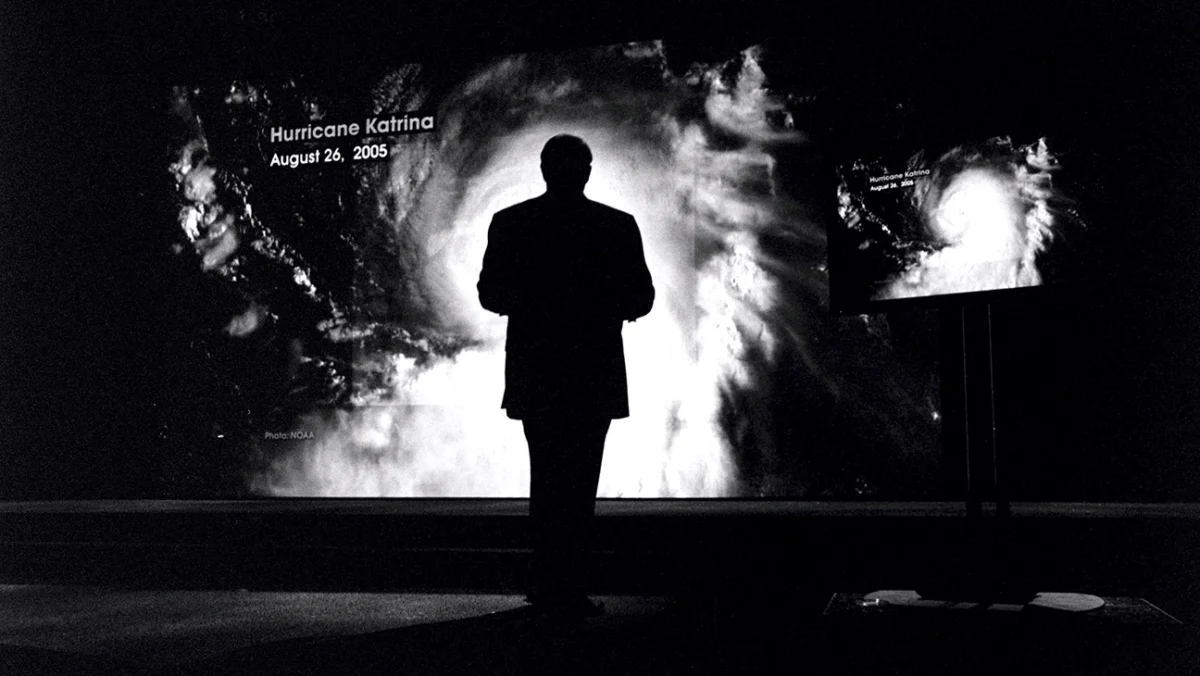
Nearly two decades after its seismic release, Davis Guggenheim’s 2006 documentary An Inconvenient Truth continues to resonate, not merely as a historical artifact, but as a prescient warning and a catalyst for change. The film, which brought former Vice President Al Gore’s impassioned climate change presentation to the silver screen, has indelibly marked public consciousness, shifting perceptions and inspiring a generation to confront the escalating climate crisis. As the documentary approaches its twentieth anniversary, its impact is being re-examined amidst a complex geopolitical landscape, evolving scientific understanding, and a renewed urgency to address environmental degradation.
The Genesis of a Movement
The journey of An Inconvenient Truth began not in a Hollywood studio, but in a quiet presentation room. In the summer of 2005, Guggenheim, then a rising documentarian, attended a slideshow by Al Gore at the Beverly Hilton. Invited by producer Lawrence Bender and activist Laurie David, Guggenheim found himself profoundly moved by Gore’s earnest and data-rich explanation of the escalating climate crisis. This personal encounter would soon translate into a cinematic phenomenon.
Released in May 2006, An Inconvenient Truth captivated audiences with its accessible yet urgent portrayal of the science behind global warming. Gore, presenting with a blend of intellectual rigor and personal conviction, laid bare the devastating consequences of inaction, from rising sea levels and extreme weather events to the melting of polar ice caps. The film’s power lay in its simplicity and its ability to translate complex scientific data into a compelling narrative. It was a departure from typical issue-oriented documentaries, presenting a crisis not as an abstract concept but as an immediate and tangible threat to human civilization.
The film’s theatrical run saw approximately 4 million viewers in North American cinemas, with tens of millions more engaging with it through various platforms in the subsequent years. Its impact was profound, with many viewers reporting a fundamental shift in their understanding and concern for climate change. The documentary’s success was further amplified by its critical acclaim, culminating in an Academy Award for Best Documentary Feature.
A Shifting Landscape: From Awakening to Obstruction
In its initial release, An Inconvenient Truth benefited from a unique confluence of factors. The film arrived on the heels of the eco-apocalyptic blockbuster The Day After Tomorrow (2004), which had already primed audiences for environmental disaster narratives. Furthermore, for many viewers in 2006, the re-emergence of Al Gore as a prominent voice on climate change offered a sense of hope and a counter-narrative to the prevailing political climate, where he had narrowly lost the 2000 presidential election. This created a powerful emotional resonance, allowing viewers to imagine an alternate reality where Gore’s leadership might have steered the nation towards a more sustainable path.
The documentary’s presentation of scientific predictions, particularly the time-lapse visualization of sea-level rise engulfing lower Manhattan, was met with both awe and criticism. While hailed by supporters as a crucial wake-up call, some detractors labeled it as alarmist. Guggenheim himself reflects that, in retrospect, many of the film’s predictions were, if anything, moderate. The devastating impact of Hurricane Sandy in 2012, which saw significant flooding in lower Manhattan, lent a chilling prescience to Gore’s visuals, underscoring the accuracy of the film’s forecasts.
However, as An Inconvenient Truth approaches its twentieth anniversary, the political and industrial landscape surrounding climate action has dramatically shifted. The film’s initial reception was marked by a relative bipartisanship on the issue, a stark contrast to the current environment. Under the Trump administration, the United States has seen a significant rollback of environmental regulations, characterized by a deliberate campaign to dismantle climate policies.
Statements from public officials have openly challenged the scientific consensus. For instance, the former head of the Environmental Protection Agency (EPA) famously declared, "We are driving a dagger straight into the heart of the climate change religion," a sentiment that renders the earnest pleas of An Inconvenient Truth almost comedic in their contrast to contemporary political rhetoric. The administration’s actions, such as paying a French energy company $1 billion to abandon offshore wind projects and redirecting those investments into oil and gas, exemplify this anti-climate agenda. These policy reversals, while impactful, are viewed by many as temporary setbacks.
Gore’s Enduring Optimism and Evolving Solutions
Despite the headwinds of political obstruction and public skepticism, Al Gore remains a steadfast advocate for climate action. In recent interviews, Gore expresses unwavering confidence that the global movement to address climate change is ultimately inevitable. He attributes this optimism to a fundamental shift in public opinion. "The fact that public opinion is so strongly on the side of doing something makes it inevitable that we will solve the climate crisis," he asserts.

Gore also highlights the remarkable advancements in climate solutions since the film’s release. "The availability of the solutions has advanced far more rapidly than I had hoped [in the film] 20 years ago," he notes. This rapid innovation, particularly in renewable energy technologies, has dramatically altered the economic viability and accessibility of sustainable alternatives.
The idea that An Inconvenient Truth has become a relic is a notion Gore actively refutes. He argues that the film is, in fact, more relevant today than ever before. "Every night on the TV news is like a nature hike through the Book of Revelation," he states, referring to the escalating frequency and intensity of climate-related disasters. Yet, he points to tangible progress in global adoption of climate solutions. He cites the example of Pakistan, where solar panels have become a common component of dowries, a testament to the widespread integration of renewable energy in everyday life. This anecdotal evidence, which has been fact-checked and confirmed, illustrates the grassroots adoption of sustainable technologies.
The Lasting Impact on a Generation
Director Davis Guggenheim believes that the consciousness shift initiated by An Inconvenient Truth is irreversible. "You have a whole generation that grew up with it and changed their lives because of it," he explains. "That’s not something one president can undo." This generation, having absorbed the film’s message during their formative years, has carried its lessons forward, influencing their career choices, consumer habits, and civic engagement.
The film’s influence extends to the realm of popular culture. Its hopeful narrative of scientific ingenuity and collective action to save a planet mirrors themes found in recent cinematic works like Project Hail Mary. The hypothetical scenario of younger versions of characters like Ryland Grace (Ryan Gosling) and Eva Stratt (Sandra Hüller) watching An Inconvenient Truth in 2006 and being inspired to pursue careers dedicated to averting global catastrophe is a compelling illustration of the film’s intergenerational impact.
Hollywood’s Evolving Role and Future Prospects
The landscape of Hollywood’s engagement with climate issues has also undergone significant changes. Jeff Skoll’s Participant Media, a key financial backer of An Inconvenient Truth, ceased operations in 2024, marking the end of an era for socially conscious filmmaking. Paramount, the film’s original distributor, is now under new management with a reportedly more favorable stance towards the current administration’s policies, raising questions about whether such a film would receive the same distribution support today.
Despite these shifts, the core message of An Inconvenient Truth remains potent. Gore continues his global advocacy, traveling for sustainability summits and climate conferences, maintaining a studiously nonpartisan yet firm stance on the urgency of the crisis. His message, while guarded in its optimism regarding the timeline for avoiding the most catastrophic harms, remains resolutely focused on the inevitability of victory.
"China has made massive investments in the energy sources of the future and an appreciating asset, while we are, under Donald Trump, foolishly and recklessly doubling down on a depreciating [oil] asset," Gore stated, drawing a stark contrast between international approaches to energy policy. However, he remains unfazed by political setbacks, viewing them as cyclical rather than terminal. "Donald Trump is not the first time there’s ever been a climate-policy recession. And every time, the policy comes back stronger than ever before."
Data and Analysis: The Accelerating Crisis
The scientific consensus on climate change has only strengthened since 2006. The Intergovernmental Panel on Climate Change (IPCC), the leading international body for assessing climate science, has consistently reported increasingly dire projections. Recent IPCC reports underscore that the world is warming at an unprecedented rate, with global average temperatures already approximately 1.1 degrees Celsius above pre-industrial levels. The consequences are palpable: more frequent and intense heatwaves, altered precipitation patterns leading to both droughts and floods, sea-level rise accelerating, and increased ocean acidification.
The economic implications of inaction are staggering. Studies by institutions like the Rhodium Group estimate that unchecked climate change could cost the U.S. economy trillions of dollars annually by the end of the century due to factors such as reduced agricultural yields, increased healthcare costs from extreme heat, and damage from extreme weather events. Conversely, investments in clean energy and climate adaptation offer significant economic opportunities, including job creation and technological innovation. For example, the renewable energy sector has seen exponential growth, with solar and wind power becoming increasingly cost-competitive with fossil fuels.
Looking Ahead: A Persistent Call to Action
An Inconvenient Truth served as a critical inflection point, awakening a global dialogue on climate change. While the political and environmental landscape has evolved, the fundamental truths presented in the film remain as relevant as ever. The film’s legacy lies not only in its immediate impact but in its enduring power to inspire continued action, foster innovation, and hold leaders accountable. As Al Gore aptly concludes, the fight for our planet is a long game, marked by cycles of progress and resistance, but ultimately driven by the unwavering momentum of public will and the accelerating availability of viable solutions. The documentary’s call to action, though nearly two decades old, echoes with a renewed urgency in the face of an ever-more-pressing global challenge.








