
 Prabowo Widodo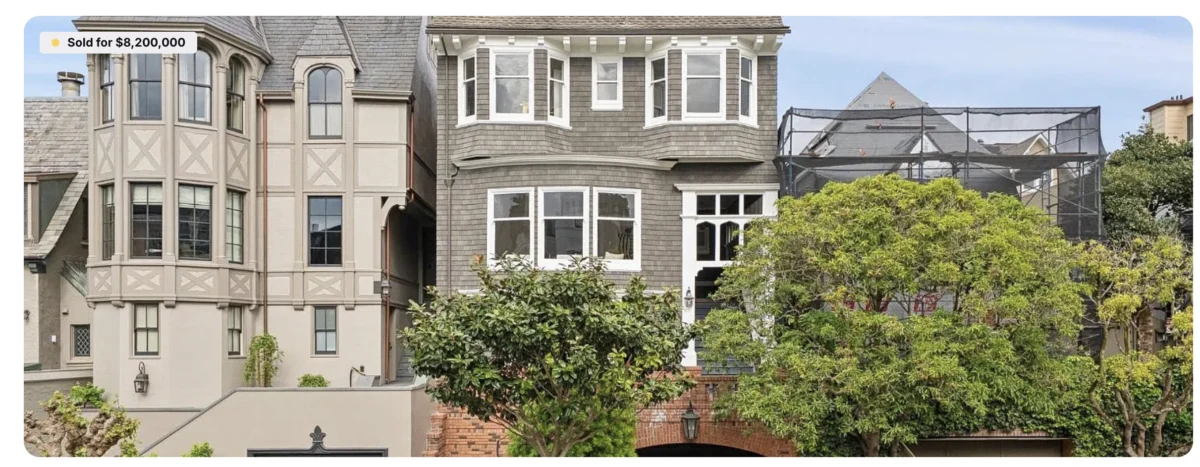
San Francisco’s real estate market, long synonymous with exorbitant prices, is currently experiencing an unprecedented surge in its high-end sector, pushing the boundaries of what even this notoriously unaffordable city deemed possible. Recent transactions reveal a market operating in a league of its own, characterized by bidding wars, rapid sales, and price escalations that are astounding even seasoned observers. This phenomenon is largely fueled by a new wave of tech wealth, particularly from employees of highly valued private companies cashing out shares in secondary markets.
Record-Breaking Sales Define the Current Landscape
The current frenzy is best illustrated by a series of headline-grabbing sales that have left the market aghast. In Cow Hollow, one of San Francisco’s most coveted neighborhoods, a six-bedroom, 5,700-square-foot residence, initially listed at $7.95 million just two weeks prior, recently closed for a staggering $15 million. This sale represents an almost doubling of value in under six years for the sellers, who had acquired the property for $7.8 million in the summer of 2020, a period when many residents were exiting urban centers due to the pandemic. The swiftness and magnitude of this appreciation prompted San Francisco real estate agent Rohin Dhar to flag the sale on X, drawing widespread incredulity from a community accustomed to market extremes.
Another notable transaction occurred in Presidio Heights, an exclusive enclave within the city. A 4,100-square-foot home, listed in late April for $4.4 million, was snapped up within a week for $8.2 million – nearly twice its asking price. Venture capitalist Nichole Wischoff, who toured the property, openly expressed her astonishment at the valuation versus the perceived quality of the asset. "Mediocre house, good location," she remarked on X, pointing out a less-than-ideal view of a neighboring, reportedly fire-damaged home. Her stark conclusion, "If you like to see cash lit on fire, come tour real estate in SF," encapsulates the prevailing sentiment among those witnessing these extraordinary transactions.
The fervor is not exclusively confined to the ultra-luxury, eight-figure segment. The middle-tier luxury market is also experiencing significant upward pressure. A 2,300-square-foot home in Bernal Heights, for instance, sold this week for $4 million – a full million dollars over its asking price. This particular sale is especially telling, as the same property had failed to sell just two years prior when listed at $2.95 million. This indicates a broad-based, aggressive bidding environment, where homes across various luxury price points are routinely commanding substantial premiums over their initial listing prices.
Supporting Data Illuminates a Divergent Market
The anecdotal evidence of an overheated luxury market is robustly supported by recent data. According to new statistics from Redfin, luxury home sales in San Francisco surged by an impressive 22% year-over-year in March. Furthermore, properties in this segment are moving off the market at an astonishing pace, going under contract in a median of just 12 days – a dramatic acceleration from the 28-day median recorded a year earlier. Nearly two-thirds of all luxury properties were under contract within two weeks, underscoring the intense buyer demand and limited supply.
In stark contrast, the non-luxury segment of the San Francisco housing market tells a different story. Non-luxury sales saw a modest increase of less than 4% over the same period, with prices remaining largely flat. This dichotomy illustrates a profound market segmentation: the high end is effectively operating in a totally distinct economic universe, insulated from the broader challenges facing the general housing market, such as higher interest rates and affordability constraints impacting first-time buyers and the middle class. The median price per square foot for luxury properties has seen a corresponding escalation, often commanding upwards of $1,500 to $2,000, significantly outpacing the citywide average. This divergence highlights a deepening wealth gap that is increasingly manifest in the urban landscape.
The Tech Economy: An Unseen Hand of Liquidity
The primary driver behind this unprecedented real estate surge is undeniably the robust and highly capitalized tech economy that defines San Francisco. The city is home to some of the world’s most valuable private technology companies, whose employees have been quietly, but systematically, accumulating substantial wealth through equity stakes. Crucially, in recent years, many of these employees have begun cashing out significant portions of their shares through secondary market transactions, injecting vast amounts of liquid capital directly into the local economy.
Companies like OpenAI and Anthropic, pioneers in the burgeoning artificial intelligence sector and now among the most valuable private companies globally, have facilitated these secondary market sales. This mechanism allows employees to monetize their equity holdings long before their companies undergo an initial public offering (IPO). The result is a substantial influx of cash into the hands of individuals who, in many cases, are already residents of the Bay Area and are looking to upgrade their living situations, invest in prime real estate, or simply deploy their newfound wealth within the local market. This flow of liquidity acts as a direct pipeline into the housing market, fueling demand at its highest echelons.
Historically, San Francisco’s real estate market has seen booms tied to tech cycles, such as the dot-com era of the late 1990s and the social media boom of the 2010s. However, the current cycle is distinct due to the sheer scale of private valuations and the mechanisms for early liquidity. Unlike previous eras where employees had to wait for an IPO to fully realize their equity gains, the mature secondary market for shares in private tech unicorns means that wealth is being unlocked earlier and more consistently, creating a sustained demand pressure on high-value assets like luxury homes. This pre-IPO wealth generation represents a significant shift, creating an immediate and profound impact on the local economy.
Expert Reactions and Broader Implications
The reactions from market participants range from awe to concern. Real estate agents describe a phenomenon where properties are receiving multiple, aggressive offers within days of listing, often sight unseen or with minimal contingencies. This hyper-competitive environment puts immense pressure on buyers to act quickly and decisively, often foregoing traditional due diligence in the race to secure a property.
From a broader economic perspective, analysts note that while such rapid appreciation signals strong economic activity at the top, it exacerbates the existing affordability crisis. Housing advocates express alarm, highlighting how this ultra-luxury boom further widens the chasm between the wealthy tech elite and the city’s middle- and lower-income residents, including essential workers, educators, and service industry professionals. The median home price in San Francisco has consistently been among the highest in the nation, hovering well over $1 million for years, making homeownership unattainable for the vast majority of its population. The current luxury surge only entrenches this disparity, threatening the city’s socio-economic diversity and increasing pressure on public services as the cost of living spirals.
The issue of housing supply, a perennial challenge in San Francisco due to restrictive zoning laws, geographical constraints, and strong community opposition to new development, remains a critical factor. Despite the soaring demand, the pace of new housing construction, particularly for single-family homes, remains stubbornly low, further intensifying competition for existing properties.
Anticipating the Next Wave of Wealth
The truly astonishing chapter of this real estate saga may still be on the horizon. A constellation of other highly anticipated tech giants, including SpaceX, other AI startups, and various enterprise software companies, have yet to go public. Conventional wisdom suggests that a significant number of these will pursue IPOs in the coming years, potentially unlocking an even more colossal wave of wealth. Thousands of employees holding substantial equity in companies valued in the hundreds of billions of dollars will become liquid almost overnight.
The implications of such an event for an already hyper-competitive housing market are, candidly, difficult to fathom. If the current secondary market liquidity is driving $15 million sales within a week of listing, the full impact of multiple major IPOs could redefine the very concept of "luxury" and "affordable" in San Francisco. For decades, San Francisco has been a punchline in discussions about housing affordability, a symbol of unattainable urban living. It will be profoundly strange, to say the least, if the current record-breaking $15 million transactions soon look like mere opening bids in a city where housing costs continue to defy conventional economic logic. The ongoing question for urban planners and policymakers will be how to manage this escalating wealth influx without completely alienating the broader populace and preserving the city’s social fabric.









