Prabowo Widodo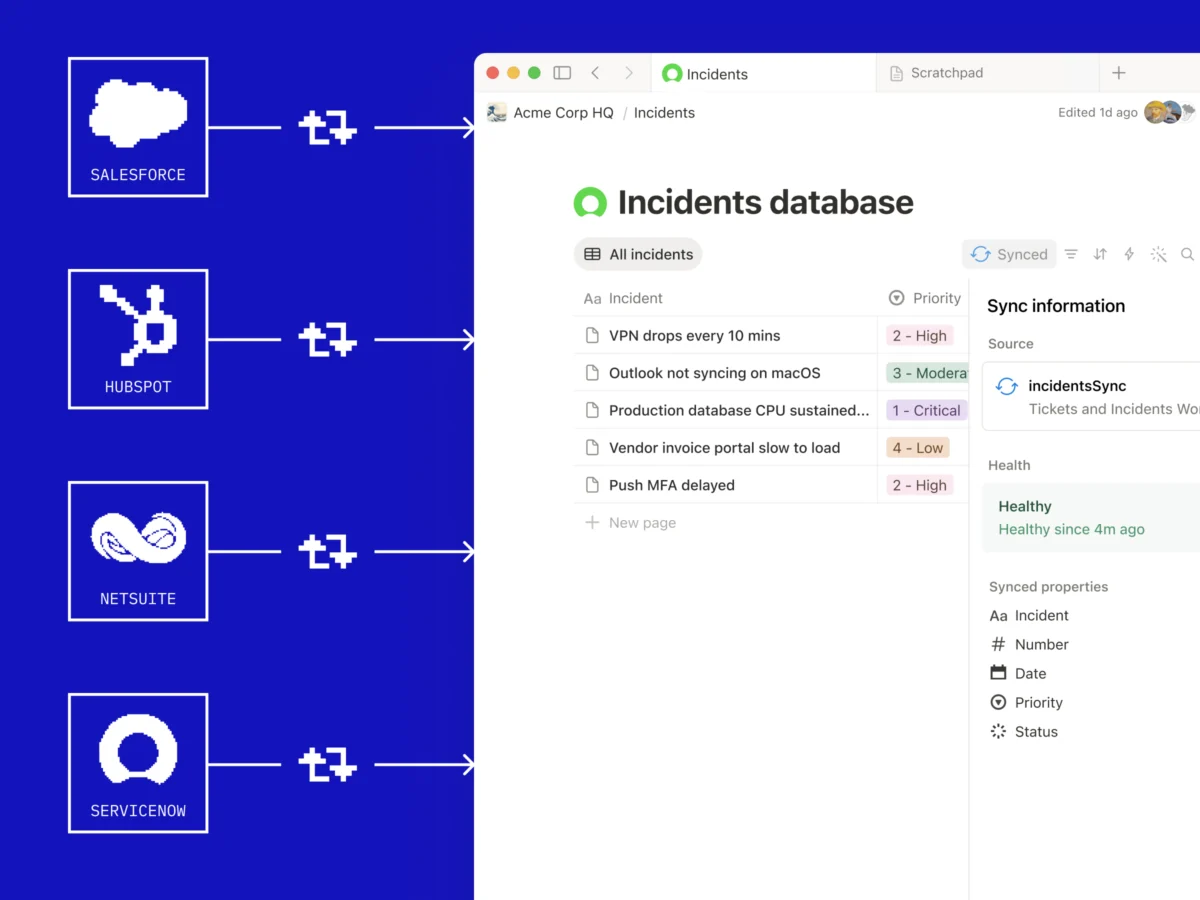
Notion, the popular productivity software maker, is embarking on a significant strategic shift, declaring its entry into the "agentic era" with the launch of a comprehensive new developer platform. In a live-streamed product announcement on Wednesday, the company, widely recognized for its versatile collaborative note-taking application, introduced a suite of advanced capabilities designed to transform its platform into a central nervous system for AI-driven workflows and integrated data. This move signals Notion’s ambition to transcend its origins as a mere note-taker, positioning itself as a pivotal hub where human and artificial intelligence can collaborate seamlessly across a multitude of tools and data sources.
The core of this transformative update lies in the creation of an "orchestration layer" — a sophisticated system engineered to coordinate AI work, automate multi-step workflows, and pull in data from virtually any database. This layer is designed to bridge the gap between Notion’s internal functionalities and the broader ecosystem of enterprise applications and external AI agents. By empowering teams to deploy custom code, synchronize external data sources, and integrate third-party AI agents directly into their workspaces, Notion aims to unlock unprecedented levels of automation and customization for its growing user base.
The Evolution of Notion and the Rise of AI in Productivity
Since its inception, Notion has carved out a unique niche in the productivity software market, evolving from a simple note-taking app into an "all-in-one workspace" that combines notes, databases, wikis, project management, and more. Its flexibility and customizable nature have garnered a loyal following among individuals and enterprises seeking a unified platform to manage diverse aspects of their work. This user-centric design philosophy has been a cornerstone of Notion’s success, allowing it to compete effectively against established giants and agile startups alike in the fiercely contested productivity software landscape, a market segment estimated to be worth hundreds of billions globally and continuously expanding with the advent of new technologies.
The integration of artificial intelligence into productivity tools has been a defining trend of the past few years. Notion first dipped its toes into this burgeoning field in February with the introduction of its Custom Agents. These AI teammates were designed to handle repetitive tasks, such as answering frequently asked questions, compiling status updates, and automating basic workflows directly within the Notion environment. The initial reception was overwhelmingly positive, with Notion reporting that its customers have since built over one million such agents, underscoring the strong demand for AI-powered assistance in daily operations.
However, these early Custom Agents, while effective for internal tasks, possessed inherent limitations. They lacked the ability to connect with external data sources or execute custom logic beyond their predefined scopes. Similarly, external AI agents that companies might already be utilizing had no direct, native way to integrate with the Notion workspace. This forced teams to resort to cumbersome workarounds, often involving third-party automation platforms like Zapier or Make.com, or dedicating significant developer resources to write custom scripts to run on their own infrastructure, creating fragmented workflows and data silos.
Acknowledging these limitations and signaling a profound shift in strategic direction, Ivan Zhao, Notion co-founder and CEO, stated during the livestream, "It’s true that, historically, Notion hasn’t been the most developer-focused platform. But things are changing." This statement encapsulates the company’s newfound commitment to empowering developers and transforming Notion into a highly programmable and extensible platform.

Unpacking the New Developer Platform: Pillars of Programmability
The new Notion Developer Platform is built upon three foundational pillars: Notion Workers, Database Sync, and Enhanced External Agent Connectivity. Each component is meticulously designed to address the previous shortcomings and propel Notion into a leadership position within the agentic era.
1. Notion Workers: Custom Logic in a Cloud Environment
At the heart of the new platform are Notion Workers, a cloud-based environment that allows customers to deploy their own custom code directly within Notion’s infrastructure. This feature is a game-changer for teams requiring bespoke functionalities that off-the-shelf solutions cannot provide. Developers can now write custom logic and deploy it to a secure sandbox – an isolated environment ensuring that the custom code operates without interfering with other systems or compromising data integrity.
The practical applications of Notion Workers are vast and varied. Teams can leverage them to synchronize data seamlessly into Notion from proprietary systems, build highly specialized custom tools tailored to unique business processes, or trigger complex workflows using webhooks. Webhooks, essentially automated signals, can kick off actions within Notion whenever a specific event occurs in another application, eliminating the need for constant manual monitoring or reliance on external, often costly, infrastructure. This significantly reduces the operational overhead and technical complexity associated with integrating Notion into sophisticated enterprise ecosystems.
An interesting aspect highlighted by Notion is the reduced barrier to entry for custom development: "You don’t even have to write the code. The company points out that your preferred AI coding agent can do it for you." This democratizes access to custom solutions, allowing non-developers to leverage AI to generate the necessary code, thereby further accelerating the adoption of tailored workflows. Notion Workers will utilize the same credit system as Custom Agents, but in a strategic move to encourage experimentation and developer adoption, Notion is offering free usage through August. This promotional period is crucial for fostering a vibrant developer community and showcasing the platform’s robust capabilities.
2. Database Sync: A Unified Data Canvas
The second pillar, Database Sync, revolutionizes how Notion handles external data. Powered by the underlying Workers infrastructure, this feature enables the platform to pull in data from any external database equipped with an API. This means that critical information residing in popular business applications such as Salesforce, Zendesk, PostgreSQL, or countless other proprietary systems can now be accessed, viewed, and interacted with directly within Notion databases.

The primary advantage here is the creation of a unified data canvas. Instead of toggling between multiple applications or struggling with outdated exports, users can maintain a real-time, current view of their most important data within their familiar Notion workspace. This not only streamlines workflows but also enhances decision-making by providing a holistic and up-to-date information repository.
Ivan Zhao underscored the profound impact of this feature, stating that it empowers Notion users to "use your Notion database as a sheer canvas to power both your workflows and your agents." This vision transforms Notion databases from mere organizational tools into dynamic operational centers where live external data can feed directly into automated workflows and intelligent AI agents, creating a truly integrated operational environment. The ability to centralize disparate data sources within Notion is a powerful proposition, addressing a common pain point for businesses struggling with data fragmentation. According to recent industry reports, data integration challenges cost businesses billions annually in lost productivity and inefficient operations, making Notion’s solution highly pertinent.
3. Enhanced External Agent Connectivity and Custom Agent Tools
The third crucial component of the developer platform significantly enhances Notion’s interoperability with the burgeoning ecosystem of AI agents. Users can now directly chat with external AI agents they utilize, assign them specific tasks, and monitor their progress, much as they would with Notion’s native Custom Agents. This fosters a seamless human-AI collaboration experience, eliminating the need for users to switch contexts or platforms when interacting with various AI tools.
At launch, Notion has partnered with several prominent AI agents, including Claude Code, Cursor, Codex, and Decagon, ensuring immediate utility for a wide range of developers and businesses. The company has also explicitly stated its plans to expand this list of supported partner agents, indicating a commitment to building a comprehensive and open AI ecosystem.
For organizations with highly specialized needs, the platform also offers an External Agent API. This allows teams to connect their own internal, proprietary AI agents – those built specifically for their company’s unique operational requirements – directly with Notion. This level of customization ensures that even the most niche internal AI solutions can be integrated into the broader Notion-driven workflow.
Furthermore, the platform allows developers to build custom agent tools with custom logic. This is particularly useful in scenarios where connecting with a third-party via MCP (Model Context Protocol) isn’t sufficient. MCP is an emerging standard designed to facilitate communication between AI tools and external data/services. By offering the ability to create custom tools, Notion ensures that even the most complex or proprietary external interactions can be handled with precision and flexibility, empowering developers to extend the capabilities of AI agents in unprecedented ways within the Notion environment.
Developer Experience and Strategic Implications

Interacting with Notion’s new Developer Platform is facilitated through the Notion CLI (Command-Line Interface), a powerful tool for developers designed for efficient management and deployment of custom solutions. This developer-centric approach, coupled with the availability of these advanced features on Notion’s Business and Enterprise Plans, underscores the company’s focus on attracting and serving the enterprise market, where the demand for deep integration and automation is most acute.
This comprehensive developer platform represents a profound strategic pivot for Notion. It moves the company beyond being merely a feature-rich application to becoming a truly programmable platform, capable of serving as core infrastructure for businesses. This redefines Notion’s competitive positioning, pitting it not only against traditional productivity suites like Microsoft 365 and Google Workspace but also against specialized workflow automation platforms such as Zapier and Make.com, and emerging AI agent orchestration platforms.
As businesses globally intensify their efforts to automate knowledge work and construct sophisticated internal AI systems, a platform that seamlessly integrates custom code, live data, and intelligent agents in a single, intuitive workspace becomes an invaluable asset. Notion’s move aligns with a broader industry trend where AI companies are evolving beyond standalone AI chatbots to offer highly agentic tools that can execute actions and interact across diverse software platforms. This shift is driven by the increasing recognition that true productivity gains come from integrated systems, not isolated tools.
The implications for the future of work are substantial. By democratizing access to powerful automation and AI integration, Notion’s platform has the potential to significantly enhance efficiency, reduce manual overhead, and free up human capital for more creative and strategic endeavors. It fosters an environment where humans and AI can truly augment each other’s capabilities, leading to more intelligent, responsive, and adaptive organizations.
Ivan Zhao encapsulated this expansive vision for the future of Notion: "Any data, any tool, any agent — that’s the big picture for the Notion Developer Platform." This statement not only articulates the breadth of the new platform’s capabilities but also firmly establishes Notion’s ambition to be the foundational layer for the next generation of digital work, where intelligent agents and interconnected data form the bedrock of enterprise productivity. This strategic evolution positions Notion to capture a significant share of the rapidly expanding market for AI-driven enterprise solutions and redefine what a productivity platform can truly achieve.