Ana Megawati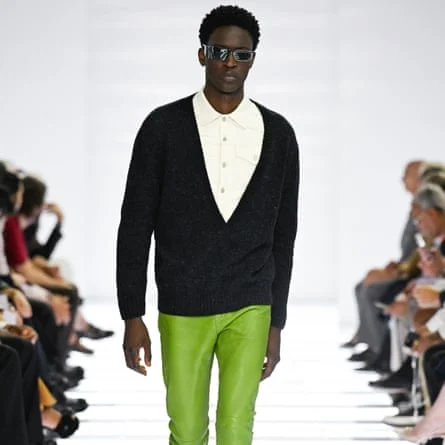
Milan, Italy – In a bold declaration that challenges conventional notions of opulence, co-creative directors Miuccia Prada and Raf Simons unveiled their latest menswear collection for Prada at Milan Fashion Week on Sunday, describing it as a deliberate effort to “break the perception of what is perceived as typical luxury in high fashion right now.” This pronouncement, made backstage before the highly anticipated show, signals a significant strategic pivot for the iconic Italian house, leaning into a purified, essentialist aesthetic that prioritizes meaning and intentionality over ostentatious display.
The collection, which forms part of the Spring/Summer 2027 season, presented a distilled vision of Prada, characterized by a conscious “rejection of experimental shapes, techniques, and decoration.” Instead, the design duo focused on crafting pieces that are inherently “intentional and meaningful,” echoing a broader cultural shift towards conscious consumption and understated elegance within the luxury sector. This approach marks a critical juncture for Prada, a brand long celebrated for its intellectual rigor and often subversive take on glamour, now actively engaging in a re-evaluation of what truly constitutes luxury in a rapidly evolving global landscape.
A Culinary Analogy for Sartorial Purity
To illustrate their philosophy, Raf Simons drew a compelling culinary parallel, comparing the collection to pasta al pomodoro – a dish renowned for its simplicity, where “little ingredients but well executed” yield profound satisfaction. This analogy underscores the meticulous attention to detail and impeccable craftsmanship applied to seemingly basic garments. The core "ingredients" of this new Prada fashion recipe, as outlined by Simons, include timeless staples: “jeans, a jeans jacket, a T-shirt, one timeless blazer, and a leather blouson.” This focus on foundational wardrobe elements, executed with unparalleled precision and luxurious materials, elevates the everyday to an art form.
The Universal Starting Point: Denim Reimagined
The designers asserted that once they had committed to their guiding principle of “one idea and variations on one idea,” their natural starting point was denim, recognizing jeans as “the most universal item in fashion.” This choice is particularly noteworthy for a luxury brand, highlighting a democratic spirit and a desire to connect with a wider audience through relatable garments.
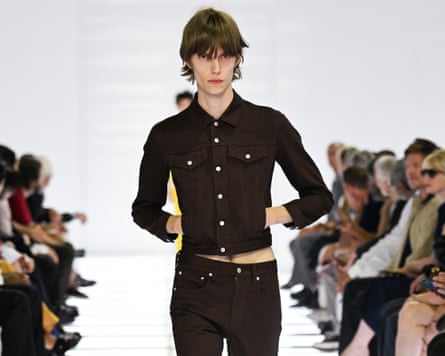
The runway show commenced with a striking opening look: white jeans, a matching white denim jacket, and a sharp navy blazer. This initial ensemble immediately set the tone for a collection that, intriguingly, eschewed traditional blue denim entirely across its 50 looks. Instead, the white jeans served as a canvas for reimagination, appearing in luxurious leather versions across an unexpected palette. Colors ranged from a vibrant banana yellow to a striking Pepto-Bismol pink and a rich aubergine, transforming the humble jean into a statement piece through material and hue.

The silhouette for all jeans and trousers was consistently skinny, tailored to hit just above the ankle bone, and paired with pointy, buckled shoes, adding a sophisticated edge. Jean jackets were cropped to sit just above the hip bones, creating deliberate flashes of flesh that introduced a subtle element of modernity and sensuality. This precise tailoring and material experimentation exemplify the collection’s commitment to re-contextualizing familiar items within a high-fashion framework.
Rejecting "Useless Design" and Embracing "Nothingness"
Miuccia Prada articulated her new obsession: the rejection of “useless design.” She stressed, “there is nothing that I hate more in this period,” signaling a strong stance against superfluous embellishment and transient trends. This sentiment reflects a growing consumer fatigue with over-the-top aesthetics and a yearning for longevity and practicality in their investments.
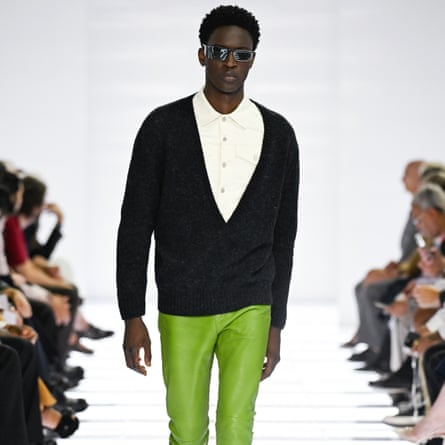
Simons, who has partnered with Miuccia Prada since 2020, elaborated on their process of taking each item and systematically "re-materializing, re-scaling, or reversing its use." This methodology breathes new life into classic forms. Leather jackets, for instance, were shrunken to create new proportions, while others were ingeniously styled underneath sleeveless patterned knits, offering unexpected layering possibilities. The collection also featured gauzy versions of jeans and jackets, appearing more like delicate underlays than traditional outerwear, blurring the lines between inner and outer garments. Accessories were minimal, limited to small bag pouches suspended from belts, styled innovatively above rather than through trouser loops, underscoring the focus on functionality and understated detail.
The catalyst for this intensive distillation process, the designers revealed, was the profound realization that “nothingness is very precise – to do this is far more difficult to achieve.” This statement encapsulates the intellectual rigor behind the collection, asserting that true simplicity and purity demand immense skill and deliberate design choices, often proving more challenging than elaborate constructions.
Prada’s Evolving Aesthetic and the Simons Partnership
The collaboration between Miuccia Prada and Raf Simons, initiated in February 2020, has been a pivotal force in shaping the brand’s contemporary direction. Simons, a celebrated Belgian designer known for his minimalist yet impactful aesthetic, joined Prada as co-creative director, a move that sent ripples through the fashion industry. This unprecedented partnership between two such influential figures was seen as a bold experiment in collaborative design, aiming to invigorate Prada’s creative output and solidify its position at the forefront of luxury fashion.
Since its inception, the partnership has consistently explored themes of utility, uniform, and the re-contextualization of everyday attire. Their previous womenswear show in February, for example, proposed the innovative concept of creating diverse outfits by simply removing or wearing the same pieces in subtly different ways. The Spring/Summer 2027 menswear collection builds upon this foundation, further refining the idea of modularity and personal interpretation. This time, however, the designers expressed a heightened excitement to witness how the audience and, crucially, their customers, would adopt and adapt these newly distilled pieces.
Wider Industry Context: Redefining Luxury in a Post-Pandemic World
Prada’s collection arrives at a moment when the luxury fashion industry is undergoing significant introspection and transformation. The past few years, marked by global upheavals and evolving consumer values, have accelerated a shift away from overt branding and towards a more nuanced understanding of luxury. The rise of "quiet luxury" – an aesthetic characterized by understated design, superior quality, and subtle branding – has gained considerable traction. Consumers are increasingly seeking timeless pieces that offer versatility and longevity, rather than fleeting trends.
According to reports from industry leaders like Bain & Company, the personal luxury goods market is projected to continue its growth trajectory, yet discerning consumers are becoming more selective. There’s a pronounced demand for items that resonate with personal values, offer genuine utility, and embody enduring craftsmanship. Prada’s focus on essential garments, elevated through premium materials and precise execution, directly taps into this prevailing sentiment. By stripping away excess, Prada is not diminishing luxury but redefining it as an experience of profound quality and intentional design.
Furthermore, Raf Simons’ comments on the historical influence of street style on fashion underscore a vital ongoing dialogue within the industry. "History has also shown us how important fashion also came from the street, from individual thinkers or from like-minded groups of people," Simons observed. "To me, at least now, right now it feels that we have to think about that and we have to maybe stimulate that again. So it doesn’t feel so much like it’s only dictated by high fashion brands and their high fashion events.” This statement highlights a desire to foster a more reciprocal relationship between high fashion and everyday style, acknowledging the organic evolution of trends from the ground up rather than solely from the top down.
Milan Fashion Week’s Enduring Influence
Milan Fashion Week (MFW) remains a cornerstone of the global fashion calendar, renowned for showcasing a blend of established luxury houses and emerging talent. Historically, Italian brands like Prada, Gucci, Versace, and Armani have been instrumental in defining sartorial trends and influencing consumer behavior worldwide. Prada, in particular, has long been celebrated for its intellectual approach to fashion, often challenging norms and setting new precedents. The city itself, with its rich heritage in design and craftsmanship, provides a fitting backdrop for such a thoughtful exploration of luxury’s future.
Prada’s show at MFW is not just a presentation of clothes; it is a cultural statement that reverberates across the industry. Coming from a brand with such significant global reach and influence, this collection could very well catalyze a broader movement towards a more minimalist, purposeful luxury that prioritizes substance over flash.
Market and Consumer Implications: Navigating Choice in a Confused Landscape
Simons also reflected on the current state of consumer choice, noting a significant contrast to his early career. He recalled how, in his early 20s, it was far easier to align with specific fashion tribes or identify with particular high fashion brands. "I was very interested in certain high fashion brands and designers and it was very easy to decide ‘that’s what I want’ but now it can be very confusing.” This observation speaks to the overwhelming proliferation of brands, trends, and digital content that can disorient even the most fashion-savvy consumer today.
In this environment of abundant choice, Prada’s simplified, focused offering could serve as a welcome antidote, providing clarity and a sense of direction. By distilling their collection to essential, impeccably crafted pieces, Prada aims to offer consumers not just garments, but a philosophy – an invitation to invest in enduring style and quality rather than succumbing to fleeting fads.
Simons further mused on the diminished influence of the catwalk on high street fashion compared to eras like the 1990s. "Right now, I think that’s [happening] less. At the end of the day we like people on the street to wear our clothes.” This candid admission reveals a desire for their designs to transcend the exclusive realm of high fashion events and genuinely integrate into people’s daily lives. It aligns with the brand’s current strategy to create adaptable, foundational pieces that invite personal interpretation and real-world wear.
The Future Trajectory of High Fashion
Prada’s Spring/Summer 2027 menswear collection is more than just a seasonal offering; it is a strategic manifesto. By championing a "purified version of Prada" and actively challenging the prevailing perception of luxury, Miuccia Prada and Raf Simons are not only setting a new direction for their brand but potentially influencing the broader trajectory of high fashion. This emphasis on intentionality, timelessness, and the re-evaluation of everyday essentials positions Prada at the vanguard of a movement that seeks to make luxury more meaningful, more enduring, and ultimately, more relevant to the contemporary consumer. As the fashion world continues to grapple with questions of sustainability, authenticity, and value, Prada’s bold pivot towards "nothingness as precision" offers a compelling vision for the future of style.