Danny Garick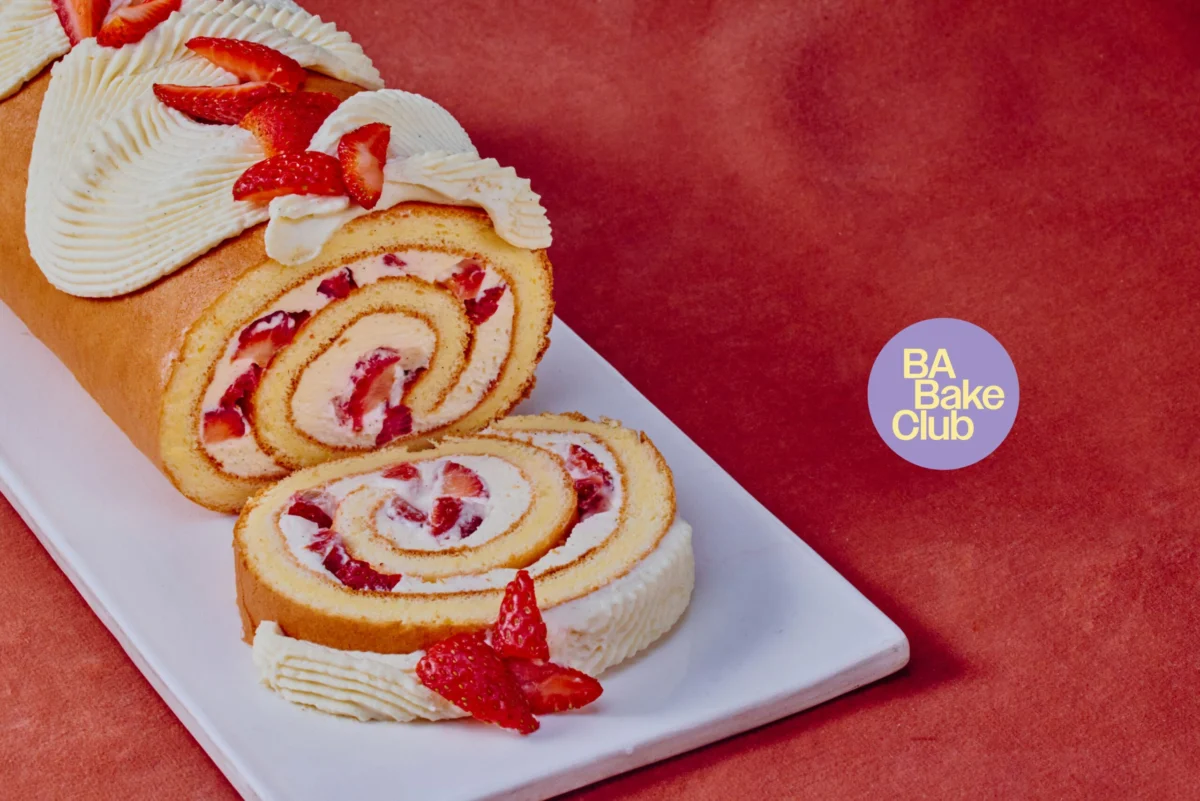
The Bon Appétit Test Kitchen has officially designated the Strawberry Roll Cake as its "unofficial birthday cake," marking a significant moment for the publication’s growing Bake Club community. Senior Test Kitchen editors Shilpa Uskokovic and Jesse Szewczyk recently detailed the evolution of this specific recipe, which has transitioned from a staff-favorite celebration dessert to a central teaching tool for home bakers. The announcement coincided with the inaugural "Baker of the Month" award and a high-profile guest appearance by celebrated Australian cookbook author and food stylist Donna Hay, who joined the program to discuss her latest literary contribution, Sunshine, Lemons and Seasalt.
The Evolution of the Strawberry Roll Cake
The Strawberry Roll Cake’s journey to the center of the Bon Appétit Bake Club began several years ago with a request from Deputy Food Editor Hana Asbrink. Seeking a dessert featuring strawberries and cream for her birthday, Asbrink prompted Uskokovic to develop a roll cake that balanced aesthetic elegance with structural reliability. The recipe proved so successful within the internal Test Kitchen environment that it was eventually selected as a primary curriculum piece for the Bake Club, a digital community designed for "confident and curious" bakers.
Uskokovic noted that the development of the vanilla-based roll cake was inspired by professional techniques observed in high-level pastry production, specifically those emphasizing a "chiffon" base. Unlike traditional Swiss rolls or jelly rolls, which can be temperamental and prone to cracking, the Bake Club version utilizes a specific fat-to-protein ratio designed for flexibility. The recipe serves as a follow-up to Uskokovic’s previously successful chocolate Swiss roll featured on Epicurious, aiming to provide a versatile vanilla foundation for seasonal fruit variations.
Technical Analysis: Chiffon vs. Traditional Sponge Bases
A central theme of the Bake Club’s educational mission is the categorization of cake structures. Uskokovic and Szewczyk provided a technical deep dive into the two primary categories of cake: foaming method cakes and butter cakes.
- Foaming Method Cakes: These cakes, including sponge, Genoise, and chiffon, rely on whipped eggs (either whole or separated) for aeration. They are typically light, airy, and capable of absorbing significant amounts of moisture, such as syrups or creams.
- Butter Cakes: These utilize the creaming method, where fat and sugar are beaten together to create a dense, tender crumb. Examples include pound cakes and standard layer cakes.
The Strawberry Roll Cake utilizes a chiffon base, which Uskokovic describes as a "revolutionary" choice for home bakers. Chiffon cakes occupy a unique middle ground; they use the foaming method for lift but incorporate liquid fat—specifically oil—to ensure the cake remains moist and pliable. This structural integrity allows the cake to be rolled after it has completely cooled, bypassing the traditional requirement to roll cakes while hot to "set" their memory, a step that frequently leads to cracking in less resilient sponge recipes.
Recipe Accuracy and Digital Corrections
In a move toward transparency common in modern culinary publishing, the editors addressed a discrepancy between the print and digital versions of the Strawberry Roll Cake recipe. Uskokovic issued a formal clarification regarding an error in the print edition of the magazine. The print version incorrectly instructs bakers to whisk egg yolks and flour together first, resulting in a thick, clumpy paste that is difficult to aerate.
The corrected digital version, available on the Bon Appétit website, outlines the proper sequence: whipping the egg whites to a specific "satin" sheen before folding in the remaining components. This correction highlights the industry-wide shift toward digital-first updates, where technical errors in static print media are remediated through dynamic online platforms to ensure consumer success.
Supporting Ingredients and Stabilization Techniques
The Bake Club recipe introduces several professional-grade tips intended to improve the reliability of delicate desserts. One such technique is the use of cream of tartar in the egg-white whipping process. Citing the influence of legendary baker Rose Levy Beranbaum, Uskokovic explained that the acidic nature of cream of tartar stabilizes the egg proteins. This serves as "insurance" against over-whipping, which can cause the egg whites to become dry, grainy, and lose their ability to expand in the oven.
Furthermore, the filling of the cake utilizes a stabilized whipped cream. While many traditional recipes rely on gelatin or heavy reduction, Uskokovic advocates for the addition of a small amount of instant pudding mix. This ingredient not only provides structural stability, allowing the cake to hold its shape for several hours or even overnight, but also contributes a specific "mouth-filling" richness that plain whipped cream lacks.
Community Engagement and the Baker of the Month
The Bake Club has successfully leveraged the Substack platform to foster a "nerdy and wholesome" corner of the baking internet. This month, the program celebrated its inaugural "Baker of the Month" award, granted to community member Megan Moore. Moore’s submission was noted for its technical precision and creative presentation, specifically her use of heart-shaped strawberry slices and a "modesty garment" of cream to seal the ends of the roll.
The community interaction also addressed common troubleshooting issues, such as "cake skin" adhesion. Several bakers reported that the outer layer of the cake occasionally sticks to the parchment paper during the rolling process. The editors analyzed this phenomenon, suggesting it is often a result of moisture interaction during refrigeration. Their recommendation for such aesthetic "flaws" is a pragmatic one: either fully remove the "skin" for a uniform look or use decorative piping to mask any imperfections.
Guest Feature: Donna Hay and the Philosophy of Simplicity
A significant highlight of the recent Bake Club session was the appearance of Donna Hay, an icon of the Australian culinary scene. With a career spanning 28 award-winning cookbooks and a long-running magazine, Hay has been instrumental in defining the modern aesthetic of food styling—characterized by bright, minimalist, and accessible imagery.
Hay discussed her latest book, Sunshine, Lemons and Seasalt, which she produced at her home near the ocean in Sydney. The book focuses on a philosophy of "one hero ingredient, one unexpected accent, and one simple technique." Hay emphasized that high-quality summer produce requires minimal intervention, a sentiment that resonates with the Bake Club’s focus on seasonal strawberries.
During the segment, Hay shared her own "trauma" regarding roll cakes from her culinary school days, noting that the traditional English sponge recipes she was taught were often dry and difficult to handle. She praised Uskokovic’s use of oil in the chiffon base as a "genius" solution to the common problem of cracking. Additionally, Hay introduced the community to her favorite kitchen tool: the "spoonula," a hybrid silicone utensil that combines the scraping capabilities of a spatula with the scooping function of a spoon.
Broader Impact and Future Outlook
The success of the Strawberry Roll Cake feature underscores a broader trend in the food media industry: the move away from "perfect" aspirational content toward community-driven, educational experiences. By addressing failures, correcting print errors, and providing scientific context for ingredient choices, Bon Appétit is repositioning itself as a technical resource for the modern home baker.
Looking ahead, the Bake Club has announced its theme for May: Whole Lemon Bars. This upcoming recipe continues the trend of maximizing ingredient potential, utilizing a blender to process entire lemons—including the pith and peel—to create a custard that captures the full floral and bittersweet spectrum of the fruit. This method aligns with the "whole fruit" cooking trends currently gaining traction in both professional pastry kitchens and sustainable home cooking circles.
As the Bake Club continues to expand its reach via Substack and digital audio platforms, the focus remains on building a foundation of "confidence and curiosity." By demystifying complex architectural bakes like the roll cake, the program aims to equip its members with the skills necessary to adapt and innovate within their own kitchens, ensuring that the "unofficial birthday cake" of the Test Kitchen becomes a staple in households worldwide.