Jono Maryono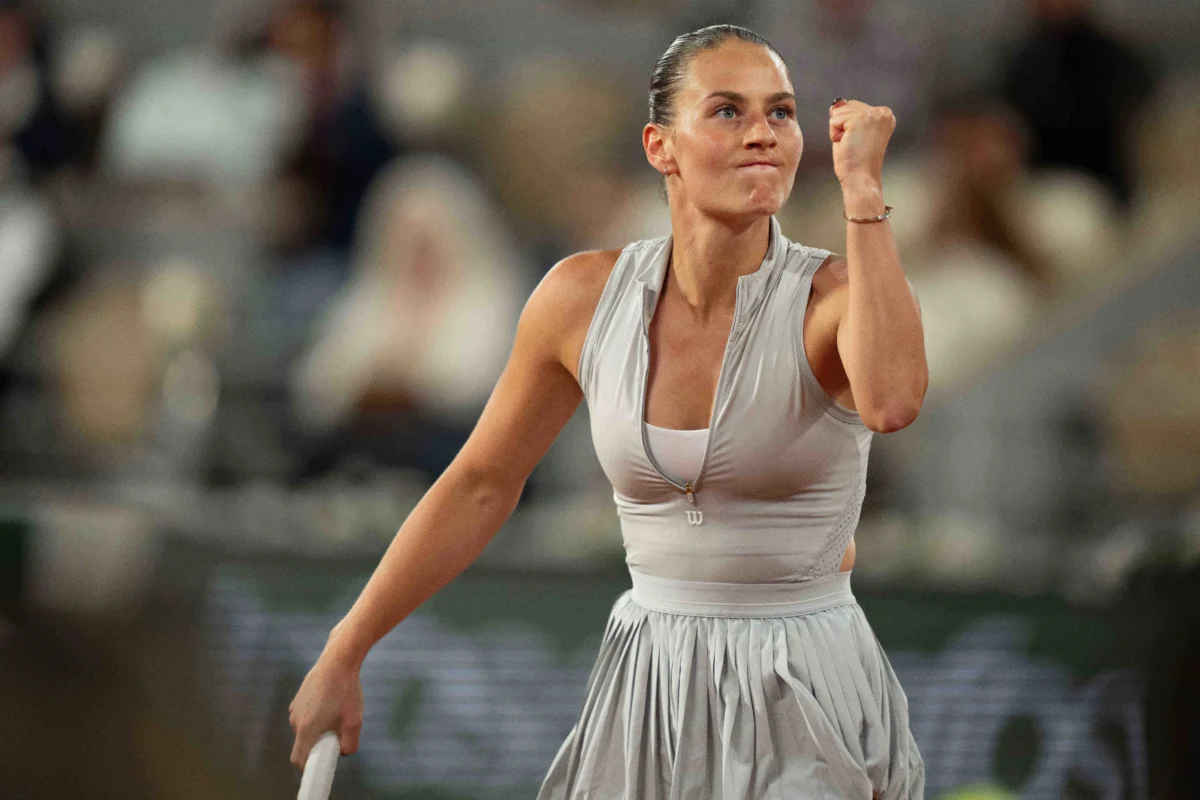
Marta Kostyuk has reached her maiden Grand Slam semifinal at the French Open, securing a hard-fought victory over fellow Ukrainian Elina Svitolina. In the aftermath of her emotional quarterfinal win, Kostyuk issued a powerful and pointed critique of Russian athletes, accusing them of deliberately obscuring their stance on the ongoing war in Ukraine and urging them to break their silence. Her comments come in the wake of continued Russian military aggression, including strikes on Kyiv that occurred just hours before her match.
Kostyuk’s Emotional Victory and Scathing Accusations
The 23-year-old Ukrainian player triumphed over Svitolina with a final score of 6-3, 2-6, 6-2 on Court Philippe-Chatrier. The match, steeped in the personal and national significance for both competitors, was played against a backdrop of grim news from their homeland. Following the intense on-court battle, Kostyuk turned her attention to the broader political landscape, directly addressing the silence maintained by many Russian athletes regarding the invasion of Ukraine, now in its fourth year.
"After four years, I think they’ve made it very clear whose side they are on," Kostyuk stated during her post-match press conference, her voice carrying a mixture of determination and weariness. She expressed her unwillingness to accept the rationale that Russian players must remain silent due to potential repercussions in their home country.
"There is a way if you don’t agree," Kostyuk elaborated. "I know some people who have left Russia the moment the war began, who sold all their business, who left everything behind because they just don’t agree with what their country is doing to other people."
The Silence of Russian Athletes and a Call for Clarity
Kostyuk’s remarks were a direct response to a recurring theme in tennis press conferences, where Russian players, including her upcoming semifinal opponent Mirra Andreeva and Diana Shnaider, have consistently stated their preference to focus solely on the tennis ball and avoid political discussions. Kostyuk, however, believes this stance is no longer tenable given the duration and severity of the conflict.
"They are all grown-ups. They know what they’re talking about. They know what’s going on. They have phones. They have Instagram. They have news," Kostyuk asserted, emphasizing the accessibility of information to athletes regardless of their location. "I wish there was some more clear stance on what’s going on, especially when your country is killing other people."
She highlighted the example of Daria Kasatkina, a prominent Russian player who publicly condemned the war and subsequently switched her sporting allegiance from Russia to Australia. Kostyuk noted that Kasatkina’s decision to speak out, despite the potential pressure on her family, demonstrated that alternative paths exist for those who wish to express dissent. Kostyuk pointed out that many Russian athletes, like Kasatkina, do not reside in Russia, further undermining the argument of unavoidable repercussions.
A Deeply Personal Victory and a Symbol of Resilience
The emotional weight of Kostyuk’s quarterfinal victory was palpable. She dedicated her win to the Ukrainian people, revealing that she had woken up to news of another night of deadly bombings in Kyiv before checking on the safety of her family. This personal connection to the ongoing conflict imbues her performance with a significance that transcends mere athletic achievement.
"With everything that’s happening, for me being here is a real blessing, and I don’t think about winning," Kostyuk confided. "I’m here to represent Ukraine and to enjoy." This statement underscores the profound sense of duty and purpose that fuels her participation in the tournament, transforming her journey into a potent symbol of Ukrainian resilience on the global stage.
Background: The Roland Garros Tournament and the Shadow of War
The French Open, one of the four Grand Slam tennis tournaments, is an annual spectacle held at the Stade Roland Garros in Paris. It is a prestigious event that attracts the world’s top tennis talent and captivates millions of viewers globally. However, since February 2022, the tournament, like all international sporting events, has been played under the long shadow of the full-scale Russian invasion of Ukraine.
The sporting world has grappled with how to respond to Russia’s aggression. International federations have implemented various sanctions, including bans on Russian teams and athletes in certain competitions. In tennis, while Russian and Belarusian athletes are allowed to compete as individuals under neutral flags, the debate surrounding their public statements on the war has persisted. The International Olympic Committee (IOC) has recommended that athletes from these nations be excluded from international competitions, though individual sports federations have made their own decisions. The Association of Tennis Professionals (ATP) and the Women’s Tennis Association (WTA) have allowed Russian and Belarusian players to compete, but have disallowed the display of national symbols.
Chronology of Events Leading to Kostyuk’s Statement
- February 24, 2022: Russia launches a full-scale invasion of Ukraine, escalating the conflict that began in 2014.
- March 2022: Tennis governing bodies (ATP, WTA, ITF) allow Russian and Belarusian players to compete as neutrals, banning national flags and anthems. Wimbledon controversially bans Russian and Belarusian players entirely for its 2022 tournament, a decision later overturned by the ATP and WTA, leading to sanctions against Wimbledon.
- Ongoing: Russian strikes continue to target Ukrainian cities, including Kyiv, often occurring during significant events or overnight.
- May 2024 (French Open): Marta Kostyuk progresses through the tournament, reaching the quarterfinals.
- June 4, 2024: Hours before her quarterfinal match, news emerges of renewed Russian strikes on Kyiv.
- June 4, 2024: Kostyuk defeats Elina Svitolina in a three-set thriller, advancing to her first Grand Slam semifinal.
- Post-match Press Conference: Kostyuk delivers her strong condemnation of Russian athletes’ silence on the war.
Supporting Data and Context
The ongoing conflict has had a profound impact on Ukraine and its people. According to the United Nations Human Rights Monitoring Mission in Ukraine, as of early June 2024, tens of thousands of civilians have been killed or injured since the full-scale invasion began. Millions of Ukrainians have been displaced internally or have sought refuge in other countries. The infrastructure of cities and towns has been devastated by shelling and missile attacks.
In the realm of sports, the war has created deeply divisive situations. Athletes, coaches, and sports federations have faced immense pressure to take clear positions. The debate over neutrality versus condemnation highlights the complex ethical dilemmas presented by geopolitical conflicts within the global sporting arena. Kostyuk’s outspokenness is not an isolated incident; other Ukrainian athletes have also used their platforms to draw attention to the war. However, the sheer prominence of the Grand Slam stage amplifies her message.
Analysis of Implications: The Pressure on Russian Athletes and the Future of Neutrality
Kostyuk’s direct challenge to her Russian counterparts has significant implications. It places increased pressure on players like Mirra Andreeva, who is scheduled to face Kostyuk in the semifinal. Andreeva, a rising star in women’s tennis, has previously stated her desire to remain focused on her game. Kostyuk’s words may force her and others to confront the uncomfortable reality of their national identity in the context of the war, potentially leading to more vocal stances or further entrenchment in neutrality.
The broader implication is the ongoing debate about the role of athletes in times of conflict. Kostyuk’s argument suggests that neutrality, particularly for those who do not face direct repercussions, can be interpreted as tacit acceptance or indifference. This perspective challenges the long-held notion that sports should remain separate from politics. As the war continues, the line between athletic performance and political statement is likely to remain blurred, with athletes like Kostyuk acting as powerful advocates for their nations and for broader human rights concerns.
The question of "whose side they are on" is not just a moral one for Kostyuk; it is a reflection of the lived reality of her country. Her performance on the court, coupled with her forthright commentary off it, makes her a compelling figure at this year’s French Open, symbolizing not just athletic excellence but also a profound commitment to her nation’s struggle for survival and justice. The coming days will reveal whether her powerful message resonates and prompts further dialogue or action from the Russian contingent in the sport.