Ana Megawati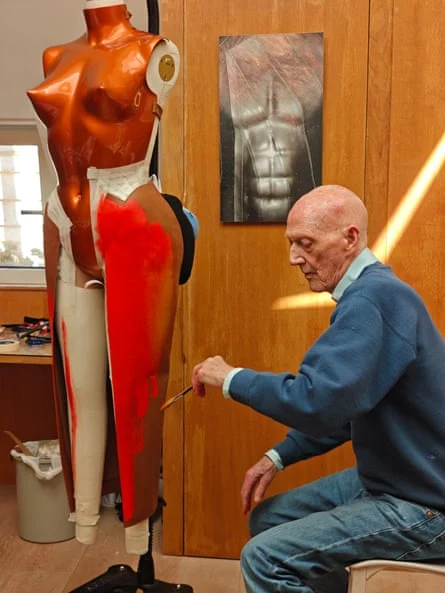
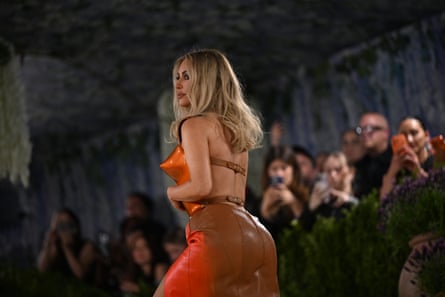
At Monday’s Met Gala, a night synonymous with groundbreaking fashion and celebrity spectacle, Kim Kardashian West once again commanded global attention, delivering what many observers considered the evening’s most significant artistic statement. Diverging from her customary role as a high-profile ambassador for established luxury fashion houses, Kardashian chose a provocative, sculptural orange fibreglass breastplate. This audacious piece was the result of an unexpected collaboration between the acclaimed East London art duo Whitaker Malem, the veteran British pop artist Allen Jones, and a car bodyshop in Kent, England, directly interpreting the gala’s "fashion is art" dress code, which explored the human body—both dressed and undressed—as a perpetual through-line in artistic expression.
The Met Gala: A Canvas for Artistic Interpretation
The Met Gala, formally known as the Costume Institute Gala, stands as one of the most exclusive and highly anticipated annual events in the fashion and art calendars. Held at the Metropolitan Museum of Art in New York City, it serves as the primary fundraising event for the museum’s Costume Institute, typically raising tens of millions of dollars each year. Chaired by Vogue‘s formidable editor-in-chief, Anna Wintour, the gala dictates a specific theme that guests are encouraged to interpret through their attire, transforming the red carpet into a living exhibition. This year’s theme, "Fashion is Art," invited a nuanced exploration of the intersection between haute couture and fine art, prompting designers and celebrities to delve into art history, sculptural forms, and conceptual expression. Previous themes have ranged from "Heavenly Bodies: Fashion and the Catholic Imagination" to "Camp: Notes on Fashion," each challenging attendees to push creative boundaries.
Kardashian, a perennial fixture at the Met Gala, has a history of delivering memorable and often controversial looks. From her floral Givenchy gown in 2013 to her "wet look" Mugler dress in 2019, she consistently understands the assignment: to generate conversation and capture the zeitgeist. This year, however, her choice signaled a notable shift. Instead of showcasing a brand, she embraced the role of a patron, commissioning an original art piece that transcended mere clothing to become a wearable sculpture. Her decision to champion smaller, independent artisans and collaborate with a fine artist like Allen Jones underscored a deeper engagement with the "fashion is art" premise. Patrick Whitaker, 61, half of the Whitaker Malem design practice, articulated the impact succinctly: "Good art should start conversation, and Kim did exactly that." He also noted Kardashian’s palpable nervousness, acknowledging the intense competition among attendees to make the most impactful statement. Adding to this competitive landscape, Anna Wintour reportedly informed Kardashian that five other guests, including her half-sisters Kylie and Kendall Jenner, would also be wearing breastplates, suggesting a burgeoning trend in soft armour and sculpted forms. For a figure of Kardashian’s global renown, opting for such a bold and potentially polarizing piece was a calculated risk.

The Artistic Lineage: Whitaker Malem and Allen Jones
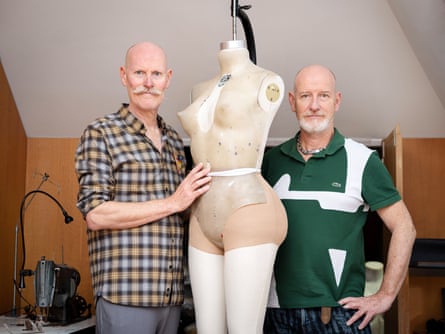
The journey of Kardashian’s breastplate began with Whitaker Malem, a design duo comprising Patrick Whitaker and Keir Malem, 60. Established in 1988, the pair eschew labels like "artists" or "designers," preferring the moniker "pop artisans." Their specialty lies in bespoke leatherwork, particularly a unique wet-moulding and sculpting technique that treats leather much like clay or a sculptor’s medium. Their creations, limited to about a dozen garments annually and starting at £5,000 per piece, are highly sought after by those seeking truly distinctive wearable art.
The collaboration’s most intriguing dimension, however, was the involvement of Allen Jones. A seminal figure in British pop art, Jones is renowned for his provocative and often controversial sculptures, particularly his "fetishistic furniture" series created between the early 1970s and 2015. These works, featuring life-sized fiberglass figures of topless women posed as tables, chairs, and hatstands, ignited fierce second-wave feminist outrage upon their initial exhibition. Critics decried them as misogynistic and objectifying, sparking decades of debate about art, gender, and representation. Despite the controversy, Jones’s work has undeniably left an indelible mark on the fashion industry, influencing designers like Thierry Mugler with his armoured silhouettes and even permeating commercial imagery like the Pirelli calendar. By integrating a mould derived from Jones’s 1969 Hatstand sculpture, the Met Gala breastplate directly referenced this contentious artistic lineage, bringing its complex history of body representation to fashion’s most prominent stage.
The Crafting Process: From Concept to Car Finish
The genesis of the breastplate was remarkably swift and direct. In early April, Whitaker Malem received a direct call from Kim Kardashian, expressing her interest in commissioning a piece for the Met Gala. This initial contact quickly evolved into a hands-on creative process. Whitaker recounted a candid video call from their seaside home in Kent: "We were just talking about how firm her body was, and she was just showing me her breasts on a video call whilst Keir and his dad were eating their dinner in the background." This anecdote highlights the intimate and unconventional nature of the bespoke design process, particularly when working with a client as uninhibited as Kardashian.
The following week, Kardashian flew to the UK, bringing one of her body dummies "chucked in the hold like it was a Volvo" to Allen Jones’s Oxfordshire home. There, Whitaker Malem cast the breastplate from an original mould based on Jones’s iconic Hatstand sculpture. Kardashian tried on various fibreglass moulds, and to the artisans’ surprise, her measurements—particularly her waist and upper torso—were an almost perfect fit. "We’d never seen an Allen Jones breastplate fit anyone so well," Whitaker remarked, underscoring the unexpected synergy, especially given that Jones’s original sculptures were "aren’t really designed to be worn." Following this initial success, Kardashian made a special trip to East London to try on the evolving breastplate, ensuring a precise and comfortable fit. To complement the sculptural fibreglass, Whitaker Malem added a hand-painted leather skirt, integrating their signature material and artisanal touch.
The final, distinctive touch was the "car body finish" Kardashian had specifically requested. This task fell to Martyn Smith, who operates MPS Body and Paint, a bodyshop in Lydd, Kent. Smith, a specialist in automotive finishes, meticulously applied multiple layers to achieve the desired effect: "It was several layers, so primers and stoppers and the final paint was solvent base, and finished with a gloss lacquer," he explained. The process took a full day, yielding a result that impressed even Smith, who admitted to not being a follower of Kardashian or fashion. "I was worried, though. I’m not a follower of Kim Kardashian or fashion, but I knew it was going to appear at a big event," he said, highlighting the unusual nature of the commission for his workshop. Whitaker’s casual endorsement, "Martyn does our Jag, so we know he’s reliable," humorously underlined the trust placed in Smith’s craftsmanship. The finished breastplate, remarkably, weighed no more than a bag of flour, and Kardashian wore it with nothing underneath, embodying the "undressed human body" aspect of the theme.
The logistics of transporting such a unique and fragile piece across continents were also a feat. A few days before the gala, a "poor flustered man" flew first-class from Los Angeles to collect the breastplate. Facing the challenge of securing a seat for an item that "didn’t have a name," the piece ultimately traveled in the overhead locker on a transatlantic flight to New York, a testament to the eleventh-hour scramble often associated with high-stakes celebrity events.
A Legacy of Innovation and Cinematic Influence
Whitaker Malem’s involvement in this high-profile project is a culmination of decades of pioneering work. Patrick Whitaker and Keir Malem’s journey began at St Martin’s, where Whitaker was a student and Malem worked in theatre. Their early breakthroughs came in the late 1980s when the pop band Bros commissioned one of their jackets, allowing them to dedicate themselves fully to their leather artistry. They have since dressed an eclectic array of celebrities, from music icon Cher to supermodel Bella Hadid, and collaborated with major fashion houses like Tommy Hilfiger and Burberry.
Their most extensive and often uncredited contributions have been in the film industry. Their work on a gilded breastplate and wing bustier for Alexander McQueen at Givenchy served as a springboard into Hollywood. They crafted Brad Pitt’s iconic skirt in Troy, designed Wonder Woman’s suit for the 2009 film adaptation, and created several memorable Bond girl costumes, including Halle Berry’s distinctive white belt in Die Another Day, which now hangs in their home. Angelina Jolie’s Lara Croft suit was another of their creations, famously sourced from materials found in London’s Ridley Road market in Dalston. While their Hollywood foray was lucrative, it was not without its frustrations, as Whitaker lamented, "In the early days, some of the costume designers bought these pieces off the rack and were pretending they designed them."
The complexities of creating Christian Bale’s Batsuit—a intricate ensemble of moulded urethane, carbon fibre, and mesh—led Whitaker Malem to embrace "the glorious body scanning game." This technological leap allowed them to produce forms via 3D printing, which are then meticulously refined by hand. Their signature wet-moulding process then involves draping and sculpting leather over these precise forms, a technique highly analogous to traditional footwear and millinery craftsmanship. This blend of cutting-edge technology and artisanal handwork positions them uniquely at the forefront of wearable sculpture.
Broader Implications and Artistic Dialogue
Kim Kardashian’s Met Gala breastplate is far more than just a dress; it is a profound commentary on the blurring lines between high fashion, fine art, and celebrity culture. By directly referencing Allen Jones’s controversial work, the piece ignited renewed discussions about the portrayal of the female body in art and fashion. Malem insightfully noted how Jones had "cleverly flipped this on its head" with Kardashian’s piece. Instead of the traditional, often objectifying image of "the usual girl draped across the car," Jones envisioned "putting the car on the girl," recontextualizing themes of power, vulnerability, and the fetishization of the female form within an empowering, albeit still provocative, framework.
The breastplate, a symbol of protection and strength throughout history, takes on new meaning in this context. It simultaneously shields and exposes, celebrating the body’s sculptural qualities while hinting at a modern warrior persona. This deliberate ambiguity aligns perfectly with the Met Gala’s intention to provoke thought and conversation. Kardashian’s choice to work with independent artisans and a storied, yet controversial, artist like Jones also highlights her influence as a cultural tastemaker, capable of elevating niche practices onto a global stage. Her platform amplifies the artistic discourse, forcing audiences to reconsider the historical baggage and contemporary relevance of such imagery.
In a world increasingly captivated by visual culture, the collaboration between Whitaker Malem, Allen Jones, and Kim Kardashian at the Met Gala serves as a powerful testament to the enduring capacity of fashion to challenge, inspire, and, most importantly, start conversations. It underscored that art, in its myriad forms, remains a potent vehicle for expressing complex ideas about identity, society, and the human condition.