Ferry Irwandi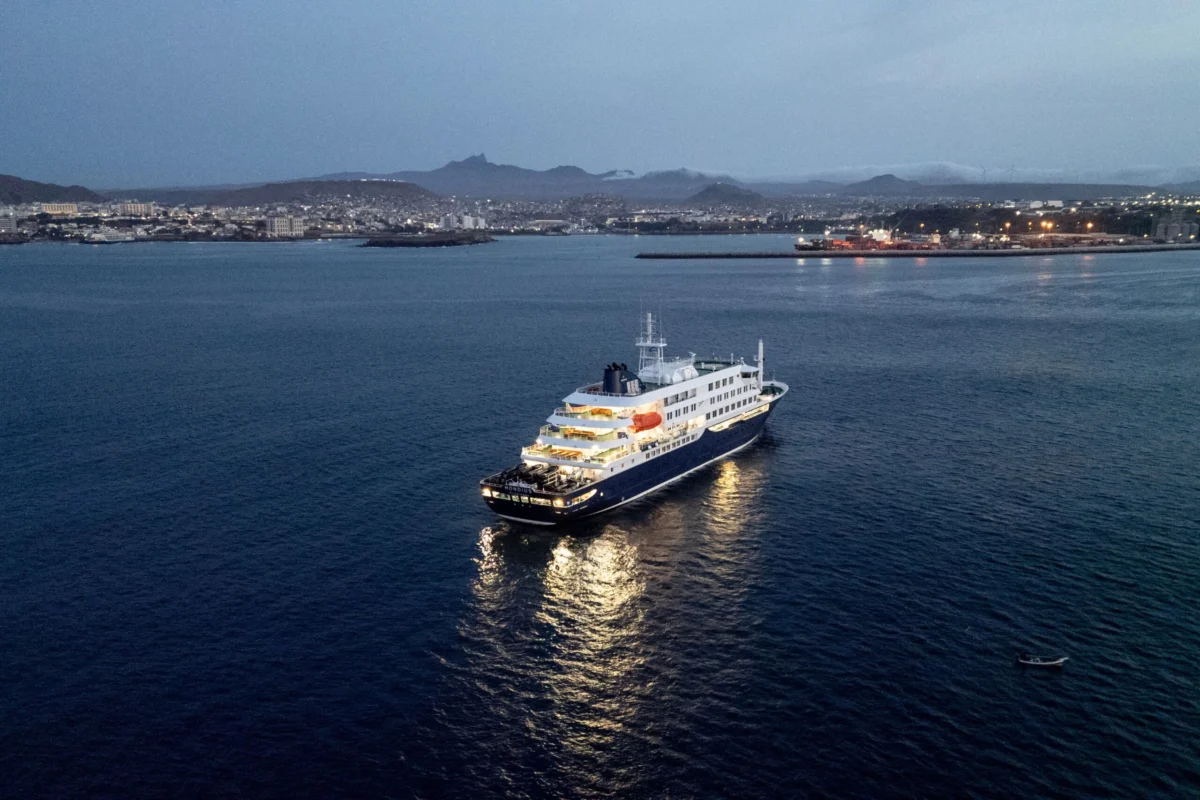
The World Health Organization (WHO) and international health agencies have launched a coordinated monitoring effort following a localized but deadly outbreak of the Andes strain of hantavirus aboard a Dutch-flagged expedition vessel. The outbreak, which originated during a voyage through South American waters, has resulted in three confirmed fatalities and several additional hospitalizations, prompting a global search for passengers who may have been exposed before the vessel was placed under strict public health protocols.
The vessel at the center of the crisis, the MV Hondius, operated by Oceanwide Expeditions, departed from Ushuaia, Argentina, on April 1 with 147 passengers and crew members on board. While the ship was initially intended to provide a remote expedition experience through the South Atlantic, the voyage was tragically interrupted by a series of severe respiratory illnesses. As of early May, at least eight individuals have been symptomatic, with three deaths confirmed among the ship’s complement. The situation has escalated into a complex international health investigation as authorities track passengers who disembarked at various ports and may now be in as many as 12 different countries.
Epidemiological Profile of the Andes Hantavirus Strain
The hantavirus is a family of viruses spread mainly by rodents. While most hantaviruses are transmitted to humans through the inhalation of aerosolized virus particles from rodent urine, droppings, or saliva, the Andes virus (ANDV) is uniquely concerning to public health officials. Identified primarily in South America, particularly in Argentina and Chile, the Andes strain is the only known hantavirus capable of person-to-person transmission.
According to Dr. Tedros Adhanom Ghebreyesus, Director-General of the WHO, the transmission of this specific strain usually requires close and prolonged contact. "In previous outbreaks of Andes virus, transmission between people has been associated with intimate contact, household settings, or the provision of direct medical care," Dr. Tedros stated during a press briefing. This characteristic explains why the virus managed to spread among a small cluster of individuals within the confined environment of a cruise ship, while the broader risk to the general public remains statistically low.
The clinical progression of hantavirus is often swift and devastating. The infection typically leads to Hantavirus Pulmonary Syndrome (HPS), a severe respiratory disease. Early symptoms mimic the flu, including fever, muscle aches, and fatigue, but can rapidly progress to acute respiratory distress. The Centers for Disease Control and Prevention (CDC) notes that the mortality rate for HPS is approximately 38%, making it one of the more lethal viral pathogens encountered in the Americas.
Chronology of the MV Hondius Outbreak
The timeline of the outbreak suggests that the initial exposure occurred on land, prior to the ship’s departure from South America. International health investigators believe the primary cases were a Dutch couple who had engaged in a birdwatching excursion through rural regions of Argentina, Chile, and Paraguay. These areas are known habitats for the long-tailed pygmy rice rat (Oligoryzomys longicaudatus), the primary reservoir for the Andes virus.
On April 1, the MV Hondius departed Ushuaia for its scheduled itinerary. By mid-April, the first signs of illness appeared among the Dutch couple. As their conditions worsened, the ship’s medical staff provided care, but the virus appears to have transitioned to at least one member of the medical team and other close contacts.
On April 24, a group of 30 passengers disembarked the vessel at Saint Helena, a remote British Overseas Territory in the South Atlantic. From there, these individuals boarded commercial flights to return to their respective home countries. It was only after this dispersal that the severity of the illness on board was fully realized, sparking a massive contact-tracing operation across four continents.
By early May, the ship was moored near Cabo Verde off the coast of West Africa. On May 6, three patients in critical condition were evacuated from the ship and transported to the Netherlands for specialized biocontainment care. On May 7, a new suspected case emerged involving a flight attendant for Royal KLM Dutch Airlines who had interacted with one of the infected passengers during a flight from South Africa to Amsterdam. The vessel is currently scheduled to dock in the Canary Islands on May 10, where Spanish health authorities and WHO representatives will conduct a comprehensive epidemiological audit.
Global Monitoring and Contact Tracing Efforts
The dispersal of passengers from Saint Helena has created a significant logistical challenge for public health agencies. Health officials in the United Kingdom, the United States, Singapore, and Switzerland have all reported that they are monitoring citizens who were aboard the MV Hondius.
In the United Kingdom, the UK Health Security Agency (UKHSA) confirmed that two British nationals are currently in self-isolation. In the United States, the CDC is coordinating with local health departments in Georgia and Arizona to monitor three travelers. Meanwhile, in Singapore, two residents have been isolated and are undergoing testing at the National Centre for Infectious Diseases.
The case of the KLM flight attendant has particularly heightened concerns regarding the potential for transmission during air travel. Dutch health officials are currently in the process of contacting all passengers who were on KLM flight KL592 from Johannesburg to Amsterdam on April 25. While the risk of transmission on an aircraft is considered low due to the lack of "prolonged and close contact" typically required for Andes virus spread, authorities are acting out of an abundance of caution.
Medical Analysis and Public Health Risk Assessment
Despite the harrowing nature of the outbreak, infectious disease experts are quick to distinguish this event from the early days of the COVID-19 pandemic. Dr. Maria Van Kerkhove, WHO’s chief of epidemic and pandemic preparedness, emphasized that the mechanism of spread is fundamentally different. "This is not the start of a COVID-like pandemic," she clarified. "Hantavirus does not spread through casual contact or broad aerosolization in the way coronaviruses do. It requires much closer interaction."
Dr. Daniel Kuritzkes, Chief of the Division of Infectious Diseases at Brigham and Women’s Hospital, noted that the Andes virus is likely spread through large respiratory droplets rather than fine aerosols. Droplets settle quickly on surfaces and do not remain suspended in the air for long periods. "The significance is that you are unlikely to be infected just by being in the same large room as an infected person," Kuritzkes explained.
There is currently no vaccine or specific antiviral treatment for hantavirus. Management of the disease relies entirely on supportive care, often involving admission to an Intensive Care Unit (ICU) and the use of mechanical ventilation or extracorporeal membrane oxygenation (ECMO) to stabilize the patient’s oxygen levels. Early intervention is the most critical factor in survival, which is why the rapid identification of exposed passengers is the current priority for the WHO.
Implications for the Cruise Industry and South American Travel
The incident has once again placed the cruise industry under the microscope regarding onboard medical protocols and the management of infectious diseases. However, industry analysts suggest that the response to the MV Hondius outbreak demonstrates a more robust integration between private cruise operators and international health bodies compared to previous years.
Oceanwide Expeditions has cooperated fully with the WHO and the Dutch government, allowing infectious disease specialists to board the ship while it was at sea to implement disinfection protocols. The company has also enforced a strict cabin-isolation policy for all remaining passengers to prevent further transmission.
For travelers planning visits to South America, health officials maintain that the risk remains negligible for the average tourist. The Andes virus is typically found in rural, wooded areas where rodents frequent barns, outbuildings, or dense vegetation. Standard tourist activities in urban centers like Buenos Aires or Santiago do not pose a hantavirus risk.
Dr. Carla McWilliams of the Cleveland Clinic advised that travelers to South American wilderness areas should take basic precautions: "Avoid areas with visible rodent activity, keep food in rodent-proof containers, and ensure that any sleeping quarters in rural areas are well-ventilated and clean."
Conclusion and Future Outlook
As the MV Hondius nears the Canary Islands, the focus remains on the health of the remaining passengers and the results of the ongoing contact tracing. The incubation period for hantavirus can extend up to six weeks, meaning that health authorities will remain on high alert through the end of May.
While the loss of life is significant, the contained nature of the outbreak and the specific requirements for the virus’s transmission suggest that the threat of a wider epidemic is non-existent. The event serves as a stark reminder of the complexities of global travel and the persistent threat posed by zoonotic diseases—illnesses that jump from animals to humans—in an interconnected world. The WHO continues to monitor the situation daily, with updates expected as the flight attendant’s test results and the condition of the evacuated patients in the Netherlands become clearer.