Layla Zulfa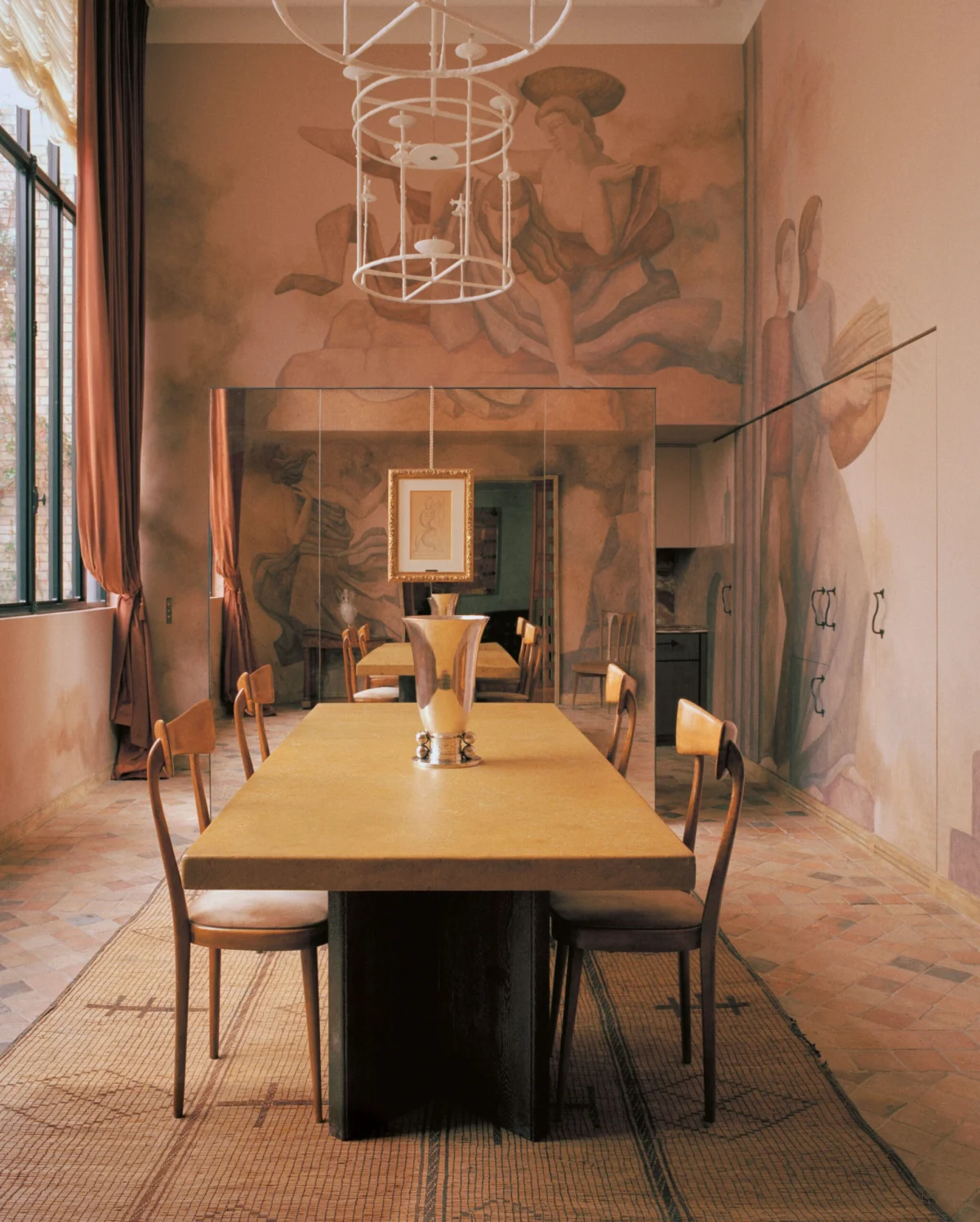
The completion of a sprawling 3,000-square-foot duplex in the heart of Paris marks what interior designer Maxime Bousquet describes as a "new era" in his professional trajectory. The project, a meticulous two-and-a-half-year renovation of a top-floor residence, serves as both a private home for a prominent collector couple and a sophisticated stage for an extensive array of blue-chip contemporary and modern art. Bousquet, a member of the prestigious AD100 France list, has transformed the space into a "jewel box" where surrealist motifs and high-concept architecture converge, effectively blurring the line between a residential sanctuary and a curated gallery.

The apartment’s design philosophy is predicated on the concept of "living with art" rather than merely housing it. Throughout the residence, works by 20th-century masters such as Pablo Picasso and Jean Cocteau are positioned alongside contemporary pieces by Sterling Ruby and Bill Viola. In the entrance hall, the tone is set by Viola’s 2006 video installation, Bodies of Light, which operates adjacent to a custom-designed staircase that ascends in a ribbon-like, sculptural spiral. According to Bousquet, the objective was to ensure the art remained a primary feature without the space feeling sterile or institutional.
Architectural Chronology and Structural Transformation
The realization of the duplex required a comprehensive structural overhaul that spanned thirty months. The project involved the unification of the building’s top two floors, a task that necessitated significant engineering interventions. One of the most complex aspects of the renovation was the decision to lower the ceiling heights in specific areas to accommodate the construction of an expansive rooftop terrace.

This outdoor space was envisioned as a contemporary homage to the legendary rooftop gardens of cosmetics pioneer Helena Rubinstein, whose Parisian residences were known for their avant-garde blend of greenery and sculpture. The newly integrated terrace is designed to function as an outdoor extension of the interior gallery, slated to feature a rotating collection of sculptures, a dedicated dining area, and a functional outdoor fireplace. This structural modification not only increased the property’s utility but also enhanced the dialogue between the interior’s surrealist themes and the Parisian skyline.
Materiality and the Fusion of Textures
Bousquet’s material palette for the apartment is a study in luxury and geological rarities. Hazelnut travertine serves as a unifying element, applied extensively from the flooring to the skirting boards. This robust stone is juxtaposed with more ethereal materials, including Taj Mahal marble and Iranian onyx, the latter of which provides a translucent, glowing quality to the surfaces it adorns.

In the living room, the interplay of textures is particularly evident. A monumental fireplace, carved from solid stone by Bousquet himself, stands in contrast to delicate blown crystal lamps sourced from Milan. The designer’s commitment to historical authenticity and unique sourcing led him to the Galerie Jacques Lacoste, where he acquired several one-of-a-kind objects. Notable among these are bronze wall lights featuring a natural patina, originally used to illuminate a swimming pool in a previous mid-century installation.
The bar area further exemplifies this eclectic but disciplined approach. It features a brutalist monk’s chair from the early 1900s paired with a 1930s pendant light designed by Pietro Chiesa for FontanaArte. These vintage elements provide a grounded counterpoint to the vibrant contemporary works on the walls, such as Sterling Ruby’s Friday the 13th (2009) and Joe Bradley’s untitled 2013 canvas.

Surrealism and the Centennial Influence
The timing of the project coincides with the broader cultural celebration of Surrealism, a movement founded in Paris nearly a century ago. The apartment’s design leans heavily into the avant-garde principles established by André Breton and Salvador Dalí, utilizing dreamlike imagery, distorted perspectives, and unexpected motifs to activate the unconscious mind of the observer.
The principal suite is perhaps the most direct expression of this "refined surrealism." The centerpiece is the Bocca della Verità bed, a 1960s creation by Italian sculptor Mario Ceroli. The bed features a massive pine-carved face as a headboard, a motif that echoes the fragmented and distorted portraits common in surrealist cinema and painting. The suite also incorporates a fireplace sourced from the Paul-Bert Serpette flea market, adding a layer of historical grit to the polished environment.

The transition from the bedroom to the bathroom is facilitated by a dressing room where the walls are entirely covered in a mural by Nadine Hautrive. The painting is an interpretation of Eileen Gray’s iconic 1914 four-panel screen, Le Destin, which was originally commissioned by the collector Jacques Doucet. Hautrive’s work reinterprets Gray’s lacquered aesthetic using a dramatic color spectrum that ranges from deep midnight blue to a piercing, high-gloss red.
The Dining Room Fresco: A Seasonal Allegory
While every room in the duplex offers a distinct visual narrative, the dining room is widely considered the most striking architectural and artistic achievement. The walls are enveloped in a floor-to-ceiling fresco by artist Elvira Solana. The work depicts an allegory of the four seasons, executed with an angularity that departs from Solana’s typical style to align with the 1940s-inspired spirit of the apartment.

The use of a fresco—a medium historically associated with Renaissance villas—within a modern Parisian duplex highlights Bousquet’s ability to synthesize disparate historical eras. The mural acts as a panoramic backdrop that surrounds the diners, creating an immersive environment that shifts in mood depending on the time of day and the play of light across the textured surfaces.
The Designer’s Signature: The Human Touch
In the principal bathroom, the design reaches a crescendo of custom craftsmanship. The space features a monumental basin carved from a single block of stone and a double shower accented with antique sculpture. However, it is a small, heart-shaped stool designed by Bousquet that the designer identifies as his most personal contribution.

"It’s like my signature, a little love letter that I leave to each of my clients," Bousquet remarked. This modest but symbolic piece of furniture serves to ground the high-concept design in a sense of intimacy and human connection. It stands as a testament to the designer’s philosophy: that even in a home populated by world-class art and museum-grade furniture, the ultimate goal is to create a space that feels personal and lived-in.
Contextual Analysis: The Rise of "Art-First" Interiors
The Maxime Bousquet project reflects a growing trend in the ultra-high-net-worth (UHNW) real estate market, particularly in European capitals like Paris and London. Collectors are increasingly moving away from the "white cube" aesthetic—characterized by minimalist, gallery-like interiors—in favor of "maximalist curation." This approach seeks to integrate blue-chip art into rich, textured environments that reference historical design movements like Surrealism, Art Deco, and Mid-Century Modernism.

The 2.5-year timeline for this renovation is indicative of the current demand for bespoke, highly technical interior architecture. The integration of smart home technology (as seen with the Bill Viola video installation) alongside ancient materials like Iranian onyx requires a level of multidisciplinary expertise that has elevated the role of the interior designer to that of a creative director or curator.
Furthermore, the influence of the AD100—Architectural Digest’s annual list of the world’s top design talent—continues to shape global tastes. Bousquet’s inclusion in the French edition of this list underscores his status as a leading voice in contemporary design, capable of executing projects that are as intellectually rigorous as they are aesthetically luxurious.

Conclusion and Future Outlook
As the summer season approaches, the completion of the rooftop terrace will finalize the vision for this Parisian duplex. The addition of an outdoor gallery space reinforces the home’s identity as a living organism of art. By successfully navigating the complexities of a major structural renovation while maintaining a cohesive surrealist narrative, Maxime Bousquet has established a new benchmark for collector residences.
The apartment stands not only as a showcase for the works of Picasso, Cocteau, and Ruby but also as a work of art in its own right. It proves that when architecture and art are treated with equal weight, the resulting environment transcends the traditional definitions of a home, becoming a profound exploration of history, psychology, and style. In the "new era" of Bousquet’s work, the boundaries between the dream world of Surrealism and the reality of modern living have been elegantly, and permanently, dissolved.