Layla Zulfa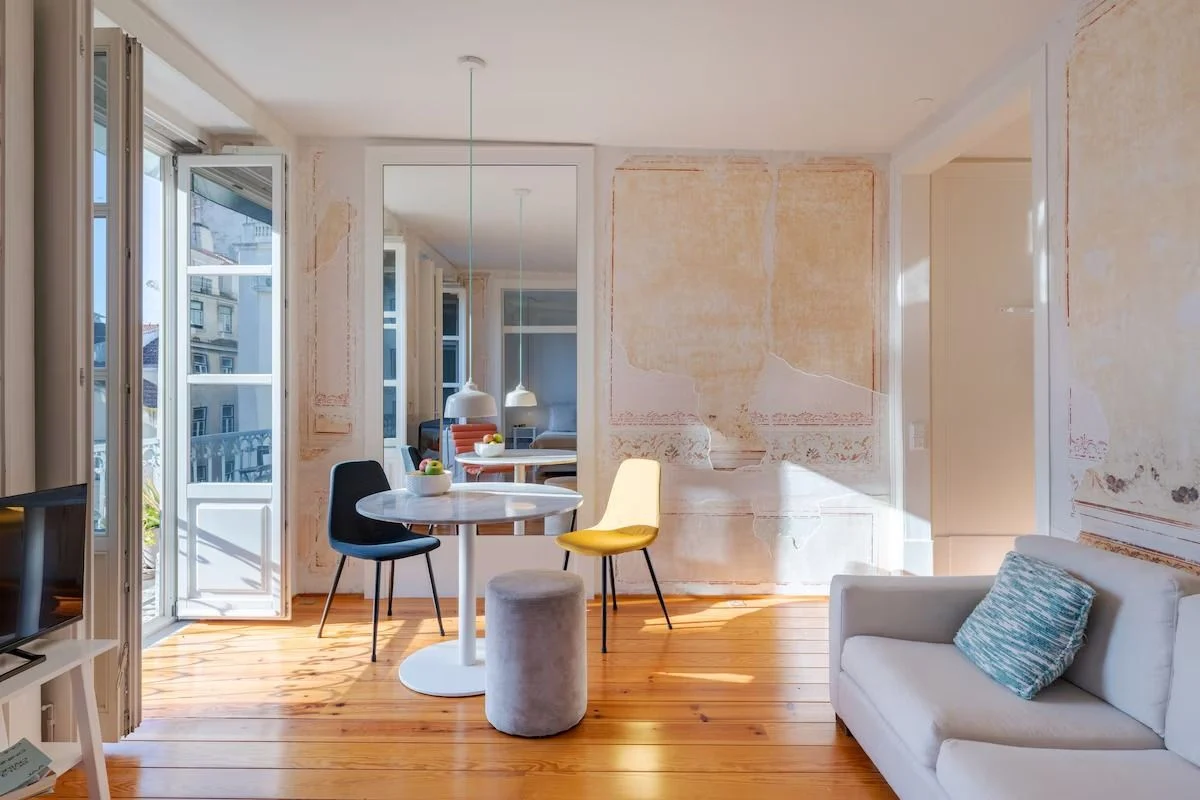
Lisbon has established itself as a premier destination for travelers seeking a confluence of historical depth and contemporary aesthetic innovation, with the city’s short-term rental market evolving into a sophisticated showcase of architectural preservation. The Portuguese capital is increasingly defined by a hospitality landscape that moves beyond the standardized offerings of traditional hotels, favoring instead the "lived-in immersion" provided by high-end Airbnb properties. These rentals, ranging from 18th-century townhouses to brutalist lofts, allow visitors to engage with the city’s unique golden light, vibrant street rhythms, and signature Pombaline-style architecture on a personal scale. As the global travel industry shifts toward experiential luxury, Lisbon’s curated apartments have become central to the city’s appeal, offering practical amenities such as full-scale kitchens and dedicated workspaces that cater to both short-term tourists and the growing demographic of long-term digital nomads.
The Evolution of Lisbon’s Short-Term Rental Market
The rise of high-design short-term rentals in Lisbon is not merely a trend in tourism but a byproduct of the city’s broader economic and architectural recovery over the last two decades. Following the 2011 international bailout, Portugal introduced the "Alojamento Local" (Local Lodging) regime, which incentivized property owners to renovate derelict buildings in the historic center. This led to a massive influx of private investment, transforming crumbling 18th and 19th-century structures into the stylish residences seen today.
Historically, the city’s aesthetic was forged in the aftermath of the 1755 Great Lisbon Earthquake. The Marques de Pombal led the reconstruction, introducing the "Pombaline" style—one of the first examples of earthquake-resistant architecture in the world. Today, this style, characterized by its grid-like layout in the Baixa district and ornate tilework known as azulejos, forms the backdrop for many of the city’s most sought-after Airbnbs. The integration of modern Scandinavian furniture and industrial accents within these historic shells represents a new chapter in Portuguese interior design, balancing heritage with global contemporary tastes.
Chronology of Architectural Preservation in Tourism
The timeline of Lisbon’s hospitality transformation can be traced through several key phases:
- Post-Earthquake Reconstruction (1755–1800): The birth of the Pombaline style, establishing the structural bones of the Baixa and Chiado districts.
- Industrial Expansion (1930s): The introduction of Art Deco and modern movement influences, seen in apartments that now offer rooftop terraces and simplified, sun-drenched layouts.
- The Restoration Boom (2012–2019): A period of rapid renovation where original frescoes and stone walls were uncovered and integrated into luxury rentals.
- The Regulatory Shift (2023–Present): The introduction of the "Mais Habitação" (More Housing) legislative package, which sought to limit new short-term rental licenses in high-density areas to balance tourism with resident housing needs.
This chronology highlights how the current inventory of "best Airbnbs" is a curated selection from a finite and increasingly regulated pool of historic properties, making those that remain available highly prized for their design integrity.
A Curated Selection of High-Design Residences
The diversity of Lisbon’s rental market is best understood through the specific neighborhoods and the architectural philosophies they represent.
Historic Preservation in Baixa and Alfama
In the heart of the city, the Baixa and Alfama districts offer stays that emphasize historical continuity. A notable one-bedroom apartment in Baixa features 19th-century frescoes that were meticulously uncovered during a recent renovation. By stripping back layers of paint, the developers allowed the original artistry to dictate the room’s character, complemented by minimalist furniture and glistening wood floors. Similarly, in Alfama—the city’s oldest district—studios situated across from the Lisbon Cathedral utilize original 18th-century brickwork and azulejo tiles. These properties often fetch between $320 and $340 per night, reflecting the premium placed on proximity to iconic landmarks like the Tram 28 route.
The Design District: Santos and Lapa
The Santos neighborhood, known as Lisbon’s design district, caters to a different demographic. A five-bedroom townhouse in this area highlights the intersection of Portuguese materials and Scandinavian modularity. Featuring oodles of granite and a strikingly modern fireplace, this property—starting at $1,182 per night—is designed for larger groups or long-term stays, incorporating 16-seater dining tables and built-in window nooks for remote work. This reflects a shift in the Airbnb market toward "bleisure" (business and leisure) travel, where space and high-speed utility are as important as aesthetic appeal.
Modern Luxury and Private Oases
On the outskirts of the traditional tourist centers, the market expands into larger, loft-style accommodations. In areas known for posh art galleries, contemporary lofts offer amenities rarely found in the cramped historic center, such as private courtyard pools and on-site parking. One such five-bedroom loft, starting at $1,410 per night, utilizes a brutalist design language with concrete counters and sleek black furnishings. These properties function as private retreats, offering a "local version of Eden" for travelers who prioritize privacy and modern architectural statements over proximity to fado houses.
Supporting Data: The Economics of Lisbon Tourism
Data from the National Institute of Statistics (INE) and various tourism boards underscore the significance of the short-term rental sector to Lisbon’s economy. In 2023, Portugal’s tourism revenue hit record highs, with Lisbon accounting for a significant portion of the overnight stays.
- Market Share: Short-term rentals (AL) are estimated to represent nearly one-third of the total tourist accommodation capacity in the Lisbon Metropolitan Area.
- Price Points: The nightly rates for high-end, design-led Airbnbs in Lisbon typically range from $205 for a one-bedroom Pombaline apartment to over $1,400 for a luxury townhouse with a pool.
- Occupancy Trends: Properties featuring "perks" such as air conditioning, rooftop terraces, and private pools see higher year-round occupancy rates, as they mitigate the challenges of Lisbon’s summer heat and dense urban environment.
The average stay in these high-end rentals has also increased, with many properties now specifically advertising "dedicated workspaces" and "full-sized kitchens" to attract the digital nomad population, which has surged since Portugal introduced its specialized visa for remote workers.
Stakeholder Perspectives and Regulatory Impact
The proliferation of Airbnbs has met with a complex reception from various stakeholders. Property owners and developers argue that the short-term rental market saved Lisbon’s historic core from physical collapse. They point to the meticulous restoration of original features—like the 18th-century stone walls and wooden ceiling beams—that would have been prohibitively expensive to maintain without the high yields of the tourism market.
Conversely, residents’ associations and city officials have raised concerns regarding "touristification" and the displacement of local inhabitants. The Lisbon City Council has responded by implementing stricter regulations under the "Mais Habitação" program. While this has slowed the growth of new rentals, it has simultaneously increased the value of existing, high-quality listings. For travelers, this means that the "best" Airbnbs are now those that have survived a rigorous vetting process, ensuring a higher standard of maintenance and design.
Broader Implications for Urban Design and Travel
The success of Lisbon’s design-focused Airbnbs suggests a broader shift in global travel preferences. Modern travelers are increasingly looking for "lived-in immersion"—the ability to experience a city not as a spectator, but as a temporary resident. This has forced the hospitality industry to reconsider the value of architectural heritage. In Lisbon, the most successful rentals are those that treat the building itself as the primary attraction.
Furthermore, the "cottagecore" and "bohemian" trends seen in Alfama and the botanical garden districts indicate a desire for nature-integrated urban living. Apartments that offer "treehouse-like" views or lush garden courtyards provide a psychological respite from the density of city life. This focus on wellness and aesthetic tranquility is expected to drive the next wave of renovations in the city.
Conclusion: The Future of the Lisbon Stay
As Lisbon continues to navigate its role as a global tourism hub, its high-end Airbnbs stand as a testament to the city’s resilience and creative spirit. By blending the structural integrity of the 18th century with the sleek functionality of the 21st, these properties offer more than just a place to sleep; they provide a masterclass in Portuguese design history. Whether it is a frescoed wall in Baixa or a brutalist kitchen in a modern loft, these spaces reflect a city that is deeply proud of its past while remaining firmly focused on a stylish, globalized future. For the discerning traveler, the choice to opt for a curated Airbnb over a standard hotel is a choice to participate in the ongoing story of Lisbon’s architectural renaissance.