Ronny Sianturi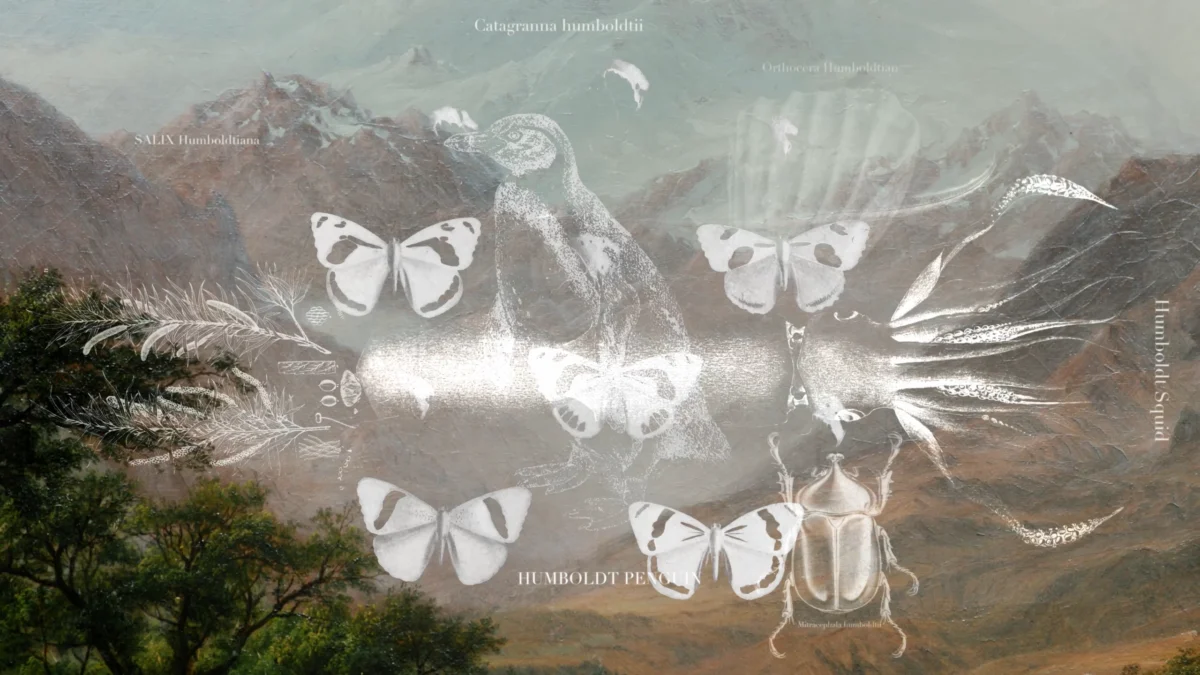
G. Anthony Svatek’s Feature Debut Explores Our Evolving Relationship with Nature Through the Lens of a Forgotten Visionary
The sprawling American landscape is dotted with countless homages to Alexander von Humboldt, the 19th-century German naturalist and polymath whose name graces species of penguins, monkeys, orchids, and geographical locations across the United States. Humboldt’s enduring legacy is not merely etched into maps and scientific nomenclature; it is deeply embedded in a radical concept he championed at the dawn of the 19th century: the idea of nature as a "network of interconnected lives." This prescient vision, resonating profoundly with contemporary concerns about climate change, serves as the intellectual and thematic bedrock for G. Anthony Svatek’s feature film debut, Humboldt USA. The documentary embarks on a cinematic journey across the diverse American terrain, from the ancient majesty of redwood forests to the urban arteries of New York and the glittering expanse of Nevada, to meticulously examine humanity’s evolving and often fraught relationship with the natural world.
Humboldt USA is set to captivate audiences with its world premiere in the international feature film competition of the 57th edition of the Visions du Réel documentary festival in Nyon, Switzerland, on Wednesday, April 22. Following its European debut, the film will make its U.S. and North American premiere on May 2 at the Museum of the Moving Image’s First Look festival, an event dedicated to showcasing "adventurous new cinema." This dual premiere marks a significant moment for Svatek’s directorial endeavor, bringing his unique perspective on ecological interconnectedness to a global and domestic stage.
The film’s press notes poignantly highlight Humboldt’s diminished contemporary recognition, describing him as a "queer naturalist, visionary ecologist, now largely forgotten." Svatek, the press materials state, "uses three of them [Humboldt place names] as unlikely common ground, weaving through present-day lives: urban activists greening neglected neighborhoods, scientists scanning redwood forests, hunters returning bighorn sheep to protected land. Across generations and landscapes, Humboldt USA asks what remains of a vision of ‘interconnectedness’." This narrative approach promises a multifaceted exploration, eschewing a traditional biographical account for a more expansive examination of Humboldt’s ideas as refracted through contemporary human endeavors and environmental challenges.
Produced by Svatek and Elijah Stevens of Space Time Films, which is also managing international sales, Humboldt USA is the culmination of years of dedicated work. Svatek, who also penned the screenplay, collaborated with Sean Hanley on the film’s cinematography, while Kaija Siirala and Svatek himself shared editing duties. This collaborative effort has resulted in what is described as a "kaleidoscopic" and "playful, but also fraught, love letter to the naturalist."
Svatek, a Brooklyn-based filmmaker whose previous shorts, including the 2023 work Some Thoughts on the Common Toad, have delved into the "defense of beauty amidst political cynicism and environmental alienation," brings a rich personal history to his ecological explorations. Raised in the Austrian Alps, his work has consistently probed humanity’s fractured relationship with the natural world. His 2023 short, Some Thoughts on the Common Toad, for instance, was a "cine-collage manifesto" inspired by an essay by George Orwell and narrated by Tilda Swinton, demonstrating a consistent thematic interest in the human condition within an increasingly estranged natural landscape.

The Genesis of a Visionary’s Revival
In an exclusive interview with The Hollywood Reporter preceding the film’s world premiere, Svatek elaborated on the impetus behind Humboldt USA and his personal connection to the enigmatic figure of Alexander von Humboldt. "I also knew him as a name and as a figure, but not much more than that," Svatek admitted. His deeper engagement with Humboldt began in 2015 with the publication of Andrea Wulf’s bestselling biography, The Invention of Nature. This gripping account presented Humboldt as a "gay proto-environmentalist who predicted man-made climate change 200 years ago," a narrative that deeply resonated with Svatek.
Beyond the intellectual appeal, Svatek discovered striking biographical parallels with Humboldt. "He called himself half-American, half-German, and I am half-Austrian, half-American. We have the same birthday. We’re both queer," Svatek revealed, underscoring a personal connection that transcended academic curiosity. These "biographical parallels got me hooked on this personal level," he explained, but it was also "the pervasiveness and fame that he had at the time, and how it showed itself in the landscape all across the United States, were also really interesting to me." Humboldt, therefore, became more than just a historical subject; he emerged as a "really interesting anchor to talk about what interconnectedness means nowadays," particularly in the context of evolving environmentalism and humanity’s relationship with nature over the past two centuries.
Navigating the Dichotomies of Nature’s Perception
Svatek identified a persistent tension within the Western paradigm for understanding nature, one that Humboldt’s work, in his view, elegantly bridges. "I feel that within the Western paradigm, we’re still struggling with these two opposites," Svatek stated. "Nature’s either fenced in at a national park or it is the domain of science. Both of them are very abstract visions and understandings of the natural world." Humboldt’s revolutionary contribution, however, was his conceptualization of nature as an intricate web of "interconnected lives." This holistic perspective stands in contrast to the often-fragmented ways in which nature is perceived and managed today.
"But then Humboldt talked about how everything was interconnected," Svatek emphasized. His own interest in "the way that technology has changed our relationship to the natural world" made Humboldt’s concept of interconnectedness a particularly potent lens through which to examine contemporary environmental discourse. Svatek deliberately avoided crafting a straightforward biographical film, instead opting to use the ubiquity of Humboldt’s name across the U.S. as an "invitation to explore this idea of interconnectedness 200 years later and how it manifests itself."
The Complexities of Interconnectedness
The film’s exploration of interconnectedness is not presented as an unalloyed good. Svatek deliberately sought to capture the inherent complexities and potential pitfalls of this worldview, a nuance that audiences are encouraged to discern. "I’m so glad you picked up on that, because I wanted the film to reflect that complexity," Svatek stated when asked about the potential downsides of focusing on interconnectedness. He acknowledged that Humboldt himself is a "very complicated, complex figure," and he aimed for the individuals and situations depicted in the film to mirror this complexity.
"Yes, nowadays, this idea of everything being interconnected is very popular again, both in the ecological sense and in the technological sense," Svatek observed. His personal stance as a "techno-skeptic" informs his work, much of which scrutinizes how technological advancements reshape human engagement with the environment. He noted that for many urban dwellers, like himself, "nature is a very abstract, mediated experience." This personal experience likely fuels his interest in examining how modern technologies, while sometimes promising greater connection, can also create new forms of distance and abstraction from the natural world.

A Cinematic Tapestry of American Landscapes and Lives
The selection of filming locations and the casting of characters in Humboldt USA were driven by a desire to represent a broad spectrum of American environments and experiences. Svatek explained, "I started to pick Humboldt place names and tried to keep in mind the spectrum of environments, both social and landscape-wise, to represent the U.S. So I wanted something that felt very urban, I wanted something that felt very rural, and I wanted something that felt very techno utopia with AI people in California." This deliberate geographical and thematic diversity allows the film to explore how Humboldt’s ideas of interconnectedness manifest in vastly different contexts.
The process of finding subjects was deeply intuitive. Svatek spent considerable time in the chosen locations, engaging in conversations and forging connections. "It became this very intuitive process of casting, so to speak," he described. An example of this organic discovery process occurred in California, where a fellow filmmaker introduced him to a group of "ecological archivists" who were engaged in the ambitious task of scanning redwood trees and employing advanced technology to create "organic algorithms." This encounter exemplifies the film’s commitment to finding individuals at the forefront of contemporary human-nature interactions, even those that push the boundaries of scientific and technological engagement.
A Long and Evolving Creative Process
Humboldt USA represents a significant investment of time and dedication from Svatek and his team. "Yeah, it has taken a while," Svatek confirmed. "I started my first research shoot at the end of 2019, so it’s been almost seven years." The initial phase of the project, a sheep relocation shoot in Nevada, was abruptly interrupted by the onset of the COVID-19 pandemic, leading to a period of reduced activity for "a year or two." This extended production timeline, however, likely allowed for a deeper immersion into the subject matter and a more nuanced development of the film’s themes.
The Voice of Reflection: A Love Letter Fraught with Concern
A distinctive narrative element in Humboldt USA is Svatek’s own voiceover, which acts as a guiding thread through the film’s diverse narratives. Described as a "love letter to Humboldt," this voiceover also conveys "disappointments and concerns." Svatek acknowledged that crafting this narrative voice was "the hardest element." He explained that the voiceover evolved from his initial feelings of admiration for Humboldt, which deepened over time.
"I really did feel like I was falling in love with him over time," Svatek shared. "But then, as it happens when you fall in love or have a crush on someone, eventually, there is some disappointment. And the more time you spend with them, the more nuanced they become, the more complex they become. That’s what makes a person, right?" This sentiment reflects a mature understanding of human complexity, moving beyond simplistic heroification or demonization.
Svatek intended this personal, reflective voice to underscore the profound changes that have occurred over the past two centuries. "‘This is what interconnectedness looks like now. And you embodied this, too! You would have been enthusiastic about the technological advances in infrastructure and all this stuff. But look at the consequences of that now!’" he imagined himself saying to Humboldt, highlighting the unintended consequences of progress. This dialogue between past and present, between the visionary’s ideals and the current realities, forms the emotional core of the film.

AI and the Future of Ecological Engagement
The inclusion of Artificial Intelligence (AI) as a theme in Humboldt USA reflects its burgeoning prominence in contemporary discourse, particularly concerning its potential impact on environmental understanding and interaction. Svatek began exploring the AI storyline in California around 2021-2022, preceding the widespread public awareness of generative AI models like ChatGPT. "I was at times thinking: ‘What are these people talking about?! I don’t understand this at all,’" Svatek recalled. However, the subsequent explosion of AI technology, exemplified by the release of ChatGPT, "just underscored the relevance of all these storylines," he noted, demonstrating the film’s prescient engagement with evolving technological landscapes.
Future Directions: Art, Activism, and Provocation
Looking ahead, Svatek is exploring new projects that continue his engagement with complex societal and environmental issues. He has been commissioned to work on projects within the New York art world, a departure from his previous focus. This new direction, however, intersects with his ongoing concerns about climate change. "For the past year or two, I’ve been thinking a lot about how the topic of climate change and the climate crisis has disappeared so much, and in what ways it has broken through," he stated.
He is particularly interested in a potential narrative or hybrid project that examines the strategies of direct action employed by environmental activists within art museums. These activists, Svatek notes, "use the strategy of attacking public art to draw attention to the climate crisis." He finds this tactic "super interesting," even if he doesn’t "necessarily agree with everything they’re doing."
Svatek views these acts of provocation as a reflection of the media landscape’s reliance on "scandal and outrage" to gain attention. He characterizes the act of "throwing a can of soup against a protected Van Gogh painting" as a "desperate tactic, but also radical. It’s totally polarizing, and I think that’s interesting." His prospective work, he clarified, would not aim to pass judgment on such actions but rather to delve into their inherent complexities. This aligns with his directorial approach in Humboldt USA, where nuance and multifaceted exploration are paramount.
The film’s journey from its world premiere at Visions du Réel to its U.S. debut at First Look signals a significant moment for documentary cinema, offering audiences a profound and timely reflection on Alexander von Humboldt’s enduring legacy and its relevance to our present-day ecological challenges. Through its cinematic exploration of diverse American landscapes and the lives intertwined with them, Humboldt USA invites viewers to reconsider their own relationship with nature and the intricate web of connections that bind us all.