
 Ronny Sianturi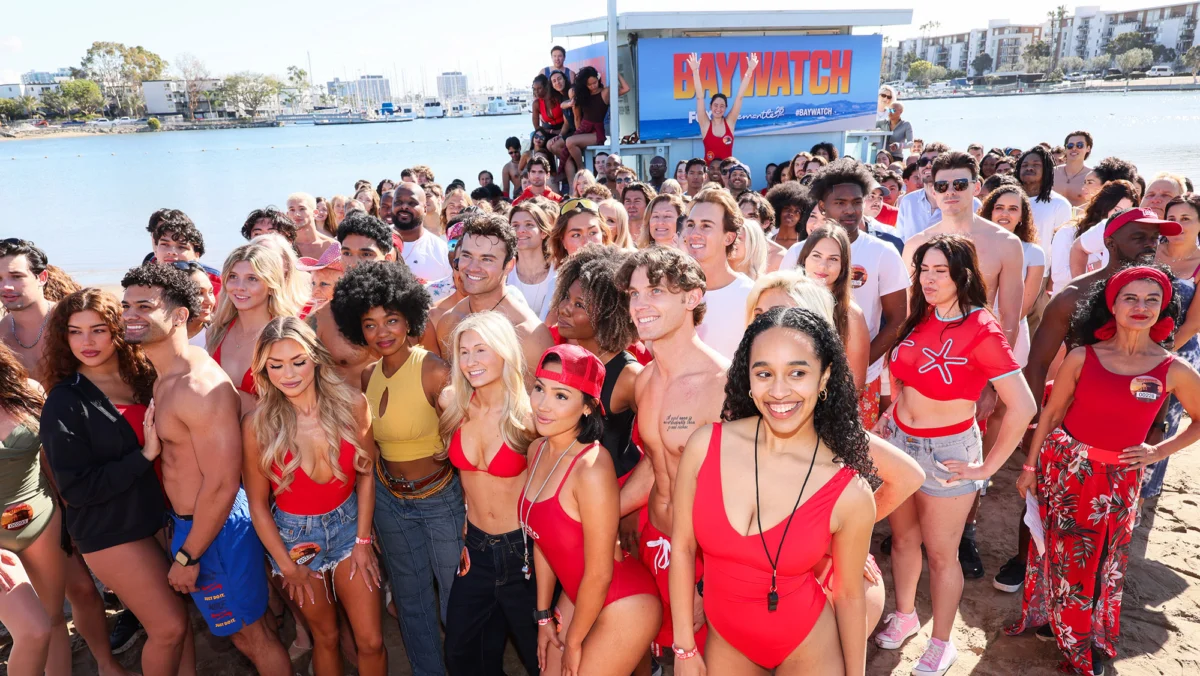
Los Angeles is grappling with a deepening crisis in its film and television production sector, a situation that has significantly impacted the livelihoods of thousands of industry workers. This economic fallout has now thrust the issue to the forefront of the city’s mayoral campaign, with leading candidates vying to present themselves as the ultimate solution to the mounting challenges. Central to the debate is the efficacy and operational efficiency of FilmLA, the city’s official film permitting office, which has become a focal point of criticism.
The "Baywatch" Blunder: A Catalyst for Campaign Rhetoric
The spotlight intensified on Los Angeles’s production woes following complications surrounding the revival of Fox’s "Baywatch." Despite securing substantial tax credits amounting to $21 million to film within the city, the production encountered a "myriad of complications" during its shoot at Venice Beach. These hurdles, characterized by bureaucratic red tape, have sparked considerable frustration within the industry over the past month.
Sensing the political capital to be gained, Mayor Karen Bass’s administration was quick to respond. A statement from her office announced "immediate action" to "clear bureaucratic barriers," an effort to preemptively address what was perceived as a burgeoning campaign issue.
However, the "Baywatch" incident provided ammunition for Bass’s opponent, reality television veteran and internet influencer Spencer Pratt. Pratt, who is running as an anti-establishment outsider with a platform focused on government negligence, particularly in the wake of his own home being destroyed by a Pacific Palisades wildfire, took to his Substack to voice his industry allies’ grievances. On April 2, he articulated a common refrain: "All of my industry friends have the same complaints: permits arrive at 5 p.m. the night before a shoot, loaded with surprise fees." He further elaborated on the perceived inefficiencies, noting that "drone approvals, helicopter clearances, even lane closures trigger add-ons," contrasting Los Angeles’s approach with other cities that, in his view, "prioritize filmmakers" while "Los Angeles treats them like nuisances."
Pratt’s outspoken criticism serves as a stark reminder that the process of filming in Los Angeles has frequently been described as unwelcoming and prohibitively complex.
Mayoral Candidates’ Promises and Critiques
In an interview with The Hollywood Reporter, Mayor Karen Bass defended her administration’s approach, emphasizing a collaborative strategy. "Everything I’ve done in terms of the industry has been done with them at the table," she stated. "It’s been a request that they specifically made. They know that I’m open to continuing to do more." Reflecting on the prospect of a second term, Bass highlighted the importance of sustained effort: "You can [enact] policies but you have to follow up on them and make sure they’re working and find out where you can tweak them." Addressing the persistent criticism of FilmLA, whose longstanding chief resigned last year amid mounting complaints, Bass acknowledged its shortcomings: "it could be improved – obviously, it’s not as effective as it should be."
The administration’s efforts to streamline production included an executive directive issued in May 2025. This directive mandated city departments to enhance accessibility and affordability for filming at iconic city locations like the Griffith Observatory by shortening review timelines and reducing certain fees. Furthermore, Bass’s administration has worked to limit the number of city staffers required on set to a single individual and improve inter-departmental communication regarding ongoing infrastructure projects that could impact filming schedules.
Spencer Pratt has presented a comprehensive list of policy proposals aimed at revitalizing the local production scene. His platform includes a commitment to "slash location fees in half," establish "a dedicated concierge team" to navigate production challenges, expedite permitting approvals, and reduce on-set city staff presence to "zero on-set city staff for 90% of productions." Pratt also advocates for public subsidies to support the local filming office, currently funded by production fees, and pledged to "direct all departments to waive all location, staff, and inspection fees for shoots under $2M" and "mandate LADOT/Police/Fire instant pre-approvals for standard street closures and safety plans."
A notable voice in the debate is Nithya Raman, an insurgent progressive candidate and current city councilmember representing an industry-rich district that includes Sherman Oaks, Los Feliz, Silver Lake, Koreatown, the Miracle Mile, and the Hollywood Hills. Raman’s initial 2020 council campaign received significant support from the entertainment business, stemming from her previous role as executive director of Time’s Up and her husband’s status as a seasoned television producer.
While Councilman Adrin Nazarian, a neighbor in an industry-heavy district, has been a vocal proponent of reform, Raman had remained relatively quiet on the production issue, focusing instead on her signature concerns like housing affordability. However, the "Baywatch" controversy propelled her to the forefront of the discussion. On April 14, she posted on X: "For too long, Los Angeles has treated Hollywood as an inconvenience rather than an asset. The result: 50,000 jobs lost. When I’m mayor, LA will be a reliable partner to film productions. We’ll staff a real city film office, eliminate fees for smaller productions, simplify permitting, and get rid of ridiculous conditions that stall production."
In direct conversation with The Hollywood Reporter, Raman outlined her solutions, which center on reducing governmental red tape and addressing resistance from NIMBY (Not In My Backyard) residents who may deter shoots. Her core argument is that Mayor Bass has acted too slowly and insufficiently. "It doesn’t feel like our mayor has been fighting to keep the jobs with every tool at the city’s disposal," Raman asserted. "It doesn’t feel like there’s changes in a timely manner. We need to respond to this issue with more urgency." As a prime example of this perceived delay, Raman pointed to the appointment of a dedicated city film czar in late 2024, who began work in early 2025, well into Bass’s term and amidst the ongoing production emergency. "That’s not good enough," she concluded.
The Decades-Long Erosion of L.A. Production
The current crisis in Los Angeles’s film and television production sector is not a recent phenomenon but rather the culmination of decades of what critics describe as governmental neglect and a failure to adapt. For years, other states and even entire countries have successfully lured production jobs away from Los Angeles by offering more attractive tax incentives. Cities like Vancouver and London have emerged as major hubs for film and television production, siphoning away significant portions of the industry that was once synonymous with Southern California.
Initially, the rapid growth of the streaming industry and its voracious appetite for content masked this underlying decline. However, the subsequent "bust" in streaming growth, coupled with broader economic shifts, has exposed the vulnerability of the local industry. The past few years have witnessed historically low levels of on-location shooting days in Los Angeles, with declines escalating in recent months. Data indicates that filming for television shows in 2025 concluded more than 50 percent below the five-year average, while feature film production dropped by over 30 percent during the same period.
State-Level Efforts and Industry Reactions
In an attempt to counter this trend, California Governor Gavin Newsom championed legislation that significantly increased the state’s film and television tax incentive cap from $330 million to $750 million. While programs in New York and Georgia continue to offer more generous incentives, this move signifies a serious commitment from the state to reclaim lost production.
Industry leaders have expressed cautious optimism regarding these state-level initiatives. During a press briefing for CBS’s 2026-2027 primetime lineup on April 15, George Cheeks, Paramount’s Chair of TV Media, noted his company’s desire to "shoot in California as much as possible," but emphasized the financial realities of production. "We do have a financial model that we have to hit," Cheeks stated, adding that state coverage of above-the-line costs through tax credits would further enhance California’s attractiveness.
Local Initiatives and the Path Forward
In March, the Los Angeles City Council took a unified stance to combat the production decline, unanimously approving a series of measures. These initiatives include expediting soundstage certification, improving the coordination of permit regulations, launching an independent audit of the permitting system, and introducing free "micro-shoots" for productions involving minimal personnel. Councilman Adrin Nazarian, whose district is a hub for industry activity, is now advocating for enhanced transparency and accountability within the filming office and proposing a pilot program to waive fees for productions with 50 or fewer employees.
The mayoral candidates’ engagement with this issue highlights its growing importance. The election cycle has seemingly forced a prioritization of the production crisis, or at least a recognition of its utility as a political talking point.
Analyzing the Proposed Solutions
The competing proposals from the mayoral candidates reveal different approaches to tackling the complex issues facing the film and television industry. Spencer Pratt’s platform, as previously detailed, focuses on significant fee reductions, enhanced support services, and accelerated approvals. His emphasis on cost savings and administrative simplification for smaller productions aims to make Los Angeles a more accessible location for a broader range of projects.
Mayor Bass’s administration, meanwhile, points to concrete actions taken during her first term, such as streamlining access to city properties and reducing on-set staffing requirements. Her executive directive signals an effort to address specific pain points identified by the industry, focusing on making city resources more readily available and cost-effective.
Nithya Raman’s critique of the current administration’s efforts underscores a perception of insufficient urgency and scale. Her proposals for a dedicated city film office and the elimination of fees for smaller productions align with a broader push for more robust governmental support and a more proactive stance in attracting and retaining industry business. The reference to the relatively recent appointment of a film czar suggests a belief that more decisive and immediate action was warranted.
Broader Implications for Los Angeles
The escalating production crisis has profound implications for the economic and cultural fabric of Los Angeles. The loss of 50,000 jobs, as cited by Raman, represents a significant economic blow, impacting not only direct industry employment but also ancillary businesses that rely on the production ecosystem, such as catering, transportation, and equipment rental.
Furthermore, the erosion of Los Angeles’s status as the undisputed capital of the entertainment industry raises questions about the city’s future identity and its ability to maintain its creative leadership. The competition from other cities and countries highlights the need for continuous adaptation and innovation within the local regulatory and incentive structures.
The upcoming mayoral election presents voters with a clear choice regarding the future of film and television production in Los Angeles. The candidates’ differing approaches – from Pratt’s anti-establishment reform agenda to Bass’s incremental improvements and Raman’s call for greater urgency – reflect the diverse perspectives on how best to navigate this critical juncture for one of the city’s most iconic and economically vital sectors. The outcome of this election will undoubtedly shape the landscape of Hollywood for years to come.








