Ferry Irwandi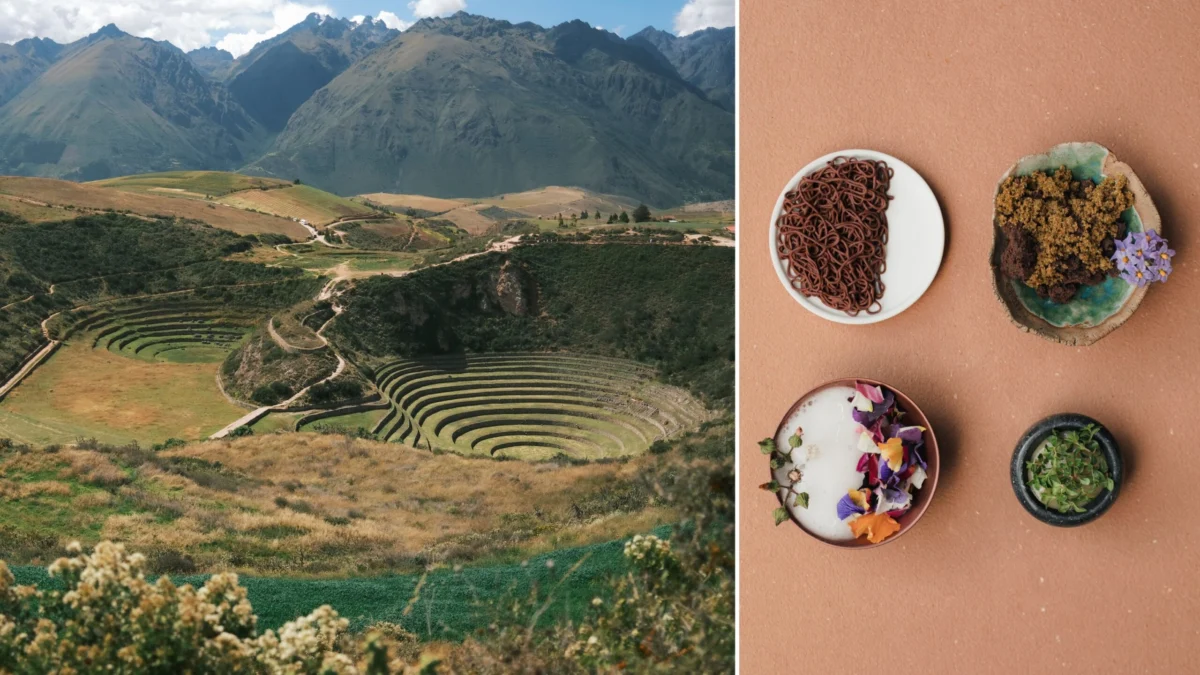
In the high-altitude landscape of the Sacred Valley of the Incas, specifically in the minute community of Kollparay, a significant cultural and agricultural revival is taking place. Located at 3,500 meters above sea level, Kollparay is an annex of the K’acllaraccay community, consisting of only five households and fifteen residents. Here, the renowned destination restaurant Mil—led by the celebrated culinary trio of Virgilio Martínez, Pía León, and Malena Martínez—has unveiled a new immersive experience titled the "Qollqa Mater" route. This initiative aims to bridge the gap between ancestral Incan technology and contemporary food security challenges, offering guests a deep dive into the sophisticated methods of food preservation that once sustained one of the world’s greatest empires.

The Qollqa Mater route represents the latest evolution of Mil, which since its inception in 2018 has functioned as much as a research laboratory as a fine-dining establishment. Situated adjacent to the Moray archaeological site—an Incan agricultural laboratory characterized by its concentric terraces—Mil serves as the headquarters for Mater Iniciativa, the group’s biological and cultural research arm. The new three-hour immersion focuses on the "qollqa," an ancient Incan granary system designed to harness natural ventilation and high-altitude microclimates to preserve crops for extended periods.
The Architecture of Preservation: Understanding the Incan Qollqa
Historically, the Incas were masters of hydraulic engineering and architectural logistics. The qollqa was a cornerstone of their administrative success, allowing the empire to store massive surpluses of maize, tubers, and dried meats (ch’arki) to safeguard against drought or crop failure. Unlike modern refrigerated units that rely on electricity, the qollqa utilizes the natural topography and atmospheric conditions of the Andes.

The newly constructed Qollqa Mater is a conical, circular structure measuring approximately 15 by 52 feet. Built over the course of a year, the project was a collaborative effort involving architect Juan Carlos Pareja, UCLA archaeologist Rachel Schloss, and local community members led by Wilber Juárez Huamán. The structure is composed of traditional materials—adobe and stone—with a thatched roof of ichu grass.
Crucially, the building’s orientation is dictated by the surrounding "apus," or mountain spirits. The entrance faces Apu Verónica, allowing the cool, dry breezes from the Amazon basin to circulate through the interior. This natural airflow, combined with the insulating properties of thick adobe walls, creates a stable microclimate. Preliminary results from the Mater team indicate that potatoes and mashuas (a flowering tuber) stored in the qollqa since December have remained free of sprouts and decay, significantly outperforming traditional home storage rooms known as "trujis," where food typically lasts only eight months.

Cultural Reciprocity and the Philosophy of Ayni
The integration of the Kollparay community into the Mil experience is rooted in the Andean concept of "ayni," a Quechua term signifying a system of mutualism and reciprocity. In this worldview, labor and resources are shared: "today for you, tomorrow for me." This philosophy extends beyond human interaction to the land itself, which is treated as a living entity.
Visitors on the Qollqa Mater route are introduced to this concept immediately upon arrival. Guides like Norma Quispe Juarez, a local resident and translator, facilitate a ritual of introduction where guests smear their hands with local soil. This gesture is intended to "introduce" the visitor to the land, ensuring safe passage and a harmonious connection with the environment.

A central figure in this immersion is Doña Conchi (Concepción Meza Challco), an 89-year-old resident of Kollparay. In a move that exemplifies the restaurant’s commitment to community integration, guests are invited into Doña Conchi’s home to share a traditional breakfast. This meal typically includes "sankhu," a paste made from toasted corn ground on a stone mortar, and "emoliente," a medicinal herbal tea. By involving elders like Doña Conchi, Mil provides a direct economic link to the community while ensuring that oral traditions and ancestral recipes are recognized as essential cultural assets.
Timeline of Culinary and Research Evolution at Mil
The development of the Qollqa Mater route is part of a broader chronology of research conducted by Mater Iniciativa in the Cusco region:

- 2018: Mil opens in Moray, focusing on high-altitude ingredients (3,500m+).
- 2019-2021: Launch of the Botanical route and the Warmi route. The latter, developed with a local women’s cooperative, focuses on traditional textile dyeing using endemic plants.
- 2022: Intensive research begins on the fermentation of local fruits and the cataloging of "cushuro," a nutrient-dense river algae known as the "caviar of the Andes."
- 2023: Construction begins on the Qollqa Mater in collaboration with local builders and international archaeologists.
- June 2024: The Qollqa Mater route officially opens to the public, offering a synthesis of history, architecture, and gastronomy.
Culinary Analysis: The Tasting Menu as a Landscape Narrative
Following the three-hour immersion, guests transition to the Mil dining room, where the research of Mater Iniciativa is translated into an eight-course tasting menu. Led by head chef Luis Valderrama, the kitchen operates under a strict "altitudinal" philosophy, using only ingredients sourced from the surrounding ecosystems.
The menu serves as a literal consumption of the landscape. Notable dishes include:

- Preserved Tubers: Native potatoes cooked in clay ("huatia"), a technique that mirrors the storage capabilities of the qollqa.
- High-Altitude Proteins: Refined lamb tartare and alpaca, balanced with herbs like "kjolle" and brightened with tamarillo (tree tomato).
- Corn Diversity: A course dedicated to the vast spectrum of Andean corn, featuring white cheese pairings and butter infused with "chicha," an ancestral fermented corn beverage.
- Forest and River: The use of "cushuro" algae and "arracacia" (a root vegetable) highlights the biodiversity of the Sacred Valley’s water systems.
- Cacao Research: The desserts utilize native "Chuncho" cacao, incorporating the fruit’s mucilage—a sweet pulp often discarded in commercial chocolate production—to provide acidity and texture.
The beverage program at Mil mirrors the complexity of the food, focusing on non-alcoholic distillations and fermentations. Ingredients such as cabuya nectar, tumbo fruit, and dehydrated botanicals are used to create pairings that enhance the earthy, herbal notes of the cuisine without the numbing effects of high-alcohol spirits, which can be problematic at such high altitudes.
Implications for Food Security and Sustainable Tourism
The revitalization of the qollqa is more than a historical exercise; it is a strategic response to the escalating climate crisis. In the Andes, climate change has made seasonal patterns increasingly unpredictable. Frosts and heavy rains now occur during the traditionally dry "golden" months, threatening the sustenance of small-scale farmers.

By demonstrating that Incan storage technology can effectively preserve harvests without modern infrastructure, Mater Iniciativa is providing a scalable model for food security in rural mountain communities. This "low-tech, high-intelligence" approach offers a sustainable alternative to energy-dependent cold storage, which is often inaccessible or prohibitively expensive for communities like Kollparay.
From a tourism perspective, the Qollqa Mater route represents a shift toward "regenerative travel." Rather than merely observing a landscape, visitors participate in a system that funds archaeological research, supports local employment, and preserves indigenous knowledge. The high price point of the experience ($720 per person) reflects the intensive resources required to maintain this collaborative ecosystem and ensures that the impact on the small community remains manageable and beneficial.

Official Responses and Broader Impact
The international culinary community has closely monitored the developments at Mil. The restaurant has consistently appeared on the "World’s 50 Best" lists and was recently named "The Best Culinary Experience in the World" by the World Culinary Awards.
Malena Martínez, Director of Mater Iniciativa, emphasizes that the project is a "way to bring ancient technology into the present." Chef Virgilio Martínez adds that the qollqa "shifts our understanding of the past," moving it from a static museum concept to a functional tool for the future.

As the Qollqa Mater enters its operational phase, the goal is for the structure to eventually be managed entirely by the community. It will serve as a communal seed bank and harvest store, safeguarding the genetic diversity of Andean crops. For residents like Doña Conchi, the structure is a bridge between the world of her ancestors and the changing world of her grandchildren.
The success of Mil and the Qollqa Mater route suggests a new path for global gastronomy—one where the restaurant serves as a steward of both biodiversity and cultural heritage. By looking backward to the engineering of the Inca Empire, the team at Mil is charting a forward-thinking course for how humanity might feed itself in an increasingly uncertain climate.