Ferry Irwandi
The logistics of multi-generational family travel require a meticulous balancing act of diverse demographic preferences, architectural demands, and geographic convenience. When a family of four—comprising a former design editor, her parents, and her brother—embarked upon a six-day itinerary through Italy’s southeastern region of Puglia in September, the selection of the ideal accommodation proved to be a masterclass in compromise. Regional tourism boards note a significant surge in demand for authentic, heritage-based lodgings across Southern Italy, with historical properties outperforming standard hotel offerings by over 25 percent in booking longevity. For this family, the strict criteria demanded a synthesis of historical preservation, modern domestic utility, and sophisticated aesthetic standards: a traditional conical stone trullo for the father, dedicated laundry facilities for the mother, a swimming pool for the collective party, and refined interior design elements to satisfy professional visual expectations.
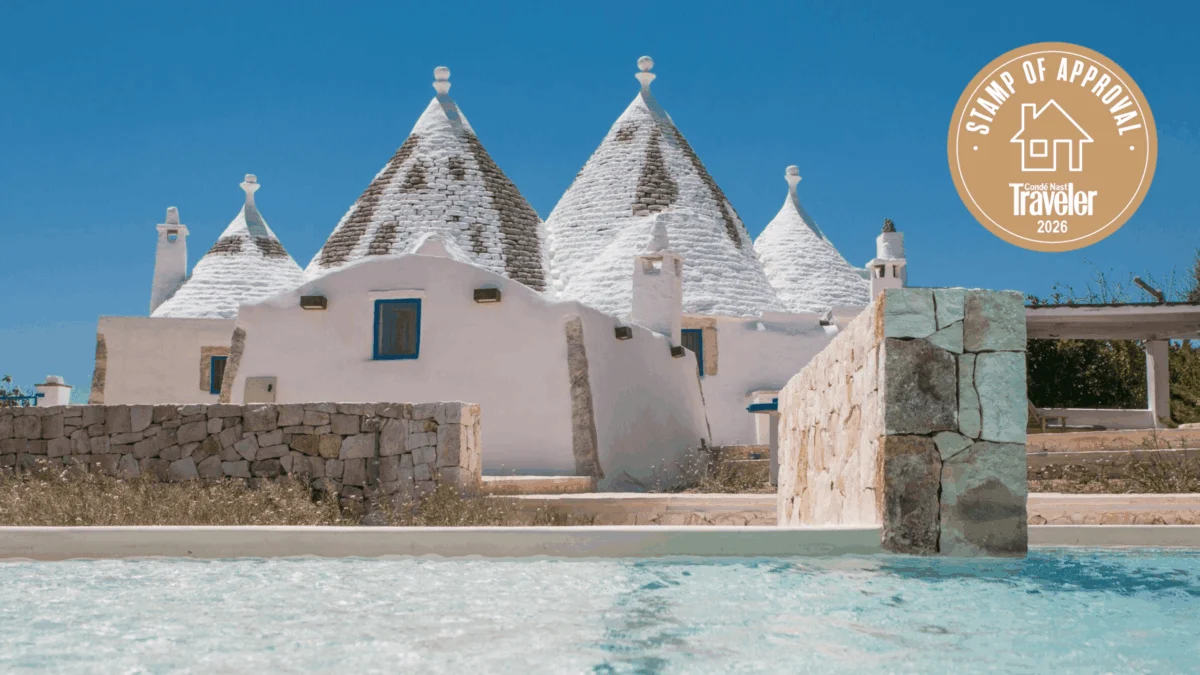
These precise parameters culminated in the selection of Trullo Giulio, situated a fifteen-minute drive outside the historic municipality of Martina Franca in the heart of the Itria Valley. The operational framework of rural Italian holiday rentals often involves localized coordination, a reality underscored upon arrival following a ninety-minute transit from the coastal city of Bari. Property access was facilitated by a local resident named Anna, whose arrival in a vintage farm utility vehicle set the tone for the deeply agrarian landscape. Surrounded by ancient olive groves that stretch uninterrupted to the horizon, the property layout offered a distinct architectural separation: a main historical trullo housing two bedrooms and one bathroom, complemented by two separate outbuildings containing additional sleeping quarters, a secondary bathroom, and a fully equipped kitchen.
Architectural and Interior Analysis
From a design perspective, Trullo Giulio reflects broader interior trends favoring minimalist Mediterranean aesthetics combined with regional heritage. The interior palette relies on stark whitewashed lime plaster paired with blue accents, evoking Cycladic simplicity while maintaining structural fidelity to the region’s 14th-century building techniques. The property’s current configuration represents a careful modernization that preserves the integrity of the original dry-stone masonry and vaulted ceilings. However, structural constraints inherent to historic agricultural dwellings introduced notable functional quirks. The primary bedrooms within the main conical structure feature textile curtains rather than solid doors for partition, and climate-control air conditioning units are restricted exclusively to the secondary outbuildings.

Furthermore, the absence of robust Wi-Fi infrastructure and cellular connectivity acts as a natural digital detox, redirecting the focal point of the residency entirely toward the exterior landscape. Tourism analysts observing rural Italian developments frequently report that travelers increasingly prioritize disconnect-oriented properties, viewing limited connectivity not as an inconvenience, but as an enhanced mechanism for familial engagement. The primary architectural focal point of Trullo Giulio is its expansive outdoor terrace, anchored by a saltwater infinity pool featuring an integrated whirlpool feature and an unobstructed visual axis overlooking the surrounding olive orchards. Complemented by an outdoor shower and multiple shaded pergolas, the exterior grounds function as the primary living space for occupants during the temperate Mediterranean autumn.
Geographic Positioning and Regional Exploration
While the architectural appeal of the trullo encourages prolonged site retention, the geographic positioning of Martina Franca serves as an effective operational hub for regional exploration. Statistical data from the regional tourism agency, Puglia Promozione, indicates a steady annual increase in visitors utilizing the Itria Valley as a central base rather than traditional coastal strips. Within a sixty-minute driving radius of the property, travelers gain access to some of Southern Italy’s most notable architectural and cultural landmarks, including the UNESCO World Heritage trulli-dense town of Alberobello, the whitewashed cliffside city of Ostuni, and the maritime municipality of Polignano a Mare.
Local commercial infrastructure supports this tourism influx through a blend of traditional commerce and specialized gastronomy. A well-stocked provision market and the acclaimed local dining establishment Sale e Pepe, located within a five-minute transit of the rental property, exemplify the regional economic integration of small-scale enterprises catering to international visitors. Gastronomic tourism remains a primary economic driver for the province of Taranto and surrounding districts, with specialized local delicacies—such as sea urchin dishes in coastal enclaves like Ricciolandia—contributing to a thriving culinary sector that attracts high-net-worth cultural tourists annually.
Experiential Tourism and Cultural Integration

The broader implications of this familial excursion highlight a structural shift within the global tourism industry toward experiential and skill-acquisition travel. Market research indicates that bookings for localized culinary workshops, artisanal crafts classes, and agricultural tours have expanded exponentially over the past five years, reflecting a consumer desire for active participation over passive observation. To fulfill a collective objective of mastering traditional regional gastronomy, the family participated in a private pasta-making workshop booked via digital experience platforms.
Conducted at a coastal trullo in Cozze under the instruction of local practitioners, the session focused on the manual production of orecchiette—Puglia’s signature ear-shaped pasta variety. This hands-on educational model not only preserves intangible cultural heritage but also provides small independent operators with sustainable revenue streams independent of traditional agricultural yields. Economic studies on rural Italian micro-enterprises demonstrate that experiential tourism initiatives bolster local household incomes, fostering a symbiotic relationship between incoming travelers and indigenous residents.
Broader Socio-Economic Impact on Rural Puglia
The integration of historic preservation with modern hospitality models has profound socio-economic implications for the Itria Valley and the broader Mezzogiorno region. As depopulation historically threatened rural agricultural communities throughout Southern Italy, the adaptive reuse of historical structures—such as masserie (fortified farmhouses) and trulli—has injected vital capital into local economies. Municipal governments in Martina Franca, Locorotondo, and Cisternino have increasingly incentivized structural conservation projects that maintain historical zoning laws while upgrading basic utility infrastructure to meet contemporary safety and sanitation standards.
Industry observers note that this model of sustainable heritage tourism protects architectural assets from dereliction while preventing the over-commercialization seen in major urban centers like Florence or Venice. By dispersing visitors across wide agrarian networks rather than concentrating them in dense historic cores, properties like Trullo Giulio distribute tourism revenue directly to rural merchants, independent olive oil producers, and local artisans. Ultimately, the synthesis of historical preservation, localized gastronomy, and multi-generational familial travel underscores a maturing sector within European leisure markets—one that values authentic regional engagement, structural heritage, and communal culinary traditions above standardized luxury.