
 Prabowo Widodo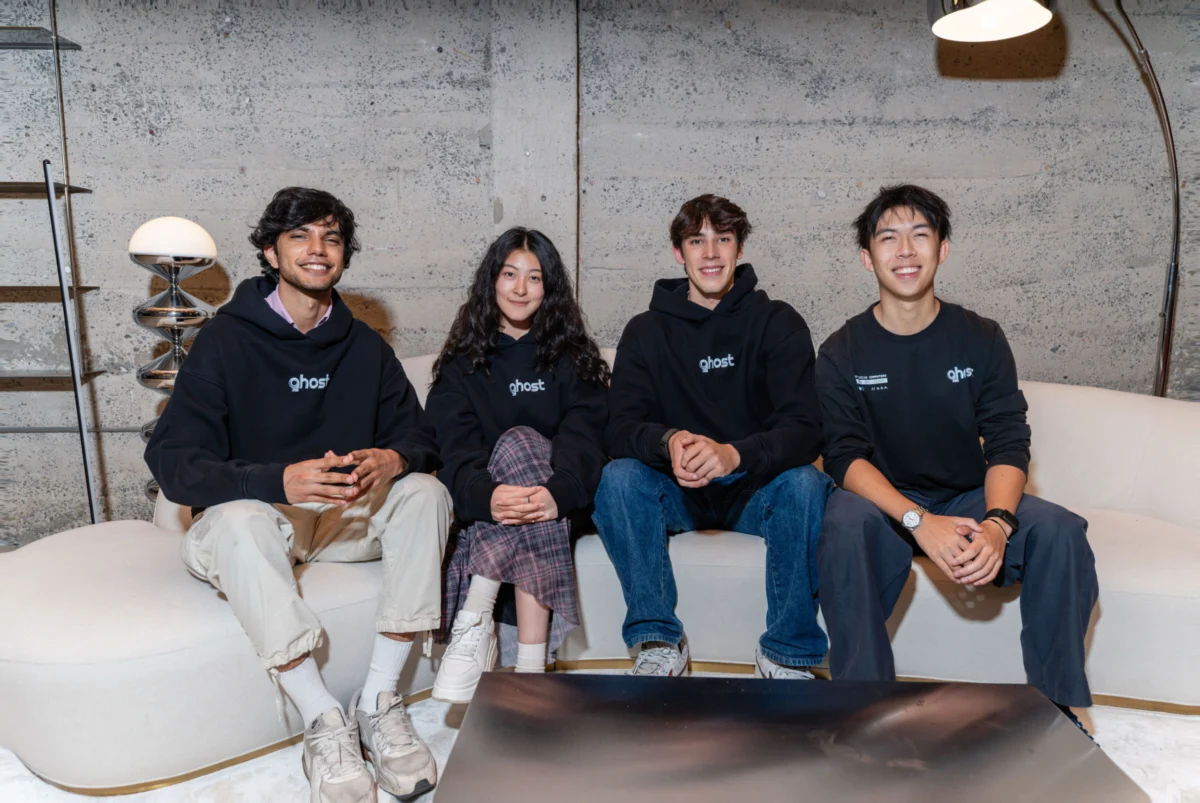
The rapid evolution of generative artificial intelligence has largely played out within cloud computing data centers, forcing users to interact with advanced models through web browsers and smartphone applications. However, a San Francisco-based hardware startup named Ghost is pivoting that paradigm inward. After a year of stealth development, the company has officially emerged to announce an $11 million seed funding round and the commercial rollout of its flagship product: Core, a specialized personal computer engineered from the ground up to run autonomous artificial intelligence agents locally.
The seed funding round was led by Andreessen Horowitz, with participation from several prominent institutional backers and venture firms including Abstract, Audacious Ventures, SV Angel, and Nova. Ghost was founded by 19-year-old Zain Javaid, who serves as the company’s chief executive officer. Javaid leads a young, engineering-focused founding team that includes Nicholas Chua, 19, Yifei Chen, 24, and Gautam Sharda, 23. The capital infusion will primarily support scaling manufacturing operations at the company’s San Francisco facility, expanding engineering talent, and fulfilling initial hardware orders.
Bridging the Gap Between Hardware and Autonomous Agents
For much of his early career, Javaid envisioned a path as a quantitative analyst, utilizing advanced mathematics and large data sets to drive investment decisions. Although he pursued this path briefly, he ultimately found the routine uninspiring. The trajectory of his professional life shifted dramatically in late 2022 with the public release of OpenAI’s ChatGPT. For Javaid, witnessing the capabilities of large language models sparked an unprecedented level of intellectual curiosity and excitement, steering his focus toward the nascent field of personal artificial intelligence.
This fascination ultimately gave birth to Ghost and the conceptualization of Core. Traditional personal computers, laptops, and specialized setups like a repurposed Mac Mini running local open-source models are engineered for general-purpose computing. While users can configure these conventional systems to execute artificial intelligence workloads, Javaid and his co-founders argued that the user experience is frequently plagued by performance bottlenecks, complex configuration hurdles, and a lack of native integration between hardware accelerators and continuous background software layers.
Core is designed to eliminate these friction points by operating as a dedicated, screenless computational unit often described by its creators as a "brain in a box." Priced at $3,499, the device includes enterprise-grade hardware bundled directly into the retail cost, removing the requirement for consumers to separately source expensive graphics processing units. Pre-orders for the initial production batch opened on Monday, with commercial shipments slated to commence during the final week of October.
Hardware Specifications and Local Processing Architecture
At the heart of Core’s computing architecture is an Nvidia RTX Pro 4000 SFF Blackwell GPU, a specialized processor optimized for accelerating machine learning and deep learning tasks. Unlike traditional desktop towers that rely on active user engagement to execute commands, Core is designed to function continuously in the background. The device integrates a proprietary software layer, an independent browser environment, and a specialized filing system capable of synthesizing diverse streams of personal data—ranging from desktop files and application logs to smart home IoT devices.
The physical unit operates independently of a built-in display. Instead, users interface with Core primarily through a dedicated smartphone application or software interface. While voice interaction modes are supported, commands must be directed into the mobile companion app rather than the chassis of the device itself.
Out of the box, Core comes preinstalled with three distinct foundational open-weights models: Qwen-3.8-Next, Qwen-3.8-27B, and Gemma-4-31B. Recognizing the fast-paced evolution of the artificial intelligence ecosystem, Ghost designed the hardware to support open-source flexibility. Users are not restricted to the preinstalled software; they can readily download and deploy alternative models sourced from community repositories like Hugging Face or load proprietary models trained independently.
Furthermore, Ghost implements an over-the-air update mechanism comparable to modern automotive software deployment models, such as those utilized by Tesla. Users can choose to enable automated background updates to ensure their device perpetually executes the latest model iterations, or they can manually select when to adopt new generations of software architecture.

Data Privacy, Local Sovereignty, and Security Protocols
A central pillar of Ghost’s market positioning is its strict adherence to local data processing and user sovereignty. In an era where consumer data is frequently ingested by cloud service providers to train subsequent iterations of proprietary models, Core aims to insulate the user from third-party surveillance.
According to company leadership, all operational logic, model weights, personal memories, and contextual data histories remain physically stored and processed on the local hardware device rather than transmitted to external cloud infrastructure. Encryption protocols are implemented to ensure that neither external cloud providers nor Ghost itself can access personal user data.
This localized philosophy extends to hardware longevity and operational independence. Javaid emphasized that Core was architected to remain fully functional even if Ghost were to cease business operations or shut down its servers entirely. Because all source code and computational weight reside on the physical unit, the user maintains total ownership of the machine and its accumulated contextual memory.
To address legitimate security concerns surrounding autonomous agents that possess credentials, logins, and passwords, Ghost is engineering an integrated network firewall. This proprietary security layer actively monitors every outgoing network request originating from the computer. If the firewall detects an agent attempting to execute an unauthorized transaction, perform a sanctioned action, or exfiltrate protected data, the system immediately blocks the request and flags it for manual user review.
Industry Implications and the Competitive Landscape
The launch of Ghost enters a rapidly expanding market segment focused on localized artificial intelligence and ambient computing. Major technology conglomerates, including Apple, Microsoft, and Google, are aggressively embedding artificial intelligence assistants directly into their operating systems and hardware ecosystems. Apple’s recent pushes into ambient device intelligence and personal context awareness represent formidable competition for startups operating in the consumer AI space.
Despite the dominance of established tech incumbents, Javaid remains confident in Ghost’s specialized value proposition. He contends that while major technology companies possess superior distribution channels and foundational hardware engineering capabilities, their core products remain tethered to general-purpose computing paradigms. By contrast, Ghost’s competitive edge lies in software optimization designed explicitly for continuous agentic reasoning—how an artificial intelligence model comprehends a user’s lifestyle, retains contextual memory, initiates independent tasks, and determines the optimal moments to interact.
To illustrate the practical application of this architecture, Javaid provided a hypothetical operational scenario: Core could proactively alert a user that they might be falling ill by synthesizing disparate real-time data points. The device could observe an elevated resting heart rate, review computer activity logs indicating late-night work sessions on a specific project, and correlate these inputs with local epidemiological context regarding seasonal flu outbreaks in San Francisco.
Future Outlook and Chronology of Growth
The formal introduction of Ghost and the debut of the Core computing unit mark a significant escalation in the commercialization of edge-based artificial intelligence infrastructure.
- Late 2022: The public release of generative artificial intelligence chat interfaces sparks a fundamental shift in computing interest for foundational CEO Zain Javaid.
- 2023–2024: The Ghost founding team—comprising Zain Javaid, Nicholas Chua, Yifei Chen, and Gautam Sharda—initiates stealth development on dedicated hardware architectures for autonomous agents.
- October 2024 (Announced): Ghost emerges from stealth, securing an $11 million seed funding round led by Andreessen Horowitz alongside participation from Abstract, Audacious Ventures, SV Angel, and Nova.
- October 2024 (Current): Pre-orders for the inaugural batch of Core units open at a retail price of $3,499, with manufacturing anchored in San Francisco and commercial delivery scheduled for the final week of the month.
As Ghost transitions from a stealth development studio to a commercially shipping hardware manufacturer, the broader technology industry will closely monitor consumer appetite for dedicated, high-end artificial intelligence appliances. Whether everyday users are willing to invest premium capital for local, private agentic computing remains the defining question for the next phase of the artificial intelligence hardware boom.








