Layla Zulfa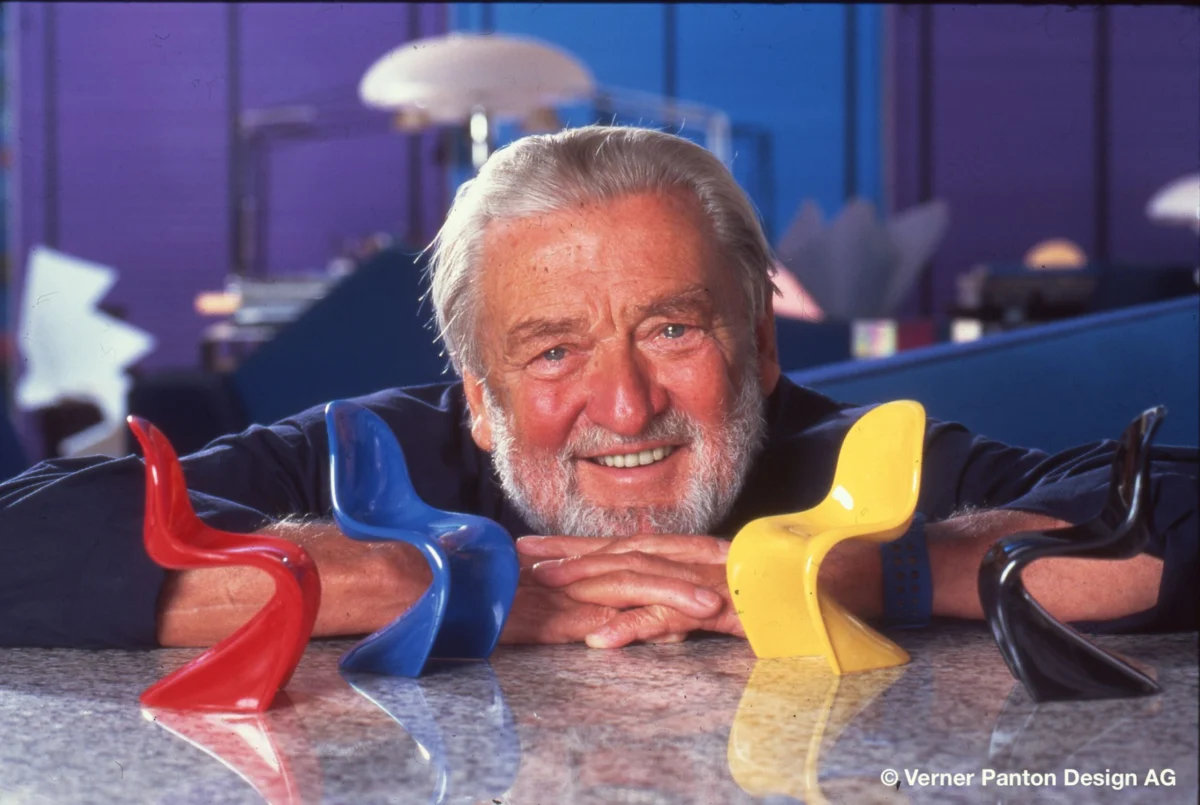
In March, the design community of New York City gathered at a venue in the Lower East Side to commemorate what appeared to be a meticulously curated house party. The atmosphere, characterized by beer bottles chilled in an ice-filled bathtub and stacks of pizza boxes integrated into the room’s aesthetic, served as a backdrop for a more significant occasion. At the center of the space stood a dramatic installation of Panthella lamps, marking the 100th anniversary of the birth of the late Danish designer Verner Panton. Hosted by the lighting manufacturer Louis Poulsen and the design-focused Substack "For Scale," the event utilized branded pizza boxes reading “100 YEARS OF PANTON” and wall projections of Panthella-centric graphics to honor a legacy that remains a cornerstone of mid-century and contemporary industrial design.
The festivities, which culminated in the presentation of a centennial cake at 11:00 pm, represent just one segment of a year-long global celebration. As 2024 and 2025 mark the milestone of what would have been Panton’s personal centennial, the design world has seen a massive resurgence of interest in his catalog. This renewed attention is not merely a nostalgic retrospective but a strategic reintroduction of his work into the modern market, driven by collaborations between the Panton family and several of the world’s most prestigious furniture manufacturers.

The Radical Philosophy of Verner Panton
Born in 1926, Verner Panton is widely regarded as one of Denmark’s most influential 20th-century furniture and interior designers. However, unlike many of his contemporaries who focused on the organic warmth of wood and traditional Scandinavian craftsmanship, Panton was a radical experimentalist. His work was characterized by a fearless use of new materials—particularly plastics, fiberglass, and steel—and a vibrant, often psychedelic color palette that challenged the conventions of the era.
“Many of my father’s designs were far ahead of their time and represented something new and never before seen,” says Carin Panton Von Halem, daughter of the designer and head of Verner Panton Design AG. This family-founded enterprise manages the exclusive rights to Panton’s work, ensuring that modern reproductions remain faithful to his original vision while adapting to contemporary standards of sustainability and production. According to Stine Liv Buur, Vitra’s design classics manager, Panton’s ability to invent new typologies is precisely why his work has endured. He famously avoided the traditional "four-legged chair" silhouette, seeking instead to create fluid, sculptural forms that merged the furniture with the surrounding space.
The Evolution of an Icon: The Panton Chair
Perhaps no object better illustrates Panton’s technical ambition than the Panton Chair. Conceived in 1958 and eventually produced in collaboration with Vitra in 1967, it was the first chair in history to be molded from a single piece of plastic. The journey from concept to mass production, however, was fraught with engineering challenges that reflect the evolution of industrial material science over the last 60 years.

The initial production run in 1967 consisted of only 150 pieces made from cold-molded, fiberglass-reinforced polyester. This material proved too delicate for long-term use, leading to frequent breakage. By 1968, Vitra moved to polyurethane hard foam (Baydur), which allowed for a sturdier finish but remained expensive and labor-intensive to manufacture. In the 1970s, the manufacturer attempted to use Luran S, a thermoplastic, but the material was prone to fatigue and eventually forced a halt in production.
It was not until 1999 that Vitra achieved Panton’s ultimate goal: a version of the chair made from dyed-through polypropylene. This material provided the necessary flexibility, strength, and affordability for global distribution. Today, the chair is offered in two primary versions: the standard polypropylene model and the "Panton Chair Classic," which utilizes the 1968 polyurethane foam technique and is positioned as a premium collector’s item. Looking toward the future, Vitra has integrated recycled polypropylene into the production process, aligning the 20th-century icon with 21st-century environmental mandates.
Illumination and Modernity: The Panthella and Flowerpot
While his seating redefined interior silhouettes, Panton’s contributions to lighting were equally transformative. Since 1971, Louis Poulsen has been the exclusive manufacturer of the Panthella lamp. Known for its mushroom-like shade and tulip-shaped base, the Panthella was designed to emit a soft, glare-free light, with both the base and the shade acting as reflectors.

Monique Faber, chief design officer at Louis Poulsen, notes that the lamp’s proportions were considered "perfection" upon its release. To keep the design relevant for modern consumers, the brand has introduced various scales, ranging from the original 500mm shade to a 160mm portable, cordless version launched in 2019. A significant aspect of this modernization is the focus on repairability. Unlike many "disposable" portable lamps on the market, the modern Panthella Mini is designed with replaceable LED bulbs and batteries, ensuring the product remains functional for decades rather than ending up in a landfill.
Similarly, the Flowerpot lamp, originally released in 1968 by &Tradition, has become a symbol of the "Peace and Love" era. Its simple geometry—two semi-circular spheres facing each other—has allowed it to transition seamlessly into modern minimalist interiors. Marie Honda, CEO of &Tradition, emphasizes that the brand’s current production methods focus on disassembly. The lamps are now constructed without glue, allowing them to be fully repaired or recycled at the end of their lifecycle.
The Business of Color and Modular Design
Panton’s influence extends into the realm of modular storage through his collaboration with Peter J. Lassen, the founder of Montana Furniture. The two met in 1958 at Fritz Hansen and remained lifelong friends and collaborators. Today, Montana produces the "Panton Wire," a shelving system composed of thin steel rods molded into interlockable cubic units.

The Panton Wire exemplifies the designer’s vision of transparency; the units allow the objects they hold to be visible from all angles, creating a sense of lightness in a room. Joakim Lassen, current managing director of Montana, reports that the company sells approximately 60,000 units of the Panton Wire annually. To celebrate the centennial, the brand has expanded the color palette to include cobalt blue, pine green, and tangerine, catering to a market that is increasingly moving away from the beige and grey "sad lamps" of the early 2000s toward a more vibrant, "maximalist" aesthetic.
Economic and Cultural Implications
The enduring popularity of Panton’s work provides a case study in the "Classics" market of the furniture industry. According to market analysis, the demand for authentic mid-century modern designs has seen a steady 5-7% annual growth over the last decade, as consumers prioritize longevity and resale value over fast-furniture alternatives. By maintaining exclusive rights and collaborating with high-end manufacturers, the Verner Panton Design AG ensures that the market is not saturated with low-quality imitations, thereby preserving the brand’s prestige.
Furthermore, the shift toward sustainability has become a primary driver of production changes. Louis Poulsen’s public sustainability reports and Herman Miller’s recent move to use 99% recycled plastic for the Eames Molded Plastic Dining Chair indicate a broader industry trend. For Panton’s designs, which were born in the age of "plastic-is-fantastic," the transition to recycled materials is a necessary evolution to ensure his work remains ethically viable in a climate-conscious world.

A Legacy Preserved
Reflecting on the centennial, Carin Panton Von Halem suggests that while her father was a pioneer of bold, public-facing design, he was personally a modest man who preferred to remain in the background. “He would have been very happy, honored, and proud,” she notes, regarding the global scale of the celebrations.
The centennial year will continue with several high-profile events, including a new exhibition at the Vitra Design Museum in Weil am Rhein, Germany. This will be followed by a dedicated showcase at "Three Days of Design" in Copenhagen and various international gallery installations. These events serve as a reminder that Verner Panton did not just design objects; he designed an atmosphere. His work remains relevant because it blurs the line between functional furniture and fine art, offering a vision of the future that—even 100 years after his birth—still feels remarkably ahead of its time.
As the design world looks toward the next century, the lessons of Panton’s career remain clear: innovation requires a willingness to fail, a curiosity about new materials, and an unwavering belief that color and form can fundamentally alter the human experience of space. By choosing an original Panton piece today, consumers are not merely buying furniture; they are investing in a century-old legacy of rebellion against the mundane.