Kang Muslim
The Intersection of Faith and Racial Perception
The study arrives at a time of significant demographic and political shifts within the United States. For decades, the "evangelical" label has been largely synonymous with white conservative voters—a group that, despite a declining share of the total population, continues to exert outsized influence on American elections. However, the evangelical movement is increasingly multiracial, with growing numbers of Latino and Asian American adherents. This diversification has prompted political scientists like Chan to investigate whether the traditional "God Gap"—the tendency for religious voters to lean toward conservative candidates—operates uniformly across different ethnic groups when filtered through the lens of racial attitudes.
To quantify these attitudes, Chan utilized the "racial resentment" scale, a metric established in political science during the late 20th century to measure a specific form of modern prejudice. Unlike "old-fashioned" racism, which centers on biological inferiority, racial resentment focuses on the belief that Black Americans do not adhere to traditional American values of individual responsibility and hard work. Those scoring high on this scale typically argue that systemic barriers such as slavery and Jim Crow no longer impede Black progress and that government intervention to address inequality is unnecessary or unfair.
Methodology and the 2020 Collaborative Multiracial Post-Election Survey
The empirical foundation of this research is the 2020 Collaborative Multiracial Post-Election Survey (CMPS), a robust data set designed to address the limitations of standard national polling. Traditional polls often suffer from small sample sizes when analyzing minority subgroups, leading to high margins of error for populations like Asian American or Black evangelicals. The 2020 CMPS addressed this by oversampling these populations and offering the survey in multiple languages, including Spanish, Korean, Vietnamese, and both traditional and simplified Chinese.
Chan’s analysis focused on respondents who self-identified as evangelical, fundamentalist, or mainline Christians. He then cross-referenced their stated voting behavior in the 2020 general election with their scores on the racial resentment scale. The survey asked participants to respond to four specific prompts, such as whether they believed "Irish, Italians, Jews and many other minorities overcame prejudice and worked their way up" and whether "Blacks should do the same without any special favors." By controlling for variables such as income, education, age, gender, and general political interest, Chan was able to isolate the specific impact of racial attitudes on voter turnout.
The Mobilizing Force: White, Latino, and Asian American Evangelicals
The findings revealed a striking correlation among white evangelicals. For this group, holding high levels of racial resentment was a primary driver for electoral participation. The statistical model indicated that white evangelicals with the highest levels of racial animus were approximately 22 percentage points more likely to vote than their peers with the lowest levels of resentment. Interestingly, this association was almost non-existent among white non-evangelicals, suggesting that the religious environment of evangelicalism provides a unique framework that activates these racial attitudes into political action.
A similar, though slightly less pronounced, trend was observed among Asian American and Latino evangelicals. For these groups, conservative racial attitudes also functioned as a mobilizing force. Latino evangelicals at the high end of the racial resentment scale were roughly 20 percentage points more likely to turn out than those at the low end. This suggests that for many non-Black minority evangelicals, the theological emphasis on individual responsibility and "meritocracy" aligns with conservative racial views, creating a unified motivation to support candidates who champion these values.
The Paradox of the Black Evangelical Experience
The most significant departure from this trend occurred among Black evangelicals. In this demographic, the relationship between racial resentment and voter turnout was completely inverted. Black evangelicals who held more conservative racial views—those who might agree that Black Americans should work harder without government assistance—were 23 percentage points less likely to vote than Black evangelicals with more liberal racial views.
This sharp decline in participation highlights a profound psychological conflict. While Black non-evangelicals also showed a decrease in turnout associated with racial resentment, the drop was most severe among the evangelical subset. This suggests that the "cross-pressures" of being part of a racial group that emphasizes solidarity and a religious group that may emphasize individualistic conservative values create a state of paralysis.
Conflict Decision Theory and Political Paralysis
To explain these divergent outcomes, Chan pointed to "conflict decision theory." This psychological framework suggests that when individuals are faced with choices that pit their core identities against one another, the resulting internal friction often leads to "decisional procrastination" or total withdrawal.
For a white evangelical, there is often no conflict; their racial attitudes, religious community, and political affiliation frequently point toward the same candidates. For a Black evangelical who holds conservative racial views, however, the conflict is acute. Their personal beliefs may align with conservative platforms, but their racial identity and the social norms of the Black community—which largely views the Republican party as hostile to Black interests—create a "psychological blockade." Rather than choosing between their racial solidarity and their personal racial/theological beliefs, many of these individuals simply choose to stay home on Election Day.
Historical Context and Inferred Reactions
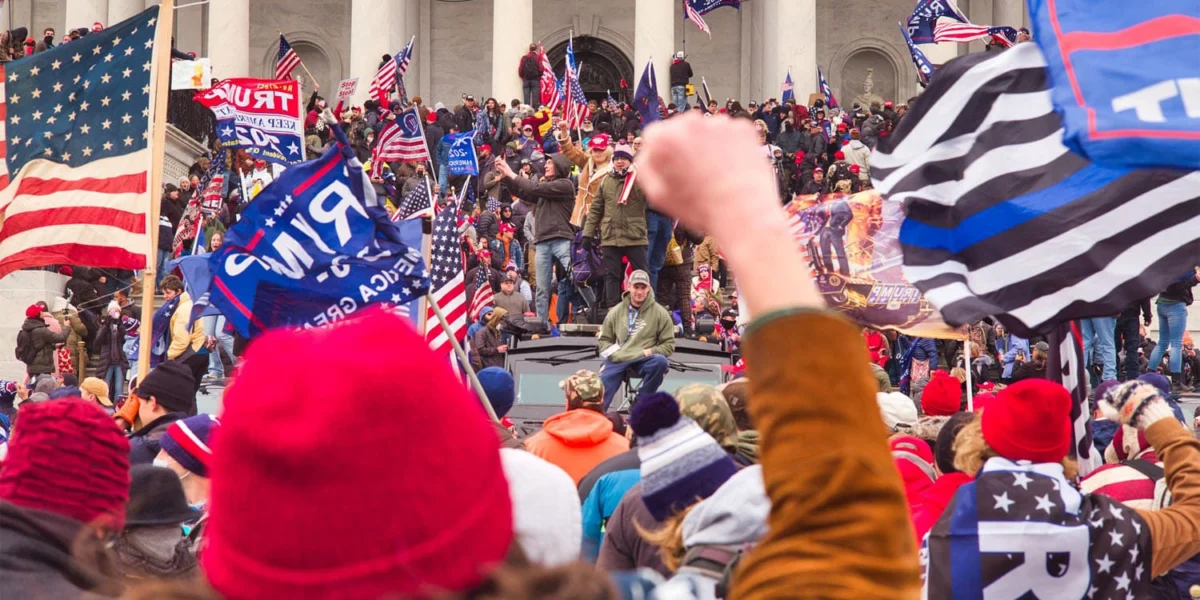
The implications of this study are vast, particularly when viewed through the lens of recent American history. The 2020 election took place against the backdrop of the Black Lives Matter movement and a national reckoning on race following the death of George Floyd. For many white and non-Black minority evangelicals, the rhetoric of "law and order" and the critique of systemic racism served as a "call to action," reinforcing their desire to vote.
While official reactions from major evangelical organizations have been limited, the study aligns with observations from sociologists like Michael Emerson, who has long argued that the "racialization" of American religion creates separate realities for different ethnic groups within the same faith. Political strategists on both sides of the aisle are likely to view these findings as a roadmap for mobilization. For the GOP, the data suggests that emphasizing individual responsibility and traditional values remains a potent way to turn out white and Latino evangelical bases. For Democrats, the study highlights the necessity of addressing the specific "cross-pressures" that may be depressing turnout among Black voters who hold complex, non-monolithic views on race.
Limitations and Avenues for Future Research
Despite the clarity of the findings, Chan acknowledged several limitations inherent in survey-based research. The term "evangelical" is notoriously difficult to define; for some, it is a strict theological category based on the authority of the Bible and the necessity of a "born again" experience. For others, it has become a cultural or even a partisan label.
Furthermore, the study suggests that the frequency of church attendance may play a role that requires further investigation. Preliminary data indicated that among Latino evangelicals, high church attendance might actually correlate with lower turnout, a counterintuitive finding that suggests some religious environments may prioritize spiritual withdrawal over political engagement. Future research could benefit from looking at specific denominations—such as comparing Southern Baptists with members of the Assemblies of God—to see if organizational culture influences how racial resentment is processed.
Broader Impact on the American Electorate
The research by Nathan K. Chan provides a nuanced look at the "hidden" drivers of American voter turnout. It challenges the simplistic notion that religious groups vote as monoliths and reveals that the "evangelical" experience is fundamentally different depending on the skin color of the person in the pew.
As the United States moves toward future election cycles, the "racialization" of the evangelical vote remains a critical factor. The study proves that personal biases do not exist in a vacuum; they are filtered through community expectations and social identities. For some, these biases are a bridge to the ballot box; for others, they are a barrier that silences their political voice. Understanding these layers of identity is essential for anyone seeking to grasp the volatile and shifting landscape of American democracy. In a polarized era, this research serves as a reminder that the decision to vote is as much a psychological and social act as it is a political one.