Danny Garick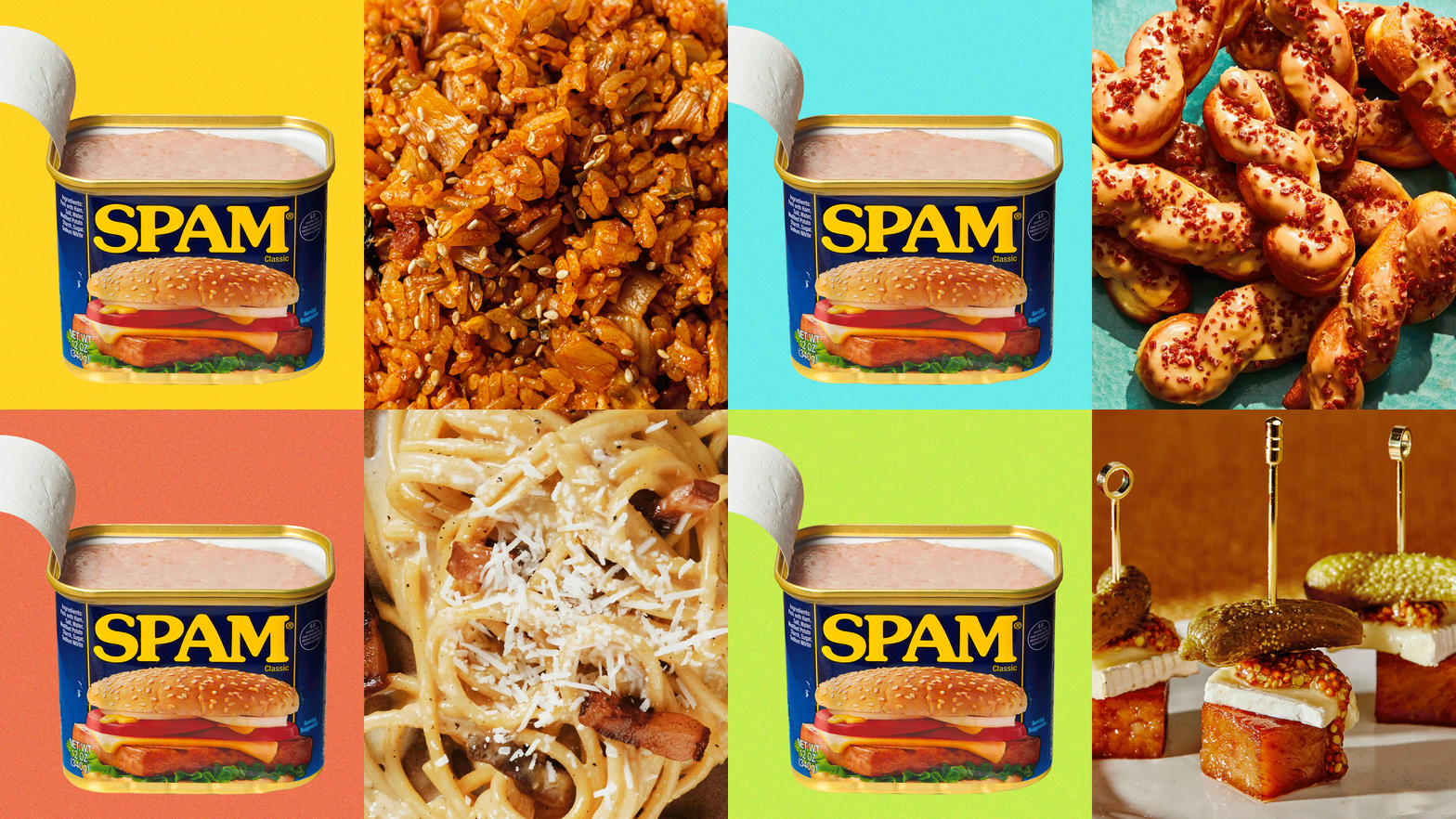
The year 2024 marks the 89th anniversary of the introduction of Spam, the iconic canned cooked meat product that has evolved from a Great Depression-era solution into a global cultural phenomenon. Produced by Hormel Foods Corporation, Spam—a portmanteau often attributed to "spiced ham"—was first launched on July 5, 1937. What began as a convenient, shelf-stable protein for American households has since traversed the globe, sustaining Allied troops during World War II, embedding itself into the national cuisines of various Pacific and Asian nations, and eventually finding a prestigious place in the kitchens of modern gourmet chefs. Today, Spam remains a testament to the intersection of industrial food production, wartime necessity, and culinary innovation.
The Genesis and Historical Context of a Global Brand
The origins of Spam are rooted in the economic necessity of the 1930s. During the Great Depression, consumers sought affordable, high-protein food sources that did not require refrigeration. Jay Hormel, the son of Hormel Foods founder George Hormel, developed the product as a way to market underutilized shoulder of pork. The name "Spam" was famously chosen during a New Year’s Eve party in 1936, following a contest where guests were offered a $100 prize to name the new product. Kenneth Daigneau, an actor and the brother of a Hormel vice president, suggested the winning name.
Upon its release in 1937, Spam was marketed as "The Miracle Meat," touted for its versatility and convenience. However, its true leap into the global consciousness occurred with the United States’ entry into World War II. The U.S. military required vast quantities of protein that could withstand long-distance shipping and varying climates without spoiling. Between 1941 and 1945, Hormel shipped over 100 million pounds of Spam overseas to feed Allied troops. For many soldiers, Spam became a daily staple, leading to a complex relationship of both reliance and "Spam fatigue." Simultaneously, the product was introduced to local populations in Hawaii, Guam, the Philippines, South Korea, and Okinawa, where it was integrated into local diets and remains a beloved ingredient today.
Chronology of the Evolution of Spam
The history of Spam is marked by significant milestones that reflect its transition from a wartime ration to a pop-culture icon:
- 1937: Spam is officially introduced to the market by Hormel Foods in Austin, Minnesota.
- 1941–1945: World War II propels Spam to international prominence as a primary military ration.
- 1950s: Following the Korean War, Spam becomes a critical protein source in South Korea, eventually leading to the creation of Budae Jjigae (Army Base Stew).
- 1970: The British comedy troupe Monty Python airs the "Spam" sketch, cementing the product’s place in comedic history and later providing the terminology for unsolicited bulk email.
- 2001: The Spam Museum opens in Austin, Minnesota, celebrating the brand’s history with exhibits including "Spam Around the World" and a gallery of vintage advertisements.
- 2005: Monty Python’s Spamalot, a musical based on the film Monty Python and the Holy Grail, debuts on Broadway, further intertwining the brand with popular entertainment.
- 2012: Hormel introduces "Sir Can-A-Lot," a mustachioed mascot designed to revitalize the brand’s image for a younger generation.
- 2020–2022: During the COVID-19 pandemic and subsequent inflationary periods, Spam sales reached record highs as consumers returned to shelf-stable, cost-effective pantry staples.
Economic Data and Global Market Presence
The enduring popularity of Spam is supported by robust economic data. According to Hormel Foods’ annual reports, the brand has seen seven consecutive years of record sales growth as of the early 2020s. In 2021, Hormel reported that it produced its nine billionth can of Spam. The product is currently sold in over 40 countries and is available in more than 15 varieties, including Lite, Less Sodium, Teriyaki, and Jalapeño.
Geographically, the consumption of Spam is highly concentrated in specific regions. Hawaii remains the largest consumer of Spam per capita in the United States, with residents consuming approximately seven million cans annually. In South Korea, Spam is considered a premium gift item; during the Lunar New Year and Chuseok holidays, elaborate Spam gift sets are sold in department stores, accounting for a significant portion of the brand’s international revenue. In the Philippines, Spam is a staple of the "Silog" breakfast tradition, often served as "Spamsilog" alongside garlic fried rice and eggs.
Culinary Versatility: Modern Interpretations by Food Industry Professionals
While Spam’s history is rooted in utility, its modern application is characterized by culinary creativity. Professional chefs and food editors have embraced the product’s unique texture and salty profile, using it as a versatile canvas for diverse flavor profiles. This shift represents a broader "high-low" culinary trend, where processed staples are reimagined through the lens of gourmet cooking.
The Stir-Fry Application
Culinary experts, including Nina Moskowitz of Bon Appétit, note that Spam functions similarly to tofu in its ability to absorb flavors. When sliced into thin strips and crisped in a skillet, it provides a textural contrast to vegetables like broccoli. A common modern preparation involves a tamari-ginger sauce enhanced with cinnamon, creating a complex savory-sweet profile. The addition of crispy fried shallots provides a "toasty" finish, elevating the dish from a simple pantry meal to a sophisticated stir-fry.

The Hawaiian Breakfast Influence
The influence of Pacific Island cuisine on mainland American breakfast habits is evident in the popularization of Spam-based morning meals. June Kim, an executive editor, highlights the simplicity of frying low-sodium Spam planks until golden brown and serving them with a fried egg and white rice. The use of the rendered pork fat to cook the egg adds a depth of flavor that is typically finished with a condiment like Sriracha. This preparation mirrors the breakfast traditions of Hawaii and Guam, where Spam is a fundamental component of the morning meal.
Innovations in the Breakfast Sandwich
The traditional "Bacon, Egg, and Cheese" (BEC) has been increasingly replaced by the "Spam, Egg, and Cheese" (SEC). Test Kitchen editor Rebecca Firkser suggests that a thick, seared slice of Spam on a toasted English muffin with sharp white cheddar or American cheese offers a superior melt and a distinct salty-sweet balance. Some iterations include a drizzle of maple syrup or a classic touch of ketchup, highlighting the product’s ability to bridge the gap between savory and sweet flavor profiles.
Fusion Pastas: The Spam Carbonara
In an example of culinary "fusion," Spam has been utilized as a substitute for Italian cured meats like pancetta or guanciale. Ingu Chen, an art director, describes a method where diced Spam is rendered and crisped to mimic traditional Italian ingredients. This "purist-adjacent" approach often incorporates Asian elements such as soy paste, kizami nori (shredded seaweed), and scallions, resulting in a dish that honors the structure of carbonara while introducing a unique salty-umami depth.
Korean-American Staples: Kimchi Fried Rice
For many Korean-Americans, Spam is an essential ingredient in kimchi fried rice (Kimchi-bokkeumbap). Hana Asbrink, a deputy food editor, emphasizes that the combination of diced Spam, fermented kimchi, and gochujang (Korean chili paste) creates a deeply satisfying meal. This preparation utilizes the acidity of the kimchi to cut through the richness of the Spam, illustrating the product’s importance in diaspora cuisines where Western ingredients were historically adapted to traditional recipes.
Official Responses and Cultural Impact
Hormel Foods has actively leaned into the cultural status of Spam. In statements regarding the brand’s longevity, Hormel executives have pointed to the product’s "uncomplicated" nature and its ability to provide comfort during times of uncertainty. The company’s marketing strategy has shifted from basic utility to celebrating the "Spam community," fostering a sense of nostalgia while encouraging culinary experimentation.
Cultural critics have noted that Spam’s reputation has undergone a significant rehabilitation. Once stigmatized as "mystery meat" or a symbol of post-war poverty, it is now celebrated as a symbol of resilience and cultural adaptation. In the Philippines and South Korea, Spam is a link to a history of survival and the creative blending of indigenous and colonial foodways. In the United States, its popularity among Gen Z and Millennial consumers is often attributed to a desire for "authentic" comfort foods and an interest in global fusion cooking.
Broader Implications and Future Outlook
The 89-year trajectory of Spam offers insights into the future of the global food industry. As food security and shelf-stability become increasingly important in the face of climate change and supply chain disruptions, the "Spam model"—a high-protein, long-lasting, and affordable product—remains highly relevant. Furthermore, the brand’s success in integrating into diverse global cultures suggests that processed foods can transcend their industrial origins to become genuine components of cultural heritage.
As Spam approaches its 90th anniversary in 2027, its presence in both the pantry and the professional kitchen appears secure. Whether served as a simple musubi on a beach in Oahu or as an elegant hors d’oeuvre in a New York City bistro, Spam continues to defy culinary boundaries. Its journey from a 12-ounce can in Minnesota to a global icon is a testament to the enduring power of a product that is, at its core, simply seasoned pork and ham, yet represents so much more to the millions who consume it.