Jono Maryono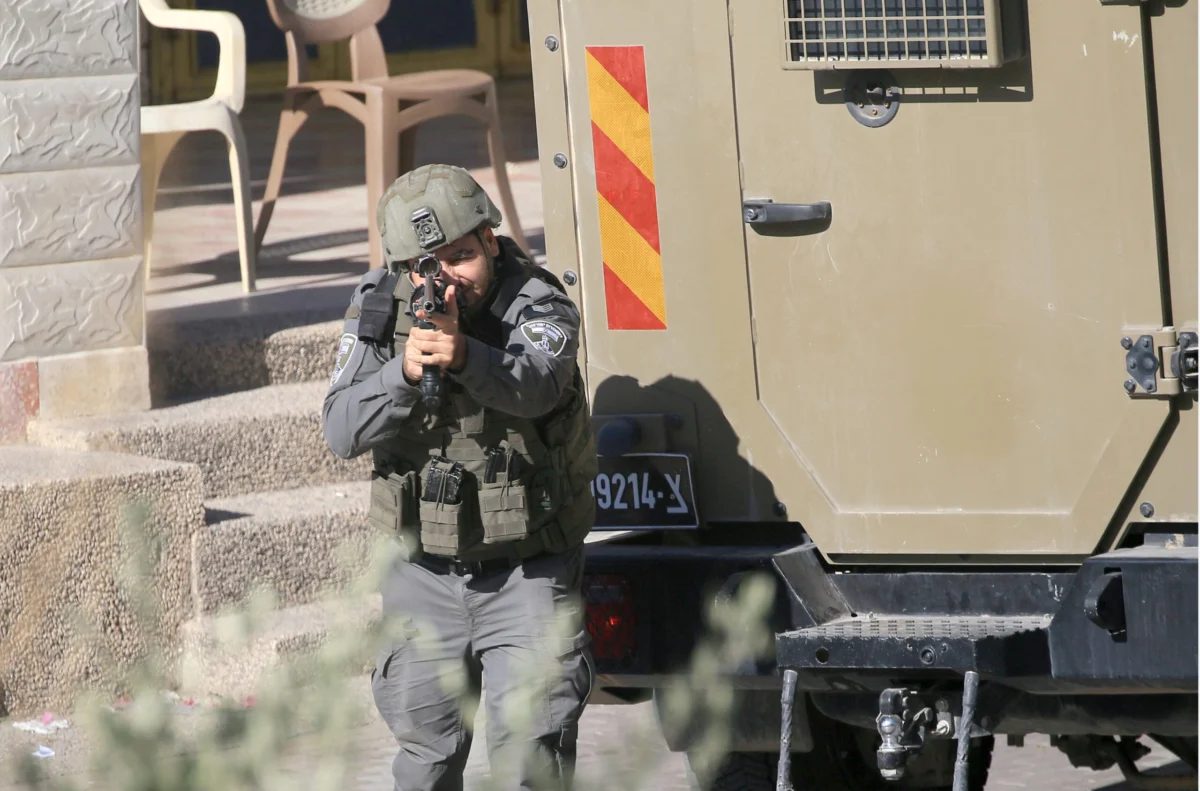
The occupied West Bank has experienced a dramatic and lethal escalation in hostilities following two separate, violent incidents that left a Palestinian man dead after an alleged vehicular assault and an Israeli settler fatally wounded in a targeted shooting. These concurrent events underscore the deepening security crisis and the pervasive volatility characterizing the region, where friction points between Israeli military forces, illegal settlements, and the Palestinian population continue to generate daily casualties. The developments come at a time of heightened regional anxiety, as overlapping conflicts across the Middle East exert compounding pressure on security dynamics within the Palestinian territories.
According to military statements, the first incident unfolded near the northern West Bank city of Jenin, a frequent focal point for armed confrontations and military incursions. An Israeli army spokesperson reported on Sunday that soldiers stationed near the evacuated and illegal settlement of Ganim, located east of Jenin, opened fire on a Palestinian man who allegedly attempted to carry out a vehicular ramming attack against military personnel. The armed forces confirmed that the targeted driver was killed at the scene, while no injuries were sustained among the Israeli troops.
However, the aftermath of the shooting drew immediate humanitarian concerns. The Palestine Red Crescent Society (PRCS) stated that Israeli military forces actively blocked their ambulances and emergency medical teams from reaching the wounded Palestinian man. This claim, corroborated by the official Palestinian news agency Wafa, highlights ongoing friction regarding humanitarian access in zones designated as closed military areas by the Israeli Defense Forces (IDF). Medical obstruction allegations in the West Bank have historically drawn criticism from human rights organizations, who argue that delaying emergency response violates international humanitarian law governing the treatment of the wounded during security operations.
Concurrently, a separate and lethal escalation occurred in the central West Bank, near the illegal settlement of Halamish, northwest of Ramallah. An Israeli settler, identified as a 30-year-old man, was critically wounded in a drive-by shooting attack. According to police and emergency response reports, the victim was rushed to a nearby medical facility in critical condition, where he ultimately succumbed to his wounds despite medical intervention. The brazen nature of the attack prompted an immediate and extensive military response from the Israeli army, which deployed reinforcement units to comb the surrounding terrain.
In the wake of the Halamish shooting, the Israeli military initiated a sweeping manhunt for the perpetrator. The army reported that the assailant had opened fire from a moving vehicle before abandoning it and fleeing the scene on foot. Security forces established multiple checkpoints and cordoned off the area to intercept the suspect. As part of these punitive and restrictive security measures, Israeli forces completely sealed all entry and exit points to the major Palestinian urban centers of Ramallah and el-Bireh. Wafa reported that the closures paralyzed movement for thousands of Palestinian commuters, commercial transport, and emergency services, triggering severe economic and logistical disruptions across the central West Bank.
Broader Context and Historical Background
To fully comprehend the gravity of these recent fatalities, it is essential to examine the socio-political and structural backdrop of the occupied West Bank. Since the 1967 Six-Day War, Israel has maintained military control over the West Bank, facilitating the establishment of hundreds of settlements. Under international law, these settlements are considered illegal, built on land captured in war, a legal consensus upheld by the United Nations Security Council, the International Court of Justice, and mainstream international bodies, though contested by the Israeli government.
The coexistence of heavily fortified Israeli settlements, bypass roads exclusively for Israeli citizens, and entrenched military infrastructure alongside fragmented Palestinian population centers has created a permanent state of friction. Over the past three years, the West Bank has witnessed a steady resurgence of armed resistance and militant activity, particularly in northern hubs such as Jenin and Tulkarem. Localized armed groups, often operating outside the traditional command structure of the Palestinian Authority (PA), have emerged to challenge ongoing military raids and settler expansion.
Simultaneously, settler violence has experienced a measurable increase. Human rights monitors, including United Nations agencies and Israeli human rights organizations such as Yesh Din and B’Tselem, have documented a rising trend of attacks by extremist settlers targeting Palestinian villages, agricultural lands, and infrastructure, frequently occurring under the passive observation or active protection of the Israeli military. The intersection of militant Palestinian attacks against Israelis, aggressive military counter-terrorism operations, and expanding settler communities has created a continuous cycle of retaliatory bloodshed.
Chronology of Escalating West Bank Violence
The timeline of violence in the West Bank throughout the current geopolitical cycle reveals a systemic deterioration in security conditions. The following chronology highlights key phases leading up to the recent incidents:
- Early 2022: The Israeli military launches "Operation Break the Wave," a sustained campaign of nightly raids into West Bank cities, primarily targeting Jenin and Nablus, in response to a wave of attacks inside Israeli cities.
- Late 2022 to 2023: The emergence of localized militant formations, such as the Jenin Brigade and the Lion’s Den, signals a generational shift away from traditional Fatah-dominated security frameworks toward decentralized armed youth groups.
- October 2023: The outbreak of the Israel-Hamas war in the Gaza Strip serves as an immediate catalyst for a profound intensification of violence in the West Bank, resulting in the highest annual death toll in the territory in nearly two decades.
- Throughout 2024: Routine military incursions expand into prolonged urban battles, characterized by extensive infrastructure destruction in refugee camps, increased use of aerial drone strikes in the West Bank, and a surge in lethal drive-by shootings targeting Israeli motorists and settlers.
- Current Period: Incidents such as the alleged vehicular attack near Jenin and the fatal shooting near Halamish demonstrate that the operational tempo of violence remains unabated, driven by localized actors and reinforced by uncompromising military countermeasures.
Statistical Overview and Supporting Data
Quantifying the human cost of the ongoing conflict in the West Bank reveals an alarming upward trend in fatalities and injuries. According to data compiled by the United Nations Office for the Coordination of Humanitarian Affairs (OCHA) and verified by local health authorities:
- Casualty Tolls: Since the escalation of hostilities, hundreds of Palestinians have been killed by Israeli forces or settlers in the West Bank, including a significant number of minors and individuals not involved in active hostilities. Concurrently, dozens of Israelis—comprising both civilians, settlers, and military personnel—have lost their lives in Palestinian shooting, ramming, and stabbing attacks across the West Bank and Israel.
- Settler Expansion and Incidents: OCHA monitoring indicates that settlement-related violence has increased exponentially, with thousands of recorded incidents resulting in property damage, forced displacement of pastoral Palestinian communities, and direct physical casualties.
- Movement Restrictions: The implementation of sudden closures, checkpoints, and iron gates isolating Palestinian cities like Ramallah, Jenin, and Nablus affects hundreds of thousands of civilians daily, obstructing access to employment, education, and specialized medical care.
- Administrative Detention: The use of administrative detention—imprisonment without charge or trial based on classified evidence—has expanded dramatically, with thousands of Palestinians currently held in Israeli detention facilities under stringent conditions.
Official Responses and Institutional Postures
The dual incidents near Jenin and Halamish elicited swift, predictable statements from the primary stakeholders involved, reflecting the deep polarization and lack of a unified political horizon.
The Israeli military and security establishment framed their actions around the imperative of self-defense and counter-terrorism. Regarding the Jenin incident, military spokespersons emphasized that soldiers acted in accordance with operational protocols when confronted with an imminent vehicular attack. In response to the Halamish shooting, defense officials reiterated their commitment to tracking down the perpetrators, pledging that security forces would utilize all available intelligence and operational assets to dismantle local cells responsible for orchestrating drive-by attacks. Israeli leadership has consistently maintained that comprehensive closures and aggressive security sweeps are unavoidable necessities to protect settler communities and curb the infiltration of arms into population centers.
Conversely, Palestinian institutions and leadership condemned the ongoing military operations. The Palestinian Authority criticized the killing of the Palestinian man near Jenin as an extrajudicial execution, pointing to the denial of medical access by the PRCS as a severe violation of international norms. Palestinian officials argued that the continuous escalation of military incursions into urban centers, coupled with unchecked settler violence, actively sabotages any possibility of political stability. Civil society organizations have called upon the international community to move beyond rhetorical condemnation and enforce accountability mechanisms to address both state-sanctioned military abuses and the persistent violence emanating from illegal settlements.
Broader Impact and Strategic Implications
The long-term implications of these persistent flashpoints extend far beyond the immediate localized tragedies, shaping the strategic landscape of the entire region.
First, the deepening security vacuum in the West Bank poses a severe structural challenge to the authority and legitimacy of the Palestinian Authority. As the PA struggles to project governance or security across autonomous areas—particularly in the north—its relevance continues to erode in the eyes of the local populace, paving the way for further radicalization and the entrenchment of armed factions.
Second, the expansion and consolidation of illegal settlements, coupled with escalating retaliatory violence, cement a de facto one-state reality that effectively forecloses the viability of a sovereign, contiguous Palestinian state alongside Israel. This trajectory complicates international diplomatic efforts and deepens diplomatic friction between Israel and its Western allies, who periodically voice concern over settlement growth while maintaining strategic security cooperation.
Finally, the humanitarian toll on Palestinian civilians—manifested through economic strangulation via permanent checkpoints, psychological trauma, and the constant threat of lethal force—creates an environment of chronic instability. For Israelis, the persistent vulnerability to drive-by shootings and vehicular attacks ensures that a state of high anxiety and defensive mobilization remains the baseline of daily existence. Until foundational political issues are addressed, incidents like those near Jenin and Halamish will likely remain grim milestones in an unending cycle of cyclical violence.