Layla Zulfa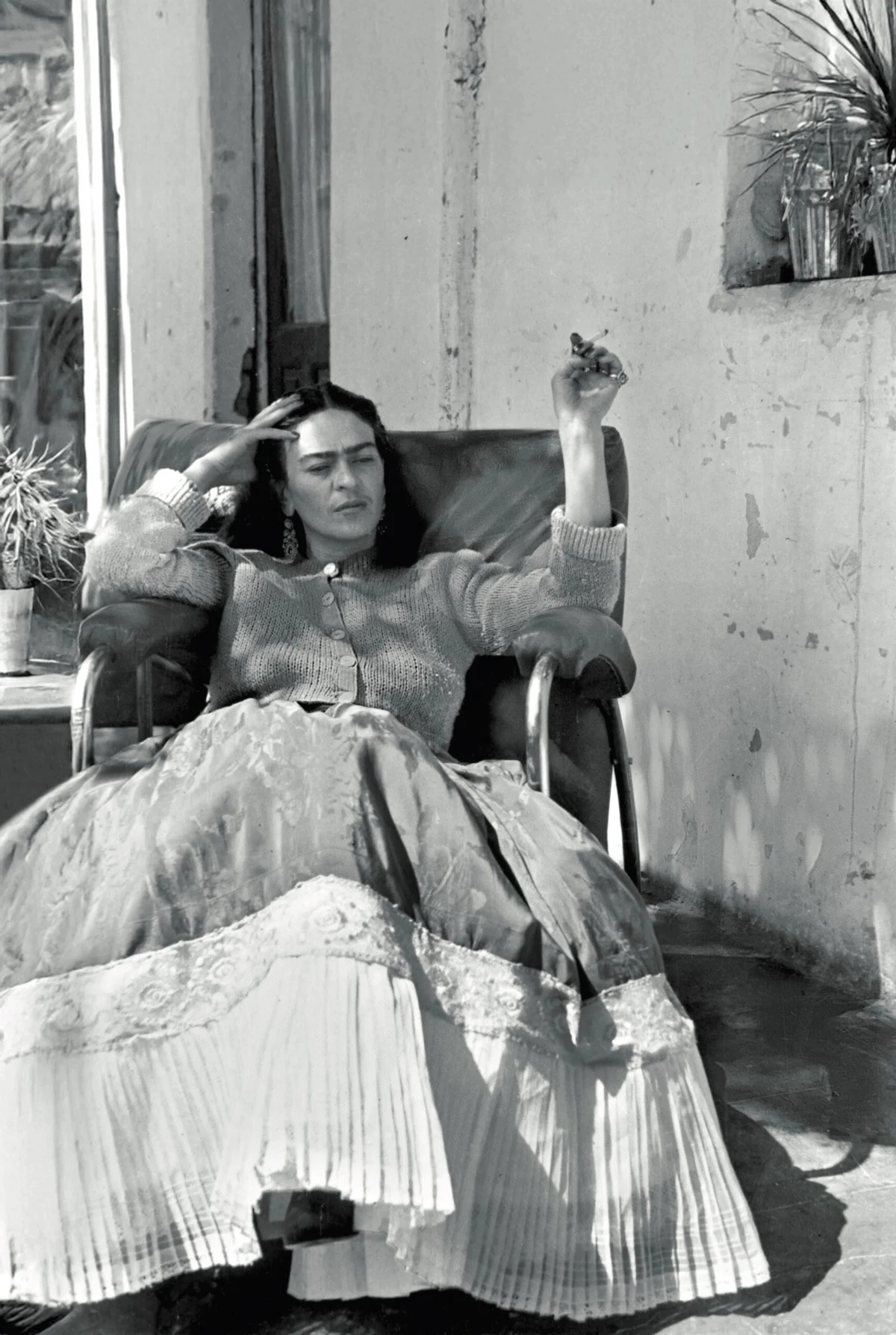
The legacy of Frida Kahlo has undergone a profound transformation in the seven decades since her death, evolving from the specialized acclaim of the Mexican art world to a ubiquitous global brand. This phenomenon, frequently termed "Fridamania," has seen the artist’s likeness—characterized by her distinctive unibrow and traditional Tehuana dress—reproduced on everything from high-fashion runways to mass-market consumer goods. However, critics and historians have long argued that this commercial saturation has "flattened" Kahlo, stripping away the complexities of her humanity in favor of a marketable aesthetic. A new publication from Rizzoli, titled Casa Kahlo: Frida Kahlo’s Sanctuary, seeks to provide a necessary corrective to this decontextualization. Authored by the artist’s direct descendants, the book serves as a companion to the recently opened Casa Kahlo museum in Mexico City, offering an unprecedented look at the private life, domestic joys, and family ties of one of the 20th century’s most enigmatic figures.

The Emergence of a New Cultural Landmark
While the "Casa Azul" (The Blue House) has long served as the primary site of pilgrimage for Kahlo enthusiasts, it has functioned as a formal museum since 1958, shortly after the artist’s death. In contrast, the nearby residence known as Casa Kahlo remained a private family home for Kahlo’s descendants until as recently as 2021. The transition of this space from a private residence to a public museum has unearthed a wealth of previously unseen material.
During the conversion process, curators and family members discovered a vast repository of personal artifacts, including intimate correspondence, family recipes, and rare photographs. These items provide a more nuanced perspective on Kahlo, moving beyond the recurring themes of physical suffering and marital strife that dominate her professional oeuvre. The book Casa Kahlo synthesizes these discoveries, presenting Kahlo not merely as a tragic icon, but as a doting aunt, a playful sister, and a vibrant participant in the daily rhythms of her Coyoacán neighborhood.

A Chronology of Space and Identity
The narrative of Frida Kahlo’s life is inextricably linked to the architecture of Coyoacán. To understand the significance of the new museum and book, one must look at the chronological development of the Kahlo family’s real estate holdings, which mirrored the artist’s own tumultuous journey.
1904–1910: The Foundation of Casa Azul
Frida’s father, Guillermo Kahlo, a German immigrant and professional photographer, built Casa Azul in 1904. It was here that Frida was born on July 6, 1907. The home was originally designed in a French-influenced style, typical of the Porfiriato era, before being later painted the iconic cobalt blue by Frida and her husband, Diego Rivera.

1925: The Catalyst of the Accident
On September 17, 1925, an 18-year-old Frida was involved in a catastrophic bus accident. A streetcar collided with her vehicle, resulting in a metal handrail piercing her abdomen and pelvis. This event ended her dreams of becoming a physician and began her life as an artist. During her long periods of convalescence at Casa Azul, her parents installed a mirror above her bed, allowing her to begin the self-portraiture that would define her career.
1930–1933: The Acquisition of Casa Kahlo
While Frida and Diego Rivera were living in the United States—traveling to San Francisco, Detroit, and New York for Rivera’s mural commissions—Frida’s mother, Matilde Calderón, purchased the property that would become Casa Kahlo. Located just blocks from Casa Azul, Frida sent funds from the U.S. to help her parents renovate the space. This house eventually became the residence of Frida’s sister, Cristina Kahlo, and her children, serving as a secondary sanctuary for the artist.

1934–1940: The San Angel Experiment
Upon their return to Mexico, Kahlo and Rivera moved into a pair of modernist houses in the San Angel neighborhood. Designed by architect Juan O’Gorman, these "twin houses" were a radical departure from the colonial style of Coyoacán. Linked by a bridge, the structures represented the couple’s unconventional marriage—separate yet connected. Rivera’s house was larger and painted red, while Frida’s was a smaller, blue concrete cube.
1940–1954: Return to the Roots
Following a brief divorce and remarriage in 1940, Kahlo and Rivera moved back to Casa Azul. This period marked Kahlo’s most prolific era as a teacher and cultural figure, but also the period of her steepest physical decline.

Humanizing the Icon: The Descendants’ Perspective
The new Rizzoli volume is penned by Mara Romeo Kahlo (Frida’s grandniece), Mara de Anda, and Frida Hentschel. Their involvement provides a perspective that is often missing from academic biographies. According to the authors, Casa Kahlo was a place where the "official" version of the artist was set aside.
"While her identity as a great painter and the wife of a well-known artist dominated Casa Azul, Frida the daughter, the sister, and the aunt is what shone through at Casa Kahlo," writes Mara Romeo Kahlo. The family archives reveal a woman who sealed letters to her sister with lipstick kisses and took great pleasure in the culinary traditions of Mexico. The book includes family recipes that Kahlo enjoyed, emphasizing her role in the domestic sphere.

The correspondence found in the home sheds light on her deep bond with her sister Cristina. Despite the well-documented affair between Rivera and Cristina, which caused a temporary rift in the family, the sisters eventually reconciled. Frida’s role as a surrogate mother to Cristina’s children, Isolda and Antonio, is a central theme of the new publication. Photos from the 1930s show a relaxed Kahlo on the balconies of Casa Kahlo, far removed from the stoic, suffering figure seen in her self-portraits.
Supporting Data: The Scale of Fridamania
The release of Casa Kahlo comes at a time when the artist’s market value and cultural influence are at an all-time high. In November 2021, Kahlo’s self-portrait Diego y yo (Diego and I) sold at Sotheby’s for $34.9 million, making it the most expensive work by a Latin American artist ever sold at auction.

This financial valuation is mirrored by digital engagement. On social media platforms, the hashtag #FridaKahlo appears on over 4 million posts, ranging from art history discussions to makeup tutorials. However, the Kahlo family has expressed concern that this digital footprint often ignores the artist’s political convictions—she was a lifelong communist—and her intellectual depth. The opening of the Casa Kahlo museum is seen as a strategic move to reclaim her narrative from the global licensing industry.
The Menagerie and "Los Fridos"
One of the most enriching aspects of the new book is the detailed documentation of Kahlo’s domestic environment. She was a well-known lover of animals, maintaining what visitors described as a "menagerie" at Casa Azul. This included spider monkeys (most famously Fulang-Chang), Xoloitzcuintli dogs, parrots, deer, and even an eagle.

These animals were not merely pets; they were frequent subjects of her paintings, often serving as symbolic stand-ins for the children she was unable to conceive due to her injuries. The book provides context for these relationships, showing how the presence of these creatures created a sense of life and vitality in a home that was often shadowed by the artist’s physical pain.
Furthermore, the book explores her role as an educator. In 1943, Kahlo began teaching at the art school La Esmeralda. As her health worsened, she moved her classes to Casa Azul. Her students, who became known as "Los Fridos," were encouraged to look at the reality of Mexican life rather than follow European academic traditions. This period of her life highlights her commitment to the next generation of Mexican artists and her role as a mentor.

Broader Impact and Implications for Cultural Tourism
The establishment of the Casa Kahlo museum and the publication of the Rizzoli book are expected to have a significant impact on Mexico City’s cultural landscape. Coyoacán is already one of the most visited boroughs in the city, with Casa Azul attracting hundreds of thousands of visitors annually. The addition of a second, more intimate site allows for a "Kahlo Circuit," encouraging tourists to engage with the artist’s life across multiple locations.
Beyond tourism, the project has significant implications for the study of Mexican Modernism. By releasing private family archives, the descendants are providing scholars with new primary sources to analyze Kahlo’s life and work. This transparency helps to dismantle the "myth" of Frida, replacing it with a more grounded, historical reality.

Conclusion: Viva la Vida
The final chapter of Kahlo’s life was marked by extreme hardship, including the amputation of her right leg due to gangrene in 1953. Yet, even in her final days at Casa Azul, she remained defiant. Her last painting, a vibrant still life of watermelons, bears the inscription "Viva la Vida" (Long Live Life).
The new book Casa Kahlo echoes this sentiment. By focusing on her laughter, her family, and her home, the authors have moved the conversation away from her "Broken Column" and toward her enduring spirit. As the global public continues to consume the image of Frida Kahlo, this new record of her domestic sanctuary ensures that the human being behind the icon is not forgotten. In the transition from private residence to public archive, Casa Kahlo stands as a testament to the fact that while an artist’s work belongs to the world, her soul is best understood through the walls that sheltered her.