Ferry Irwandi
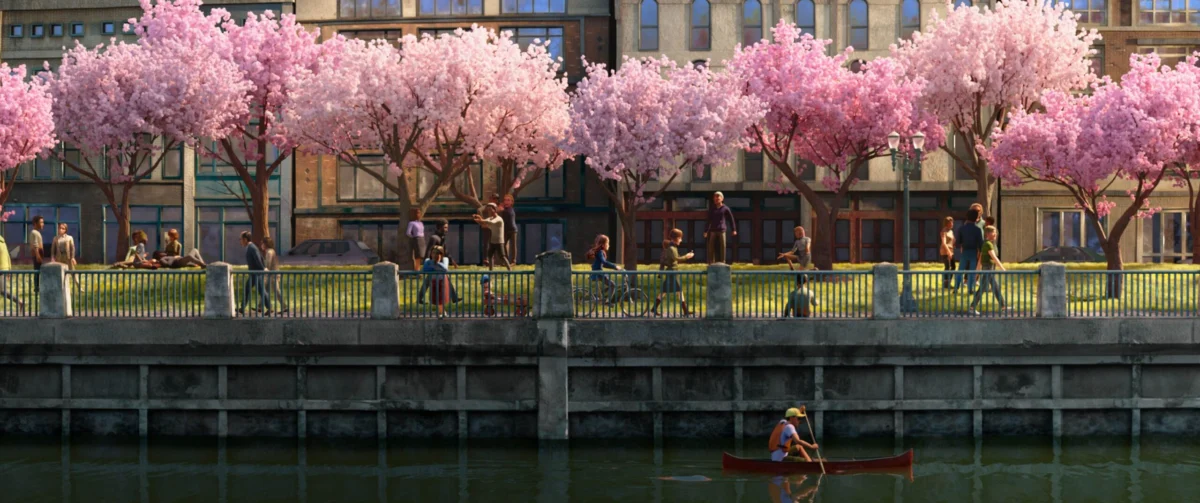
The intersection of hand-crafted artistry and regional geography forms the foundation of Laika’s latest stop-motion feature, Wildwood, an adaptation of the beloved fantasy novel written by Colin Meloy. Directed by Travis Knight, the film represents a significant milestone for the Oregon-based animation studio. For the first time in its history, Laika has set a feature-length narrative explicitly in its hometown of Portland, Oregon. The production journey, spanning nearly two decades from manuscript discovery to the final rendered frame, reflects both the painstaking nature of stop-motion animation and a profound localized tribute to the Pacific Northwest.
The Genesis and 16-Year Timeline of Production
The narrative of Wildwood began long before its theatrical realization. Director Travis Knight first encountered Colin Meloy’s unpublished manuscript in 2010, just a single year after Laika released its landmark debut feature, Coraline, in 2009. At the time, the studio was establishing itself as a powerhouse of stop-motion innovation, blending traditional physical craftsmanship with cutting-edge technological advancements such as rapid-prototyped 3D-printed facial animation.

Adapting Wildwood, however, presented an entirely different scale of logistical and artistic challenges. The pre-production phase officially commenced in 2019, positioning the project to scale up its physical construction units just as the global entertainment industry—and the physical landscape of Portland itself—faced unprecedented disruptions due to the COVID-19 pandemic. Over the 16-year span from manuscript to screen, Portland underwent significant demographic, cultural, and structural transformations. Despite these shifts, Knight and his creative team remained committed to capturing the specific cultural and environmental texture of the city as it existed in memory and reality, integrating local cultural staples such as Voodoo Doughnut and nods to regional indie-folk bands like The Decembrists into the protagonist Prue’s daily life.
Translating the Pacific Northwest Ecosystem into Fantasy
Set largely within the "Impassable Wilderness"—a dense, magical forest situated just beyond the municipal borders of Portland—Wildwood functions simultaneously as a high-stakes fantasy adventure and a delicate eco-fable. The film’s narrative follows 13-year-old Prue as she ventures into the forbidden zone to rescue her kidnapped baby brother, thrusting her into an elaborate civil war among the realm’s animal denizens.
According to Knight, translating the natural world into stop-motion animation required confronting the distinct geometric rules of organic matter. While interiors such as a child’s bedroom or a local coffee shop (nodding to Laika’s in-house cafe, Dripsters) offer manageable, rectilinear parameters for set builders, forests and wilderness environments possess a chaotic, organic grammar. Animating dense foliage, sprawling root systems, and towering ancient trees demanded specialized fabrication techniques and materials.

To anchor the fantasy realm in authentic geography, the artistic team integrated visual references to iconic Pacific Northwest landmarks throughout the wilderness sets. Viewers familiar with Oregon geography can spot subtle architectural and topographical homages to Crater Lake and Haystack Rock. By treating the natural landscapes of Oregon on the same mythic tier as classical literary realms like C.S. Lewis’s Narnia or J.R.R. Tolkien’s Middle-earth, the filmmakers sought to elevate regional pride onto an international cinematic scale.
The Philosophy of Handcrafted Artistry in an Automated Era
A core thematic current within Wildwood is the celebration of human labor and tangible craftsmanship. This philosophy is manifested not only in the monumental physical effort required to shoot stop-motion animation frame by frame, but also through subtle visual gags embedded within the film’s background—such as an art fair vendor in Portland’s St. Johns neighborhood displaying a sign urging patrons to purchase human-made art before it vanishes permanently.
In an era increasingly dominated by digital automation and frictionless technological processes, Knight views the meticulous, tactile nature of stop-motion as a deliberate cultural statement. Every wrinkle on a character’s face, every individual leaf on a fabricated shrub, and every weathered wooden plank on a miniature storefront requires physical manipulation by artisans, painters, and set dressers. This dedication to the human touch underscores a broader industry-wide conversation regarding the value of physical art forms in contemporary media production.

Reflections from the Director on Creative Roots
Reflecting on the completion of a project so deeply intertwined with his personal history, Knight shared insights regarding the daunting nature of creating art inspired by one’s home. Addressing aspiring creators, the director emphasized that true originality stems not necessarily from geographical setting, but from honoring one’s individual perception of the world.
"Every place has its own unique characteristics and its own unique personality," Knight noted, discussing the process of channeling childhood memories of exploring the forested slopes of Oregon mountains into his directorial work. He stressed that an artist’s primary offering is their distinct inner lens—shaped by upbringing, community interaction, and personal observation—which cannot be replicated by automated systems or external imitation.
Broader Implications for Regional Cinema and Animation

The release of Wildwood carries significant economic and cultural implications for the Pacific Northwest creative sector. Laika’s sustained presence in Washington County and the broader Portland metropolitan area anchors a robust ecosystem of specialized craftspeople, model makers, puppet fabricators, and digital artists. By utilizing local geography as both a literal setting and a conceptual muse, the studio reinforces Portland’s reputation as a vital global hub for independent animation and alternative cinematic storytelling.
Furthermore, the film’s underlying environmental themes align with contemporary cultural discourse surrounding ecological preservation and stewardship. By framing the struggle within the Impassable Wilderness as an eco-fable rooted in real-world forestry, the filmmakers hope to foster an appreciation for natural ecosystems without resorting to didactic messaging.
As Wildwood enters theatrical distribution, its legacy will likely be measured not only by its technical achievements in stop-motion animation—where physical craftsmanship continues to push the boundaries of visual medium—but also by its faithful, affectionate portrait of a changing city and its surrounding wilderness. Through meticulous attention to detail and a steadfast commitment to the handcrafted aesthetic, Laika has cemented a localized fairy tale into the broader canon of modern fantasy cinema.