Johny Marice
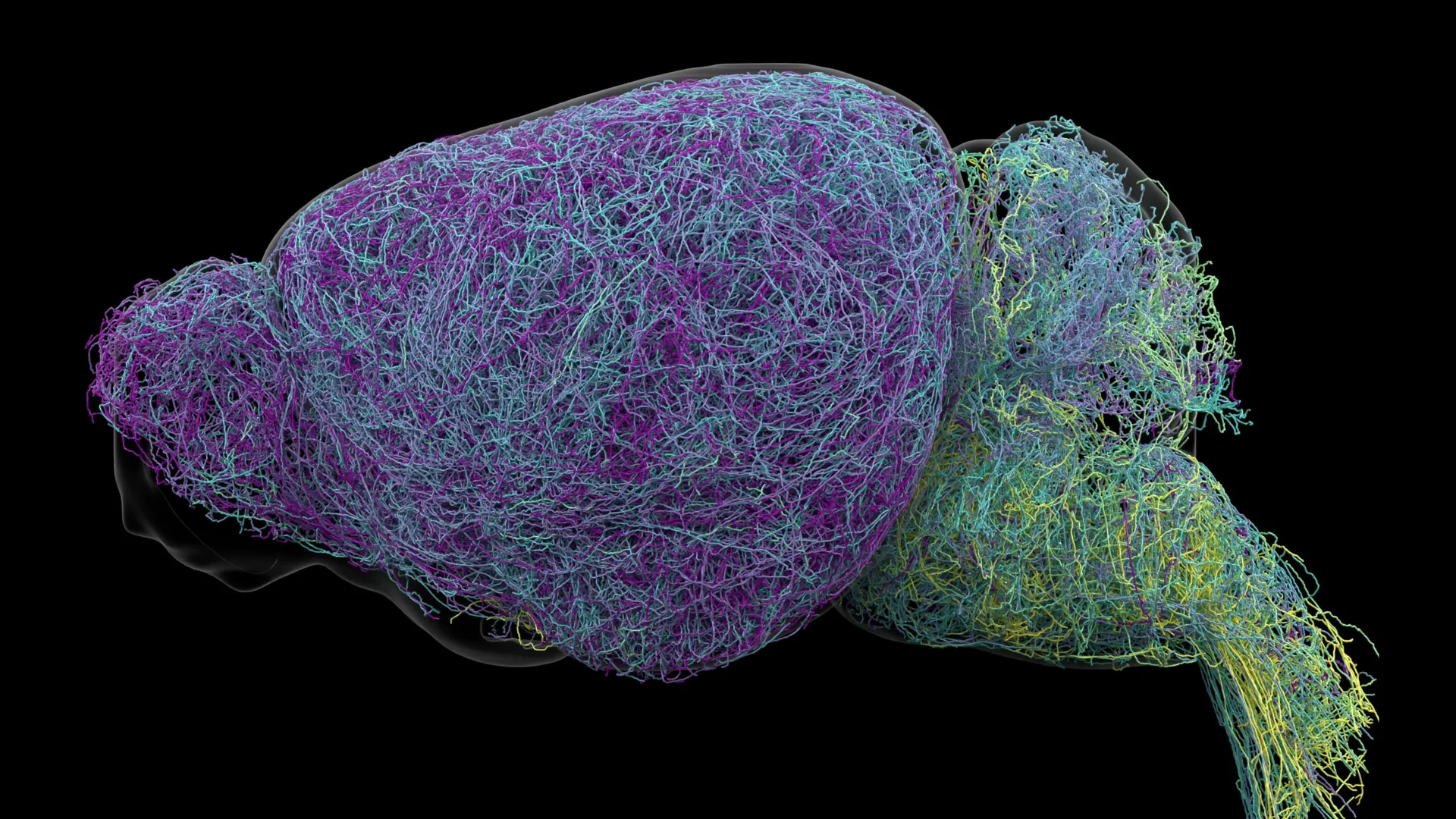
Deep within the brainstem lies a cluster of nerve cells no larger than a grain of rice, yet this region—the locus coeruleus (LC)—serves as a command center for the brain’s most fundamental operations. Latin for "blue place" due to its distinct pigmentation, the LC is the primary source of norepinephrine (NE) in the central nervous system. For decades, the prevailing consensus in neuroscience was that the LC functioned like a biological foghorn: a uniform, broadcast-style signaling system that saturated the brain with the same chemical message regardless of the stimulus. A groundbreaking study published in Nature by researchers at the Allen Institute for Brain Science has effectively dismantled this "broadcast" hypothesis, revealing instead a sophisticated, highly targeted postal network that governs attention, learning, and environmental engagement.
The Evolution of a Paradigm Shift
The scientific community’s long-standing reliance on the "broadcasting" model of the locus coeruleus originated in the mid-20th century. Early neuroanatomical studies lacked the resolution to map the individual projections of LC neurons, leading researchers to believe that these cells fired synchronously to manage global states like arousal or wakefulness. However, as imaging technology and genetic sequencing advanced, the limitations of this model became increasingly apparent.
The recent study, supported by the National Institutes of Health (NIH) through the Brain Research Through Advancing Innovative Neurotechnologies (BRAIN) Initiative, represents a multi-year effort to reconcile the mismatch between the LC’s massive influence and its simplistic theoretical structure. By employing a combination of whole-brain imaging, high-density neural recordings, and rigorous behavioral experiments in murine models, the research team identified that the LC is not a singular monolithic structure, but rather a collection of specialized sub-circuits. This investigation effectively moves the field from a 20th-century understanding of "global modulation" to a 21st-century model of "spatial precision."
Anatomy of a Targeted Network
The researchers mapped the neural architecture of the LC with unprecedented detail, uncovering a stark dichotomy between the dorsal and ventral regions. The dorsal portion, situated in the upper reaches of the structure, serves as a high-level command post. These neurons project primarily to the cerebral cortex and the forebrain, areas associated with complex cognitive functions such as executive decision-making and learning. In contrast, the ventral portion projects downward, forming connections with the brainstem and spinal cord.
This discovery clarifies why the brain can simultaneously manage disparate tasks. For instance, the dorsal neurons facilitate the rapid recalibration of behavior when a mouse encounters an unexpected outcome in a task, essentially helping the brain "learn from its mistakes." Meanwhile, the ventral neurons appear to act as a regulatory gate for sensory engagement, determining whether an organism ignores a stimulus or pays it heed.
Karel Svoboda, director of Neural Dynamics at the Allen Institute and a co-author of the study, summarized the shift in understanding: "The findings suggest the brain’s norepinephrine system is far more like a targeted postal network than a foghorn. It is an organized, hierarchical system that allows for localized control over disparate neural functions."
The Record-Breaking Neuron and Structural Complexity
One of the most startling aspects of the Allen Institute study was the structural analysis of the LC neurons themselves. Utilizing advanced whole-brain reconstruction, the team examined nearly 35,000 neurons and analyzed the genetic profiles of roughly 400,000 individual cells.
The researchers discovered that LC axons—the long, slender projections that transmit electrical impulses—are far longer than previously assumed. On average, these axons measure approximately 35 centimeters, a massive distance for a cell body residing in the brainstem. The team successfully reconstructed one axon that measured an astonishing 70.32 centimeters, marking it as one of the longest individual neurons ever documented in a mouse brain.
Jeremiah Cohen, a scientist at the Allen Institute and study co-author, noted that the existence of such expansive axons does not contradict the "targeted" theory. "This neuron, like many others that we studied, supplies norepinephrine to a very large volume of the cerebral cortex," Cohen explained. "But this neuron doesn’t release NE everywhere. It ignores the cerebellum, brainstem, and spinal cord. Its reach is extensive, but its target list is highly specific." This suggests that even the most far-reaching neurons in the brain are bound by strict genetic instructions that dictate exactly where they deposit their chemical messengers.
Clinical Implications for Neurological Disorders
The transition from a "broadcast" model to a "targeted" model has profound implications for clinical medicine. Norepinephrine is a critical component in the pathology of several high-profile neurological and psychiatric conditions, including Attention-Deficit/Hyperactivity Disorder (ADHD), major depressive disorder, anxiety, and neurodegenerative diseases like Alzheimer’s.
Currently, pharmacological interventions for these conditions—such as selective norepinephrine reuptake inhibitors (SNRIs)—often suffer from a lack of precision. Because these drugs typically modulate the entire norepinephrine system, they frequently cause systemic side effects. A patient might see improvements in focus (the intended target) while simultaneously experiencing elevated heart rate or digestive issues (the unintended side effects of global modulation).
By identifying the distinct pathways and genetic signatures of the LC, researchers may eventually be able to develop "circuit-specific" therapies. If scientists can target the specific genetic pathways that govern the dorsal LC without triggering the ventral LC, they could theoretically treat cognitive deficits in Alzheimer’s or ADHD without causing the broad physiological disruptions associated with current medications.
Synergies with Dopamine and Future Research
The study also provides critical insights into how the norepinephrine system interacts with the dopamine system—the brain’s primary "reward" signal. The basal ganglia, a region centrally involved in habit formation, receives heavy dopaminergic input. The Allen Institute findings suggest that norepinephrine and dopamine may operate in tandem, providing a dual-layered regulatory system that allows the brain to acquire complex, abstract concepts while simultaneously evaluating environmental rewards.
This interplay suggests a level of neural sophistication that was previously underestimated. If the LC is managing the "how" of learning and the dopamine system is managing the "what" of reward, their integration provides a framework for understanding how organisms navigate high-stakes decision-making.
Moving Forward: From Mice to Humans
While the current research is derived from mice, the evolutionary conservation of the brainstem across mammalian species suggests that these findings likely translate to the human brain. The BRAIN Initiative continues to fund research aimed at mapping the "human connectome," and this study provides a crucial roadmap for future human-focused neuroimaging projects.
The next phase of this research will likely involve testing whether these specific pathways can be manipulated through non-invasive techniques, such as targeted neuromodulation. As researchers continue to refine their map of the LC, the "blue place" is rapidly transforming from a mysterious, monolithic structure into a well-defined, highly organized, and essential circuit hub.
The discovery does more than just update a textbook diagram; it fundamentally alters the trajectory of how we perceive the brain’s ability to communicate. By proving that the LC operates with precision rather than chaos, the Allen Institute has opened the door to a new generation of precision medicine, potentially offering relief to millions of individuals suffering from disorders that have, until now, been treated with the blunt instrument of systemic pharmacology. The fog has lifted, revealing a complex, elegant, and highly efficient network that keeps the brain—and the organism—in balance.