Johny Marice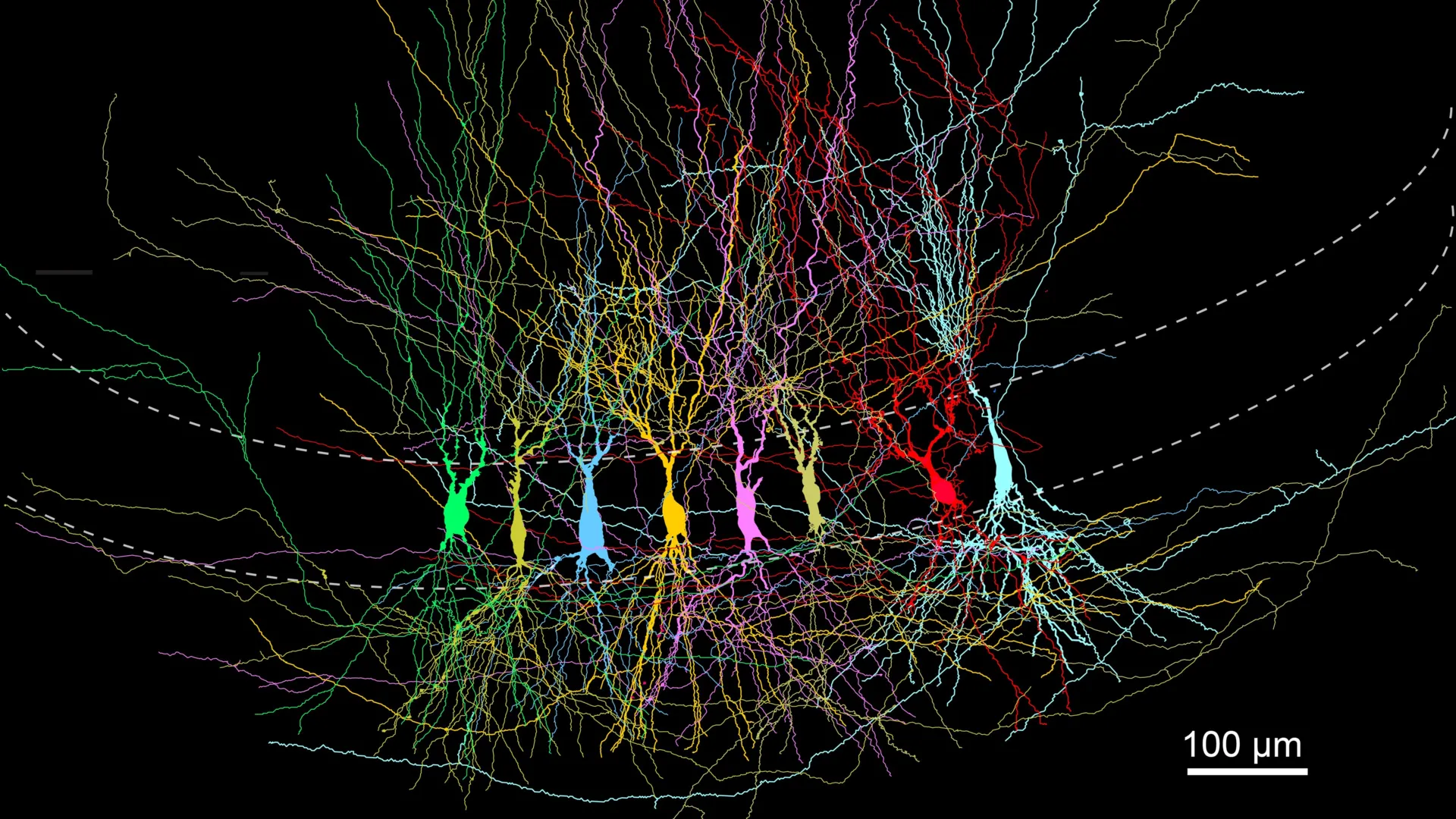
The intricate architecture of the human brain, particularly the hippocampus, a region fundamental to memory formation and spatial navigation, has long been a subject of intense scientific inquiry. Traditionally, developmental neuroscience has grappled with the nature-versus-nurture debate, often framed as the contrast between a "tabula rasa" (blank slate) and a "tabula plena" (full slate). New groundbreaking research from the Institute of Science and Technology Austria (ISTA) has provided compelling evidence that a critical neural network within the hippocampus, responsible for memory processing, develops more in line with the "full slate" model, undergoing a process of refinement rather than initial construction.
This paradigm-shifting study, led by Magdalena Walz Professor for Life Sciences Peter Jonas at ISTA and published in the esteemed journal Nature Communications, meticulously details the postnatal development of the CA3 hippocampal neural network. The findings challenge long-held assumptions about neural circuit formation and offer profound insights into the fundamental mechanisms that underpin our ability to learn, remember, and orient ourselves in the world.
Unraveling the Mysteries of Hippocampal Development
The hippocampus, a seahorse-shaped structure nestled deep within the temporal lobe, is indispensable for transforming fleeting sensory experiences into enduring memories. It acts as a crucial hub, integrating information from various sensory modalities and consolidating it into long-term storage. Furthermore, its role in spatial navigation is well-established, enabling us to create cognitive maps of our environment and find our way. The precise development and functioning of the hippocampal circuits are therefore paramount for cognitive health and overall well-being.
The ISTA research team focused on a key component of this memory-making machinery: the CA3 pyramidal neurons. These neurons are known for their intricate connectivity and their reliance on synaptic plasticity – the brain’s remarkable ability to modify the strength of connections between neurons and even alter its physical structure in response to experience. This plasticity is the very foundation upon which learning and memory are built.
A Temporal Journey Through Neural Maturation
To meticulously map the developmental trajectory of the CA3 network, the researchers, spearheaded by ISTA alumnus Victor Vargas-Barroso, investigated mouse brains at three distinct postnatal stages. These stages were chosen to represent critical windows of neural development:
- Early Postnatal Development (Day 7-8): This period marks the initial stages of network formation, a time when neuronal connections are thought to be rapidly establishing.
- Adolescence (Day 18-25): This phase is characterized by significant synaptic remodeling and refinement, a crucial period for fine-tuning neural circuits.
- Adulthood (Day 45-50): This stage represents a mature and stabilized neural network, where established connections are optimized for efficient communication.
The team employed a sophisticated arsenal of cutting-edge techniques to observe and analyze neural activity at an unprecedented level of detail. The patch-clamp technique, a cornerstone of electrophysiology, allowed them to record the minuscule electrical signals generated by individual neurons, including their presynaptic terminals (the output junctions of neurons) and dendrites (the input branches). This provided direct insight into the functional state of neuronal communication.
Complementing these electrophysiological measurements, the researchers utilized advanced imaging technologies and laser-based stimulation methods. These allowed them to visualize neural activity within the living brain and to precisely activate or inhibit specific neural connections. This dual approach – measuring electrical activity and controlling neuronal function – provided a comprehensive understanding of how the CA3 network evolves from its nascent stages to its adult form.
From Exuberant Connectivity to Streamlined Efficiency
The findings of this extensive study yielded a truly surprising and counterintuitive revelation. Contrary to the expectation that neural networks gradually build complexity by adding more connections, the ISTA team observed a distinct pattern in the CA3 hippocampal circuit.
In the early stages of postnatal development, the CA3 network was found to be remarkably dense, characterized by a high number of connections that appeared to be largely random. These connections, while numerous, were not yet finely tuned for optimal information processing. As the mouse brain matured and transitioned into adolescence and then adulthood, this dense and somewhat chaotic network underwent a significant transformation. The overall number of connections decreased, but the remaining connections became far more organized, precise, and efficient.
This process, the researchers explained, aligns with a "pruning model" rather than a "growth model." Instead of starting as a blank slate and progressively adding connections, the CA3 network begins with an "overabundance" of connections that are then selectively eliminated or refined. This streamlining process leads to a more efficient and specialized network capable of sophisticated memory processing.
Professor Peter Jonas, the senior author of the study, articulated the significance of this finding: "This discovery was quite surprising. Intuitively, one might expect that a network grows and becomes denser over time. Here, we see the opposite. It follows what we call a pruning model: it starts out full, and then it becomes streamlined and optimized." This observation directly challenges the traditional "blank slate" analogy for neural development, suggesting a more inherent, albeit transient, complexity from the outset.
The Evolutionary Advantage of a "Full Slate" Beginning
The question naturally arises: why would the brain evolve to begin with such a dense and seemingly inefficient network, only to pare it down later? Professor Jonas and his team propose a compelling evolutionary rationale.
The hippocampus’s demanding role in memory formation requires the integration of diverse types of information. To form a cohesive memory, the brain must seamlessly combine sensory inputs such as sights, sounds, smells, and contextual details. This complex feat of integration demands robust and rapid communication between neurons.
Jonas suggests that an "exuberant connectivity" in the early stages of development might be precisely what enables neurons to quickly establish preliminary links. This initial, widespread connectivity could facilitate the rapid formation of transient circuits that allow for the initial processing and association of various sensory streams. As the animal gains experience and specific neural pathways prove more useful, these initial, potentially redundant connections are pruned. This selective elimination strengthens the functionally relevant pathways, leading to a more efficient and specialized network.
"That’s a complex task for neurons," Jonas explained. "An initially exuberant connectivity, followed by selective pruning, might be exactly what enables this integration."
The alternative – a true "tabula rasa" where neurons begin with no inherent connections – would necessitate a much slower and potentially less efficient process of connection finding and establishment. If neurons had to locate each other from scratch and build all their connections de novo, the speed and precision required for complex memory formation might be compromised. The initial period of widespread connectivity, therefore, could serve as a crucial scaffolding, allowing for rapid initial learning and adaptation, which is particularly vital in the early stages of life when survival and learning are paramount.
Implications for Cognitive Health and Neurological Disorders
The implications of this research extend far beyond our understanding of normal brain development. The principles of synaptic pruning and refinement are fundamental to numerous cognitive functions, and disruptions in these processes have been implicated in a range of neurological and psychiatric disorders.
For instance, conditions like autism spectrum disorder (ASD) have been associated with alterations in synaptic density and pruning. Some theories suggest that an overabundance of synaptic connections, failing to be adequately pruned, might contribute to the sensory sensitivities and information processing differences observed in individuals with ASD. Conversely, insufficient synaptic pruning or excessive loss of connections could be a contributing factor to other neurodevelopmental or neurodegenerative conditions.
Understanding the precise mechanisms governing synaptic pruning in the healthy hippocampus could pave the way for novel therapeutic strategies. By identifying the molecular and cellular signals that orchestrate this refinement process, researchers might be able to develop interventions to correct aberrant pruning and restore optimal network function in individuals affected by these disorders.
A Paradigm Shift in Developmental Neuroscience
The ISTA study represents a significant departure from the simplistic "blank slate" model of neural development. It underscores the intricate and dynamic nature of brain maturation, highlighting that development is not merely about adding complexity but also about refining and optimizing existing structures. The CA3 hippocampal network, as revealed by this research, begins with a transient period of dense, seemingly random connectivity that is subsequently streamlined into a highly organized and efficient system.
This finding provides a crucial piece of the puzzle in understanding how the brain learns to process information, form memories, and navigate the world. It suggests that the brain is not a passive recipient of experience but possesses an inherent, albeit temporary, structural predisposition that facilitates rapid initial learning and adaptation.
The research team’s meticulous work, employing state-of-the-art methodologies, offers a robust foundation for future investigations into the developmental intricacies of the hippocampus and other brain regions. As scientists continue to probe the mysteries of neural development, this study serves as a powerful reminder that the journey from infancy to adulthood is a complex interplay of genetic programming and environmental influence, where the very architecture of our brains is sculpted through a remarkable process of both connection and disconnection. The hippocampus, it appears, is not born empty, but rather begins its life brimming with potential, ready to be honed into the sophisticated memory and navigation engine we rely on throughout our lives.