Jono Maryono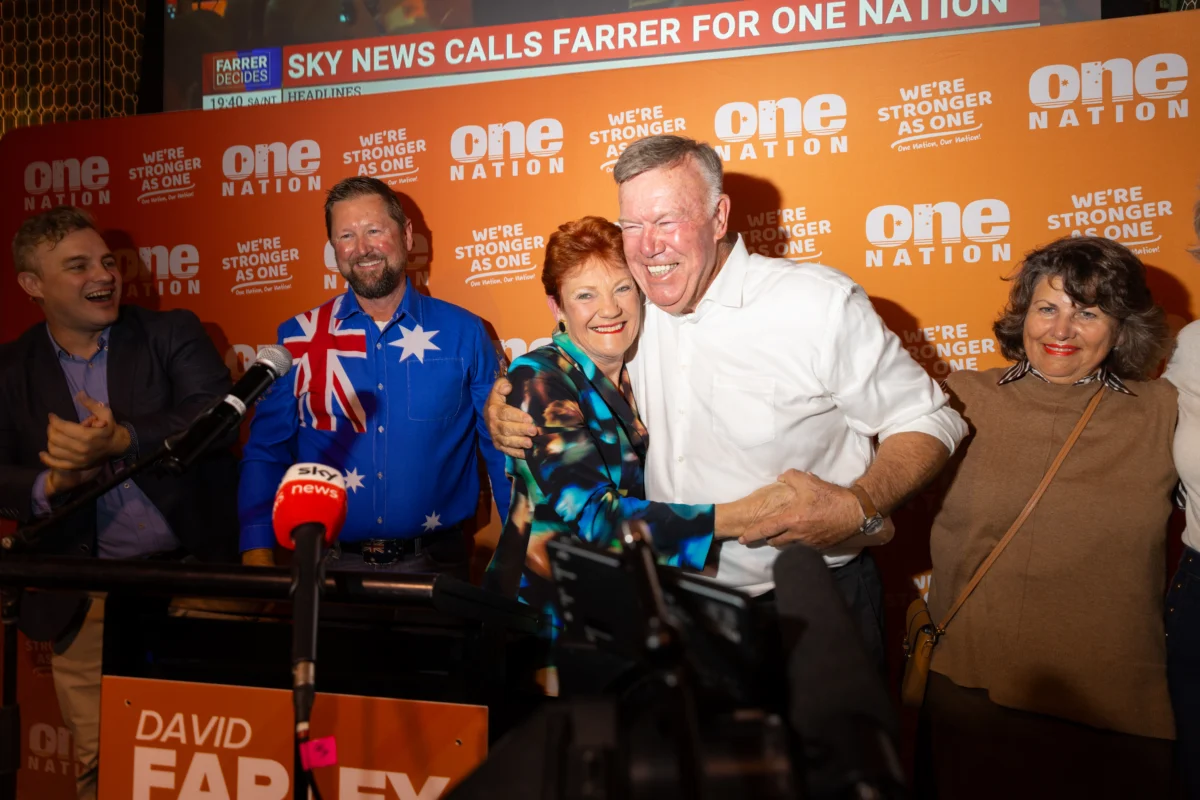
Australia’s political landscape has been significantly reshaped with the far-right One Nation party securing its first-ever seat in the nation’s House of Representatives. Preliminary election results from the special election in the southwestern New South Wales division of Farrer have confirmed a decisive victory for David Farley, a former agribusiness consultant, who is poised to represent the party in federal parliament for the first time in its three-decade history. This landmark achievement marks a pivotal moment for One Nation, a party long associated with populist and nationalist sentiments, and signals a potential shift in the federal political discourse, particularly concerning immigration and agricultural policy.
The by-election, triggered by the resignation of Sussan Ley, the former leader of the centre-right Liberal Party, in February, saw David Farley capture a projected 59.1 percent of the vote. His independent opponent, Michelle Milthorpe, garnered 40.8 percent, according to reporting by the Australian Broadcasting Corporation (ABC). Notably, the centre-left Labor Party, which currently holds a majority in the lower house, did not field a candidate for the Farrer seat, a strategic decision that allowed the contest to primarily focus on the battle between One Nation and the independent. ABC election analyst Casey Briggs described the result as "very clear" and "not a close result," underscoring the strength of Farley’s mandate.
A Historic Milestone for One Nation
Founded by Pauline Hanson in 1998, One Nation has historically struggled to gain traction in the House of Representatives, its previous parliamentary successes largely confined to the Senate. The party’s consistent platform has centered on themes of national sovereignty, stricter immigration controls, and protectionist agricultural policies, resonating with a segment of the Australian electorate disillusioned with mainstream politics. Farley’s victory in Farrer, a rural electorate with a significant agricultural base, provides a potent symbol of the party’s ability to translate its core messaging into tangible electoral success at the federal level.
In his victory speech, Farley articulated a vision for One Nation’s future, stating that the party "has reached the end of its beginning" and is "going through the ceiling." This sentiment suggests a belief that this win is not an endpoint but rather a springboard for further growth and influence within the federal parliament. His policy priorities, as outlined in his campaign, are likely to focus on reforming Australia’s immigration system to align more closely with the perceived needs of the labor market, particularly within the agricultural sector. Farley has emphasized a pragmatic approach, stating, "We’re not going to implode any of our industries that are reliant on good quality, assimilating migrants into the country. But we’re not going to entertain people to come here and live off our balance sheet, our purse and give us nothing." This rhetoric underscores a desire for a more selective and economically beneficial immigration policy, a cornerstone of the One Nation platform.
Beyond immigration, Farley has also pledged to address the rising cost of living, a concern that has become increasingly prominent for Australian households. His commitment to developing policies that are "fit for Australia, not the world" reflects a broader populist sentiment that prioritizes national interests and solutions tailored to the unique challenges faced by the country. This approach positions One Nation as a voice for those who feel that globalist agendas or international influences have not adequately served the needs of ordinary Australians.
The Farrer Context: A Rural Electorate’s Choice
The division of Farrer, located in southern New South Wales, encompasses a diverse range of communities, with a significant portion of its economy driven by agriculture, including wheat, cotton, and fruit cultivation. This demographic and economic profile has historically made it a constituency receptive to policies that address the concerns of rural and regional Australia. The vacancy arose after Sussan Ley, a prominent figure in the Liberal Party and a former minister, resigned her seat, creating an opportunity for new political forces to emerge.
The special election process typically involves a period of intense campaigning where candidates seek to connect with voters on local issues while also articulating their broader national platforms. Farley’s background as an agribusiness consultant likely provided him with a deep understanding of the challenges and opportunities facing the agricultural sector in Farrer, allowing him to craft a message that resonated with a key segment of the electorate. His victory suggests that One Nation’s message, particularly on issues related to immigration and the economic well-being of primary producers, found fertile ground in this regional electorate.
Reactions and Analysis: A Test for Populist Power
Michelle Milthorpe, the independent opponent, acknowledged Farley’s win and offered a forward-looking perspective. She congratulated Farley and framed the upcoming parliamentary term as a critical test for One Nation. "They will successfully reflect the anger we feel out here. But that is the easy part," Milthorpe stated, highlighting the challenge of translating popular sentiment into tangible legislative action. "The hard part is doing something about it." This sentiment underscores the inherent difficulty for smaller parties, even with parliamentary representation, to enact significant policy change within a larger political system.
While Farley’s victory does not alter the overall balance of power in the House of Representatives, where the Labor Party holds a commanding majority of 94 out of 150 seats, it carries significant symbolic and strategic importance. For One Nation, it represents a breakthrough after decades of striving for lower house representation. It also provides a federal platform from which to amplify its message and potentially influence the broader political debate.
Broader Implications: A Global Trend Reflected
The rise of One Nation in Australia mirrors a global trend of increasing support for far-right and populist parties. In recent years, similar movements have gained traction in Europe, North America, and other parts of the world, often capitalizing on concerns about immigration, economic inequality, and cultural change. The success of Britain’s Reform UK party in local council elections earlier this week, at the expense of the Labour Party, is another salient example of this phenomenon.
This trend suggests that a significant portion of the electorate in many democratic nations is seeking alternatives to established political parties, often looking to populist leaders who promise to challenge the status quo and prioritize national interests. The victory in Farrer can be seen as an Australian manifestation of this broader global political realignment.
The implications for Australian politics are multifaceted. One Nation’s presence in the House of Representatives will likely lead to more robust debate on immigration, border security, and the economic impact of global trade. It may also put pressure on the major parties to address issues that resonate with the One Nation base, potentially leading to shifts in policy or rhetoric. The challenge for Farley and One Nation will be to demonstrate that they can move beyond protest politics and contribute constructively to governance, a task that Milthorpe aptly described as the "hard part."
The coming parliamentary sessions will be closely watched to see how David Farley and One Nation navigate their newfound federal platform, how they engage with other parties, and whether they can translate their electoral success into meaningful policy outcomes for the constituents they represent and for Australia as a whole. The journey from a fringe party to a federal parliamentary entity signifies a significant evolution, and its impact on the future of Australian politics remains to be seen.