
 Ana Megawati
When Ian Clayton, a retired health and safety professional from Chester, popped into his local Home Bargains one ordinary February lunchtime, he anticipated a routine shopping trip. Instead, he was abruptly confronted by a stern-looking member of staff who declared, “Excuse me, can you please put everything down and leave the shop now?” Stunned and confused, Clayton, 67, was briskly walked towards the exit, his protests initially ignored. It was only as he reached the threshold that he managed to ask what transgression he had committed. The reply was chilling: “You’ve come up on our system called Facewatch as a shoplifter. There’s a poster in the window.” Left bewildered outside the store with a QR code to scan and no explanation, Clayton’s experience represents a growing concern as live facial recognition (LFR) technology rapidly permeates UK retail, frequently leading to the false accusation of innocent customers and raising profound questions about privacy, civil liberties, and the efficacy of algorithmic justice.
The Rise of Retail Surveillance and the Facewatch System
Clayton is not an isolated case. He is one of several individuals who have recounted to the Guardian deeply unsettling experiences of being wrongly identified as a thief by shops employing Facewatch, a sophisticated LFR system designed to combat retail crime. The technology, which maps individuals’ faces against a database of "known offenders," is being aggressively rolled out across the UK. Facewatch’s own website boldly claims an impressive 99.98% accuracy rate, stating that it generated 50,288 alerts of "known offenders" to its client stores last month alone. Major retailers such as B&M, Home Bargains, Sports Direct, Farm Foods, and Spar have embraced the software, viewing it as a critical tool in the fight against a perceived surge in retail theft.
The British Retail Consortium (BRC) has consistently highlighted the escalating problem of retail crime, reporting significant financial losses and a detrimental impact on staff morale and safety. In response, many retailers are investing heavily in advanced security measures, including LFR, to deter criminals and protect their assets. However, as the experiences of Clayton and others demonstrate, the promises of cutting-edge technology are often accompanied by significant real-world pitfalls, especially when human oversight or the technology itself falters. The inherent invasiveness of LFR also sits uncomfortably with many civil liberties advocates, who argue that its widespread deployment without robust safeguards erodes fundamental rights to privacy and freedom from unwarranted surveillance.

Personal Accounts of Algorithmic Injustice
Ian Clayton’s ordeal began with an inexplicable accusation and ended with a drawn-out struggle for answers. After his ejection from Home Bargains, he attempted to contact Facewatch via a phone number on a poster, only to be redirected to an email-only support system. His path to understanding his arbitrary removal was arduous, requiring him to submit a subject access request (SAR) under data protection laws. This formal request for personal information eventually revealed that he had been erroneously linked to a shoplifting incident during a prior visit to the store.
“It was like I was guilty until proven innocent. It’s an awful feeling. It leaves a pit in your stomach, and when I look back now, I can feel it again,” Clayton recalled, conveying the profound psychological impact of the false accusation. He described the experience as “very Orwellian,” expressing a newfound hyper-awareness of cameras and a chilling sense of being constantly recorded without just cause. Home Bargains eventually offered him an apology and a £100 voucher as a "gesture of goodwill without admission," on the condition of confidentiality. Clayton, however, staunchly refused the offer, stating, “I just thought: ‘Really, you’re trying to buy my silence?’” His refusal underscores a broader principle: the desire for justice and transparency over a mere financial appeasement.
Another disturbing account comes from Warren Rajah, a data strategist based in south London. In February, he too was asked to abandon his shopping basket and leave a local Sainsbury’s store after being flagged by the Facewatch system. For Rajah, the incident transcended personal inconvenience, becoming a critical civil rights issue. “For me, this is a civil rights issue that we are slow-waltzing into because if you are just removed without question, your civil rights are being impacted,” he asserted. Rajah pointed to the undeniable issues of systemic racism in society and the documented inaccuracies of facial recognition technology when identifying individuals with darker features. “We already live in a country that has issues with racism, it’s an unavoidable issue. And we know cameras cannot pick up features of people that have darker features with as much accuracy. And this could be happening to people who are much more vulnerable than me.”
After persistent efforts involving numerous emails, Rajah eventually discovered that he was not, in fact, on the Facewatch database. His false accusation was attributed to staff misidentification. Sainsbury’s offered him a £75 voucher, and when he expressed discomfort about returning to the store, he was advised to use it online, a resolution that did little to address the fundamental breach of his rights and the humiliation he endured.

Jennie Sanders, 48, from Birmingham, shared a similarly distressing experience. While browsing in B&M on a Saturday afternoon last year, a security guard informed her that she had been flagged by Facewatch and proceeded to escort her around the store to ensure she wasn’t stealing. “I was really upset. It was in front of loads of people, and I was really embarrassed. I said I wanted to leave, and he escorted me out of the shop,” Sanders recounted. Her initial shock quickly morphed into fear as she researched Facewatch and realized the implications of being on such a shared database. “I thought: ‘I’m going to be treated like a shoplifter in every store. I’m not going to be able to do any shopping in person ever again.’”
To clear her name, Sanders was required to send a copy of her passport to Facewatch. She discovered she was on the system for allegedly stealing a bottle of wine from B&M, an accusation she vehemently denies. B&M eventually informed her they no longer possessed any evidence, including CCTV footage, relating to the alleged incident, leading to her removal from the system and a £25 voucher offer. “I took a couple of days off work, I was absolutely beside myself. Why was I on a database of criminals without my knowledge?” she questioned. The trauma of the experience has profoundly affected her shopping habits: “I’m never going into B&M again. I try to stay away from places with cameras at all – it has really affected me.”
The Broader Implications: Bias, Oversight, and Civil Liberties
These individual accounts converge into a critical national debate about the unchecked expansion of facial recognition technology. UK biometrics commissioners have repeatedly warned that national oversight mechanisms are lagging significantly behind the rapid deployment of this powerful technology. Their concerns are amplified by official acknowledgments of the technology’s inherent biases. Last year, the Home Office itself admitted that facial recognition cameras were more prone to incorrectly identifying Black and Asian individuals than their white counterparts, and women more than men. These findings starkly contradict Facewatch’s high accuracy claims and underscore the potential for algorithmic bias to exacerbate existing societal inequalities, particularly in a country already grappling with issues of racism.
The implications for civil rights are profound. The ability of private companies to create and share databases of individuals labeled as "offenders" without clear, accessible redress mechanisms raises fundamental questions about due process and the presumption of innocence. The "guilty until proven innocent" paradigm experienced by Clayton, Rajah, and Sanders is a significant departure from established legal principles and poses a threat to individual liberties. As Rajah highlighted, the expansion of such technology into police forces, in addition to the retail sector, is a grave concern, particularly given the documented racial biases and the potential for disproportionate impact on vulnerable communities.

Regulatory Challenges and the Call for Accountability
A significant common thread in these cases is the almost insurmountable difficulty individuals face in seeking redress or even understanding why they were targeted. Clayton and Sanders both navigated opaque complaint processes, while Rajah struggled to find any clear avenue for complaint. This lack of transparency and accessible recourse mechanisms leaves victims feeling powerless and further compounds their distress.
Both Sanders and Rajah considered complaining to the Information Commissioner’s Office (ICO), the formal watchdog responsible for monitoring personal information use in facial recognition technology. However, their experiences with the ICO were far from reassuring. Sanders, for instance, reported that seven months after lodging her complaint, she had yet to receive a response. “We’re told to raise complaints and send all correspondence to the information commissioner, but they don’t get back to you. What the hell is happening with any sort of response to the victims of this?” she demanded. Rajah echoed this sentiment, lamenting the perceived "toothlessness" of the ICO and the absence of a clearly publicized formal complaints process for LFR incidents. “How can you complain when there are no avenues to follow?” he asked.
Official Responses and the Path Forward
Sainsbury’s issued an apology to Mr. Rajah, attributing his experience to "human error" rather than a failure of the facial recognition technology itself. They emphasized Facewatch’s claimed 99.98% accuracy rate and stated that all matches are reviewed by trained managers, with additional training provided following the incident to reinforce safeguards.
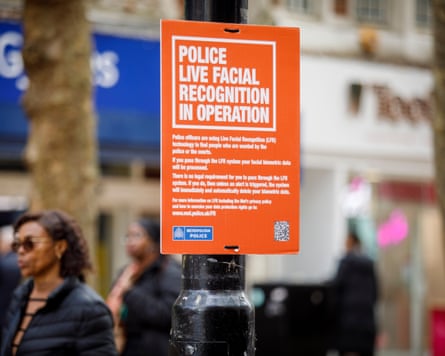
Nick Fisher, the chief executive of Facewatch, acknowledged the incidents, stating, “We are aware of the matters referenced and in each case, we acted promptly once they contacted the Facewatch data protection team.” Fisher reiterated that these cases stemmed from "human error in the way processes were carried out in-store, rather than any failure of Facewatch’s technology." He expressed regret for the individuals’ upsetting experiences, characterizing these three errors as "extremely rare cases when viewed in the context of the more than 500,000 alerts we send to retailers each year." Fisher emphasized that the system is designed to "support, not replace, human decision-making." However, this distinction between technological flaw and human error often blurs in practice, especially when the technology itself provides the initial, potentially biased, alert.
The ICO, in its response, affirmed its recognition of the "harm and upset that can be caused by misidentification." A spokesperson stated, "For this reason, use of facial recognition technology must strictly comply with data protection law and be handled with care and transparency." The ICO confirmed that individuals have the right to complain to their office if concerns cannot be resolved directly with the retailer. Furthermore, the ICO announced its continued active regulation in this area, promising to publish "further retail-focused guidance to support retailers in understanding and meeting their data protection obligations, while ensuring the public is properly protected." Despite these assurances, the practical experience of those affected suggests a significant gap between policy and effective enforcement. Home Bargains and B&M both declined to comment on the specific incidents involving Clayton and Sanders.
Conclusion: Balancing Security with Rights in the Age of AI
The experiences of Ian Clayton, Warren Rajah, and Jennie Sanders serve as a stark warning about the unbridled deployment of powerful surveillance technologies in public spaces. While retailers face legitimate challenges from crime, the current implementation of LFR systems like Facewatch appears to lack sufficient safeguards, transparency, and accessible recourse for those unjustly targeted. The emotional distress, humiliation, and erosion of civil liberties experienced by innocent shoppers highlight a critical imbalance between crime prevention efforts and fundamental individual rights.
The ongoing debate underscores an urgent need for robust, independent oversight, clear regulatory frameworks, and effective mechanisms for redress. Without these, the UK risks sleepwalking into a surveillance society where individuals are presumed guilty by algorithms, their personal data shared across commercial entities, and their rights to privacy and dignity are compromised. As facial recognition technology continues its rapid advancement, the imperative to establish ethical guidelines and ensure accountability for its use becomes ever more critical, safeguarding against a future where the convenience of technology comes at an unacceptable cost to human freedom and fairness.








