Jono Maryono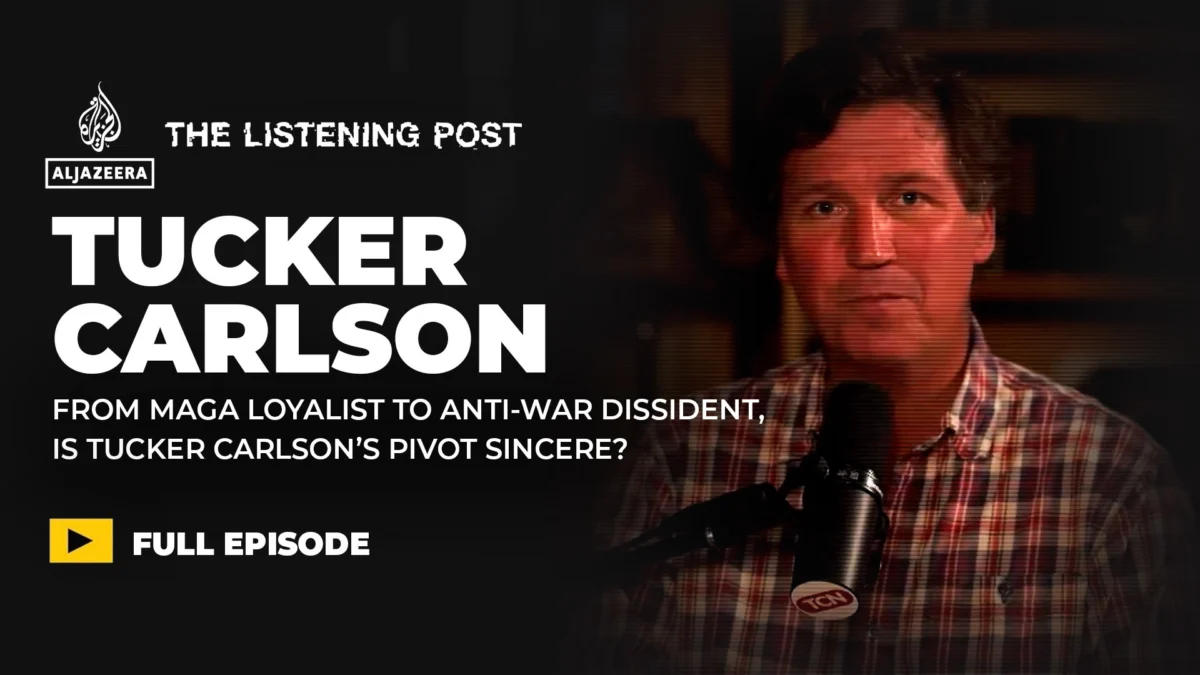
Tucker Carlson, a prominent figure in conservative media for over two decades and a vocal supporter of Donald Trump, has recently embarked on a seemingly paradoxical journey, pivoting from staunch MAGA loyalist to a significant critic of certain U.S. foreign policy stances, particularly concerning Israel. This shift has ignited fervent debate across the political spectrum, prompting questions about the sincerity of his transformation versus the possibility of a calculated reinvention aimed at expanding his influence and appeal. His willingness to engage with outlets he once heavily criticized, such as The New York Times, and his sustained high viewership have fueled speculation in Washington, D.C., about his potential political ambitions, with some suggesting he could leverage this momentum toward a presidential run.
The complex dynamics of Carlson’s evolving public persona are being dissected by a diverse group of commentators. Wajahat Ali, cohost of the Democracy-ish Podcast, offers insights into the cultural and political undercurrents shaping these shifts. Briahna Joy Gray, host of the Bad Faith Podcast, provides an analysis of the rhetorical strategies and ideological underpinnings of Carlson’s new positions. Ana Kasparian, executive producer and host of The Young Turks, brings a critical perspective, often challenging the motivations behind such public transformations. Jude Russo, managing editor of The American Conservative, contributes a viewpoint from within conservative circles, exploring how Carlson’s changing narrative is perceived and received by his traditional base.
The Shifting Sands of U.S.-Israel Relations and Carlson’s Critique
Carlson’s recent critiques have notably focused on the United States’ unwavering support for Israel, a cornerstone of American foreign policy for decades. This stance represents a significant departure from his previous alignment with the Trump administration’s deeply pro-Israel policies, including the relocation of the U.S. embassy to Jerusalem and brokering the Abraham Accords. While the U.S. has historically provided substantial military and diplomatic aid to Israel, dating back to the post-World War II era and solidifying during the Cold War, Carlson’s current platform has become a significant amplifier of dissenting voices regarding this long-standing alliance.
Data from the U.S. State Department indicates that since 1948, the United States has provided Israel with over $150 billion in military and economic assistance. This support has been a consistent feature across multiple presidential administrations, regardless of party affiliation, underscoring the deeply entrenched nature of this strategic partnership. Carlson’s willingness to challenge this consensus, particularly on a widely popular cable news program, marks a notable deviation and has resonated with a segment of the American public that is increasingly questioning the extent and nature of U.S. involvement in foreign conflicts and alliances.
A Broader Trend of Re-evaluation?
Carlson’s pivot, while prominent, is not entirely an isolated phenomenon. A growing segment of the American populace, particularly younger generations, has expressed skepticism towards traditional foreign policy doctrines and a desire for a more restrained U.S. role in global affairs. Polling data from organizations like the Pew Research Center has indicated a decline in bipartisan support for foreign interventions and an increasing interest in domestic priorities. This broader public sentiment may be creating fertile ground for narratives that challenge established foreign policy norms, including those concerning the U.S.-Israel relationship.
The historical context of the U.S.-Israel alliance is rooted in shared strategic interests, particularly in the Middle East, and a commitment to Israel’s security. However, ongoing geopolitical shifts, including the rise of new global powers and evolving regional dynamics, have led to a re-examination of these alliances by various stakeholders. Carlson’s platform has provided a prominent voice for those advocating for a recalibration of this relationship, pushing for a more critical assessment of its costs and benefits for the United States.
The "Greater Israel" Narrative and its Mainstreaming
Beyond his critique of U.S. policy, Carlson has also given considerable airtime to discussions surrounding the concept of "Greater Israel." This ideology, historically associated with a fringe settler movement, advocates for the establishment of Israeli settlements across the entirety of the occupied Palestinian territories and potentially beyond, envisioning a larger Israeli state. While once relegated to the margins of political discourse, this narrative has, according to reports, gained significant traction within key Israeli institutions, including media outlets.
The Listening Post’s Tariq Nafi has investigated how this once-fringe settler fantasy has progressively moved towards the mainstream in Israel. This development is reportedly fueled by a constellation of voices within Israeli media and political spheres, actively pushing for territorial expansion. This trend raises concerns about the future of the Israeli-Palestinian conflict and the potential for increased instability in the region.
Ben Reiff, Deputy Editor at +972 Magazine, a publication known for its critical reporting on Israeli policies and the occupation, has likely provided firsthand accounts and analysis of this phenomenon. His work often delves into the impact of settler movements and the political forces advocating for territorial expansion. Maya Rosen, Assistant Editor at Jewish Currents, a magazine that engages with Jewish identity and progressive politics, likely offers a perspective that grapples with the implications of such narratives for both Israeli society and the broader Jewish diaspora, potentially highlighting internal debates and ethical considerations.
The rapid normalization of the "Greater Israel" idea within certain Israeli circles signifies a potential shift in the political landscape, moving away from a two-state solution framework towards an expansionist agenda. This has significant implications for international law, human rights, and the prospects for a lasting peace in the region.
On Our Radar: UK Media and the Aftermath of a London Attack
In parallel, "The Listening Post" highlights a distinct but equally significant media narrative unfolding in the United Kingdom. Days after a knife attack in North London resulted in two Jewish men being hospitalized, a considerable portion of the UK’s political and media establishment quickly coalesced around a particular explanation for the incident. Reports suggest that this narrative sought to assign blame to anti-genocide protests and, notably, to Zack Polanski, the sole Jewish leader within British politics.
Meenakshi Ravi’s dissection of this media coverage is crucial for understanding how narratives are constructed and disseminated in the aftermath of sensitive events. Such rapid attribution of blame, particularly when targeting political figures and protest movements, can have profound implications for public discourse, potentially stifling legitimate dissent and fostering an environment of fear and suspicion. The context of rising antisemitism globally, juxtaposed with concerns about the impact of protests on public order, creates a complex environment where media framing can significantly influence public perception and political responses.
The specific targeting of Polanski, a Jewish individual, within this narrative is particularly noteworthy. It raises questions about whether the incident is being exploited to discredit political opposition or to create a specific impression of who is responsible for societal unrest. Ravi’s analysis would likely explore the sources of this narrative, the evidence presented (or lack thereof), and the potential motivations behind its widespread adoption by certain media outlets and political figures. This situation underscores the critical role of independent journalism in scrutinizing official narratives and ensuring that complex events are reported with accuracy, nuance, and a commitment to avoiding scapegoating.
The Implication of Carlson’s Pivot
Tucker Carlson’s evolution from a staunch defender of Trump-era policies to a vocal critic of key U.S. foreign engagements, particularly concerning Israel, has generated considerable discussion. The sincerity of this transformation remains a subject of debate, with some viewing it as a genuine ideological shift and others as a shrewd strategic maneuver to capture a broader audience and potentially position himself for future political endeavors.
The increased attention he has garnered by engaging with media he once dismissed, such as The New York Times, suggests a deliberate effort to expand his reach beyond his traditional base. This tactic, if successful, could translate into significant political capital, especially in a polarized political climate where established narratives are increasingly being challenged.
The implications of Carlson’s evolving stance are multifaceted. For the Republican party, it presents a challenge to traditional foreign policy orthodoxy and could signal a further fragmentation of its ideological landscape. For the broader public discourse, it amplifies voices that question long-standing alliances and the extent of American global involvement. The continued scrutiny of his narrative by commentators from various perspectives will be crucial in understanding the true nature and impact of this significant shift in one of America’s most prominent media personalities. His journey from MAGA loyalist to antiwar critic serves as a compelling case study in the dynamic and often unpredictable nature of political influence and media evolution in the 21st century.