Layla Zulfa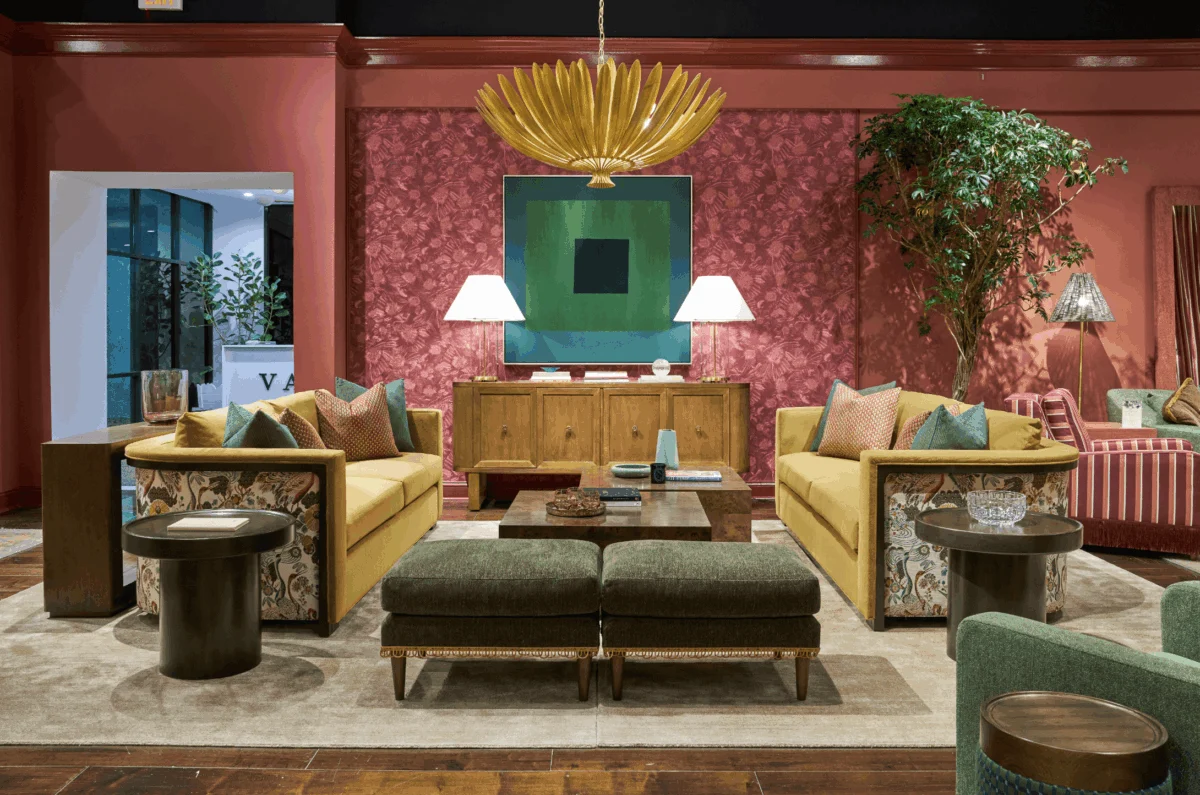
The High Point Market, recognized globally as the primary hub for the residential furnishing industry, recently concluded its latest session in North Carolina, signaling a decisive shift in interior design priorities for the coming seasons. As the largest furniture trade show in North America, encompassing over 11.5 million square feet of showroom space and attracting approximately 75,000 attendees twice a year, the event serves as a bellwether for consumer behavior and manufacturing innovation. This season, the prevailing themes moved away from the austere minimalism of the previous decade, favoring instead a return to tactile ornamentation, high-performance versatility, and a deliberate embrace of historical nostalgia. Industry analysts and designers on-site observed that the market is currently navigating a post-pandemic landscape where the home is no longer just a functional shelter, but a highly expressive gallery of personal identity.

Technical Innovation in Form: The Fluidity of Rigid Materials
One of the most technically significant trends identified at the Market was the "Shape of Drapes," a design movement that translates the soft, undulating folds of textiles into hard materials like wood and metal. This trend represents a mastery of manufacturing, as creating fluid curves in rigid media requires advanced CNC technology or traditional hand-carving expertise. At the Abner Henry showroom, designer Nikki Levy showcased the Draped Desk, a piece available in ten different wood species that features supports mimicking the movement of curtains. This intersection of "trompe l’oeil" and furniture design suggests a growing consumer desire for pieces that challenge the visual expectations of their material composition.
Similarly, Thompson Traders, a family-operated firm specializing in luxury copper work, introduced a sculptural range hood named the Seda, which utilizes copper to replicate the flounce of a skirt. Vanguard Furniture also adopted this motif in its Jazz Chest, which features a maplewood facade carved into drapery-like undulations. Industry experts suggest that these forms are gaining popularity because they provide a visual counterweight to the sharp angles and straight lines that have dominated modern architecture for years. By introducing "softness" through hard furniture, designers are able to maintain the durability of wood and metal while achieving the psychological comfort associated with textiles.

The Convergence of Interior and Exterior Living
The distinction between indoor and outdoor furniture has reached a point of near-total erasure. Historically, outdoor furniture was characterized by rigid materials—cast iron, teak, or plastic—with thin, detachable cushions. However, the latest collections from brands such as Harbor, Century, Four Hands, and Bernhardt demonstrate a move toward fully upholstered outdoor sectionals and sofas that are indistinguishable from high-end living room sets.
This evolution is driven primarily by advancements in performance textile technology. Companies like Sunbrella have expanded their offerings to include muted botanical prints and heathered geometric patterns that mimic the hand-feel of natural cotton or wool. Sunbrella’s recent collaboration with Kelly Ventura, the Sylvan collection, exemplifies this "English cottage" aesthetic. To support this shift, textile manufacturers are also professionalizing the supply chain; Sunbrella recently announced a new trade program featuring preferred pricing and simplified ordering to assist designers in specifying high-performance fabrics for entire interior projects, not just patios. The addition of performance trims from heritage brands like Thibaut and Kravet further allows designers to apply "passementerie"—the art of applying decorative edgings—to outdoor pieces, effectively bringing Gilded Age luxury to the backyard.

The Resurgence of Maximalism and Passementerie
After years of "soulful minimalism" dominating social media and retail showrooms, High Point Market 2024 saw a robust return to ornamentation and layered textures. This "More is More" philosophy is manifesting through the heavy use of fringe, brocade, and complex pattern play. Vanguard Furniture’s vice president of marketing and creative, Laura White, noted that in an increasingly digital and sterile world, consumers are seeking rooms that feel "warmly human" and expressive. This was evidenced by Vanguard’s display of triple-decker fringe in silver, marigold, and terracotta tones on sofas and ottomans.
The maximalist trend is not limited to Western styles; it is also taking a global, almost gothic turn. Designer Barry Dixon’s latest collection for Arteriors draws inspiration from his time in South Africa, India, and Pakistan. His work features reptilian-patterned mirror frames and lighting fixtures that resemble overgrown tree canopies. A standout piece, the Neushoorn wall sconce, was inspired by "dhal"—traditional Indian shields made from rhinoceros hide. This shift suggests that the market is moving toward "storytelling" pieces that evoke a sense of travel and history. Simultaneously, Barrie Benson’s 10th-anniversary collection for Highland House paid homage to maximalist icons like Renzo Mongiardino and Madeleine Castaing, utilizing exuberant stripes and floral-patterned tufted seating to create a sense of curated abundance.

Regionalism and the Southwestern Design Frontier
The American Southwest has emerged as a major source of aesthetic inspiration, blending Native American, Spanish, and Mexican artisanal techniques. This trend is defined by an earthy palette of "sun-bleached" tones and time-worn materials. Designer Alfredo Paredes, through his Cocuyo fabric collection for Kravet Couture, highlighted this movement with the Yacuma textile—a patchwork of tonal ikat stripes designed to look well-traveled.
The influence of the desert landscape was also visible in wallcoverings. Harlequin introduced "Saltillo," an abstract desert scenic wallpaper inspired by Mexican landscapes, offered in "daylight" and "nightfall" palettes. This focus on transitional use—pieces that work equally well in a bright morning breakfast nook or a moody evening wet bar—reflects a broader trend toward versatile, atmospheric design. At Four Hands, the Southwestern theme was reinforced through the use of leather and suede fringe on furniture, while Amber Lewis’s debut lighting collection for the brand featured wrought-iron chandeliers that evoke a rustic, frontier-inspired elegance.

Tailored Aesthetics: Menswear and Suiting Staples
In a move toward "quiet luxury" with a masculine edge, many brands have turned to classic tailoring for inspiration. Tartans, tattersalls, and plaids—traditionally found in bespoke suiting—are being used to upholster everything from slipper chairs to benches. This trend aligns with the industry-wide resurgence of chocolate brown and deep slate tones.
Universal Furniture’s Fenwick collection utilized sophisticated plaids to create a buttoned-up, formal look. Meanwhile, the newly launched House of Duval, led by designer Duval Reynolds under the Sherrill Furniture umbrella, debuted the "New American Heritage" collection. This line focuses on tailored details, such as table legs with brass mounts and menswear-inspired fabrics. The Javon bench, upholstered in a plum, ochre, and pale blue plaid, served as a primary example of how traditional suiting aesthetics are being repurposed to add a sense of stability and "heritage" to contemporary interiors.

The Scaling Up of the American Home: The Quest for Size
While other industries are focusing on "slimification," the furniture manufacturing sector at High Point reported a growing demand for larger-scale pieces. This is particularly evident in the kitchen and bath categories. James Martin Vanities reported that their "XL offering" has been expanded to include 84-, 96-, and 120-inch styles to meet the requirements of sprawling master suites.
In the lighting category, the trend toward "supersizing" is equally prevalent. Arteriors has released larger versions of its popular fixtures, such as the 52-inch Bennet chain-link chandelier. Designer Noz Nozawa’s Hoshi pendant for Corbett Lighting, inspired by the Japanese process of drying persimmons (Hoshigaki), measures nearly 29 inches square. Manufacturers suggest that as open-concept floor plans remain popular, larger sculptural pieces are necessary to provide focal points and "anchor" large volumes of space. Outdoor furniture maker Janus et Cie also showcased its Grande Arche extendable dining table, which protracts to 106 inches, catering to the trend of large-scale outdoor entertaining.

Nostalgia and the Return of the 1990s Palette
Color palettes at the Market reflected a deep sense of nostalgia, with several designers reporting a return to the aesthetics of the 1990s. This includes the revival of stained wood kitchen cabinets—specifically deep, dark woods—and the use of pale blue and coral combinations. Sue Wadden, director of color marketing at Sherwin-Williams, noted during a panel at Broad Hall that clients are increasingly requesting "nostalgia palettes" that remind them of their childhood homes or their grandparents’ houses.
This psychological connection to the past is influencing product development across the board. The return of the "dark wood kitchen" marks a significant departure from the all-white "modern farmhouse" look that has dominated the market for the last decade. Industry experts believe this shift is part of a larger cyclical movement where consumers seek out the "weight" and perceived permanence of darker finishes during times of economic or social uncertainty.

Broader Industry Implications and Economic Outlook
The trends observed at High Point Market suggest an industry that is doubling down on quality, texture, and size to justify premium price points in a competitive market. The blurring of indoor and outdoor categories represents a significant growth opportunity for manufacturers, as homeowners continue to invest in "staycations" and the improvement of their immediate environments.
Furthermore, the emphasis on performance fabrics and durable, "well-suited" upholstery indicates a shift toward longevity. Consumers are moving away from "disposable" furniture in favor of pieces that offer both aesthetic character and the ability to withstand the rigors of daily life. As the design world prepares for 2025 and 2026, the takeaways from High Point point toward a future that is unapologetically decorative, technically ambitious, and deeply rooted in a sense of personal and historical narrative. The market has proven that while minimalism may offer a clean slate, the current consumer is looking for a more "human" home—one filled with the curves of wood, the warmth of dark timber, and the intricate textures of a well-tailored suit.