Reynand Wu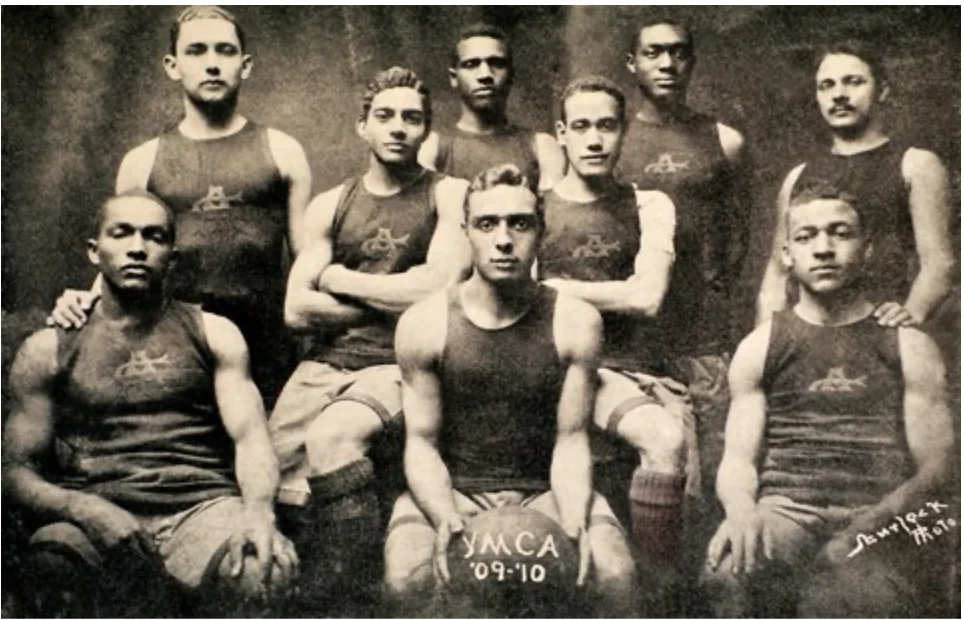
The rhythmic thud of a basketball against asphalt, punctuated by shouts and cheers, is an iconic soundscape of New York City. From the vibrant street courts of Harlem to the bustling playgrounds of Brooklyn, basketball is more than just a game; it is an integral thread in the city’s cultural fabric, deeply woven into the identity of its diverse communities. Yet, the profound connection between basketball and African American culture in urban centers like New York is not merely a matter of sporting preference; it is a complex narrative rooted in decades of systemic discrimination, including redlining and segregation. This historical context reveals how exclusionary practices inadvertently fostered a unique environment where basketball blossomed into a powerful symbol of resilience, community, and opportunity.
Basketball’s Early Days: A Sport for the Privileged
Basketball, invented in 1891 by Canadian physical education instructor Dr. James Naismith in Springfield, Massachusetts, was initially conceived as a less injury-prone indoor sport to keep students active during harsh winters. Its early adoption was primarily within predominantly white institutions: YMCAs, colleges, and high schools across the nation. By the early 1900s, elite universities such as Harvard, Yale, Cornell, and Princeton were competing against each other, cementing basketball’s image as a "white man’s game," as author Michael Novack observed in his 1946 work, The Joy of Sports.
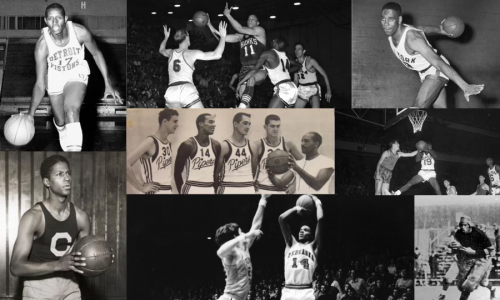
The professional landscape mirrored this exclusivity. The first professional basketball league, the National Basketball League (NBL), was established in 1937, eventually merging with the Basketball Association of America (BAA) in 1949 to form the National Basketball Association (NBA). For its initial three decades, the collegiate and professional ranks were overwhelmingly white, with Black participants systematically barred from entry. It wasn’t until 1928 that George Gregory Jr. broke the collegiate color barrier. The professional game saw its first Black players — Chuck Cooper, Nathaniel Clifton, and Earl Lloyd — in the 1949-1950 season, marking a pivotal, albeit belated, step toward integration. During this era, many community centers, including YMCAs, maintained strict segregation policies, effectively denying Black individuals access to organized basketball facilities. This exclusion compelled Black communities to forge their own paths, constructing their own courts and developing their own leagues, laying the groundwork for the sport’s deep cultural entrenchment.
Systemic Disadvantage: The Shadow of Redlining and Segregation in NYC
The disproportionate appeal and accessibility of basketball for minority groups in cities like New York cannot be understood without examining the profound impact of discriminatory housing policies. Redlining, an exclusionary practice institutionalized in 1934 with the National Housing Act (NHA), played a significant role in shaping the urban landscape and the recreational opportunities within it. The NHA aimed to bolster the housing market by creating government programs like the Federal Housing Administration (FHA) and the Home Owners’ Loan Corporation (HOLC), which provided mortgage insurance and facilitated homeownership. However, these benefits were largely withheld from Black Americans.
The HOLC, through its notorious "residential security maps," categorized neighborhoods based on perceived investment risk. Areas with large populations of Black residents were invariably color-coded red, signifying them as "hazardous" or "risky" for lenders. This designation effectively starved these neighborhoods of investment, driving down property values and deterring potential buyers and developers. The FHA then leveraged these maps to guide its lending policies, systematically refusing federally insured housing loans to minorities in redlined districts. The consequences were devastating and long-lasting, exacerbating racial wealth gaps and concentrating poverty. According to a 2020 study by Aaronson et al., these 1930s HOLC maps had demonstrable long-run effects on place-based measures of economic opportunity and socioeconomic success, reinforcing cycles of disadvantage for generations.
Furthermore, as Black populations migrated to northern cities seeking to escape Jim Crow segregation, a phenomenon known as "white flight" ensued. White homeowners increasingly abandoned urban centers for newly developed suburbs, which were often explicitly designed to exclude Black residents. This exodus further depressed property values in inner-city neighborhoods, creating a self-reinforcing cycle of disinvestment. The Brookings Institution, in examining the Black-white wealth gap, highlights how these historical policies continue to manifest in present-day economic disparities.
The economic inequality forged by redlining directly impacted the availability and quality of public resources, including recreational spaces. Redlined neighborhoods in New York City, for instance, consistently had less green space and smaller parks compared to their wealthier, predominantly white counterparts. An analysis by the Trust for Public Land revealed that the average park size in poor New York City neighborhoods was a mere 6.4 acres, starkly contrasting with the 14-acre average in affluent areas. This scarcity of large, well-maintained recreational facilities inherently limited options for sports requiring extensive fields or specialized equipment, such as baseball or football.
Basketball: The Accessible Arena
In this landscape of limited resources, basketball emerged as a uniquely accessible sport. Unlike baseball, which often necessitates significant financial investment in equipment (bats, gloves, specialized shoes) and access to well-maintained fields and organized travel teams, basketball required minimal overhead. A ball, a hoop, and a patch of pavement were often sufficient. This low barrier to entry made basketball a natural fit for communities facing economic hardship and restricted access to expansive recreational infrastructure.
David C. Ogden, a University of Nebraska professor who studied race and sport dynamics, observed that the lack of baseball facilities in Black neighborhoods and the prohibitive cost of "select" baseball teams were primary reasons for the sport’s lack of racial diversity. His 2003 study indicated that "more than two-thirds of the 27 coaches said that African-American youth prefer to spend their time on the basketball court rather than on the diamond." This preference was not merely cultural; it was an adaptive response to systemic economic and spatial constraints. Basketball courts, often smaller and requiring less land, could be more easily integrated into densely populated urban environments, even in areas starved of larger green spaces. These courts became crucial community hubs, providing safe spaces for youth, fostering camaraderie, and offering an outlet for physical activity and competitive spirit.
The Rise of Black YMCAs and Independent Leagues
The popularity of basketball among minority communities flourished further with the establishment of segregated Black YMCAs. These institutions became vital centers for social, educational, and athletic development within Black communities, offering facilities and programs that were denied elsewhere. The Smart Set Athletic Club of Brooklyn, formed in 1907, stands as a testament to this era, becoming America’s first fully independent Black basketball team. As more Black YMCAs emerged across major cities, basketball quickly spread, mirroring the growth of these community pillars.
A pivotal figure in this movement was Edwin Bancroft Henderson, an educator in Washington D.C. Henderson, who learned basketball during summer sessions at Harvard University, introduced the sport to young Black men in the D.C. area. His efforts were instrumental in popularizing the game along the East Coast, particularly in burgeoning Black communities in New York, Philadelphia, and Baltimore. These early Black teams and leagues, often referred to as the "Black Fives," played a crucial role in developing talent and fostering a distinct style of play long before the NBA integrated. They were not just sports teams; they were cultural institutions, providing entertainment, pride, and a sense of collective identity in an era of intense racial discrimination.
Beyond community building, basketball also presented a rare pathway for economic upward mobility for Black athletes. The Harlem Globetrotters, formed in 1926, epitomized this phenomenon. They quickly rose to prominence, becoming the most renowned basketball team for Black players. For many talented Black basketball players, the Globetrotters offered the primary, and often sole, opportunity to earn a living through their athletic prowess, showcasing their incredible skill and showmanship to audiences worldwide, often challenging prevailing stereotypes.
Basketball Today: A Thriving Legacy
Decades after the dismantling of formal segregation, basketball’s roots in New York City’s African American communities continue to yield a vibrant cultural harvest. The sport’s participation among Black individuals has soared, particularly in NYC, solidifying its status as a "basketball mecca." The city’s parks, once symbols of disparity, now host some of the most competitive and celebrated grassroots basketball tournaments in the nation.
Every summer, thousands of fans and aspiring athletes flock to iconic venues like Dyckman Park in Manhattan for events such as the Nike-sponsored "NY vs NY" series and Slam magazine’s Summer Classic. These tournaments, featuring top-ranked high school players and local legends, are not just sporting spectacles; they are powerful community gatherings that celebrate talent, foster local pride, and continue a rich tradition. The energy, skill, and passion displayed on these courts are a direct continuation of the resilience and ingenuity born from earlier generations’ struggles for recreational equity.
The demographic shifts in professional basketball further underscore this profound historical trajectory. In stark contrast to 1950, when Black players were largely excluded, approximately 75% of the NBA’s players are now Black. This dramatic transformation is not merely a statistical anomaly but a testament to the enduring cultural impact of basketball in Black communities. Beyond the NBA, Black athletes from American cities play in leagues across the globe, exporting a style of play and a cultural legacy that originated, in part, from the constrained environments of redlined neighborhoods.
While the discriminatory practices of redlining and segregation were designed to stifle Black communities, they inadvertently catalyzed the growth of basketball as an enduring staple. The lack of access to other sports and resources, coupled with the low cost of entry, made basketball a natural and accessible outlet. Black YMCAs and independent leagues provided essential infrastructure and pathways for talent development. Today, the vibrant basketball culture of New York City stands as a powerful reminder of how communities, through ingenuity and perseverance, can transform systemic disadvantage into a source of enduring strength, identity, and global influence. The courts of Harlem and beyond are not just places where games are played; they are living monuments to a complex history, where the bounce of a ball echoes generations of struggle, triumph, and cultural evolution.
Additional Resources:
Aaronson, D., Faber, J., Hartley, D., Mazumder, B., & Sharkey, P. (2020). The Long-Run Effects of the 1930s HOLC “Redlining” Maps on Place-Based Measures of Economic Opportunity and Socioeconomic Success. The Effects of the 1930s HOLC “Redlining” Maps. https://doi.org/10.21033/wp-2020-33
Bowen, F. (2023, April 7). In its early years, NBA blocked black players. The Washington Post. Retrieved April 24, 2023, from https://www.washingtonpost.com/lifestyle/kidspost/in-nbas-early-years-black-players-werent-welcome/2017/02/15/664aa92e-f1fc-11e6-b9c9-e83fce42fb61_story.html
Centopani, P. (2020, February 24). The makings of basketball mecca: Why it will always be New York. FanSided. Retrieved May 1, 2023, from https://fansided.com/2020/02/24/makings-basketball-mecca-will-always-new-york/

Domke, M. (2011). Into the vertical: Basketball, urbanization, and African American … Into the Vertical: Basketball, Urbanization, and African American Culture in Early- Twentieth-Century America. Retrieved March 31, 2023, from http://www.aspeers.com/sites/default/files/pdf/domke.pdf
Gay, C. (2022, January 13). The black fives: A history of the era that led to the NBA’s racial integration. Sporting News Canada. Retrieved April 24, 2023, from https://www.sportingnews.com/ca/nba/news/the-black-fives-a-history-of-the-era-that-led-to-the-nbas-racial-integration/8fennuvt00hl1odmregcrbbtj
Gorey, J. (2022, July 25). How “White flight” segregated American cities and Suburbs. Apartment Therapy. Retrieved April 30, 2023, from https://www.apartmenttherapy.com/white-flight-2-36805862
Hunt, M. (2022, October 11). What is the National Housing Act? Bankrate. Retrieved April 25, 2023, from https://www.bankrate.com/real-estate/the-national-housing-act/#:~:text=What%20is%20the%20National%20Housing%20Act%20(NHA)%3F,Loan%20Insurance%20Corporation%20(FSLIC).
Hu, W., & Schweber, N. (2020, July 15). New York City has 2,300 parks. but poor neighborhoods lose out. The New York Times. Retrieved April 21, 2023, from https://www.nytimes.com/2020/07/15/nyregion/nyc-parks-access-governors-island.html
Ivy league regular season champions, by Year. Coaches Database. (2023, March 5). Retrieved April 24, 2023, from https://www.coachesdatabase.com/ivy-league-regular-season-champions/
McIntosh, K., Moss, E., Nunn, R., & Shambaugh, J. (2022, March 9). Examining the black-white wealth gap. Brookings. Retrieved April 25, 2023, from https://www.brookings.edu/blog/up-front/2020/02/27/examining-the-black-white-wealth-gap/
Ogden, D. C. ., & Hilt, M. L. . (2003). Collective Identity and Basketball: An Explanation for the Decreasing Number of African Americans on America’s Baseball Diamond. Retrieved March 31, 2023, from https://www.nrpa.org/globalassets/journals/jlr/2003/volume-35/jlr-volume-35-number-2-pp-213-227.pdf
Ortigas, R., Okorom-Achuonyne, B., & Jackson, S. (n.d.). What exactly is redlining? Inequality in NYC. Retrieved March 30, 2023, from https://rayortigas.github.io/cs171-inequality-in-nyc/
Pearson, S. (2022). Basketball origins, growth and history of the game. History of The Game Of Basketball Including The NBA and the NCAA. Retrieved April 24, 2023, from https://www.thepeoplehistory.com/basketballhistory.html
Robertson, N. M. (1995). [Review of Light in the Darkness: African Americans and the YMCA, 1852-1946., by N. Mjagkij]. Contemporary Sociology, 24(2), 192–193. https://doi.org/10.2307/2076853
Townsley, J., Nowlin, M., & Andres, U. M. (2022, August 18). The lasting impacts of segregation and redlining. SAVI. Retrieved March 30, 2023, from https://www.savi.org/2021/06/24/lasting-impacts-of-segregation/