Reynand Wu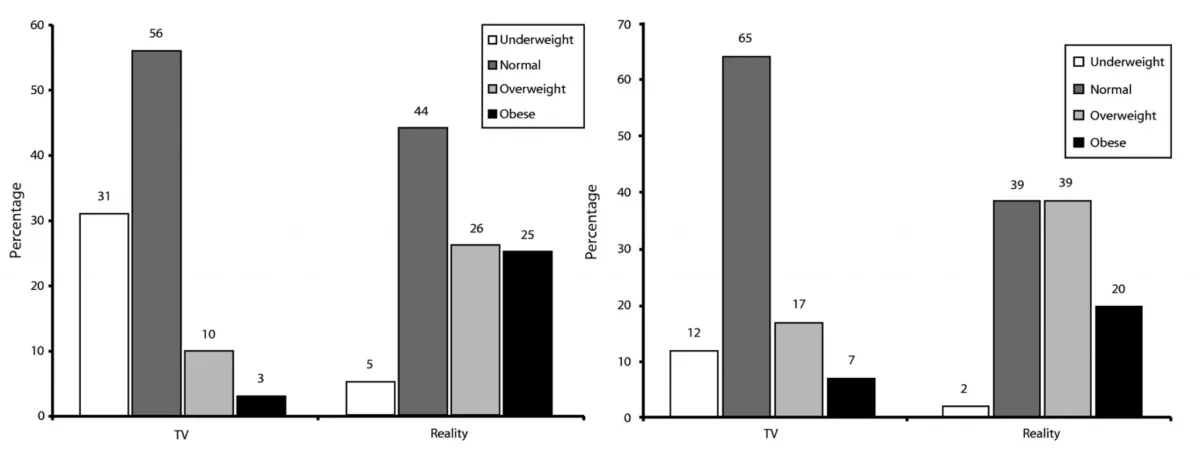
A seminal study by Tzoutzou et al. highlighted the stark disparity in appearance-based compliments within television programming, revealing that all 36 positive remarks directed at women were exclusively for those with thin physiques. Alarmingly, not a single positive message was conveyed to women of average or overweight body types. A similar pattern emerged for male characters, with only one overweight individual receiving a positive affirmation. This data underscores a deeply ingrained bias within television narratives, signaling to audiences that external beauty is almost exclusively defined by thinness, thereby excluding and devaluing anyone who deviates from this restrictive standard. Such consistent messaging can lead viewers to internalize this "thin ideal," making it challenging for them to cultivate a positive self-image, particularly if their physical appearance does not conform to the idealized body standard frequently depicted on screen. The constant exposure to negative portrayals of larger bodies can profoundly influence how viewers perceive their own bodies, fostering dissatisfaction and self-criticism.
The Distorted Lens: Caricature and Stereotype
Beyond mere underrepresentation, the portrayal of larger-bodied individuals on television is overwhelmingly negative, often relying on a limited repertoire of dehumanizing stereotypes. These characters are frequently relegated to roles as comedic sidekicks, the butt of jokes, or outright villains, effectively denying them the opportunity for complex character development. This trend is not new but has persisted across decades of television programming, evolving slightly in its manifestation but remaining consistent in its detrimental impact.
In the realm of comedy, the humor directed at larger women, in particular, often comes at their expense rather than celebrating their wit or personality. Studies indicate that overweight women are approximately twice as likely to be the subject of a joke compared to their thinner counterparts. Furthermore, these characters typically occupy smaller roles, are less likely to be involved in romantic relationships, and experience fewer positive social interactions than thin characters. This pattern reinforces the notion that their worth, both romantically and socially, is diminished by their size.
The villainous archetype is another common, and particularly damaging, trope for larger-bodied characters. Research by Himes and Thompson, focusing on popular children’s videos, found that obesity was equated with negative traits such as evil, unattractiveness, unfriendliness, and cruelty in a striking 64% of cases. Iconic examples from children’s media, such as Ursula from The Little Mermaid or the Queen of Hearts from Alice In Wonderland, vividly illustrate this association. These characters, often physically imposing and morally corrupt, serve to forge a powerful, subconscious link between larger bodies and negative qualities in the minds of young viewers. By reducing fat characters to these archetypes, storytellers strip them of their humanity, preventing the development of rich, multifaceted narratives that are routinely afforded to other characters. This is not merely an oversight; it is an active demonization of larger bodies, embedding prejudice into the fabric of popular culture.
An Invisibility Crisis: Underrepresentation in Prime Time
The issue of negative portrayal is compounded by a significant problem of underrepresentation. Despite a growing diversity in body types within the general population, television consistently fails to reflect this reality, particularly for larger bodies. Data from as early as 1999-2000, as documented by Brownell et al., revealed a stark discrepancy between the prevalence of various body types on television versus their presence in reality. For women, the gap was particularly pronounced: while a significant portion of the real-world female population would be classified as average or overweight, these categories were severely underrepresented on screen, with a disproportionate number of thin women appearing. A similar, though slightly less dramatic, pattern was observed for male body types.
Decades later, while there have been some incremental improvements driven by advocacy and cultural shifts, the fundamental imbalance persists. Modern analyses continue to show that characters with larger bodies are significantly less visible than their real-world counterparts. When they do appear, they are often in supporting roles, further marginalizing their presence. This sustained underrepresentation contributes to a sense of invisibility for many viewers, sending a message that their body type is not worthy of being seen, acknowledged, or celebrated in mainstream media. The absence of diverse body types normalizes the thin ideal as the default and only acceptable form, reinforcing the narrative that larger bodies are exceptional, undesirable, or simply do not exist in the aspirational worlds depicted on television.
Historical Roots of Body Bias in Media
The roots of body bias in media can be traced back through decades of cultural and societal shifts, reflecting evolving beauty standards and public health narratives. In the early to mid-20th century, a more robust physique was sometimes associated with health and prosperity, particularly in post-war eras. However, with the advent of mass marketing and the rise of fashion industries, coupled with a burgeoning diet culture in the latter half of the century, the ideal began to shift dramatically towards thinness. Television, as a powerful cultural mirror and shaper, quickly adopted and amplified these changing ideals.
By the 1980s and 90s, the "heroin chic" aesthetic and the pervasive presence of supermodels solidified thinness as the paramount beauty standard. Television shows, sitcoms, and dramas of this era often featured predominantly thin casts, and when larger characters appeared, they frequently fulfilled stereotypical roles: the "fat friend" who offers comic relief but lacks romantic prospects, the perpetually dieting character, or the villain whose physical size was implicitly linked to their moral failings. This period saw the entrenchment of tropes that continue to echo today, contributing to a deeply ingrained cultural fatphobia that media both reflects and propagates. The medicalization of obesity in public discourse further complicated matters, with television sometimes conflating health concerns with moral failings, inadvertently adding another layer of stigma to larger bodies.
The Psychological Toll: Audience Internalization and Health Implications
The pervasive negative portrayal and underrepresentation of larger bodies on television inflict a significant psychological toll on audiences, leading to the internalization of harmful ideals and potentially severe health consequences. The impact can be swift and profound: a study by Fouts and Burggraf demonstrated that as little as 30 minutes of television viewing could negatively affect how young women perceive their own bodies, potentially leading to various external struggles. This rapid internalization underscores the potent influence of media on body image formation, especially during impressionable developmental stages.
The Tzoutzou et al. study further corroborated this, finding that young girls explicitly acknowledged media influence on their desire to be thin and conform to prevailing beauty standards. This desire often translates into frequent dieting, a common precursor to disordered eating patterns. Many eating disorders are rooted in the pursuit of unrealistic body standards, an image relentlessly transmitted by mass media. The constant bombardment with images of thinness as the only acceptable form of beauty can foster chronic body dissatisfaction, low self-esteem, and even depression among those who do not fit this narrow mold.
Beyond self-esteem issues, these misrepresentations can lead viewers to anticipate and internalize societal discrimination. Individuals may believe they will be subjected to the same sexist and disparaging treatment they witness on screen if they do not conform to the body norm, leading to anxiety, social withdrawal, and a heightened sense of vulnerability. This fear can drive individuals to engage in unhealthy behaviors, from extreme dieting to excessive exercise, in a desperate attempt to avoid perceived social rejection and stigma. The cumulative effect of these media messages can be devastating, creating a cycle of self-criticism, anxiety, and potentially serious mental and physical health issues. It transforms television from a source of entertainment into a vehicle for body shaming and the propagation of harmful stereotypes, making it difficult for many viewers to enjoy content without feeling judged or inadequate.
Industry Response and Advocacy Calls
In recent years, the growing awareness of media’s impact on body image has spurred increasing calls for change from various stakeholders. Academic researchers continue to publish studies highlighting the detrimental effects of biased representation, providing empirical evidence that challenges media producers to re-evaluate their content. Public health organizations, increasingly recognizing the link between media exposure, body dissatisfaction, and public health outcomes like eating disorders and mental health issues, have joined advocacy groups in demanding more inclusive and positive portrayals.
Advocacy groups like the National Association to Advance Fat Acceptance (NAAFA) and organizations dedicated to body positivity and eating disorder awareness have been at the forefront of this movement. They actively campaign for media literacy, promote diverse body representation, and challenge the ingrained fatphobia within cultural narratives. Their efforts often involve direct engagement with media executives, scriptwriters, and casting directors, urging them to adopt more equitable and realistic portrayals of human diversity.
While progress has been slow, there have been glimmers of change. Some industry representatives, under pressure from public criticism and internal awareness, have begun to acknowledge the need for greater diversity, not just in terms of race and gender, but also body type. Producers and showrunners for some newer programs have made conscious efforts to cast diverse bodies in complex roles, challenging traditional stereotypes. However, these instances remain relatively few and far between, often celebrated precisely because they are exceptions to the norm. The industry often cites commercial pressures and audience preferences as justifications for maintaining existing paradigms, though advocacy groups argue that authentic representation would resonate with and expand audiences, not alienate them. The rise of streaming platforms has also opened new avenues for diverse storytelling, as these platforms are sometimes less constrained by traditional network demographics and advertising models.
Towards Inclusive Storytelling: A Path Forward
The path toward more inclusive storytelling on television necessitates a multi-faceted approach, moving beyond tokenistic gestures to fundamental shifts in narrative construction and character development. This involves a conscious effort by writers, directors, and producers to envision characters with larger bodies not as defined by their size, but as fully realized individuals with rich inner lives, complex relationships, and diverse aspirations.
Firstly, there must be a deliberate effort to cast larger-bodied actors in a wider array of roles—heroes, romantic leads, professionals, and antagonists—without their weight being the central focus or the sole source of their characterization. This means moving beyond the "fat friend" or "comic relief" tropes and allowing these characters to embody the full spectrum of human experience. When humor is involved, it should be derived from situational comedy or wit, not from mocking a character’s physical appearance.
Secondly, storylines should explore the unique challenges and triumphs faced by larger individuals in a nuanced manner, acknowledging the societal stigma they often encounter without reducing their entire existence to a struggle with weight. This could involve narratives that celebrate body positivity, explore the complexities of self-acceptance, or challenge fatphobic attitudes within the fictional world, mirroring real-world conversations about social justice and inclusion.
Thirdly, greater diversity behind the camera is crucial. When writers, directors, and producers from diverse backgrounds, including those with personal experiences of navigating a larger body, are involved in the creative process, it naturally leads to more authentic and empathetic portrayals. Their insights can help dismantle unconscious biases and foster narratives that resonate more deeply with a broader audience.
Finally, media literacy initiatives can empower viewers, particularly younger audiences, to critically evaluate the messages they receive from television. By teaching audiences to question stereotypes and recognize the constructed nature of media portrayals, they can become more resilient to harmful ideals and advocate for the representation they wish to see.
Conclusion: Beyond the Screen, A Societal Imperative
Television, at its core, is a space meant for entertainment, escapism, and connection. However, when viewers encounter content that judges, mocks, or marginalizes their physical being, it transforms a potential source of enjoyment into a source of anxiety and self-doubt. The continued perpetuation of negative stereotypes and the glaring underrepresentation of larger bodies on screen hinder television’s capacity to be truly inclusive and universally enjoyed.
All bodies deserve to feel seen, valued, and represented authentically within the vast landscape of television programming. This is not merely a matter of political correctness; it is a societal imperative. By embracing genuine body diversity, television has the power to dismantle harmful stereotypes, foster self-acceptance, and contribute to a more empathetic and inclusive society. The media’s responsibility extends beyond mere reflection; it has the profound capacity to shape perceptions and influence cultural norms. Moving forward, the goal must be to create a television landscape where every viewer, regardless of their body type, can sit back, relax, and see themselves reflected with dignity, complexity, and respect.