
 Reynand Wu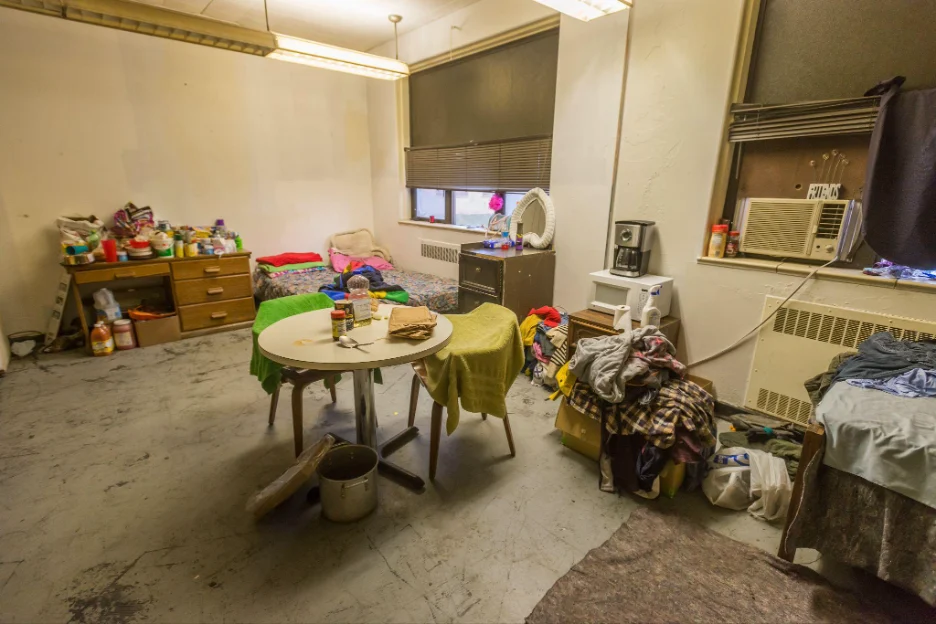
Migrant labor forms the indispensable backbone of the United States’ agricultural sector, an essential and constant force that fuels the nation’s food supply. Despite their critical role, the individuals performing this arduous work often remain largely unseen, their lives obscured not only socially but also spatially. This systemic invisibility is deeply embedded in the housing structures provided by employers, which are frequently tucked away behind dense groves, situated far from public roads, or sequestered on private land secured by locked gates. These remote locations render housing sites not only difficult to access for outside assistance but also profoundly challenging for workers to leave, effectively creating a controlled environment that limits autonomy and perpetuates dependency.
The Invisible Backbone of U.S. Agriculture
The agricultural sector in the United States relies heavily on a workforce estimated to be between 2.5 and 3 million individuals, a significant portion of whom are migrant workers. These laborers are responsible for planting, cultivating, and harvesting a vast array of crops, often under extreme conditions. Their efforts ensure the availability and affordability of produce for consumers nationwide, yet their vital contributions often go unrecognized. The paradox lies in their indispensable economic value juxtaposed against their marginalized social and living conditions.
Data from organizations like the National Center for Farmworker Health (NCFH) consistently highlight the demographics of this workforce: predominantly male, of Hispanic origin, and often foreign-born, with a substantial number lacking legal immigration status. The average annual income for a farmworker family is often below the federal poverty line, making employer-provided housing a critical, albeit often problematic, component of their employment package. Without stable and affordable housing options, many workers would face insurmountable barriers to employment in an industry characterized by seasonal shifts and geographic mobility.
Spatial Segregation and Control: A Systemic Issue
The physical characteristics of migrant housing are a direct reflection of this systemic invisibility and control. Accounts from workers across various agricultural regions—from the orchards of Michigan to the fields of California and the farmlands of North Carolina—consistently describe similar conditions. Workers often spend long days, frequently six or seven days a week, toiling in fields or orchards under harsh weather, only to return to dormitories or cabins situated far from town centers. These shared spaces often lack basic privacy, comfort, or dignity. Common descriptions include cramped quarters with multiple beds in a single room, communal bathrooms, and often bare or inadequate kitchen facilities.
For instance, photographs from facilities in places like Rantoul, Illinois, depict bedrooms with narrow beds, small windows, and insufficient space, underscoring the rudimentary nature of these accommodations. Similarly, historical images, such as Dorothea Lange’s iconic 1936 photograph of a migrant agricultural worker’s family in Nipomo, California, during the Great Depression, reveal a long-standing pattern of temporary, often substandard, shelters. While the materials and specific designs may have evolved, the underlying principle of minimal provision and isolation persists. These visual records serve as powerful evidence of a system designed to operate efficiently by minimizing the cost and visibility of its human labor.
Historical Roots and Regulatory Gaps
The current state of migrant farmworker housing is not an accident but a product of historical labor practices and evolving legal frameworks. From the early 20th century, as industrial agriculture expanded, a mobile workforce was necessary to follow crop cycles. Early labor camps were often makeshift and unregulated, leading to widespread exploitation and deplorable living conditions. The mid-20th century saw some legislative attempts to address these issues, notably with the passage of the Migrant and Seasonal Agricultural Worker Protection Act (MSPA) in 1983.
MSPA is the primary federal law governing farm labor contractors and agricultural employers regarding wages, housing, transportation, and disclosures. It sets minimum standards for housing provided to migrant workers, requiring it to be safe and sanitary and to comply with federal and state safety and health standards. The Occupational Safety and Health Administration (OSHA) also has specific standards for temporary labor camps. However, the interpretation and enforcement of these "minimum legal standards" are often contentious. Critics argue that these standards are barely above what might be considered acceptable for institutional settings, and in practice, often lead to dehumanizing conditions that prioritize cost-efficiency over worker well-being.
The H-2A Visa Program: A Double-Edged Sword
The H-2A temporary agricultural program, which allows U.S. agricultural employers to bring foreign nationals to the U.S. to fill temporary agricultural jobs, further intertwines employment with housing. Under the H-2A program, employers are legally required to provide housing for their workers, either on the farm or in rented accommodations, free of charge. While this provision ensures workers have a place to live, it also creates a direct link between housing and employment that can severely limit worker autonomy.
This employer-controlled housing system means that a worker’s ability to retain their job, and thus their legal status and livelihood in the U.S., is often tied directly to their housing situation. Any complaint about working conditions, wages, or even housing itself, carries the profound risk of job loss, which in turn means losing their bed and potentially facing forcible deportation. This inherent power imbalance is a critical component of the "labor strategy" described by experts. It creates an environment where workers are hesitant to speak up, fearing reprisal and displacement.
Expert Analysis: The Architecture of Control
Sociological frameworks offer a crucial lens through which to understand these conditions, moving beyond merely labeling them as "bad housing." Conflict theory, which posits that societal structures and changes arise from struggles over power and resources, provides a powerful explanation. In the context of migrant labor, the struggle for power is starkly visible in the very organization and control of living spaces.
Drawing on the work of theorists like Henri Lefebvre, who argued that space is socially produced, we can see how migrant housing is not a neutral backdrop but a deliberate construct. The arrangement and social production of space in these camps reflect the interests of those who hold authority and control—the employers. The shape of a room, the distance between houses, and the layout of a dormitory are not random; they are designed to manage and control. Comfort, fairness, or individual function are secondary to the imperatives of labor management and cost control.
Similarly, Michel Foucault’s analysis of how institutions use architecture to enforce discipline provides further insight. In migrant housing, the physical space itself signals control, often without the need for overt surveillance or physical barriers. While these dorms may not have bars or guards, their design—meeting only the bare minimum legal standards, providing little privacy, and fostering an environment of shared vulnerability—achieves a similar disciplinary effect. The architecture subtly dehumanizes, and in doing so, it controls behavior and limits the agency of residents.
Implications for Worker Well-being and Society
The direct consequences of this system on workers are profound. Accounts from paralegals and advocates frequently detail the psychological toll of living in such monitored and undignified conditions. Workers describe living in such close proximity that every breath of a bunkmate is audible, and being subject to stringent rules about visitors, meals, and noise. The inability for married couples to live together, the constant feeling of being monitored, and the pervasive fear of speaking out are common themes. These homes are not truly "theirs"; the system ensures a transient and controlled existence.
Beyond individual dignity, the lack of adequate housing contributes to broader public health issues. Overcrowded living conditions facilitate the rapid spread of infectious diseases. Lack of access to clean water and proper sanitation can lead to gastrointestinal illnesses. The stress and isolation inherent in these living arrangements also contribute to mental health challenges. These health disparities are not merely personal misfortunes but structural outcomes of a system designed with specific economic and control objectives.
Advocacy and the Path Forward
Recognizing these issues as a systemic "labor strategy" rather than an accidental "housing crisis" is the first step toward meaningful change. Advocacy groups such as the Farmworker Justice, United Farm Workers (UFW), and various legal aid organizations have long championed reforms, pushing for stricter enforcement of existing regulations, improved housing standards, and greater worker protections. They argue for mechanisms that decouple housing from employment, providing workers with more independent and dignified living options.
Proposed solutions include increased funding for independent, non-employer-controlled housing initiatives, more robust inspections by federal and state agencies, and stronger legal protections for workers who report violations without fear of retaliation. Additionally, raising public awareness about the living conditions of those who feed the nation is crucial. As scholars and citizens, bringing these designs and their implications to light is paramount. We cannot effectively change what remains hidden or unacknowledged. The true cost of cheap food is often borne by those whose lives are spatially and socially erased, and addressing this requires a collective commitment to visibility, dignity, and justice.









