
 Reynand Wu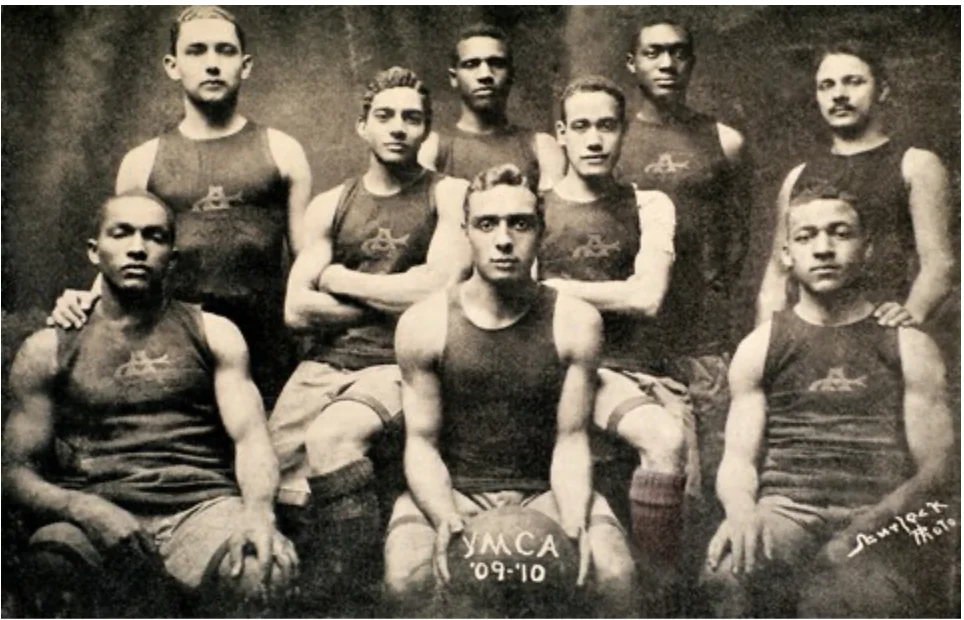
Picture this. Walking down 135th street in Harlem, you spot a vibrant park in the distance. As you draw closer, the rhythmic thud of a basketball bouncing on asphalt punctuates the air, mingling with the excited shouts and laughter of children. It’s a quintessential New York City scene: a small, outdoor court, meticulously maintained with fresh paint delineating its boundaries and a sturdy chain-link fence standing guard. The worn leather of the ball is in constant motion—passed with precision, dribbled with flair, and shot from all angles with a hopeful arc. As the pickup game progresses, the raw energy and palpable excitement naturally draw in more kids, their faces alight with anticipation, waiting for their turn to join the fray. This vibrant spectacle, emblematic of New York City’s deep connection to basketball, is more than just a game; it is a living testament to a complex history, where systemic discrimination inadvertently forged a profound cultural identity.
New York City is synonymous with basketball. From the storied courts of Harlem to the vibrant playgrounds of Brooklyn, basketball has been an integral part of the city’s cultural fabric for decades, an undeniable force shaping communities and aspirations. But the question lingers: why has basketball become such an enduring staple of African American culture in major urban centers, particularly in a metropolis like New York? The answer is multifaceted, revealing a complex interplay of historical forces where the very roots of its popularity among minority groups stem directly from the insidious and pervasive discriminatory practices of redlining and segregation that reshaped American cities in the 20th century. This article delves into that history, exploring how economic disenfranchisement and social exclusion inadvertently paved the way for basketball to become a symbol of resilience, community, and opportunity.
The Early Game: A "White Man’s Sport" with Segregated Courts
Basketball, as we know it today, began with humble origins. It was founded in December 1891 by Dr. James Naismith, a Canadian physical education instructor at the International YMCA Training School in Springfield, Massachusetts. Naismith sought a less injury-prone sport than football, one that could be played indoors during harsh New England winters, keeping his students active and engaged. His invention, initially played with peach baskets and a soccer ball, quickly gained traction. By the early 1900s, it was rapidly spreading across the nation, taking root in colleges, high schools, and YMCA facilities. Elite institutions like Harvard, Yale, Cornell, and Princeton were among the first to establish collegiate teams, engaging in intercollegiate play as early as 1901.
The professionalization of the sport followed suit. The first professional basketball league, the National Basketball League (NBL), was established in 1937, laying foundational groundwork for what would become a national phenomenon. This league later merged with the Basketball Association of America (BAA) in 1949, giving birth to the iconic National Basketball Association (NBA).
However, for the first three decades of its existence, basketball, particularly at the collegiate and professional levels, was overwhelmingly dominated by white participants. Black athletes were systematically barred from playing, reflecting the deeply entrenched racial segregation prevalent across American society. The color barrier in basketball was rigidly enforced, mirroring the discriminatory practices in other professional sports like baseball, which saw its own integration struggles. It wasn’t until 1928 that George Gregory Jr. became the first Black collegiate player, a lone pioneer in a landscape of exclusion. The professional ranks remained segregated even longer. It took until the momentous 1949-1950 NBA season for Chuck Cooper, Nathaniel Clifton, and Earl Lloyd to break the professional color barrier, marking a watershed moment in the sport’s history and American civil rights.
During this era, basketball was primarily played in community centers such as YMCAs. These institutions, while promoting physical activity and community engagement, were often complicit in segregation, with many white-owned and operated YMCAs refusing membership and access to Black individuals. Consequently, if Black people desired to play basketball, they were frequently compelled by necessity to establish their own facilities and organizations, a critical step that would inadvertently foster the sport’s deep roots within their communities.
The Architect of Disadvantage: Redlining and Its Profound Impact on Urban Communities
The rise of basketball’s popularity within minority communities in cities like New York cannot be understood without examining the devastating effects of redlining and other forms of economic discrimination. These exclusionary practices systematically depressed resources and opportunities in neighborhoods predominantly inhabited by Black and other minority populations.
Redlining emerged as a formalized discriminatory practice in the United States starting in 1934 with the implementation of the National Housing Act (NHA). This pivotal legislation created government programs and entities, notably the Federal Housing Administration (FHA) and the Home Owners’ Loan Corporation (HOLC), ostensibly with the goal of stabilizing and improving the housing market during the Great Depression. The stated intent was to promote homeownership by providing mortgage insurance to lenders, thereby making it easier for average Americans to obtain loans for purchasing homes. While the FHA significantly boosted homeownership rates and improved housing conditions for many white Americans, its policies explicitly and systematically excluded Black people and other minorities from accessing these benefits.
The HOLC played a crucial role in institutionalizing redlining. It produced detailed residential security maps for hundreds of cities across the nation. These maps categorized neighborhoods into four color-coded grades based on their perceived investment risk. Green areas (Grade A) were deemed "best" and desirable for investment, typically affluent, white suburbs. Blue areas (Grade B) were "still desirable." Yellow areas (Grade C) were "declining" and often transitioning racially or economically. Crucially, red areas (Grade D) were labeled "hazardous" – a designation almost exclusively applied to neighborhoods with large populations of Black residents or other minority groups, as well as working-class immigrant communities. These "redlined" districts were explicitly deemed "risky" for investors, driving down property values and scaring off potential investment.
The FHA then utilized these HOLC maps as a guide for its lending policies, effectively refusing federally insured housing loans for minorities in redlined areas. This meant that residents in these communities were denied access to affordable mortgages, making it nearly impossible to purchase or improve homes. The ripple effects were catastrophic:
- Wealth Disparity: Redlining directly contributed to the massive and persistent Black-white wealth gap. While white families were able to build equity through homeownership, Black families were denied this fundamental pathway to intergenerational wealth accumulation.
- Neighborhood Disinvestment: The lack of federal and private investment led to the deterioration of housing stock, infrastructure, and public services within redlined communities. Roads, schools, sanitation, and recreational facilities suffered from chronic underfunding.
- Forced Concentration: As Black families migrated from the Jim Crow South to Northern cities in search of economic opportunity, discriminatory housing practices forced them into overcrowded and underserved neighborhoods. Concurrently, "white flight" saw many white homeowners abandon urban areas for newly built, FHA-backed suburbs, further eroding the tax base and social capital of inner cities.
- Limited Green Space and Recreation: A direct consequence of redlining and disinvestment was a stark disparity in access to quality public spaces and recreational facilities. Redlined neighborhoods typically had less green space and smaller, less-maintained parks on average. A 2020 analysis by the Trust for Public Land highlighted this stark reality in New York City, finding that the average park size in poorer neighborhoods was only 6.4 acres, compared with a significantly more generous 14 acres in wealthy neighborhoods. These smaller, often neglected spaces severely limited the types of sports that could be played and the quality of athletic infrastructure available to children in these communities.
Basketball: An Accessible Escape and Community Builder
In this environment of systemic disadvantage, basketball emerged as a uniquely accessible and appealing sport for minority children. Unlike many other popular American sports, basketball did not carry significant cost-of-entry barriers.
- Minimal Equipment: To play baseball at a competitive level, one needs a bat, glove, specialized shoes, and often expensive league fees and travel team costs. Similarly, football requires extensive protective gear. Basketball, by contrast, fundamentally requires only a ball and a hoop. This low financial barrier made it immediately available to a much broader segment of the population.
- Space Efficiency: Given the limited and smaller park sizes in redlined areas, sports that required vast open fields, like baseball or soccer, were impractical or impossible to play regularly. Basketball courts, compact in comparison, could be squeezed into tight urban spaces, making them ubiquitous in city neighborhoods. A single hoop attached to a wall or a small paved lot was enough to start a game.
- Community Engagement: The inherent nature of basketball, with its continuous action and ability to accommodate many players in pickup games, fostered strong community bonds. Courts became natural gathering places, centers of social interaction, and proving grounds for skill and camaraderie. David C. Ogden, a professor at the University of Nebraska who studied race and sport dynamics, observed that the scarcity of baseball facilities in Black neighborhoods and the high cost of playing select baseball were primary reasons for the lack of racial diversity in the sport. His research in 2003 found that "More than two-thirds of the 27 coaches said that African-American youth prefer to spend their time on the basketball court rather than on the diamond." This preference was not just cultural; it was a rational adaptation to economic and spatial realities.
The Rise of Black Institutions and the Globetrotter Phenomenon
In response to widespread exclusion, Black communities began to build their own institutions, and basketball flourished within them. The development of Black YMCAs was particularly instrumental. These YMCAs were more than just gyms; they were vital community hubs that provided social, educational, and athletic opportunities in an era when mainstream institutions were closed off. They offered safe spaces for Black youth to develop their talents and find mentorship.
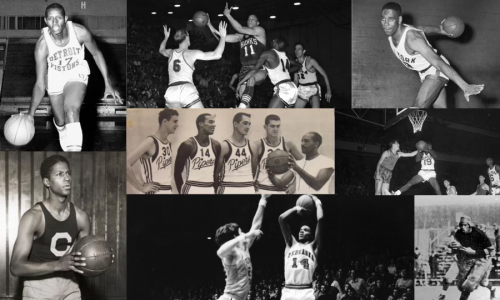
One of the earliest examples of independent Black basketball was the Smart Set Athletic Club of Brooklyn, which formed in 1907, becoming one of America’s first fully independent Black basketball teams. As more Black YMCAs and community centers emerged in major cities across the East Coast, basketball spread rapidly. Edwin Bancroft Henderson, an influential educator from Washington D.C., played a pivotal role in this dissemination. Having learned the game during summer sessions at Harvard University, Henderson introduced basketball to young Black men in the D.C. area, pioneering its adoption. Soon, the game was being enthusiastically played in Black communities throughout New York, Philadelphia, and Baltimore, establishing regional rivalries and local legends.
Basketball also became a crucial avenue for economic upward mobility, a rare pathway out of the systemic poverty enforced by redlining. The Harlem Globetrotters, formed in 1926 by Abe Saperstein, became the most renowned basketball team for Black players. In an era when the NBA was still segregated, the Globetrotters offered Black athletes the primary, and often only, means to make a living playing basketball. They showcased incredible athleticism, skill, and showmanship, captivating audiences globally and demonstrating the immense talent within the Black community, defying racial stereotypes, and laying critical groundwork for future integration. Their international tours also introduced basketball to new audiences worldwide, further cementing its global appeal.
Integration and the Modern NBA: A Legacy Transformed
The breaking of the color barrier in collegiate and professional basketball in the mid-20th century marked a significant turning point. While slow and often met with resistance, the entry of Black players into the NBA profoundly transformed the league. The athleticism, style, and innovation brought by these players not only elevated the game but also resonated deeply with urban audiences, solidifying basketball’s cultural significance.
Today, basketball is an undeniable and vital part of New York City’s culture, transcending racial boundaries while still holding a special place in African American communities. The decades following segregation have seen Black participation in basketball soar, particularly in NYC, solidifying its status as a global basketball mecca.
Every summer, across the city’s five boroughs, minority communities gather for legendary outdoor basketball tournaments that draw national, and even international, attention. Iconic events like the Nike-sponsored "NY vs. NY" and Slam magazine’s "Summer Classic" feature top-ranked high school players and future NBA stars, attracting thousands of passionate fans to legendary courts like Dyckman Park in Manhattan and Rucker Park in Harlem. These tournaments are not just competitions; they are vibrant cultural festivals, celebrations of community, skill, and enduring spirit, reflecting a rich history forged on these very same streets.
The demographic landscape of professional basketball has also undergone a dramatic shift. In stark contrast to 1950, when Black players were a novelty, today, approximately 75% of the NBA is comprised of Black athletes. Furthermore, countless Black athletes from the U.S. and around the world play professionally in leagues across the globe. This demographic transformation highlights the profound impact of integration and the pathways to opportunity that basketball now offers, a stark departure from its segregated beginnings.
Enduring Impact and a Cultural Tapestry
The story of basketball’s rise among African American communities in New York City is a powerful narrative of resilience and adaptation in the face of systemic injustice. While segregation and redlining were designed to stifle Black progress and participation in mainstream society, the economic conditions they fostered inadvertently created an environment where basketball, with its low barriers to entry and communal nature, could thrive. It became more than just a sport; it became a cultural touchstone, a source of pride, identity, and a pathway to recognition and success.
The legacy of these historical forces continues to shape urban basketball culture today. The passion for the game, the legendary streetball tournaments, and the disproportionate representation of Black athletes at the highest levels of the sport are all echoes of a past where exclusion paradoxically led to an embrace. Basketball courts in New York City remain vital community spaces, serving as proving grounds for talent, fostering camaraderie, and embodying a spirit of determination that has defined generations. The enduring presence of basketball in these communities is a powerful reminder that even in the shadow of historical oppression, culture finds a way to flourish, adapt, and ultimately, transcend.
Additional Resources:
Aaronson, D., Faber, J., Hartley, D., Mazumder, B., & Sharkey, P. (2020). The Long-Run Effects of the 1930s HOLC “Redlining” Maps on Place-Based Measures of Economic Opportunity and Socioeconomic Success. The Effects of the 1930s HOLC “Redlining” Maps. https://doi.org/10.21033/wp-2020-33
Bowen, F. (2023, April 7). In its early years, NBA blocked black players. The Washington Post. Retrieved April 24, 2023, from https://www.washingtonpost.com/lifestyle/kidspost/in-nbas-early-years-black-players-werent-welcome/2017/02/15/664aa92e-f1fc-11e6-b9c9-e83fce42fb61_story.html
Centopani, P. (2020, February 24). The makings of basketball mecca: Why it will always be New York. FanSided. Retrieved May 1, 2023, from https://fansided.com/2020/02/24/makings-basketball-mecca-will-always-new-york/
Domke, M. (2011). Into the vertical: Basketball, urbanization, and African American … Into the Vertical: Basketball, Urbanization, and African American Culture in Early- Twentieth-Century America. Retrieved March 31, 2023, from http://www.aspeers.com/sites/default/files/pdf/domke.pdf

Gay, C. (2022, January 13). The black fives: A history of the era that led to the NBA’s racial integration. Sporting News Canada. Retrieved April 24, 2023, from https://www.sportingnews.com/ca/nba/news/the-black-fives-a-history-of-the-era-that-led-to-the-nbas-racial-integration/8fennuvt00hl1odmregcrbbtj
Gorey, J. (2022, July 25). How “White flight” segregated American cities and Suburbs. Apartment Therapy. Retrieved April 30, 2023, from https://www.apartmenttherapy.com/white-flight-2-36805862
Hunt, M. (2022, October 11). What is the National Housing Act? Bankrate. Retrieved April 25, 2023, from https://www.bankrate.com/real-estate/the-national-housing-act/#:~:text=What%20is%20the%20National%20Housing%20Act%20(NHA)%3F,Loan%20Insurance%20Corporation%20(FSLIC).
Hu, W., & Schweber, N. (2020, July 15). New York City has 2,300 parks. but poor neighborhoods lose out. The New York Times. Retrieved April 21, 2023, from https://www.nytimes.com/2020/07/15/nyregion/nyc-parks-access-governors-island.html
Ivy league regular season champions, by Year. Coaches Database. (2023, March 5). Retrieved April 24, 2023, from https://www.coachesdatabase.com/ivy-league-regular-season-champions/
McIntosh, K., Moss, E., Nunn, R., & Shambaugh, J. (2022, March 9). Examining the black-white wealth gap. Brookings. Retrieved April 25, 2023, from https://www.brookings.edu/blog/up-front/2020/02/27/examining-the-black-white-wealth-gap/
Ogden, D. C. ., & Hilt, M. L. . (2003). Collective Identity and Basketball: An Explanation for the Decreasing Number of African Americans on America’s Baseball Diamond. Retrieved March 31, 2023, from https://www.nrpa.org/globalassets/journals/jlr/2003/volume-35/jlr-volume-35-number-2-pp-213-227.pdf
Ortigas, R., Okorom-Achuonyne, B., & Jackson, S. (n.d.). What exactly is redlining? Inequality in NYC. Retrieved March 30, 2023, from https://rayortigas.github.io/cs171-inequality-in-nyc/
Pearson, S. (2022). Basketball origins, growth and history of the game. History of The Game Of Basketball Including The NBA and the NCAA. Retrieved April 24, 2023, from https://www.thepeoplehistory.com/basketballhistory.html
Robertson, N. M. (1995). [Review of Light in the Darkness: African Americans and the YMCA, 1852-1946., by N. Mjagkij]. Contemporary Sociology, 24(2), 192–193. https://doi.org/10.2307/2076853
Townsley, J., Nowlin, M., & Andres, U. M. (2022, August 18). The lasting impacts of segregation and redlining. SAVI. Retrieved March 30, 2023, from https://www.savi.org/2021/06/24/lasting-impacts-of-segregation/








