Jono Maryono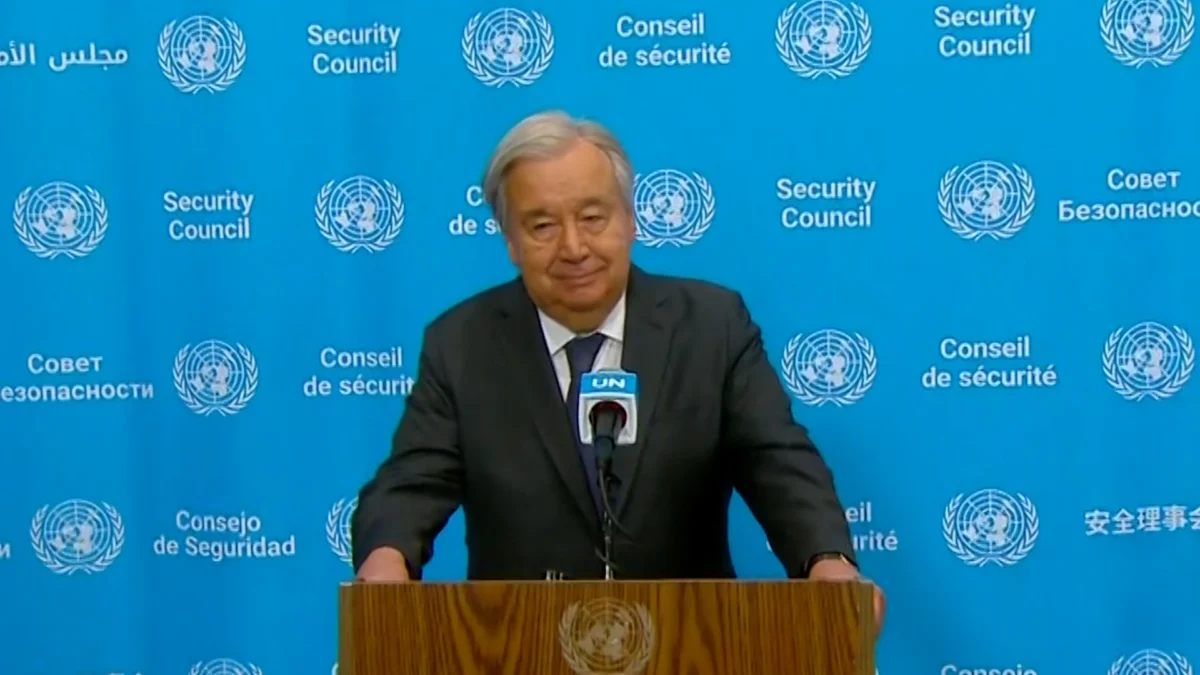
United Nations Secretary-General Antonio Guterres has indicated that diplomatic efforts aimed at resolving the protracted conflict involving the United States and Israel against Iran are "highly probable" to resume. This statement, delivered following a significant bilateral meeting with the Deputy Prime Minister of Pakistan, signals a potential thaw in a deeply entrenched geopolitical standoff that has had far-reaching consequences across the Middle East and globally. The remarks offer a sliver of optimism amidst persistent tensions, suggesting a renewed international impetus for de-escalation and a peaceful resolution.
Background to the Iran Conflict
The conflict, which the United Nations Secretary-General refers to as the "US-Israel war on Iran," is a complex and multifaceted geopolitical struggle that has evolved over several decades. While the exact genesis is debated, key turning points include the Iranian Revolution of 1979, which fundamentally altered the region’s power dynamics, and subsequent periods of escalating diplomatic and economic friction. The United States and Israel have consistently voiced concerns over Iran’s nuclear program, its ballistic missile development, and its support for regional proxy groups, which they argue destabilize the Middle East. Conversely, Iran maintains that its nuclear activities are for peaceful purposes and that its regional influence is a defensive measure against perceived external threats.
Over the years, the conflict has manifested through various means, including economic sanctions, cyber warfare, covert operations, and, at times, direct or indirect military confrontations. The absence of sustained, direct diplomatic engagement has allowed mistrust to fester and hostilities to escalate. Previous attempts at negotiation have been fraught with challenges, often collapsing due to differing interpretations of agreements, perceived provocations, or shifting political landscapes in the involved nations. The international community, particularly the UN, has repeatedly called for restraint and dialogue, but a comprehensive peace process has remained elusive.
Guterres’s Statement and Bilateral Meeting
The announcement of the likely resumption of talks came during a press conference following a meeting between UN Secretary-General Antonio Guterres and the Deputy Prime Minister of Pakistan. While the specifics of the discussions with Pakistan’s Deputy Prime Minister were not fully detailed, Pakistan has historically played a role in regional diplomacy and has maintained relations with both Iran and, to a lesser extent, the United States. Its position as a significant Muslim-majority nation with a strategic location in South Asia often places it in a unique vantage point for mediating regional disputes.
Guterres’s use of the phrase "highly probably" suggests a degree of confidence, likely stemming from behind-the-scenes diplomatic overtures or a perceived shift in the willingness of key parties to engage. The UN chief’s role as a neutral arbiter and facilitator of international dialogue positions him as a crucial figure in any such diplomatic revival. His office has been actively engaged in efforts to de-escalate tensions and promote multilateral solutions to global crises, making this statement a significant development.
Timeline of Escalation and Diplomatic Efforts
The path to the current impasse has been marked by several critical junctures. Following the 1979 Iranian Revolution, relations between Iran and the United States, and subsequently with Israel, deteriorated significantly. The Iran-Iraq War (1980-1988) further cemented regional divisions.
- 1980s-1990s: The US imposed various sanctions on Iran, citing concerns over terrorism and human rights. Israel also viewed Iran’s growing regional influence with alarm.
- Early 2000s: International scrutiny intensified over Iran’s nuclear program, leading to the establishment of the International Atomic Energy Agency (IAEA) as the primary monitoring body.
- 2003: Iran publicly acknowledged it was enriching uranium, sparking widespread international concern.
- 2006-2010: The UN Security Council imposed multiple rounds of sanctions against Iran due to its nuclear activities.
- 2013: Diplomatic overtures led to the election of Hassan Rouhani as Iran’s president, who promised a more moderate foreign policy.
- 2015: The Joint Comprehensive Plan of Action (JCPOA), commonly known as the Iran nuclear deal, was agreed upon by Iran and the P5+1 (the five permanent members of the UN Security Council plus Germany). This deal aimed to curb Iran’s nuclear program in exchange for sanctions relief.
- 2018: The United States, under President Donald Trump, unilaterally withdrew from the JCPOA and reimposed stringent sanctions on Iran, a move widely condemned by other signatories.
- 2019-2023: Tensions escalated with incidents such as attacks on oil tankers in the Persian Gulf, the downing of a US drone, and increased military posturing by both sides. Iran also began to gradually roll back its commitments under the JCPOA.
- 2024-Present: Despite ongoing tensions, diplomatic channels have remained partially open, with various intermediaries attempting to bridge the gap between the US, Israel, and Iran. Guterres’s statement suggests a more concrete prospect for formal negotiations.
Supporting Data and Impact Analysis
The conflict has had a profound impact on global energy markets, regional stability, and international security.
- Economic Impact: Sanctions imposed on Iran have significantly curtailed its oil exports, a major source of revenue. This has had ripple effects on global oil prices, contributing to market volatility. The International Monetary Fund (IMF) has reported that Iran’s economy has faced significant contractions during periods of intense sanctions, leading to high inflation and unemployment. Conversely, disruptions in the Middle East, often linked to this conflict, have historically caused spikes in crude oil prices, affecting economies worldwide. For instance, during periods of heightened tensions, Brent crude oil prices have seen significant upward surges, impacting transportation costs and consumer goods.
- Humanitarian Concerns: The conflict and its associated sanctions have had a severe impact on the Iranian population, affecting access to essential goods, medicine, and foreign investment. Reports from various human rights organizations have detailed the struggles faced by ordinary citizens.
- Regional Destabilization: Iran’s support for various groups in countries like Syria, Lebanon, Yemen, and Iraq has been a major source of concern for its regional rivals, including Saudi Arabia and Israel. This has contributed to prolonged conflicts and humanitarian crises in those nations. The Syrian civil war, for example, has seen significant Iranian involvement, prolonging the conflict and exacerbating the humanitarian catastrophe.
- Nuclear Proliferation Concerns: The uncertainty surrounding Iran’s nuclear program has been a persistent global security concern. While the JCPOA aimed to provide transparency and assurances, its collapse has led to renewed anxieties about potential weaponization. Data from the IAEA has been crucial in monitoring Iran’s nuclear activities, with reports indicating periods of increased uranium enrichment following the US withdrawal from the JCPOA.
Potential Implications of Resumed Talks
The potential resumption of talks, as indicated by Guterres, could herald a significant shift in regional and international dynamics.
- De-escalation of Tensions: A successful diplomatic process could lead to a de-escalation of military posturing and a reduction in proxy conflicts, fostering greater stability in the Middle East.
- Revival of the JCPOA or a New Agreement: Renewed negotiations might lead to the revival of the JCPOA or the crafting of a new, comprehensive agreement that addresses Iran’s nuclear program, missile development, and regional activities. This could pave the way for sanctions relief, potentially revitalizing Iran’s economy and easing the humanitarian burden on its population.
- Improved Global Energy Security: A more stable Middle East, free from the immediate threat of conflict, could lead to more predictable oil supplies and a calming of global energy markets.
- Strengthened International Cooperation: A successful diplomatic outcome would underscore the effectiveness of multilateralism and the UN’s role in conflict resolution, potentially encouraging greater international cooperation on other pressing global issues.
Official Responses and Reactions (Inferred)
While specific official reactions to Guterres’s statement would typically follow such an announcement, based on historical patterns and stated positions, the following can be logically inferred:
- United States: The US administration would likely welcome any credible steps towards de-escalation and a diplomatic resolution. However, they would emphasize the need for Iran to demonstrate concrete actions regarding its nuclear program and regional behavior. Past statements suggest a preference for a "bigger and better" deal than the JCPOA, encompassing a wider range of issues.
- Israel: Israel has historically maintained a firm stance against Iran’s nuclear ambitions and its regional influence, often viewing Iran as an existential threat. A spokesperson for the Israeli government might express cautious optimism but would likely reiterate concerns about Iran’s long-term intentions and demand verifiable assurances regarding its military and nuclear programs.
- Iran: Iranian officials would likely express readiness for dialogue but would also assert their sovereign rights and call for the lifting of sanctions as a prerequisite for meaningful engagement. They would likely frame any negotiations within the context of their national security interests and resistance to foreign interference.
- European Union: EU member states, as signatories to the JCPOA, would likely express strong support for renewed diplomatic efforts, emphasizing the importance of the deal’s original objectives and the need for all parties to return to full compliance.
- Regional Powers (e.g., Saudi Arabia): Countries in the region that have been at odds with Iran would likely monitor developments closely, potentially expressing a desire for regional de-escalation but also reiterating their own security concerns and demands for Iran’s regional behavior to change.
The path ahead for diplomatic engagement is expected to be challenging, marked by deep-seated mistrust and complex negotiations. However, the UN Secretary-General’s pronouncement offers a beacon of hope, suggesting that the international community is actively working towards a more peaceful and stable resolution to one of the world’s most enduring geopolitical conflicts. The coming months will be critical in determining whether this optimism translates into tangible progress on the ground.