Jono Maryono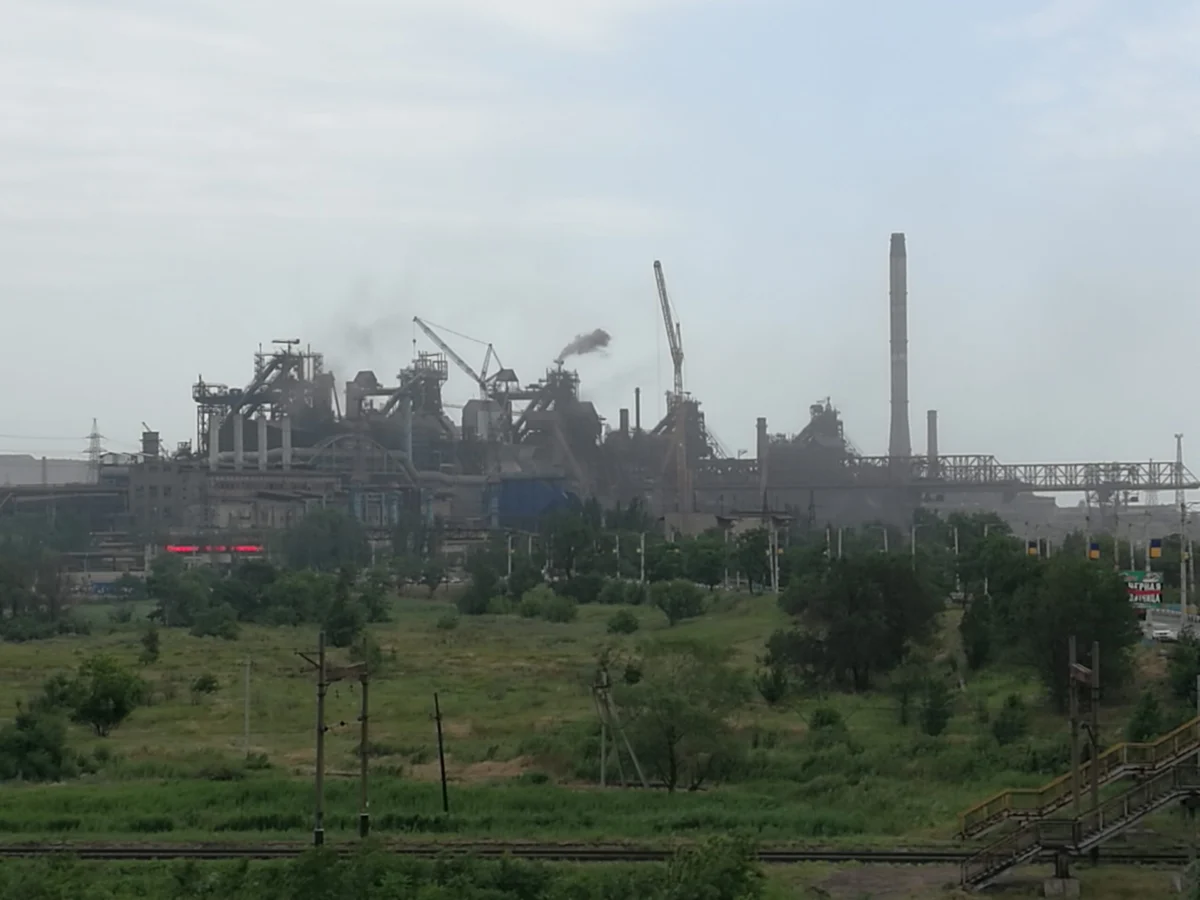
The gentle lapping of warm, barely salty waters against sandy shores, the rental of small sailboats with friends – these are the cherished memories Mariya Bubnova, a businesswoman and mother of two now displaced from her home, holds of the Sea of Azov. Once a vibrant hub of leisure, industry, and a vital economic artery for Ukraine, the Sea of Azov has transformed into a stark symbol of loss and geopolitical ambition following Russia’s full-scale invasion in 2022. For hundreds of thousands of Ukrainians like Bubnova, who grew up in Mariupol, the largest port on Azov, the sea is no longer a place of nostalgic recollections but a painful reminder of what has been seized.
The Sea of Azov, the world’s shallowest inland sea, comparable in size to Switzerland, held a dual identity before the conflict. Post-Soviet division in 1991 saw its waters shared between Ukraine and Russia. On its Ukrainian shores, a picturesque landscape of spas and resorts coexisted with the colossal steel plants that once accounted for 40 percent of Ukraine’s steel production. These industrial giants, while a source of national economic pride, also contributed to a sea breeze tinged with the byproducts of heavy industry. Beyond the industrial output, the sea facilitated a bustling maritime trade, with freighters transporting millions of tonnes of steel slabs, wheat, vegetable oils, and coal towards the Black Sea and beyond, to the Mediterranean. The nearly 1,500 kilometers of Ukrainian shoreline offered a budget-friendly destination for families, its knee-deep, calm waters providing a safe haven for children. Adults, meanwhile, sought the therapeutic benefits of Azov’s curative mud and thermal waters, sought after for their efficacy in treating ailments like arthritis, skin conditions, and allergies, a tradition reportedly dating back to the Tsarist era.

A Business Derailed by Escalating Aggression
Mariya Bubnova’s personal narrative mirrors the broader tragedy unfolding along the Azov coast. In 2011, she and her husband, Serhiy, established a thriving business in Mariupol, initially focusing on fruit and vegetable sales before expanding into the mass production of salads and pickles. Their enterprise, a testament to Ukrainian entrepreneurial spirit, began to face obstacles with Russia’s increasing assertiveness in the region. The annexation of Crimea in 2014, which partially frames the Sea of Azov, and the subsequent backing of separatists in eastern Ukraine, led to the creation of de facto "statelets" north of Mariupol. These developments introduced "border checkpoints" and "customs offices," effectively severing the Bubnovs’ access to these territories for their products.
Undeterred, the couple secured a grant from the United States Agency for International Development (USAID) to develop a business producing frozen soups. However, the full-scale Russian invasion in February 2022 brought their ambitions to a devastating halt. Mariupol, a city of nearly half a million people, bore the brunt of the relentless Russian assault. For months, the city was subjected to continuous bombardment by Russian aircraft and artillery, resulting in tens of thousands of civilian casualties and the utter destruction of its industrial infrastructure, including the vital steel plants and countless other businesses.
The Bubnov family, like so many others, was forced to flee their home in mid-March 2022. "We didn’t take a thing, nothing, just walked out," Mariya recounted, highlighting the sheer desperation and urgency of their evacuation. Their substantial investments, amounting to hundreds of thousands of dollars in equipment, were reduced to rubble by the shelling. Their apartment, once a sanctuary, was subsequently appropriated by Russian-appointed "authorities." Mariya and her two children sought refuge in the Netherlands, becoming part of the vast diaspora of Ukrainians displaced by the conflict, particularly from the eastern regions.

The Economic Catastrophe of a Lost Sea
The strategic importance of the Sea of Azov to Ukraine’s economy cannot be overstated. Following the 2022 invasion, Russia swiftly occupied the entire Ukrainian coastline of the sea, establishing a "land bridge" to solidify its control over Crimea. This strategic move effectively cut off Ukraine’s access to this crucial maritime resource. In a further assertion of dominance, Moscow declared the Sea of Azov its "domestic sea" and, in 2023, Russian President Vladimir Putin signed a decree explicitly prohibiting Ukraine from utilizing it.
The economic ramifications for Ukraine have been profound. Maryna Horbashevska, head of the management and finance department at Mariupol State University (now relocated to Kyiv), explained to Al Jazeera that the Sea of Azov "has always been of strategic economic importance for Ukraine, primarily as a hub for logistics and exports." The loss of direct access has crippled Ukraine’s maritime trade capabilities, impacting its gross domestic product (GDP). While estimates suggest Ukraine lost approximately 10 to 12 percent of its GDP due to the loss of Azov, Horbashevska noted that this figure could be "significantly higher" when considering the destruction of Mariupol’s metallurgical plants.
A comprehensive survey by SecDev, a Canadian geopolitical risk firm commissioned by The Washington Post in 2022, underscored the magnitude of Ukraine’s losses. Beyond the direct impact of the Azov Sea region, the report estimated Ukraine’s total losses from occupied areas north and east of Azov, including mineral resources, to be a staggering $12.4 trillion. This colossal figure encompasses nearly two-thirds of Ukraine’s coal mines, two-fifths of its metals, a third of its rare earth minerals (including lithium), one-fifth of its natural gas, and 11 percent of its oil deposits.

Russia’s consolidation of control over the Sea of Azov has involved extensive infrastructure development, including the construction of road and rail networks encircling the sea. For Moscow, this "acquisition" has served as a potent propaganda tool, reinforcing its narrative of national strength and expanding state control over economic assets. Aleksey Kushch, a Kyiv-based analyst, commented to Al Jazeera that Russia employs the "internal sea" slogan for propaganda while simultaneously leveraging the infrastructure spending to stimulate domestic demand for state-commissioned industrial production.
A Pyrrhic Victory Built on Ruins and Mass Graves
Despite Russia’s strategic and economic objectives, the gains in terms of tangible industrial assets are questionable. The once-mighty steel plants of Mariupol are now unrestorable ruins, their complex manufacturing processes, reliant on iron ore from central Ukraine, unlikely to be revived in their former capacity. Kushch suggests that Russia’s industrial gains are "almost zero," with only the industrial area of Melitopol, located 200 kilometers west of Mariupol, offering any significant productive potential.
While Moscow promotes the "restoration" of Mariupol, Ukrainian officials and eyewitness accounts paint a grim picture. Reports indicate that hastily constructed buildings have been erected over the mass graves of civilians killed during the siege. The environmental damage is equally severe. Though the air quality in Mariupol may have improved due to the cessation of industrial pollution, the seawater itself is in a deplorable state, contaminated by the breakdown of sewage systems and the fallout from relentless shelling. Compounding these issues is the "brain drain," as refugees and displaced individuals seek stability and opportunity elsewhere, often in Western Europe or other parts of Ukraine.

Mariya Bubnova’s journey exemplifies this displacement. After a year and a half in the Netherlands with her children, she reunited with her husband and settled in Slavutych, a town historically associated with the now-decommissioned Chornobyl nuclear power station. Like many displaced individuals, they face the challenge of rebuilding their lives with limited resources and assets. "I don’t know anything. You have to make every effort to find yourself, start working," Mariya shared, reflecting the resilience and determination required to navigate such profound upheaval. Despite the adversities, she and her husband have embarked on a new venture, establishing a company to produce canned soups. Their daughter, Alyna, aged 19, has contributed by developing a new recipe for borscht, a quintessentially Ukrainian dish.
A Potential Canal and a Looming Geopolitical Shift
A significant geopolitical development could further complicate Ukraine’s prospects of reclaiming the Sea of Azov and dramatically alter its regional standing. As early as 2007, Russia began exploring plans for a canal connecting the Sea of Azov to the oil-rich Caspian Sea, following a natural lowland that once linked the two bodies of water millions of years ago. Such a project, if realized, would grant Caspian nations like Kazakhstan, Turkmenistan, and Azerbaijan direct access to the Black Sea and subsequently the Mediterranean. This ambitious undertaking could rival the Suez Canal and significantly bolster Russia’s influence in a region where China and Turkey are actively vying for dominance.
Igar Tyshkevych, a Kyiv-based analyst, warned of the potential implications, stating the canal "will work against China, against Türkiye, partially even against Iran." He further elaborated on the potential ramifications for Ukraine: "If Russia comes out of the war [and] tries to sell this project to the United States as an infrastructure project that will limit China’s expansion, then it is very bad for us, because in this case, Ukraine will simply become a nuisance that stands in [the project’s] way with its demands to have its territories returned." The realization of such a canal could solidify Russia’s geopolitical leverage and potentially marginalize Ukraine’s territorial claims, turning the Sea of Azov from a symbol of Ukrainian heritage and economic prosperity into a pawn in a larger global power play.