Ferry Irwandi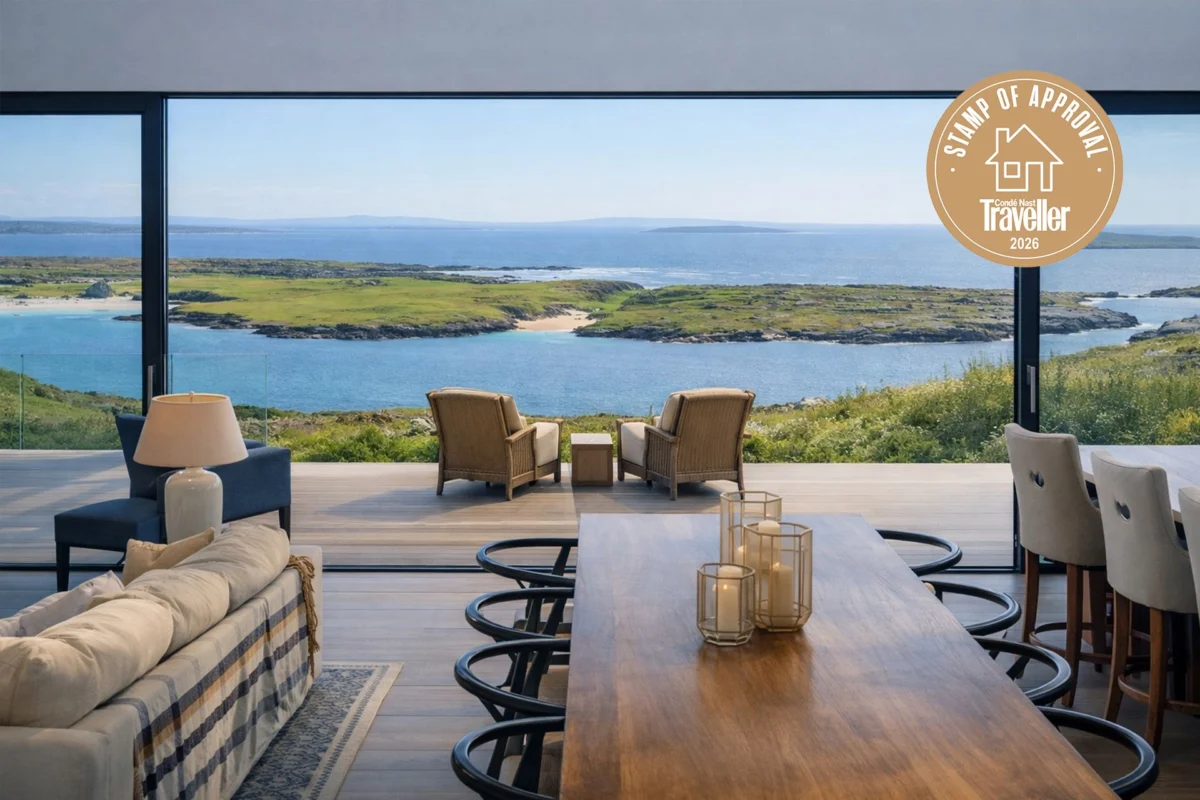
The rugged coastline of Connemara, situated in the west of Ireland, has long been defined by its dramatic topography, characterized by granite mountains, peat bogs, and a jagged Atlantic littoral. Within this landscape, Dog’s Bay stands as a geographical anomaly and a premier destination for both domestic and international visitors. Known for its distinct horseshoe shape and white sands, the bay is increasingly becoming a focal point for high-end architectural interventions that seek to balance the region’s traditional aesthetic with modern luxury requirements. One such project, the Brandy & Soda House—a glass-fronted modernist villa located near the village of Roundstone—represents a significant shift in the Irish luxury rental market, merging contemporary Australian design influences with the austere beauty of the Irish Atlantic coast.
The Geographical and Geological Context of Dog’s Bay
Dog’s Bay is frequently cited by geologists and environmentalists as one of the most significant coastal features in County Galway. Unlike the majority of Irish beaches, which are composed of quartz sand, the mile-long stretch of Dog’s Bay is made of biogenic carbonate sand. This "shell sand" is formed from the finely ground remains of foraminifera—tiny sea creatures—giving the beach its signature pearlescent white color and a texture that is notably softer than typical coastal sediment.
The bay is part of a tombolo, a rare coastal formation where a spit or bar connects an island to the mainland. In this case, Dog’s Bay is situated back-to-back with Gurteen Bay, separated by a fragile grassland ecosystem known as machair. This specific environment is protected under European Union conservation directives, as machair is one of the rarest habitats in Europe, found only on the west coasts of Ireland and Scotland. The preservation of this landscape has historically limited large-scale development, ensuring that new architectural projects, such as the Brandy & Soda House, must adhere to stringent environmental and aesthetic standards to maintain the visual integrity of the Connemara coastline.
Architectural Innovation: The Modernist Reimagining
The Brandy & Soda House is an exercise in "vernacular modernism," a style that respects local building traditions while utilizing modern materials and spatial configurations. The property was originally a derelict, traditional Irish cottage—a structure typical of the 19th-century rural landscape, characterized by thick stone walls, small windows, and a modest footprint designed to withstand the harsh Atlantic elements.
The renovation, led by Galway-born Damien McKeon and his Australian wife, Sarah Lucas, transformed the ruin into a glass-walled villa that emphasizes transparency and light. The most striking feature of the renovation is the 100-foot expanse of floor-to-ceiling glass that serves as the southern facade of the building. This design choice serves a dual purpose: it maximizes passive solar gain—a critical factor in the temperate but often overcast Irish climate—and provides an unobstructed panoramic view of the Atlantic Ocean and the distant Aran Islands.
Internally, the house features a pitch-roofed living and dining space that echoes the silhouette of the original cottage while expanding the volume to accommodate contemporary luxury standards. The inclusion of two primary suites, each equipped with walk-in wardrobes and sea-facing tubs, positions the property at the upper echelon of the "short-term stay" market. The design also incorporates a "kids’ wing" with bespoke bunk beds and an integrated home theater system, catering to the multi-generational travel trend that has seen a 25% increase in the luxury sector over the last five years, according to industry reports.
Chronology of Development and Construction
The transformation of the Brandy & Soda House followed a rigorous timeline that reflects the complexities of building in a remote, environmentally sensitive area:
- Site Acquisition (Circa 2018): McKeon and Lucas identified the property through an online listing. At the time of purchase, the site was heavily overgrown, requiring significant "bush bashing" to access the original stone structure.
- Design Phase (2018–2019): The owners collaborated to integrate "Aussie" design principles—characterized by open-plan living and a strong connection between indoor and outdoor spaces—with the Irish landscape. The goal was to create a structure that felt "elemental" rather than intrusive.
- Planning and Environmental Review (2019–2020): Given the proximity to the Dog’s Bay machair and the visibility of the site, the project underwent a detailed planning process to ensure the modernist glass structure did not detract from the "untamed" character of Connemara.
- Construction and Material Sourcing (2020–2022): Construction involved stabilizing the original stone masonry while installing the massive glass panels. The interior was finished with a mix of local materials (Connemara stone) and modern amenities (an electric Yamaha piano and high-end theater technology).
- Operational Launch (2023): The property was listed as a luxury rental, quickly becoming a flagship example of high-end "staycation" options on Ireland’s Wild Atlantic Way.
Economic Impact and the Luxury Rental Market
The emergence of properties like the Brandy & Soda House is a reflection of broader economic trends within the Irish tourism sector. Data from Fáilte Ireland, the national tourism development authority, indicates that the "Wild Atlantic Way" brand has contributed significantly to the regional economy since its inception in 2014. In 2023 alone, the west of Ireland saw a record influx of North American and European tourists seeking "isolated luxury"—private, high-end accommodations that offer proximity to nature without sacrificing modern comforts.
The pricing and positioning of the Brandy & Soda House cater to a specific demographic that prioritizes privacy and local authenticity. The "welcome hamper" provided to guests serves as a microcosm of the local economy, featuring products such as:

- Kylemore Abbey Preserves: Made by the Benedictine nuns at the nearby historic estate.
- Local Artisanal Cheeses: Sourced from farms across County Galway.
- Seaweed-Infused Salts: Utilizing the sustainable harvesting of Atlantic kelp, a growing industry in the region.
This "hyper-local" approach to hospitality ensures that the economic benefits of high-end tourism are distributed among local producers and artisans, rather than being confined to the property owners.
Cultural Context: Roundstone and the "Second-Home" Phenomenon
The village of Roundstone, located just minutes from the villa, provides the cultural backdrop for the Brandy & Soda House. Founded in the 1820s by Alexander Nimmo, Roundstone is one of the few planned villages in Ireland. Historically a fishing village, it has evolved into a seasonal hub for artists, writers, and affluent "second-home" owners.
The name "Brandy & Soda House" is itself a nod to local history, derived from the name of the lane leading to the property. This lane was traditionally used by locals walking to the pubs in Roundstone, such as O’Dowd’s and Vaughan’s. This connection to local nomenclature helps root the modernist building in the community’s collective memory, mitigating some of the tensions often associated with contemporary development in traditional areas.
However, the "second-home" culture in Roundstone remains a subject of socioeconomic analysis. While the influx of summer visitors and luxury renters provides a seasonal boost to the hospitality sector (particularly for businesses like Vaughan’s, known for its Killary mussels and crab claws), it also places pressure on local housing markets. The Brandy & Soda House represents a model where a derelict structure is revitalized, adding value to the landscape without displacing permanent residents from existing housing stock.
Implications for Future Regional Development
The success of the Brandy & Soda House suggests a clear trajectory for future development in Connemara and similar coastal regions. There is a demonstrable demand for architectural excellence that utilizes the landscape as its primary "wow factor."
Environmental Considerations: Future projects will likely need to incorporate even higher levels of sustainability. While the glass villa maximizes natural light, the integration of heat pumps and high-performance insulation is becoming standard for properties of this caliber to meet Ireland’s Climate Action Plan goals.
Tourism Trends: The property’s focus on "slow travel"—encouraging guests to cook large feasts in the 10-seat kitchen and engage with the local environment via sea swimming and walking—aligns with a global shift away from "tick-box" tourism toward immersive experiences.
Policy and Planning: The balance between preserving the "gloriously deserted" feel of Connemara in the winter and managing the "buzz" of the summer months remains a challenge for local authorities. Projects that repurpose existing ruins, rather than building on "greenfield" sites, are likely to receive more favorable reviews from both planning boards and the public.
In conclusion, the Brandy & Soda House is more than a luxury rental; it is a case study in how modern architectural thought can be applied to one of Europe’s most sensitive and beautiful landscapes. By honoring the geological uniqueness of Dog’s Bay and the historical context of Roundstone, the project demonstrates that the future of Irish rural architecture lies in a sophisticated blend of transparency, tradition, and local integration. As Connemara continues to attract global attention, such properties will play a pivotal role in defining the region’s identity in the 21st century.