Ana Megawati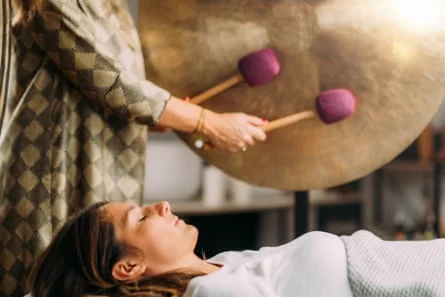
The contemporary wellness landscape is witnessing a significant evolution, moving beyond traditional spa treatments to embrace experiential therapies, with "sound baths" emerging as a particularly prominent trend. While the simple act of soaking in a warm bath has long been a solace for many, a new form of immersion, one in resonant sound, is capturing widespread attention and a burgeoning market share. This practice, involving participants reclining while practitioners generate therapeutic soundscapes with instruments like gongs, singing bowls, and chimes, has seen an exponential surge in popularity over the past decade, fueled by social media visibility and a global search for stress reduction.
Understanding the Phenomenon: What Are Sound Baths?
At its core, a sound bath is an immersive, full-body listening experience designed to induce a state of deep relaxation and meditative calm. Unlike a traditional musical performance, the goal is not aesthetic appreciation but rather a therapeutic journey facilitated by specific frequencies and vibrations. Participants typically lie on yoga mats, sometimes suspended in fabric cocoons or even floating on inflatable loungers in aquatic settings, as skilled practitioners, often robed, orchestrate a symphony of resonant sounds. Instruments commonly employed include Himalayan and crystal singing bowls, large gongs, chimes, tuning forks, and various percussion instruments. These sessions are increasingly offered in diverse venues, from high-end wellness clubs boasting surround-sound chambers and subwoofers to serene outdoor locations like Sydney Harbour, where the gentle rocking of the tide may complement the auditory experience.
The marketing surrounding these classes often posits lofty claims, suggesting the sounds can "soothe and calm your nervous system," "penetrate every cell in your body," and that specific frequencies promote "healing." Singing bowls, revered for their shimmering, "cosmic sound," are frequently lauded for their purported ability to alleviate "chronic symptoms like pain, fatigue, anxiety, or emotional overwhelm." This blend of ancient tradition, modern marketing, and the pervasive influence of social media has propelled sound baths from niche practice to a mainstream wellness offering. Google Trends data, for instance, illustrates a dramatic increase in searches for "sound bath" globally and particularly in regions like Australia, indicating a substantial growth in public interest and accessibility over the last ten years.
A Deep Dive into History and Ancient Roots
While the recent surge in sound bath popularity might suggest a novel invention, the therapeutic application of sound is deeply rooted in human history, stretching back millennia across diverse cultures. Ancient civilizations intuitively understood the power of sound and vibration to influence human states of being.
- Ancient Egypt: Records suggest the use of vowel sound chanting in healing rituals, believed to resonate with different energy centers in the body. Temples incorporated acoustic designs that amplified specific sounds, fostering altered states of consciousness.
- Ancient Greece: Physicians like Pythagoras explored the mathematical ratios of music and their effects on the human psyche. He reportedly used specific musical modes and melodies to address emotional imbalances and even physical ailments, referring to it as "music medicine."
- Indigenous Cultures: Aboriginal Australians have used the didgeridoo for healing and storytelling for thousands of years, with its deep vibrations believed to clear blockages and promote physical and spiritual well-being. Native American cultures incorporate drums, rattles, and vocalizations in their healing ceremonies.
- Tibetan Buddhism: Perhaps the most direct lineage to modern sound baths comes from the Tibetan tradition. Tibetan singing bowls, along with gongs and chanting, have been used for centuries in meditation and ritualistic practices to induce deep relaxation, facilitate spiritual awakening, and promote healing. The intricate harmonics produced by these bowls are believed to align the body’s energy centers.
The transition from these ancient, often spiritual or ritualistic applications to the contemporary wellness trend is a testament to humanity’s enduring quest for holistic well-being. The modern sound bath movement has largely secularized and commercialized these practices, repackaging them for a global audience seeking alternatives or complements to conventional stress management techniques. The convenience and accessibility offered by modern wellness centers and digital platforms have allowed these ancient traditions to find new life and relevance in the 21st century.
The Scientific Inquiry: Do the Claims Resonate?
The purported benefits of sound baths, ranging from nervous system regulation to cellular healing, invite scientific scrutiny. While some marketing claims venture into pseudoscientific territory, experts acknowledge a plausible basis for certain effects, primarily related to relaxation and mood enhancement.
Dr. Vince Polito, a senior lecturer in psychological sciences at Macquarie University, highlights the established field of music psychology. "There’s a rich field of music psychology that’s all about the impacts of different types of sounds on human psychology and human physiology," he notes. It is entirely plausible, he suggests, that sound baths can positively influence mood and induce relaxation.
Existing research, though still developing, offers some supportive data:
- 2016 Observational Study: A study published in the Journal of Evidence-Based Complementary & Alternative Medicine examined the effects of a meditation session incorporating Tibetan singing bowls. Participants reported significant reductions in tension, anger, and fatigue post-session. While this observational study lacked a control group and thus cannot definitively establish causation due to potential biases (e.g., placebo effect, expectation bias), it provided preliminary evidence of subjective improvements.
- Randomized Controlled Trial (RCT): A more robust study, an RCT involving breast cancer patients, linked Tibetan sound meditation to improvements in cognitive function and mental health. This type of study, with its control group, offers stronger evidence of a causal link, suggesting therapeutic potential in specific populations.
- Mindfulness Meditation Research: The broader context of mindfulness meditation, which sound baths often facilitate, is well-researched. Mindfulness practices have been consistently linked to reductions in anxiety, depression, and improvements in sleep quality (insomnia). Sound, in this context, can serve as a focal point for attention, guiding participants into a meditative state.
Dr. Sandra Garrido, a senior research fellow at the University of Sydney’s school of psychology, emphasizes that the effects of sound on well-being are largely mediated by perception and interpretation, rather than inherent properties of specific frequencies alone. "Like anything in the wellness space, its benefits can definitely be talked up," she cautions. However, she acknowledges key mechanisms:
- Rhythmic Entrainment: Research indicates that human physiological rhythms, particularly breathing, can synchronize with external beats without conscious effort – a phenomenon known as "rhythmic entrainment." The slow, deliberate rhythms of gongs and bowls can encourage slower, deeper breathing, activating the parasympathetic nervous system responsible for "rest and digest" functions.
- Emotional Induction: Music is a potent inducer of emotion, capable of evoking happiness, sadness, or calm. Slower tempos, sustained tones, and an absence of distracting melodic or rhythmic complexity, characteristic of sound bath music, are conducive to relaxation.
- Focused Attention: Garrido points out that a significant benefit derives from simply focusing one’s attention on the sounds, thereby quieting the "monkey mind." "It’s not so much the music itself in this process as… focusing your attention on one thing, and trying to quiet the mind," she states. "Any kind of music that you are focusing on can be a meditative experience."
The concept of "cosmic sound" or "penetrating every cell" lacks strong empirical support in a purely scientific sense. While sound waves are vibrations that travel through the body’s water content, the specific "healing" properties attributed to certain frequencies often fall outside current scientific understanding. The benefits observed are more likely attributable to the profound relaxation response, reduced sympathetic nervous system activity, and the psychological effects of a guided meditative experience.

Distinguishing Wellness Practices from Clinical Therapy
An important distinction must be drawn between sound baths as a wellness experience and music therapy as a regulated clinical practice. Dr. Amanda Krause, a senior lecturer in psychology at James Cook University and president of the Australian Music and Psychology Society, clarifies this. "There are long histories of using music and sound in therapeutic ways," she says, pointing to extensive research linking both listening to and producing music to over 500 benefits, including enhanced social, cognitive, physical, and emotional well-being.
This robust body of research underpins the profession of music therapy. Music therapists are highly trained, often holding master’s degrees, and are registered professionals in countries like Australia. They work with diverse client populations in clinical settings such as hospitals, schools, and rehabilitation centers, using music intervention to achieve specific therapeutic goals, such as pain management, cognitive rehabilitation, emotional expression, or social skill development. Their practice is guided by ethical codes and evidence-based protocols.
In contrast, the sound bath industry largely lacks a single, equivalent regulatory body for its practitioners. While many practitioners are deeply committed and well-intentioned, the absence of standardized training, certification, and oversight means quality and safety can vary significantly. This regulatory vacuum allows for a broader spectrum of claims and practices, some of which may exceed what current scientific evidence supports.
However, the communal aspect of sound baths is also recognized as beneficial. Dr. Garrido highlights that throughout most of human history, music has been intrinsically linked to social connection. The shared experience of a sound bath can foster a sense of community and collective well-being, which is often missing in an increasingly individualized world. "It’s a helpful, healthy thing," she concludes, having attended sound baths herself and found them relaxing, but advises against overpaying for what she considers "a nice experience" rather than a "miracle cure."
The Business of Bliss: Economic Implications
The rise of sound baths is not just a cultural phenomenon; it represents a significant segment of the booming global wellness industry. Valued at over $4.5 trillion annually, the wellness market encompasses everything from fitness and nutrition to mindfulness and complementary therapies. Sound baths fit squarely within the "mind-body" segment, attracting consumers willing to invest in experiences that promise stress reduction and improved mental clarity.
The pricing for sound bath sessions varies widely, from accessible community classes costing $30-$50 to high-end private sessions or exclusive retreats that can run into hundreds or even thousands of dollars. This tiered pricing reflects the diverse offerings, from simple group sessions to elaborate experiences in premium venues with additional amenities. The commercial success is evident in the proliferation of dedicated sound healing studios, the integration of sound baths into luxury spas and hotels, and the growing market for personal sound healing instruments and online courses.
However, this commercialization also brings challenges. The allure of quick profits can attract individuals with minimal training, potentially diluting the quality of offerings and leading to inflated claims. The lack of standardized regulation makes it difficult for consumers to discern truly qualified practitioners from those who may be capitalizing on a trend without adequate knowledge or skill. This underscores the need for consumer discernment and critical evaluation of marketing rhetoric.
Broader Implications and the Future of Sound Wellness
The growing popularity of sound baths reflects a broader societal trend: a pervasive desire for effective coping mechanisms against chronic stress, anxiety, and the relentless pace of modern life. In an era dominated by digital overload and constant stimulation, the promise of a technology-free, deeply immersive experience offers a compelling antidote. People are increasingly seeking holistic approaches to health that address mental, emotional, and spiritual well-being, not just physical symptoms.
The implications of this trend are multifaceted:
- Democratization of Mindfulness: Sound baths offer an accessible entry point to meditative practices for individuals who may find traditional silent meditation challenging. The guided auditory experience provides a focal point, making it easier to quiet the mind.
- Integration into Mainstream Healthcare: As research continues to strengthen the evidence base, there is potential for sound-based interventions to be more formally integrated into complementary healthcare practices, particularly for stress management, pain relief, and mental health support.
- Ethical Considerations: The wellness industry faces ongoing ethical challenges, particularly regarding the differentiation between scientifically supported benefits and exaggerated claims. Practitioners and promoters of sound baths have a responsibility to be transparent about what their services can and cannot achieve.
- Technological Advancements: Future developments might see the integration of advanced biometric feedback during sound baths, allowing for personalized soundscapes tailored to an individual’s physiological responses, further blurring the lines between ancient wisdom and modern science.
Ultimately, while sound baths may not be the "miracle cure" some marketing suggests, their capacity to induce deep relaxation, foster mindfulness, and provide a communal, sensory-rich experience is undeniable. Supported by a rich historical lineage and emerging scientific understanding, they represent a significant and evolving facet of the contemporary wellness movement, offering a resonant refuge in an often-cacophonous world. As the trend matures, a continued emphasis on credible research, professional standards, and responsible communication will be crucial for its sustained and beneficial impact.