Jono Maryono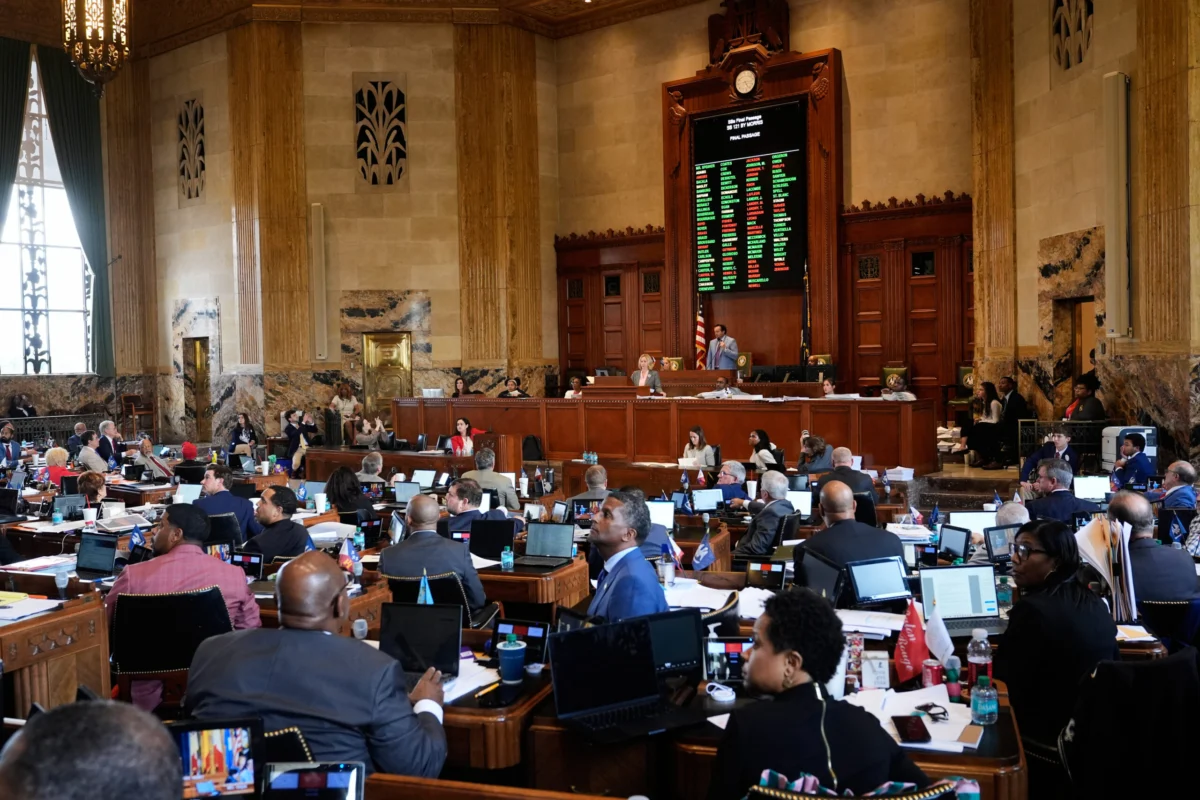
Louisiana’s legislature has enacted a new map of congressional districts, a move widely seen as strategically designed to enhance the Republican Party’s chances of securing an additional seat in the U.S. House of Representatives. This redistricting effort comes after a pivotal U.S. Supreme Court ruling that invalidated the state’s previous map, citing it as an illegal racial gerrymander. The controversial decision, handed down in April in the case of Louisiana v. Callais, struck down the existing map precisely because it was drawn to include two majority-Black congressional districts, both currently represented by Democratic incumbents.
The passage of the new map by the Louisiana State Senate on Friday, with a vote of 28-10, marks a significant development in the ongoing national battle over electoral district lines. This legislative action directly follows the Supreme Court’s determination that the prior map violated the spirit, if not the letter, of the landmark 1965 Voting Rights Act, a cornerstone of federal legislation intended to protect minority voting rights and prevent discrimination at the ballot box. Ironically, the Court’s decision has been interpreted by many as weakening the very protections the Voting Rights Act was established to uphold, creating a complex legal and political landscape for minority representation.
The implications of this redistricting are profound, particularly for Louisiana’s Black population, which has historically been a significant voting bloc. The newly approved map effectively eliminates one of the state’s two majority-Black districts, a move that Democrats argue is a thinly veiled attempt to dilute Black voting power and consolidate Republican electoral strength. This development occurs amidst a broader national trend, fueled in part by former President Donald Trump’s efforts to fortify the Republican Party’s slim majority in the House of Representatives heading into the midterm elections. Louisiana is one of several Southern states that have recently undertaken redistricting initiatives, with Republican lawmakers in each state seeking to redraw district boundaries to their party’s advantage.
The Road to a New Map: A Timeline of Legal and Political Maneuvers
The path to the current congressional map has been a complex and contentious one, marked by significant legal challenges and political maneuvering.
- 2022: Following the decennial census, Louisiana’s legislature drew a congressional map that included two majority-Black districts. This map was enacted and used for the 2022 elections.
- 2023: Civil rights organizations and voters filed lawsuits, alleging that the map drawn after the 2020 census diluted Black voting strength and constituted racial gerrymandering. They argued that a second majority-Black district should have been created, consistent with the state’s Black population demographics.
- January 2024: A three-judge federal panel ruled that Louisiana’s congressional map likely violated Section 2 of the Voting Rights Act, which prohibits racial discrimination in voting, and ordered the state to draw a new map with a second majority-Black district.
- April 30, 2024: The U.S. Supreme Court, in a 6-3 decision, reversed the lower court’s ruling. The Court concluded that the plaintiffs had not met the burden of proof required to show that the existing map was a racial gerrymander that diluted Black voting strength. The majority opinion stated that the district court had improperly applied the legal standard for proving a violation of the Voting Rights Act.
- May 2024: Following the Supreme Court’s decision, Louisiana Governor Jeff Landry called a special legislative session to redraw the congressional map. The legislature debated various proposals.
- May 16, 2024: Governor Landry postponed Louisiana’s closed U.S. House primary, originally scheduled for this date, to allow time for the implementation of a new congressional map.
- May 24, 2024: The Louisiana State Senate passed the new congressional map by a vote of 28-10. The map was subsequently approved by the legislature.
- Present: The newly passed map awaits Governor Jeff Landry’s signature. Legal challenges are anticipated.
Strategic Realignment: Republican Gains and Democratic Concerns
The newly drawn map is projected to shift the political landscape in Louisiana, with Republicans aiming to secure a fifth congressional seat. Currently, Republicans hold four of the state’s six congressional seats. The revised map is designed to make at least one additional seat, currently held by a Democrat, more competitive for the Republican Party.
Republican lawmakers involved in the redistricting process have asserted that party affiliation, rather than race, was the primary driver behind the new district boundaries. State Senator Jay Morris, the sponsor of the bill, stated that the demographers were instructed to avoid using race as a factor in drawing the districts. He explicitly mentioned an intention to "purposely put more Democrats into District 2 to make the remaining districts better performing for Republicans." This statement, while framed in terms of party registration, has been interpreted by opponents as a direct admission of partisan gerrymandering that has a disproportionate impact on racial demographics, given the strong correlation between Black voters and the Democratic Party in Louisiana.
Conversely, Democratic legislators have voiced strong opposition, arguing that the map constitutes a racial gerrymander and is designed to disenfranchise Black voters. State Senator Royce Duplessis characterized Louisiana’s actions as participating in a "vicious, vicious race to the bottom," suggesting that the state is engaging in a politically motivated redistricting effort that undermines democratic principles. He pointed to other Southern states, such as South Carolina, which had opted not to redraw their maps mid-election cycle, as examples of a more responsible approach.
The proposed map redraws the boundaries of the district currently represented by Democratic Representative Cleo Fields. The new configuration reportedly consolidates predominantly white communities in the Baton Rouge area and southern Louisiana, potentially diluting the Democratic voting strength in that district. Additionally, parts of Baton Rouge are slated to be added to the heavily Democratic, majority-Black district based in New Orleans, which is represented by Democratic Representative Troy Carter. This consolidation strategy aims to create more compact, reliably Republican districts while packing Democratic voters, particularly Black voters, into fewer districts.
Legal Repercussions and the Future of Voting Rights
The passage of the new map has ignited immediate calls for further legal action. The American Civil Liberties Union (ACLU) of Louisiana has indicated its readiness to challenge the map in court, describing it as a "racial gerrymander hiding behind the thin veneer of partisanship." The ACLU’s stance underscores the ongoing tension between partisan advantage and the protection of minority voting rights, a central theme in redistricting battles across the nation. "This fight is just beginning," the ACLU branch declared, signaling a protracted legal struggle ahead.
Governor Jeff Landry is expected to sign the new map into law, a move that will finalize the new district configurations. The state’s primary election for U.S. House seats, initially postponed, has been rescheduled to November 3, aligning with the general election date. This postponement was crucial to allow lawmakers sufficient time to draw and pass a new map, ensuring that candidates would compete under the newly established district boundaries. Governor Landry also signed a law making the U.S. House primary an open primary, allowing all candidates to appear on the same ballot regardless of party affiliation, a change that could further complicate electoral outcomes.
The Supreme Court’s decision in Louisiana v. Callais has been a focal point of concern for voting rights advocates. Critics argue that the ruling, by setting a higher bar for proving racial gerrymandering under the Voting Rights Act, has emboldened states to draw maps that may not explicitly mention race but effectively diminish minority representation through partisan means. The Court’s majority, however, maintained that the plaintiffs had failed to present sufficient evidence to demonstrate that race, rather than partisan considerations, was the predominant factor in drawing the challenged district lines.
A National Redistricting Landscape: Partisan Battles and Shifting Alliances
Louisiana’s redistricting battle is not an isolated incident but rather a prominent example of a nationwide trend. In the wake of the Supreme Court’s decision, other Republican-controlled Southern states have also moved to redraw their congressional maps, leveraging what they perceive as a more permissive legal environment for partisan redistricting. This has led to a broader contest over electoral district lines, with Republicans generally appearing to gain more ground in this redistricting cycle than Democrats.
The implications for the composition of the U.S. House of Representatives are significant. Republican strategists estimate that their redistricting efforts could yield as many as 15 additional seats. Conversely, Democrats are hopeful that their own redistricting initiatives, particularly in states like California and Utah, could result in a gain of six seats. The narrow majority currently held by Republicans in the House means that even small shifts in seat numbers can have a substantial impact on legislative control.
However, the redistricting landscape is dynamic, and legal challenges and counter-moves continue to emerge. In Wisconsin, a recent decision by the state’s liberal-controlled Supreme Court to hear an appeal concerning the state’s congressional districts offers a potential avenue for Democrats to pick up seats in future elections, though not for the upcoming 2026 contest. The lawsuit, filed by a coalition of business executives, aims to redraw the state’s Republican-leaning congressional districts, where Republicans currently hold six of the eight House seats, with only two considered competitive. While a lower court had dismissed the case, the state Supreme Court’s agreement to hear the appeal suggests a potential for significant electoral shifts in the years to come, illustrating the ongoing and multifaceted nature of the fight for fair representation.