Danny Garick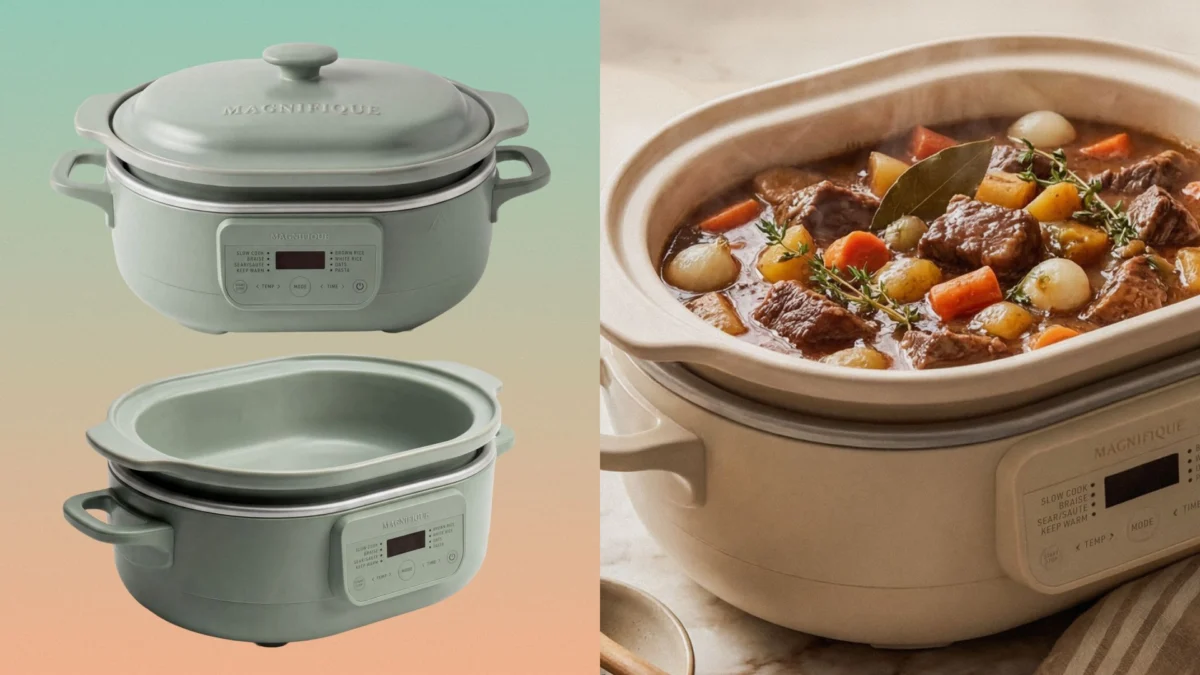
The landscape of countertop kitchen appliances has undergone a significant transformation over the last decade, moving from single-use devices to versatile multicookers. While the traditional slow cooker has remained a staple of the American kitchen since its rise to prominence in the 1970s, modern consumers are increasingly seeking alternatives that address long-standing issues of texture loss and flavor dilution. The arrival of the Magnifique Claypot Multicooker marks a notable entry into this market, promising to bridge the gap between the convenience of automated cooking and the culinary depth associated with traditional clay vessel techniques. Priced at approximately $180, this device positions itself as a premium, health-conscious alternative to standard stainless steel or non-stick multicookers.
Technical Specifications and Material Composition
The primary differentiator of the Magnifique Claypot Multicooker is its construction. Unlike the majority of modern slow cookers that utilize glazed stoneware or coated aluminum, the Magnifique features a removable pot and lid crafted from 100% kaolin clay. In the field of mineralogy, kaolin is prized for its thermal stability and durability. The material used in this device ranks at 8.5 on the Mohs scale of mineral hardness—a significant metric when compared to glazed aluminum cookware, which typically ranks at 2.5, and diamonds, which sit at the top of the scale at 10.

This high level of hardness contributes to the pot’s durability and its ability to withstand high temperatures without the risk of cracking or degrading. Furthermore, the brand emphasizes a "toxin-free" profile, asserting that the clay is free of lead, cadmium, and per- and polyfluoroalkyl substances (PFAS). While legacy brands like Crock-Pot maintain that their silicate glazes meet or exceed FDA safety requirements for heavy metals, Magnifique targets the growing demographic of "clean-cooking" enthusiasts who prefer unglazed or naturally glazed materials to eliminate even trace exposure to synthetic chemicals.
Chronology of Performance Testing
To evaluate the functional versatility of the Magnifique Claypot Multicooker, a multi-week testing protocol was established, covering a spectrum of culinary applications from high-heat searing to delicate fermentation.
Phase I: High-Heat Integration and Searing
The testing began with a classic red wine beef stew, a dish that traditionally requires a separate Dutch oven for searing to achieve a Maillard reaction. Most standard slow cookers and even many modern pressure cookers struggle to reach the temperatures necessary for effective browning. However, the Magnifique’s "Sear/Sauté" function is engineered to reach temperatures up to 450°F. During testing, the beef chunks achieved a deep crust, and a substantial fond—the caramelized browned bits essential for flavor—developed on the bottom of the clay pot. This suggests that the device can effectively replace a stovetop sauté pan for the initial stages of braising.

Phase II: Low-Slow Thermal Retention
The second phase focused on the "Slow Cook" setting. Utilizing the same beef stew, the device was set to "Low." A significant observation during this stage was the speed of the cooking process. Due to the thermal mass of the kaolin clay, which traps and radiates heat more efficiently than metal, the beef reached an optimal state of tenderness in three hours—roughly half the time expected in a traditional ceramic slow cooker. The result was a savory, concentrated sauce, though the steam release hole in the clay lid necessitated the occasional addition of water to prevent over-reduction.
Phase III: Grain and Starch Management
The device includes dedicated settings for oats, pasta, white rice, and brown rice. These functions utilize "liquid-sensing technology," designed to automatically shut off the heat once the moisture has been absorbed.
- Oats: The device took approximately 10 minutes to preheat, with a total cooking time of 30 minutes. While effective, the lack of manual temperature control in this mode led to minor sticking at the bottom, requiring intermittent stirring.
- Pasta: Using a one-pot Puttanesca recipe, the "Pasta" mode successfully cooked ditalini to an al dente texture in exactly 10 minutes. This aligns with standard stovetop timings, though the automation provides a "set-and-forget" advantage.
- Rice: This proved to be the most challenging category. Despite following the user manual’s measurements, medium-grain white rice exhibited browning and sticking on the bottom. Analysts suggest the wide, shallow shape of the clay pot may facilitate faster evaporation than the tall, narrow design of dedicated rice cookers.
Phase IV: Specialized Functions and Fermentation
The final testing phase involved braising a whole chicken and attempting a homemade yogurt recipe. The "Braise" setting, which operates similarly to the "High" slow-cook setting, processed a whole chicken soup in 90 minutes. The yogurt trial, however, highlighted the complexities of clay-based fermentation. The process requires heating milk to 180°F, cooling it to 110°F, and then insulating the pot with towels for eight hours. Due to the high thermal inertia of the clay, regulating these specific temperature drops proved difficult for the average home user, resulting in a thinner consistency than commercially produced yogurt.

Comparative Market Analysis
The Magnifique enters a competitive field currently occupied by established players like Vitaclay and the multi-functional Instant Pot. However, the Magnifique’s design philosophy leans closer to traditional "slow-food" movements.
| Feature | Magnifique Claypot | Traditional Slow Cooker | Standard Instant Pot |
|---|---|---|---|
| Material | Kaolin Clay | Glazed Stoneware | Stainless Steel/Non-stick |
| Max Sear Temp | ~450°F | N/A (usually low) | ~340°F – 400°F |
| Health Profile | PFAS/Lead Free | FDA Compliant Glaze | Stainless Steel (Safe) |
| Heat Distribution | Bottom & Side | Bottom Only | Bottom Only |
| Oven Safe Pot | Yes | Often Yes | No |
The inclusion of both bottom and side heating elements in the Magnifique base is a technical upgrade over budget slow cookers that rely solely on a base heating plate. This wrap-around heat mimics the environment of a professional oven, contributing to the "faster" slow-cooking times observed during testing.
Official Responses and Operational Insights
Following the testing period, inquiries were made to Magnifique representatives regarding the ambiguity of certain settings. A brand spokesperson clarified that the "Braise" function is specifically calibrated to be used following a high-heat sear, providing a more intense heat curve than the "Slow Cook" setting.

Regarding the "Pasta" and "Rice" settings, the company confirmed that the internal sensors monitor the resistance and humidity within the pot. However, they acknowledged that for smaller portions of grains, the high heat-retention properties of the clay might lead to localized "hot spots" in the center of the pot. They recommend stirring at least once during the cycle to ensure even moisture distribution, a step that somewhat mitigates the "automatic" nature of the device but improves the culinary outcome.
Broader Impact and Implications for the Appliance Industry
The success and reception of the Magnifique Claypot Multicooker signal a broader shift in consumer behavior. As home cooks become more sophisticated, there is a declining interest in "mushy" textures often produced by 20th-century slow cookers. The demand is shifting toward appliances that can brown, reduce, and braise within a single vessel without sacrificing the chemical purity of the cooking surface.
From an environmental and economic perspective, the $180 price point places the Magnifique in the "investment" category of kitchenware. While more expensive than a basic $30 Crock-Pot, its ability to function as a Dutch oven, a serving dish, and a multicooker offers a value proposition based on kitchen consolidation. For urban dwellers with limited cabinet space, the aesthetic design—available in earthy tones like Sage and Oatmeal—allows the device to remain on the counter as a permanent fixture.

Final Assessment
The Magnifique Claypot Multicooker represents a successful fusion of ancient material science and modern automation. While it does not entirely render the dedicated rice cooker obsolete and requires a learning curve regarding its "hot spots" during sautéing, its performance in meat-heavy stews and braises is superior to standard metal-lined multicookers. Its primary strength lies in its thermal efficiency and its commitment to a PFAS-free construction. For the modern consumer concerned with both the quality of their food and the safety of their cookware, the Magnifique offers a compelling, albeit premium, solution to the limitations of traditional slow cooking.