Jono Maryono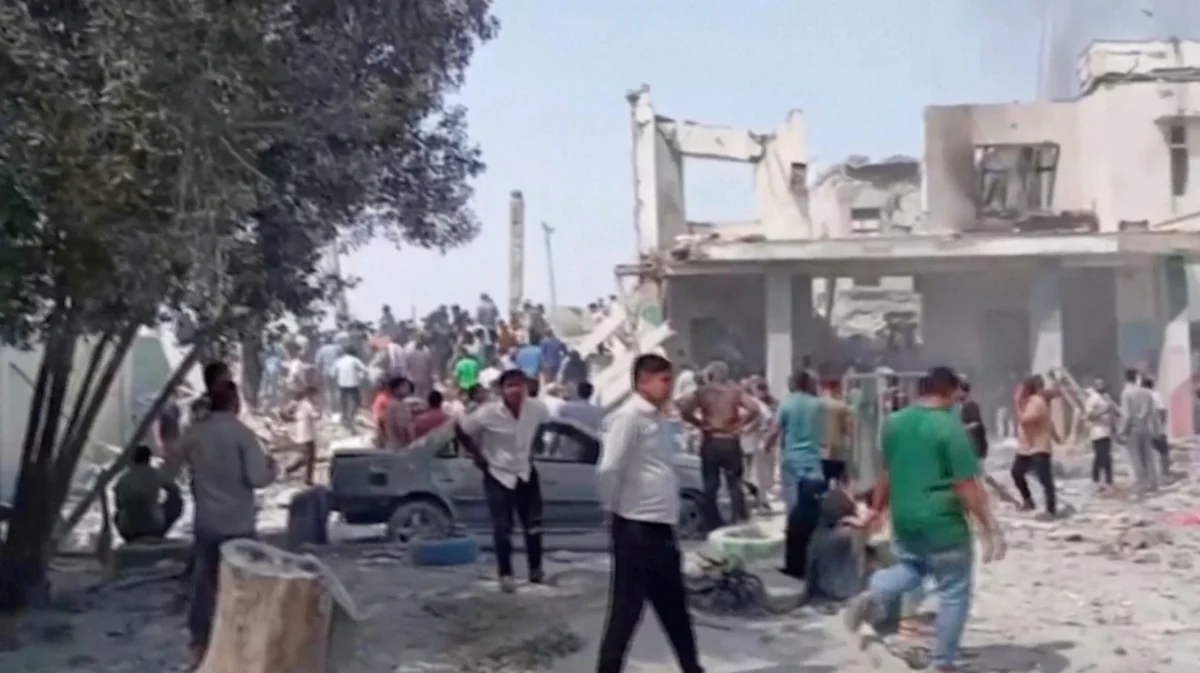
For decades, leaders implicated in war crimes often sought refuge in pleas of ignorance or justifications of unavoidable mistakes, aiming to distance themselves from culpability. However, a disturbing shift has emerged in the Middle East, characterized by a swaggering contempt for established international norms. The United States, Israel, and Iran have, in recent conflicts, demonstrated a marked tendency to dismiss, mock, or outright flout the international laws designed to protect civilian populations. If the international community fails to urgently reassert its commitment to these foundational principles, it risks acquiescing to their systemic destruction, ushering in an era where might unequivocally trumps right.
Escalation and Rhetoric: A New Era of Disregard
The current geopolitical climate is marked by unprecedented pronouncements from high-ranking officials that openly challenge the tenets of international humanitarian law. US President Donald Trump, in a widely reported interview with The New York Times, explicitly stated his perceived independence from international legal frameworks, asserting that his only constraint was his "own morality." This sentiment was echoed and amplified by Defense Secretary Pete Hegseth, who has publicly disparaged "tepid legality" in favor of what he termed "maximum lethality." Their rhetoric, particularly concerning the ongoing US-Israeli military campaign against Iran, which has now entered its second month, has signaled a profound disregard for the safety and well-being of civilian populations caught in the crossfire.
The aggressive posture was starkly illustrated following the US announcement of the "demolition" of Iran’s Kharg Island. President Trump’s subsequent comment to NBC News, "We may hit it a few more times just for fun," sent shockwaves through diplomatic circles and human rights organizations. Similarly, Defense Secretary Hegseth’s declaration that "no quarter" would be given to enemies in Iran carries chilling implications. This phrase, historically associated with a refusal to accept surrenders and a license to kill combatants who lay down their arms, represents a textbook example of conduct that US military academies themselves identify as a war crime. Such pronouncements not only incite further violence but also undermine the very fabric of rules-based warfare.
A Pattern of Contempt: Echoes Across Borders
The Trump administration’s stance is not an isolated incident. The language employed by Israeli Defense Minister Israel Katz, particularly in relation to the escalating tensions along Israel’s northern border with Lebanon, bears an eerie resemblance to the devastating conflict in Gaza. Katz has threatened the demolition of homes across southern Lebanon and has signaled an intent to prevent hundreds of thousands of displaced civilians from returning to their ancestral lands. This approach not only inflicts collective punishment but also directly violates established principles of international humanitarian law, which mandate the protection of civilian infrastructure and the facilitation of safe returns for displaced persons.
Iran’s Islamic Revolutionary Guard Corps (IRGC) has also adopted a confrontational stance that deliberately blurs the lines between military and civilian targets. The IRGC has declared US banks, investment firms, and commercial shipping interests within the region as legitimate targets, effectively classifying civilian economic assets as instruments of war. The IRGC’s spokesman issued a stark warning to Iranians, indicating that any street protests would be met with "an even harsher blow" than the January crackdowns, during which security forces are reported to have killed thousands across the country. A state television presenter further escalated the rhetoric, threatening opponents in the diaspora with consequences that would leave their "mothers sit in mourning," a thinly veiled threat of lethal retribution. These statements, emanating from multiple belligerents, underscore a deeply concerning trend of open defiance and a chilling indifference to the sanctity of civilian life.
The Human Cost: Data and Displacement
The human toll of these escalating conflicts is already staggering, painting a grim picture of widespread suffering and displacement. Preliminary reports indicate that over 2,000 individuals have been killed in Iran, with more than 1,200 fatalities reported in Lebanon. In Israel, the death toll stands at 17. Cumulatively, several million people across the Gulf, Israel, and Lebanon have been displaced or forced to flee their homes, creating a humanitarian crisis of immense proportions.
Further compounding the tragedy, a preliminary US military report suggests that US forces were responsible for a devastating attack on an elementary school in Minab, Iran, resulting in the deaths of over 170 children and school staff. The use of white phosphorus, a weapon that can cause horrific burns, by the Israeli military on Lebanese residential areas, despite clear prohibitions against its use in populated zones, has drawn widespread condemnation. Iran’s reported use of internationally banned cluster munitions against Israeli cities and its attacks on commercial vessels in the Strait of Hormuz further illustrate the deployment of weapons that carry a high risk of civilian harm and violate international agreements.
A Legacy of Impunity: The Gaza Precedent
The current crisis is not unfolding in a vacuum. The erosion of respect for international law has been a gradual process, significantly influenced by what many perceive as a sustained pattern of impunity. The unwavering support provided by the United States to Israel during its military operations in Gaza, characterized by the destruction of essential infrastructure such as hospitals and water systems, and relentless airstrikes that reduced entire neighborhoods to rubble, leading to the deaths of tens of thousands of Palestinian civilians over two and a half years, has fostered a dangerous perception that certain states are above accountability. This perceived double standard has profoundly corroded global respect for international legal frameworks.
When Iran targeted Gulf energy infrastructure, the international community responded with swift condemnation. However, a muted response was observed when Israel deployed white phosphorus in Lebanese residential areas. This selective application of outrage highlights a critical flaw in the international response: the tendency to condemn violations only when committed by adversaries. For the rules of war to retain their legitimacy, condemnation must be universal and irrespective of the perpetrator. Leaders must unequivocally denounce attacks on Iranian power plants, Lebanese homes, and Gulf civilian facilities as violations of the laws of war, regardless of the identity of the aggressor. Failure to do so risks reducing international law to a mere tool for political leverage, wielded only against rivals.
The Responsibility to Ensure Compliance
The Geneva Conventions place a clear obligation on all nations not only to adhere to the laws of war but also to actively promote global respect for them. This includes a crucial responsibility to refrain from arming forces credibly accused of violating these laws. Yet, arms continue to flow to belligerents on multiple sides of these conflicts, with little apparent consideration for the potential consequences for civilian populations. European governments that supply weapons or grant vital logistical support, such as overflight and basing rights, to forces engaged in the unlawful bombing of civilians, are not merely neutral observers. If the actions of US and Israeli forces align with the reckless rhetoric of their leaders, nations that provide arms or assistance could find themselves complicit in grave war crimes.
Documentation and Accountability: The Race Against Time
As seen in past conflicts, such as the war in the former Yugoslavia and more recently in Ukraine, the critical work of documenting and ensuring accountability for war crimes must commence while hostilities are still ongoing. The current belligerents in the Middle East appear acutely aware of this imperative and are actively working to thwart such efforts. Iran has imposed a nationwide internet shutdown, restricting the flow of information and making it difficult for citizens to document potential abuses. Individuals sharing footage of strikes have reportedly been detained. Israel has imposed restrictions on live broadcasts and has detained journalists, further limiting independent reporting. Gulf states have arrested citizens for sharing images and information online, demonstrating a coordinated effort to control the narrative and suppress evidence. In the United States, the Federal Communications Commission has reportedly threatened broadcasters’ licenses over war coverage deemed unfavorable to the Trump administration.
Governments possessing advanced intelligence capabilities have a critical role to play in preserving and disseminating evidence of potential war crimes. This includes the collection of satellite imagery, communications intercepts, and open-source footage. United Nations investigative bodies require immediate and substantial additional resources to effectively carry out their mandates. Furthermore, governments worldwide must unequivocally articulate the paramount importance of justice for war crimes.
The danger of delaying this work until the cessation of hostilities is significant. Evidence can be deliberately destroyed or disappear, and the political will for accountability can rapidly shift as global attention moves to other pressing issues. The belligerents are undoubtedly aware of this dynamic and may be strategically counting on the passage of time to erode the potential for justice.
The Peril of a Lawless World
Leaders who openly repudiate the laws of war may be operating under the misguided belief that they stand to benefit from a world devoid of rules, where brute force dictates outcomes and all civilian harm is dismissed as unavoidable collateral damage. However, by abandoning the principle of non-reciprocity – the understanding that one side’s violations do not justify a similar disregard for the law by the other – they have inadvertently fueled cycles of retaliatory strikes. These escalating tit-for-tat actions place not only their adversaries’ civilian populations but also their own troops and citizens in grave danger.
Those who recognize the value of the existing international legal framework in curbing the barbarity of war must now take a stand. The alternative is a future where the principles that have, however imperfectly, sought to mitigate the horrors of conflict are irrevocably lost. Future generations will undoubtedly ask why, in this critical moment, inaction prevailed over the defense of a system designed to protect the most vulnerable. The time to act is now, before the foundations of international law are reduced to ashes.